Prep Tools
Pu-erh Tea Needle / Pick
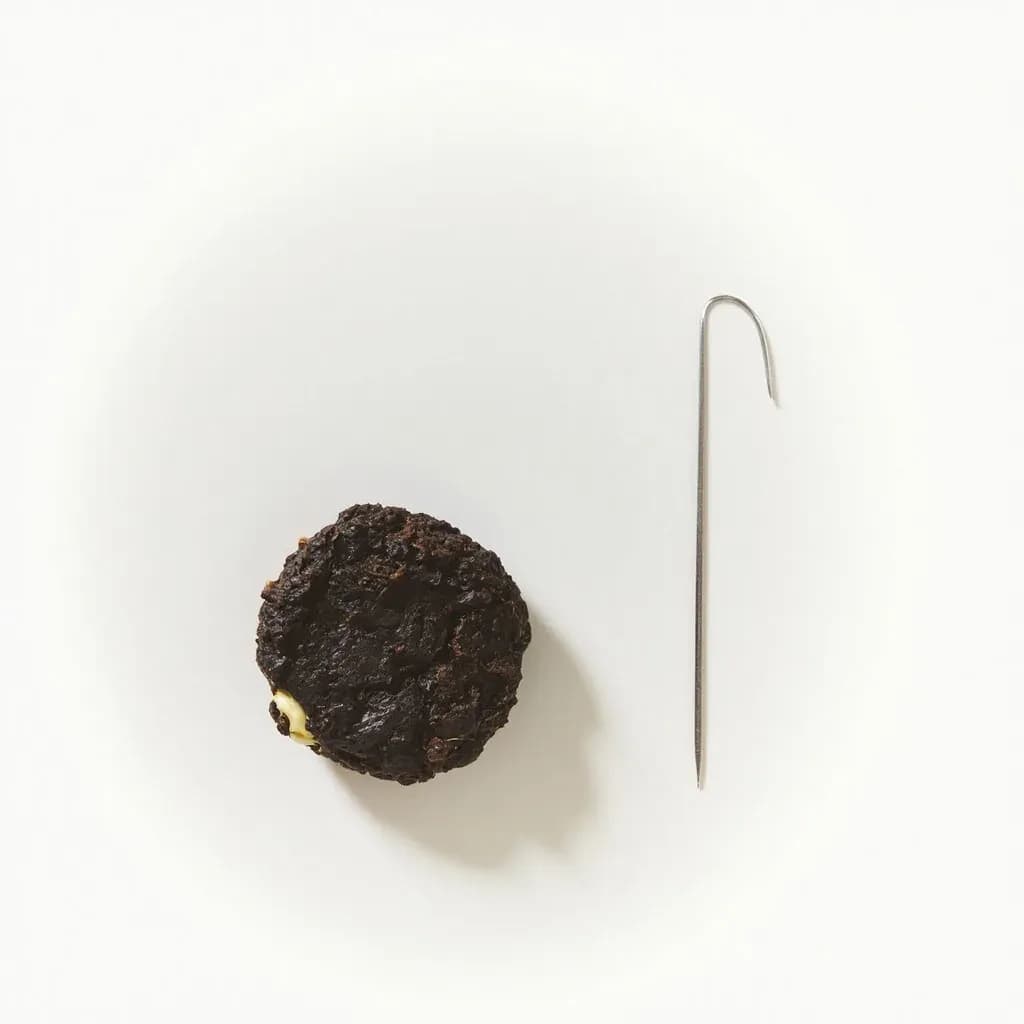
A pointed pick used to pry leaves loose from compressed pu-erh tea cakes.
A pu-erh tea needle is a slim, sharp metal or bamboo pick used to break apart pressed tea, which is sold in dense cakes, bricks, and tuo nests. The brewer wedges the point into a seam and gently levers off intact flakes of leaf so they steep evenly without being shredded. A flatter knife-style version exists for the same task on harder, tightly compressed cakes.
The pu-erh tea needle — chá zhēn (茶针) in Mandarin — is a slender, pointed pick that does one narrow job in the gongfu tea tray: separate whole leaves from a compressed cake without crushing them. It belongs to a small cluster of tea utensils, alongside tea tongs, scoop, and funnel, that the gongfu drinker reaches for before the kettle boils. Its existence is a quiet reminder that pu-erh cakes, white tea discs, and tied oolong balls are pressed for aging and shipping, not for brewing — somebody has to re-open the leaf before water can reach it.
The tool works by sliding into the seams between leaf layers and lifting gently, so the cake parts along its own grain. Done well, the brewer ends up with long, intact strips that unfurl evenly in the pot; done badly, with a pile of fannings that muddy the liquor and turn bitter. Most tools sold as 'tea needles' are actually hybrids, with a pointed awl on one end and a flat tea-knife chisel on the other, so the user has the right implement whether the cake is springy young shēng or a brick-hard aged shóu.
Material shapes the experience as much as shape does. Stainless steel is rigid, sanitary, and inexpensive, and is the right first buy. Bamboo and hardwood — rosewood, ebony, sandalwood — feel warmer in the hand and absorb aroma over time, but they lack the rigidity to crack a very dense cake. Brass, copper, and silver exist for collectors who want a heavier hand and a patina. A serious drinker eventually owns two: one for daily work, one for ceremony.
Alternatives
Types & varieties
Modern standard. Thin, rigid, easy to sanitize, and inexpensive; the right first buy for most drinkers.
Traditional and lightweight, gentle on delicate white tea cakes; can splinter if forced against very hard shóu pu-erh.
Warm to the touch and aesthetically matched to a wood tea tray; absorbs tea aroma over time; less rigid, so best for medium-compression cakes.
Often hand-forged with a vintage feel and heavier weight; develops a patina with use.
Premium ceremonial piece that resists tarnish and imparts no flavor; collector-grade.
Flat, chisel-tipped sibling — often the opposite end of the same tool — used levered, not pried, on the densest cakes.
Decorative hybrid with a flat spade blade on one side and a pointed spike on the other; more display piece than working tool.
How to Break Apart a Compressed Cake
Prying leaf from a cake is closer to surgery than to butchery: the aim is to follow seams, not to force them. The leaf in a well-pressed cake is layered like pages in a book, and the needle's job is to find the gap between layers and lift. Three habits make the difference between a clean separation and a pile of dust — angle, starting point, and patience.
- Hold the cake on its side or rim-up so the curve of the leaf layers is visible; the eye (center) is the most compressed and the worst place to begin.
- Insert the needle parallel to the leaf surface, not straight down — driving downward crushes the leaf and produces dust.
- Begin at the rim where layers curve outward and work inward; a few well-placed pries at the edge will loosen the whole disc.
- Lift in short, gentle pries rather than levering hard; the cake should crack along its grain with a soft sound, not a sharp snap.
- Aim for leaf pieces roughly the size of a thumb or a small coin — enough to weigh for a session, not so big that the core stays tight.
- Switch to the flat chisel end of a tea knife for very hard shóu pu-erh or iron cakes; lever along a seam rather than stabbing the point through the leaf.
Common uses
Tips & pitfalls
- Insert the needle parallel to the leaf surface, not straight down into the cake — driving downward crushes the leaf and creates dust.
- Start at the side or rim where the leaf layers curve outward, then work inward; the eye of the cake is the most compressed and the worst place to begin.
- Pry gently in short lifts rather than levering hard; a slow crack along the leaf grain yields whole, intact strips.
- For very dense shóu (ripe) pu-erh, switch to the flat chisel end of a tea knife; a needle alone can bend on rock-hard cakes.
- Keep the needle dedicated to tea; food residue or oils from other kitchen use will ghost into the next brewing.
- If the needle is wood or bamboo, never soak it — a quick wipe and air dry prevents splitting and odor carry-over.
- Don't hammer or tap the needle with a mallet to 'split' a cake; it shatters the leaf into fannings and dulls the point.
- Re-tip a slightly bent stainless needle by clamping the shaft in a vise and pressing gently against the bend — most light kinks can be coaxed back.
Good to know
- Also known as
- chá zhēn (茶针); pu-erh pick; pu-erh tea needle; tea awl
- Origin
- China, Yunnan; traditional accessory of the gongfu tea tray
- Typical length
- 15–22 cm total; needle point 2–4 cm
- Common materials
- Stainless steel, bamboo, rosewood, ebony, brass, copper, silver
- Profile
- Slender, tapered, pointed shaft with a slim handle; most sold today have a flat tea-knife blade on the opposite end
- Used on
- Compressed pu-erh (shēng and shóu), white tea cakes, tied oolong balls, black tea bricks
- Care
- Wipe dry after use; stainless steel is dishwasher-safe; wood and bamboo should be oiled occasionally and never soaked
- Cost range
- Stainless sets from a few dollars; hardwood or hand-forged brass and silver versions $20–$150+
Also called
Pu-erh Tea Knife · Pu-erh Pick · Tea Pick
Related

Peeler
Swift blade for stripping skin off fruit and vegetables

Grater
Sharp-toothed surface for shredding cheese and vegetables

Microplane
Ultra-fine rasp for citrus zest, garlic, and hard cheese

Mixing Bowl
All-purpose bowl for combining, whisking, and tossing

Whisk
Looped wires that beat air into eggs, cream, and sauces

Spatula
Flat blade for flipping, lifting, and scraping

Slotted Spoon
Pierced spoon that lifts solids and drains the liquid behind

Wooden Spoon
Gentle, heat-friendly spoon for stirring anything