Beverages
White Tea
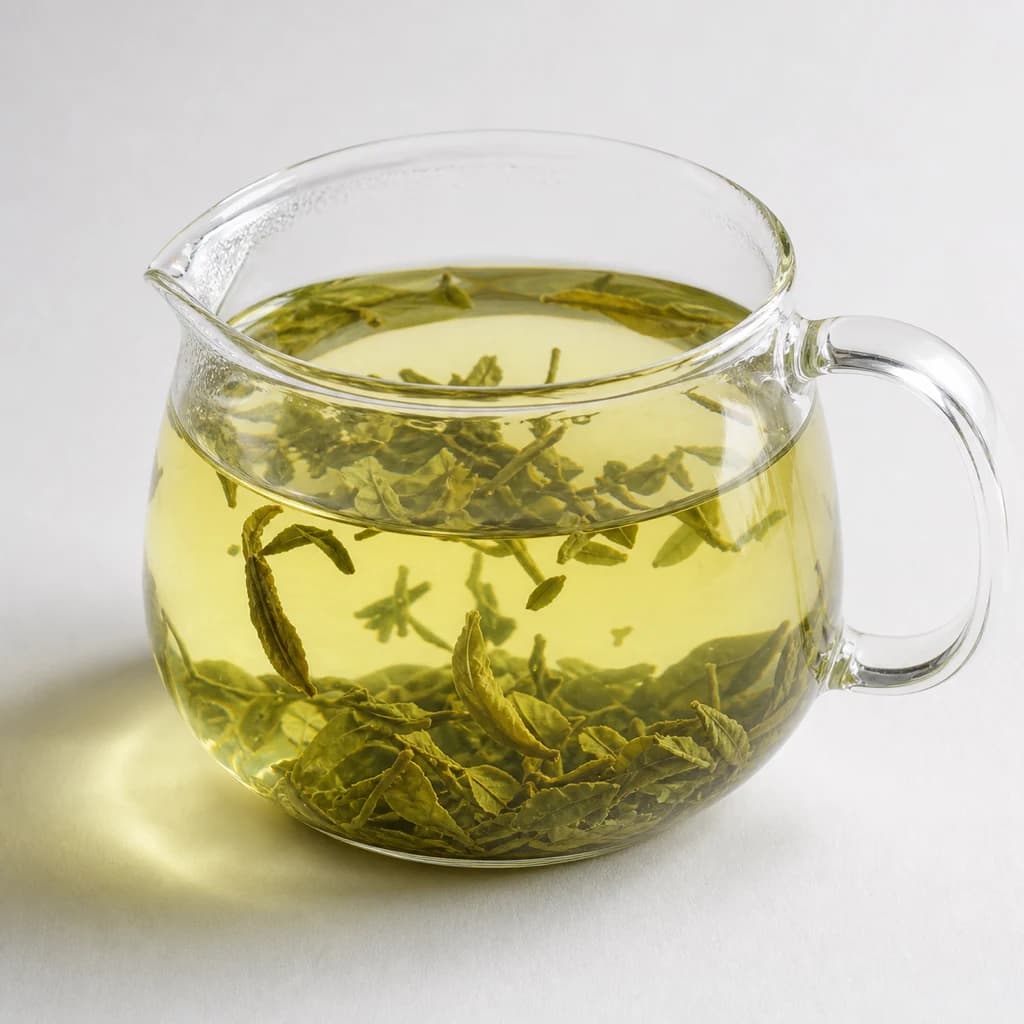
The least processed tea, made from young buds and leaves, brewing pale and delicately sweet with low astringency. Steeped gently below boiling; used for light infusions and poaching liquids.
White tea is the most lightly handled of all true teas, plucked from Camellia sinensis bushes and dried with so little interference that oxidation is held to a minimum, typically under 5–10%. The young buds and tender leaves keep much of their natural sugars and amino acids, which is why the cup brews pale and tastes sweet rather than bitter. In the kitchen that gentleness is the point: white tea lends aroma and a soft, hay-like backbone to a dish without darkening the liquid or fighting the other ingredients, the way a black or roasted oolong would.
The same delicacy that makes white tea appealing also makes it fragile. It loses its volatile aromatics faster than any other tea, and boiling water or a long, unattended steep will strip out the very compounds that make it worth using. Treat it as you would a fresh herb: brief heat, gentle temperature, used soon after opening. Reach for the leafier grades (White Peony, Shou Mei) when the tea is going into a pot, and reserve Silver Needle for brewing and finishing where its cost can be tasted.
- Measured in
- g
- Storage
- Pantry
Find it in
Suits
Types & varieties
Pure unopened buds from Fujian; the lightest, sweetest, and most expensive grade, brewing almost colorless with melon and honeysuckle notes.
One bud plus two leaves; fuller body than Silver Needle, with hay, apricot, and soft vegetal sweetness. The everyday workhorse for cooking.
Mature leaves and stems from later flushes; bolder, woodier, and faintly honeyed. Holds its own in broths and poaching liquids.
A traditional counterpart to Shou Mei, often from a different cultivar; mellower and nuttier, with a rounder mouthfeel.
Withered slowly in Yunnan, often outdoors under moonlight; slightly more oxidation gives a fruitier, rounder cup.
Long, plump buds from Yunnan big-leaf trees; richer and more velvety than Fujian Silver Needle.
Indian-grown; brighter and slightly grassy with a touch of muscatel, closer to a light Darjeeling than to a Fujian white.
Newer productions, generally more astringent and vegetal; best for iced tea and cooking where subtlety is less critical.
Choosing a grade for the kitchen
The Fujian grades run a spectrum from the most delicate (Silver Needle) to the most robust (Shou Mei), and that spectrum maps neatly onto cooking uses. Reserve the buds for finishing and brewing where their cost and clarity are detectable. For anything that will simmer, reduce, or share a pot with other aromatics, move down the ladder.
- Silver Needle — finishing garnish tea, delicate syrups, drinking straight.
- White Peony — general-purpose cooking: poaching liquids, custards, light broths.
- Shou Mei — stocks, rice cooking, smoking salts, and anything that needs body.
- Gong Mei — interchangeable with Shou Mei when you want a slightly nuttier edge.
Building a white-tea broth
A simple white-tea broth is one of the easiest ways to add a quiet floral note to poached fish or chicken. The principle is to extract flavor at sub-boiling temperatures so the tea gives up its sweetness without bitterness, then keep the liquid clear.
- Use 10 g of White Peony or Shou Mei per liter of water.
- Heat the water to 80°C and pour over the leaves; cover and steep 6–8 minutes.
- Strain and season lightly with salt, a slice of ginger, and a few white peppercorns.
- Reheat gently, never to a boil, before adding the protein to poach.
Common uses
Tips & pitfalls
- Never pour boiling water on white tea; aim for 75–85°C. Boiling flattens the aroma and pulls harsh tannins that ruin delicate dishes.
- Warm the pot and cups with hot water first so the ceramic does not drag the infusion below ideal temperature.
- Use a generous leaf-to-water ratio (about 3 g per 150 ml) and shorter steeps; white tea rewards three to five short infusions over one long one.
- Choose glass or porcelain teaware when brewing. Metal vessels, especially reactive ones, can muddy the flavor.
- Store away from spices, coffee, and the stovetop. White tea absorbs ambient odors faster than roasted teas and will taste like last night's curry.
- For cooking, reach for the leafier and more affordable grades (Shou Mei, White Peony); Silver Needle is wasted in a pot.
- Re-steep within 10–15 minutes of the previous pour. Leaves left to sit oxidize and turn sour.
- Buy in small amounts and use within a year of opening. The delicate top notes fade faster than in any other tea.
Nutrition
Energy
8 kJ · per 100 g
Where the calories come from
Protein
0.1g
0% DV
Carbs
0g
0% DV
Fat
0.2g
0% DV
Sodium
27mg
1% DV
Source · USDA FoodData Central · approx. Tea, herbal, brewed, Hohoysi (Hopi)
View on FDC →In the shops
Matched grocery products
No matched grocery products for White Tea yet.
Good to know
- Botanical type
- Camellia sinensis; the least processed of the six commercial tea categories.
- Origin
- Fujian province in southeastern China (Fuding and Zhenghe counties); now also Yunnan, with smaller plantings in Darjeeling, Sri Lanka, Kenya, and Malawi.
- Processing
- Plucked, withered in sun or in a controlled room, then dried. No rolling, no fermentation; oxidation kept under roughly 5–10%.
- Pluck standard
- Unopened buds and young leaves covered in silvery trichomes (the 'down' that gives Silver Needle its name).
- Caffeine
- About 15–30 mg per 8 oz cup, generally lower than green or black tea; rises with longer steeps and leafier grades.
- Brewing temperature
- 75–85°C (167–185°F); boiling water scorches the leaves and pulls harsh tannins.
- Brewing time
- 4–5 minutes for bud-only teas, up to 7–8 minutes for leafier grades. Re-steep three to five times.
- Storage
- Airtight and opaque, away from light, moisture, and strong odors; best within 12 months of opening, about 2 years sealed.
Substitutes
- Light green tea (sencha, Longjing) — Closest in delicacy and pale color; greener and more vegetal. Works in poaching liquids and syrups when a similar lightness is needed.
- Yellow tea (Junshan Yinzhen) — Rarer, with similar oxidation and softness; a fair match for broths, with a mellow, bean-like sweetness.
- Minimally oxidized oolong — Adds light floral notes and slightly more body when the dish can carry a touch more structure.
- Chamomile tisane — Not a true tea, but useful when a pale, floral, caffeine-free infusion is the goal in desserts or gentle broths.
Pairs with
Also called
silver needle · bai hao · white peony tea