Prep Tools
Tea Scoop
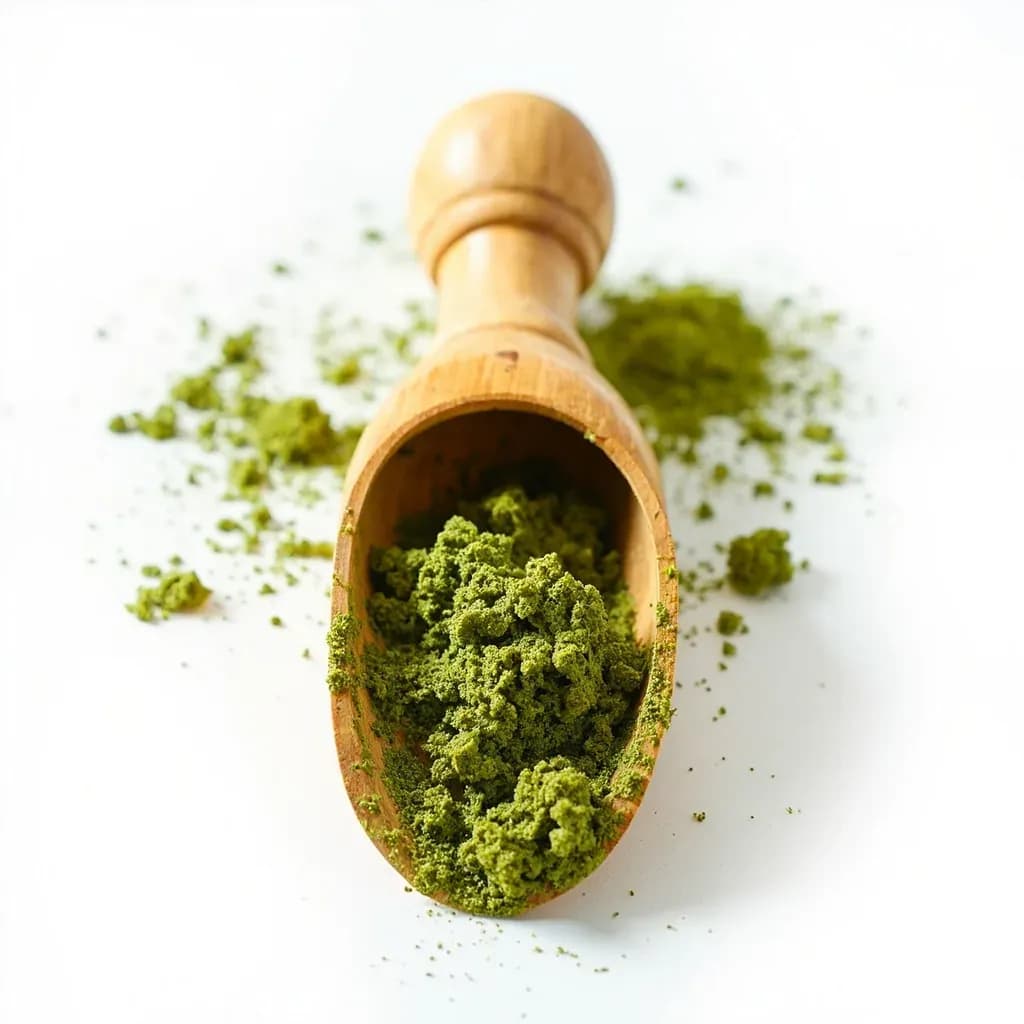
Slender scoop for measuring loose-leaf tea or matcha powder into a pot or bowl.
A small slender scoop used to measure and transfer loose-leaf tea or powdered matcha. In the Japanese tea tradition the bamboo chashaku doses matcha into the bowl, while Western tea scoops measure a standard portion of leaves per cup. The narrow shape lets it reach into tins and caddies cleanly.
A tea scoop is a small, often slender utensil used to portion loose-leaf tea or matcha from a storage caddy into the brewing vessel. At its most basic it is a measuring spoon, but the form has been refined over centuries in two distinct traditions — the Chinese gongfu cha lineage and the Japanese chanoyu ceremony — and that history shapes nearly every modern variant a cook is likely to encounter.
A dedicated scoop earns its place by giving the brewer a consistent dose of leaf, which is the single biggest variable in a good cup. A level scoop of black tea will extract predictably; a tamped or heaping scoop produces a cup that is harsh, thin, or muddy. A scoop also keeps fingers out of the leaf, preserving both the dry aroma of the tea and the dry hand of the user, and it gives the brewer a way to present and inspect the leaf before water ever touches it.
Material matters more than the simple silhouette suggests. Bamboo and hardwood are favored in both major traditions because they are thermally neutral and do not impart flavor, while stainless steel and silver are favored in Western service for durability and ease of cleaning. Shape is also functional: the bent tip of a chashaku controls how matcha powder leaves the scoop, while a straight tea caddy spoon is shaped to nest inside a storage tin.
Alternatives
Types & varieties
Japanese bamboo matcha scoop, carved from a single piece of bamboo with a bent tip; the standard tool for measuring matcha in chanoyu.
Bamboo or hardwood scoop used in gongfu cha to transfer leaves from a caddy to the pot; usually straight and longer than a chashaku.
Small scoop, often stainless steel or silver, that nests inside or rests on a tea caddy or tin; the practical standard of British and American tea service.
Traditional European scoop prized for not imparting flavor; rare today but still found in heirloom tea sets.
Modern utilitarian scoop often included with commercial loose-leaf tea; convenient but prone to retaining odors.
Decorative spoons sold with Asian tea sets; functional but chosen mainly for visual harmony with the rest of the set.
Budget alternative to an artisan chashaku, typically a simpler flat shape without the hand-cut bend.
Choosing the right material
Match the scoop to the tea, not the other way around. Bamboo and hardwood are the right default for any leaf whose aroma you want to taste cleanly — green, white, oolong, and especially matcha — because they neither conduct heat nor hold residual scent. Stainless steel and silver are practical choices for robust black teas and tisanes, where a vigorous rinse will not damage the tool and where flavor carryover is a minor concern. Plastic is acceptable for casual brewing of bagged or commodity loose-leaf but should be retired once it picks up a smell, which it will. Ceramic and horn sit between the two: inert and attractive, but worth treating gently because they chip or crack if dropped.
Measuring by scoop vs. by weight
A scoop is a fast, repeatable approximation; a scale is the truth. For most home brewing, a single level scoop per 8 oz of water is close enough that the cup will be good. When dialing in a new tea, switching to a gram scale for the first few sessions pays for itself: weigh the leaf the scoop delivers, then commit that count of scoops to your recipe card. Matcha is the one tea where most brewers never weigh, because the chashaku is calibrated to the standard ceremonial dose; even so, grind size and humidity will shift the actual weight, and the first time you open a new tin, a quick weigh confirms what that particular scoop is really giving you.
- Use a scoop for everyday consistency and a scale when developing or troubleshooting a recipe.
- For matcha, two chashaku per 60–80 ml of water is the usucha starting point; for a thicker koicha-style preparation, roughly double the matcha and halve the water.
- For Western loose-leaf, 1 level teaspoon per 240 ml water is a workable default, but adjust for leaf density — bud-heavy whites and broken CTC blacks pack differently.
Common uses
Tips & pitfalls
- Dedicate one scoop to a single tea family — strongly aromatic teas like jasmine or lapsang will taint a neutral scoop and bleed into green or white teas brewed later.
- Keep bamboo and wood scoops completely dry between uses; trapped moisture leads to mold and can split the bamboo along the grain.
- When measuring matcha, sweep the chashaku across the surface of the powder rather than digging in — a flatter, glancing pass gives a more consistent gram than a deep dig.
- A chashaku measures roughly 1 g of matcha by volume, but particle size and humidity shift the actual weight, so weigh the first time you open a new tin if precision matters.
- Never wash a chashaku with soap; plain water and a quick wipe-down preserves the bamboo's patina, which tea masters consider part of the tool's character.
- For Western loose-leaf, scoop gently rather than pressing the leaves into the bowl of the spoon; loosely filled leaves measure more accurately than compacted ones, and tightly packed leaf under-extracts because water cannot reach the center of the scoop.
- Store the scoop outside the tea tin; closing the tin with the scoop inside traps humidity, dulls aromatics, and can off-gas any flavors the scoop has picked up.
- Replace plastic scoops once they absorb an odor that does not wash out — the scent will show up in every subsequent cup.
Good to know
- Also known as
- Chashaku (茶杓) in Japanese; chá chí (茶匙) in Chinese; tea caddy spoon or tea measure in English
- Primary materials
- Bamboo, hardwood, stainless steel, silver, horn, plastic
- Typical capacity (Western tea scoop)
- About 1 teaspoon (≈5 ml), roughly 2 g of loose-leaf tea
- Typical capacity (chashaku)
- About 1 g of matcha powder per scoop (≈½ teaspoon)
- Origin
- Bamboo tea scoops developed in China; the Japanese chashaku was refined by Sen no Rikyū in the 16th century for chanoyu
- Standard tea-to-water ratio
- Roughly 2–3 g loose-leaf per 240 ml cup, or 2 chashaku (≈2 g) matcha per 60–80 ml water
- Length
- Chashaku is traditionally about 18 cm (7 in); Western tea caddy spoons are usually 10–15 cm (4–6 in)
- Storage
- Keep dry and away from strong odors; wood and bamboo scoops should be air-dried and never stored sealed inside a tea tin
Also called
Chashaku · Matcha Scoop · Tea Measure
Related

Peeler
Swift blade for stripping skin off fruit and vegetables

Grater
Sharp-toothed surface for shredding cheese and vegetables

Microplane
Ultra-fine rasp for citrus zest, garlic, and hard cheese

Mixing Bowl
All-purpose bowl for combining, whisking, and tossing

Whisk
Looped wires that beat air into eggs, cream, and sauces

Spatula
Flat blade for flipping, lifting, and scraping

Slotted Spoon
Pierced spoon that lifts solids and drains the liquid behind

Wooden Spoon
Gentle, heat-friendly spoon for stirring anything