Prep Tools
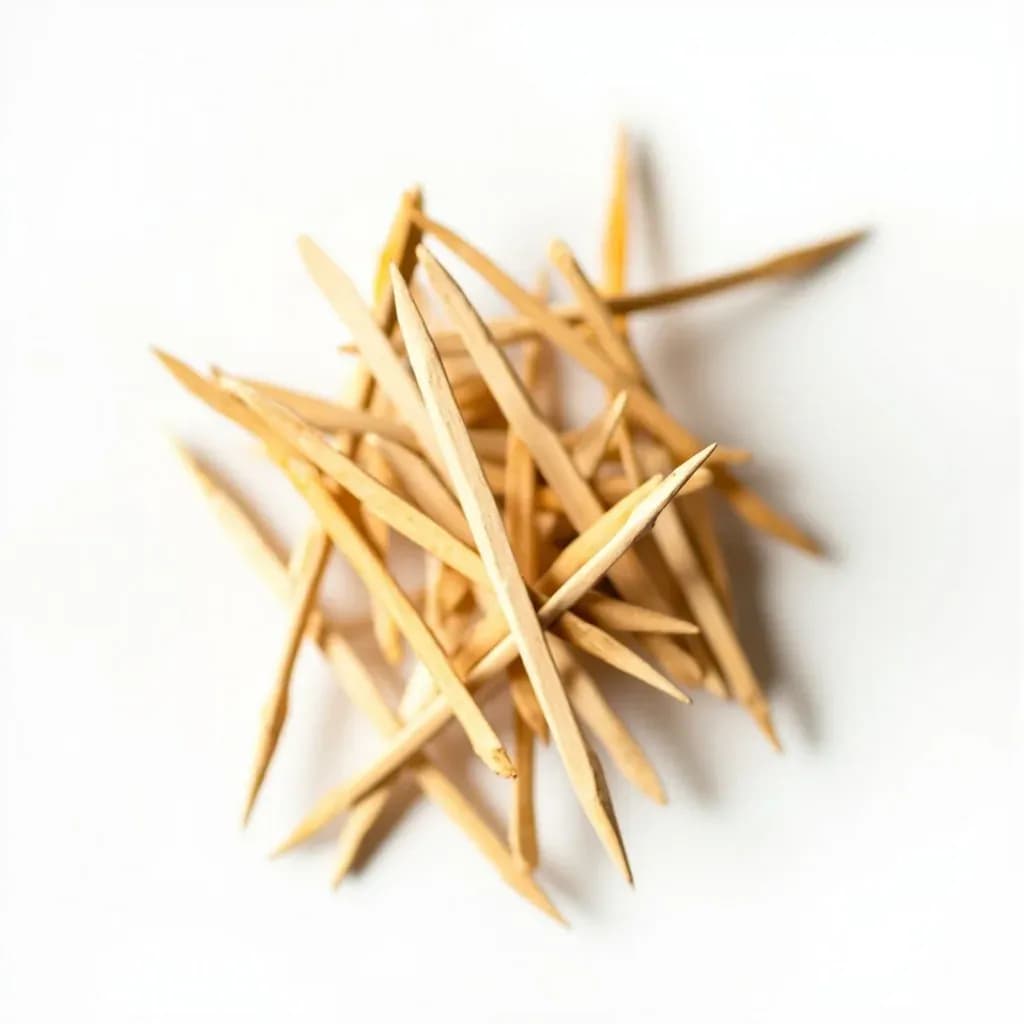
Toothpicks & Bamboo Picks
Slim wooden picks for testing doneness, pinning food and serving bite-size portions.
Toothpicks and bamboo picks are thin pointed sticks used constantly in cooking and serving. Cooks insert one into cakes or potatoes to test for doneness, pin rolled or stuffed items closed, and skewer canapés and garnishes for presentation. Bamboo versions are sturdier and often used for small kebabs and appetizers.
Toothpicks and bamboo picks are the quiet workhorses of the kitchen: cheap, disposable, and capable of jobs that range from a one-second doneness test to holding a stuffed roast together through a long sear. A round wooden toothpick doubles as a one-handed thermometer substitute for cakes and custards; a flat paddle pick is as much a presentation choice as a functional one; and a bamboo skewer is a miniature structural frame for kebabs, satay, and pinwheel sandwiches. Knowing which pick to reach for — and how to prep it — keeps service clean and food safe.
The basic wooden toothpick is roughly 2.5 inches of birch or similar white wood, often round but also sold flat so it won't roll across a plate. Bamboo picks and skewers are stiffer and longer, from about 4 inches for cocktail work up to 12 inches for full kebabs, and tolerate heavier food but burn faster when dry. Reusable metal picks handle hot and cold service; flexible plastic picks round out the category for cold service and decorative work. Wood and bamboo are single-use and biodegradable; metal is the right call for high-heat grilling and the dishwasher.
Alternatives
Types & varieties
The classic all-purpose pick for doneness tests and light pinning.
Tapered flat tip; stays put on plates and works well as a canapé skewer.
Decorative pick with a cellophane or paper frill — designed to be visible so guests spot and remove it.
About 4 in, sturdy enough to spear cheese, fruit, or olive garnishes.
Appetizer size for satay, yakitori, scallops, and shrimp.
Standard kebab length for cubed meat and vegetables on the grill.
Reusable stainless steel in looped, twisted, or flat-sword shapes.
Decorative and often themed; flexible, food-safe for cold service only.
Testing doneness with a pick
A clean wooden pick is one of the most reliable indicators of doneness for cakes, muffins, quick breads, puddings, and chilled custards. The technique is simple but worth doing carefully so you read the result correctly.
- Insert near the center but not all the way to the bottom — the base of a pan stays moister than the middle, so a touch at the bottom can mislead you.
- Withdraw and look at the pick. A few moist crumbs clinging to the wood is the textbook signal for cakes. Wet, glossy batter means it needs more time.
- For custards, panna cotta, and flan, the pick should come out clean when the set is correct; a slight jiggle in the center is expected.
- Wipe the pick between checks so old batter doesn't smear across the next insertion.
Skewering and grilling
Bamboo is stiffer than wood and holds heavier cubes, which is why it dominates kebab work — but it burns fast over open flame. A few habits make skewer grilling predictable.
- Soak bamboo skewers in water for at least 30 minutes (an hour is safer) before they hit the grill. Damp wood chars more slowly than dry.
- For long cookouts or smokers, switch to metal skewers or run two bamboo skewers parallel through the food so a cube can't spin when you turn it.
- Pack ingredients snugly along the skewer; loose cubes cook unevenly and stick to the grates.
- Tuck thin items like bay leaves or rosemary tips between pieces rather than skewering them directly — they char quickly.
Pinning and presentation
Pinning is structural: the pick holds a seam, a wrap, or a roll-up together through cooking and slicing. Presentation picks are about visibility — making sure the diner sees the point before it sees them.
- Drive picks at an angle through the seam of a stuffed roast and out the other side, then trim flush with a knife so they sit cleanly against the surface.
- Use frilled or brightly colored picks in any dish served to guests who didn't watch it being assembled — the visual cue tells them to remove it before biting in.
- Mark a cake or sheet of dough with picks at measured intervals before cutting for even, repeatable portions.
- Count picks going in and count picks coming out — a stray point left in a roast is one of the most common plating hazards.
Common uses
Tips & pitfalls
- Soak bamboo skewers in water for at least 30 minutes (an hour is safer) before grilling to slow charring; a damp towel wrapped around the exposed ends helps even more.
- For long oven grills or smoker sessions, switch to metal skewers or double up two bamboo skewers in parallel so food doesn't spin when you turn it.
- Use flat-sword or paddle-style picks for plate presentation — they won't roll and point up for easy spotting and removal.
- Always tell diners when picks are in the food; frilled or brightly colored picks exist for exactly this reason.
- If a pick breaks off in a roast, count picks going in and coming out; a stray pick on a plate is a real hazard.
- Keep bamboo away from standing water in storage — damp skewers swell, splinter, and can develop mold.
- Avoid wooden toothpicks in a 450°F (232°C) oven or over direct flame for more than a few minutes — they scorch and can leave a bitter taste.
- Stash a small jar of picks near the stove and another near the bar so they're always within reach during service.
Good to know
- Common materials
- Birch or other white wood for toothpicks; bamboo for longer picks and skewers; plastic and stainless steel for reusable picks
- Standard toothpick length
- Roughly 2.5 in (6.4 cm); frilled mint-toothpick style runs ~3.5 in
- Bamboo skewer lengths
- Commonly 4, 6, 8, 10, and 12 in (10–30 cm)
- Toothpick shapes
- Round, flat (paddle), and pointed; flat picks resist rolling on plates
- Origin (wooden)
- Commercialized in the U.S. in the 19th century; Charles Forster of Maine began manufacturing around the 1860s–70s
- Heat tolerance
- Wood chars around 400°F/200°C; dry bamboo chars faster than soaked
- Storage
- Keep dry in a covered container; moisture warps and splinters bamboo and can encourage mold on damp picks
- Disposal
- Single-use wood and bamboo are biodegradable; metal picks are reusable and dishwasher-safe
Also called
toothpicks · bamboo picks · cocktail picks
Related

Peeler
Swift blade for stripping skin off fruit and vegetables

Grater
Sharp-toothed surface for shredding cheese and vegetables

Microplane
Ultra-fine rasp for citrus zest, garlic, and hard cheese

Mixing Bowl
All-purpose bowl for combining, whisking, and tossing

Whisk
Looped wires that beat air into eggs, cream, and sauces

Spatula
Flat blade for flipping, lifting, and scraping

Slotted Spoon
Pierced spoon that lifts solids and drains the liquid behind

Wooden Spoon
Gentle, heat-friendly spoon for stirring anything