Prep Tools
Wine Thermometer
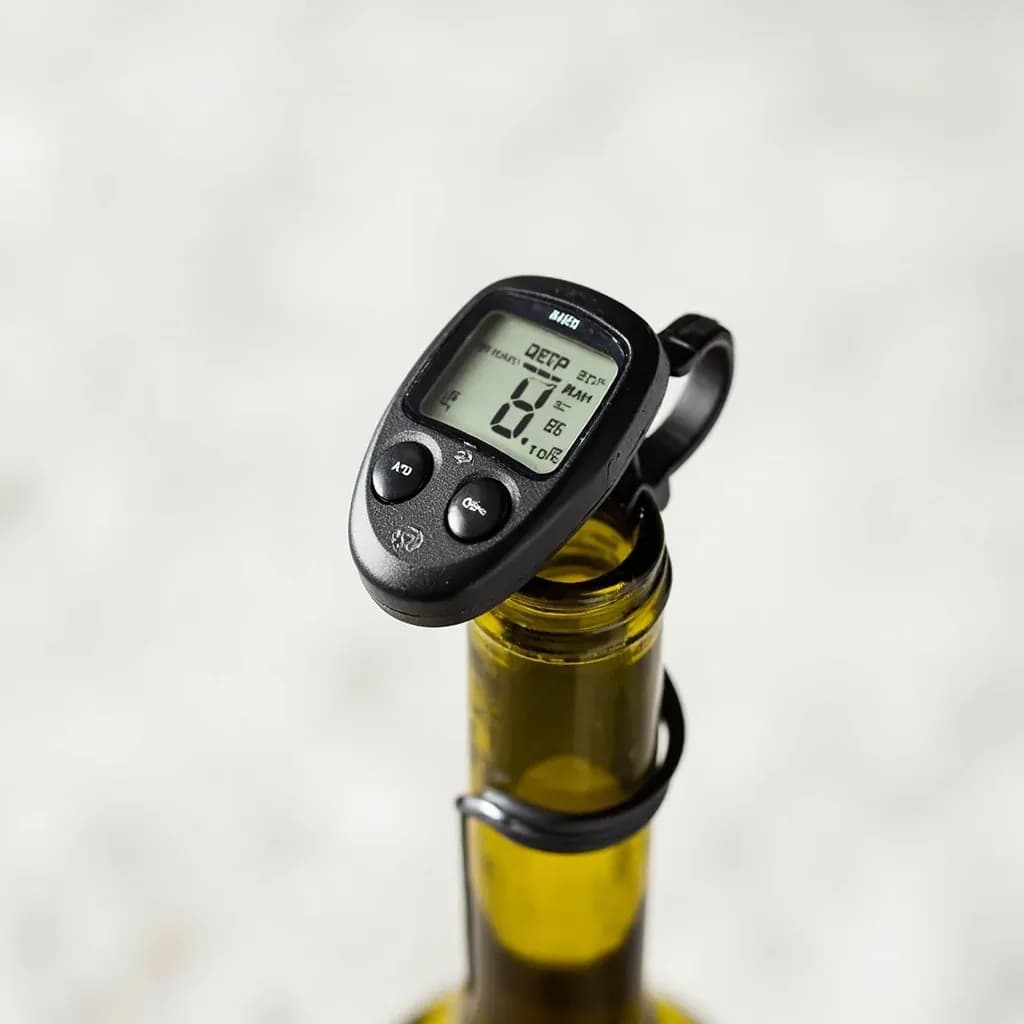
Thermometer that reads wine's serving temperature, often as a band that clips on the bottle.
A wine thermometer measures the temperature of wine to ensure it is served in its ideal range, since temperature strongly affects how a wine tastes. Common forms include a snug clip-on band that reads through the glass and a probe-style thermometer for the bottle neck. It helps avoid serving reds too warm or whites too cold.
Wine is one of the few kitchen ingredients whose flavor shifts noticeably with a change of just a few degrees, and a wine thermometer is the simplest tool for putting that variable on a dial. Serve a Sauvignon Blanc straight from an ice bucket and the aromas flatline; pour a Cabernet at the 72°F most modern homes call "room temperature" and the alcohol puffs forward while the fruit turns jammy and the tannins feel gritty. A dedicated wine thermometer — whether a wrap-around liquid-crystal band, a glass pill that floats in a decanter, or a slim digital probe — narrows the guesswork to a number, so you can pull a bottle at the right moment or watch it warm gracefully through the meal.
The three families of wine thermometer behave differently and suit different jobs. Surface-reading bands stick to the glass and tell you what the bottle wall feels like, which is close enough for casual service and brilliant for ice-bucket monitoring. Immersion thermometers — floating pills and decanting probes — read the liquid itself and are the most accurate for serious tasting. Digital and infrared probes give the fastest, most precise readings and are the choice in restaurants and tasting rooms where consistency matters bottle after bottle. Most cost only a few dollars and pay for themselves the first time they save an over-warmed Pinot from the dinner table.
A wine thermometer is a service tool, not a storage solution. For long-term cellaring, a dual-zone wine fridge with its own thermostat is far more reliable than any handheld device. But for the twenty minutes before dinner, or the hour a bottle spends in an ice bucket, nothing puts you in control of serving temperature like a thermometer you can read at a glance.
Alternatives
Types & varieties
Clips or wraps around a 750 mL bottle; uses liquid crystals that shift color across a printed scale. Reads the bottle surface, not the liquid inside, and is the most common gift-friendly style.
Glass or stainless cylinder that floats in a decanter, carafe, or glass for a direct liquid reading. Elegant on a casual table but visually distracting in formal settings.
Stainless probe on a digital base; inserted into the bottle neck or a poured glass. The most accurate option and the workhorse of restaurants and tasting rooms.
Point-and-shoot infrared model aimed at the bottle or glass. Non-contact and fast, but reads surface temperature only — handy for quick checks, less reliable for cold bottles.
Disposable liquid-crystal strip that adheres to the bottle and changes color at preset ranges. Inexpensive and event-friendly, with no moving parts to lose.
Slim thermometer designed to sit inside a decanter, often with a weighted base, giving a direct reading of the wine as it rests and opens up.
Dial thermometer that clips to the rim of an ice bucket to track chilling in real time, so a bottle doesn't drift too cold or warm unnoticed during service.
Serving temperature guide by wine style
These ranges are targets, not rules — vintage, personal preference, and the temperature of the room all nudge the ideal glass by a degree or two. When in doubt, err slightly cool rather than warm; you can warm wine in your hand faster than you can cool it.
- Sparkling wines (Champagne, Prosecco, Cava): 40–45°F (4–7°C) — cold enough to preserve bubbles and lift acidity.
- Light, crisp whites (Sauvignon Blanc, Pinot Grigio, dry Riesling): 45–50°F (7–10°C).
- Full-bodied whites (oaked Chardonnay, white Burgundy, Viognier): 50–55°F (10–13°C).
- Rosé: 45–50°F (7–10°C); richer, fuller rosés can take 50°F.
- Light reds (Beaujolais, Pinot Noir, Gamay): about 55°F (13°C), often 10–15 minutes from the fridge.
- Medium-bodied reds (Sangiovese, Tempranillo, Merlot): 60–62°F (15–17°C).
- Full-bodied reds (Cabernet Sauvignon, Syrah, Malbec, Bordeaux blends): 63–65°F (17–18°C).
- Fortified wines: tawny Port and dry sherries around 55–60°F; vintage Port and Madeira closer to 60–65°F.
Choosing the right style
Match the thermometer to how you actually drink wine, not to the most expensive option.
- Casual home use, occasional bottles, gifts: a wrap-around band is cheap, requires no batteries, and reads at a glance.
- Dinner parties and decanted wines: a floating thermometer or carafe thermometer gives the most accurate reading of the liquid itself.
- Restaurants, wine bars, and serious collectors: a digital probe offers speed and accuracy bottle after bottle.
- Cellar and fridge monitoring: a wireless fridge thermometer with min/max memory is more useful than a handheld tool — you want to know the overnight range, not the moment you open the door.
- Tasting rooms and classrooms: digital probes or infrared units keep pours consistent across a flight.
Common uses
Tips & pitfalls
- Treat "room temperature" for red wine as 60–65°F (15–18°C), the temperature of a traditional European cellar — most modern homes run 70°F or higher and will make reds feel flabby and alcoholic.
- Pull reds from the fridge 15–30 minutes before serving and whites or rosés 10–15 minutes ahead, so the chill comes off and the aromas open up rather than staying shut down.
- Don't trust a band thermometer after you've handled the bottle — your warm hand raises the glass reading well above the actual wine temperature inside. Pour a small sample for an honest read.
- Skip the microwave and never set a bottle on a warm stovetop to take the chill off; if a wine is too cold, hold the bowl of the glass in your palm briefly so it warms gradually without shocking.
- Avoid leaving a probe thermometer wedged in the bottle neck for long stretches; condensation on the stem skews the reading and the cold metal locally chills the wine right around it.
- Floating thermometers give the most accurate reading in a decanter but look out of place on a formally set table — pour the wine, let the table settle, then drop the thermometer in if needed.
- Calibrate digital probes every few months in an ice-water bath; they should read 32°F (0°C) and drift is the most common source of bad service decisions.
- Your nose is the final check — if a wine shows little aroma on the first sniff, it is almost certainly too cold, no matter what the thermometer says.
Good to know
- Tool type
- Specialized thermometer for measuring wine serving temperature
- Typical materials
- Stainless steel, glass, liquid-crystal polymer strips, or plastic housing
- Temperature range
- 32–80°F (0–27°C); some digital models extend higher
- Display type
- Analog dial, liquid-crystal color band, or digital LCD
- Ideal serving range
- Sparkling 40–45°F; light whites and rosés 45–50°F; full-bodied whites 50–55°F; light reds ~55°F; medium reds 60–62°F; full-bodied reds 63–65°F; fortified 55–65°F
- Reading time
- 30–90 seconds for probe types; near-instant for digital and liquid-crystal types
- Accuracy
- Digital probes ±0.5–1°F; liquid-crystal bands ±2°F; floating glass ±1°F
- Cleaning
- Wipe with damp cloth; probe styles hand-wash only; never submerge digital housings
Also called
wine thermometer · bottle thermometer band
Related

Peeler
Swift blade for stripping skin off fruit and vegetables

Grater
Sharp-toothed surface for shredding cheese and vegetables

Microplane
Ultra-fine rasp for citrus zest, garlic, and hard cheese

Mixing Bowl
All-purpose bowl for combining, whisking, and tossing

Whisk
Looped wires that beat air into eggs, cream, and sauces

Spatula
Flat blade for flipping, lifting, and scraping

Slotted Spoon
Pierced spoon that lifts solids and drains the liquid behind

Wooden Spoon
Gentle, heat-friendly spoon for stirring anything