Transform & Preserve
Bandaging (Clothbinding)
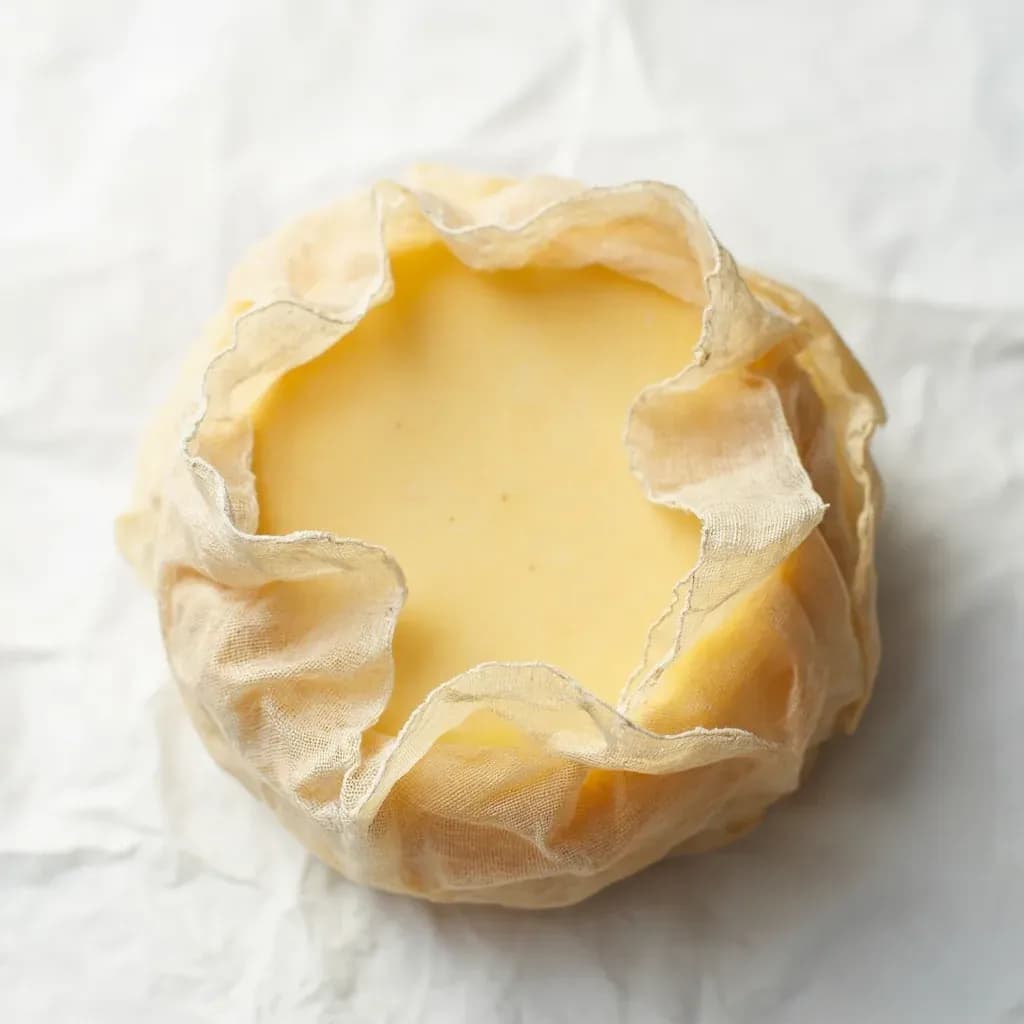
Wrapping a cheese wheel in lard-greased cloth before aging to protect it and shape its rind.
Bandaging, or clothbinding, wraps a pressed cheese in muslin secured with lard or butter before it goes to age. The cloth lets the cheese breathe and lose moisture slowly while protecting it and forming a natural, rustic rind. It is traditional for clothbound cheddar, producing earthier, more complex flavors than waxing or plastic.
Bandaging — also called clothbinding — is the practice of wrapping a formed cheese wheel in a close-weave linen or cotton cloth that has been coated with rendered fat before the cheese is set aside to age. The fat-impregnated bandage does several jobs at once: it shields the young rind from handling damage and surface contamination, slows moisture loss to a steady, predictable pace, deters cheese mites and other pests, and holds a soft-to-firm wheel in its proper cylindrical shape during the early weeks when it would otherwise slump.
The technique grew out of British farmhouse cheesemaking in regions like Derbyshire and the West Country, where wheels of Cheddar, Derby, and other territorial cheeses were traditionally bound in strips of homespun cloth smeared with rendered pork lard before being carried up to the dairy loft or cave. Modern clothbound Cheddars from makers such as Montgomery's, Keen's, Westcombe, and Sparkenhoe still carry on the practice, and the bandage has become part of the visual and flavor signature of the style — it leaves a textured, slightly waxy rind and contributes the faint savory note that distinguishes a traditional clothbound wheel from one waxed, oiled, or vacuum-sealed.
The relationship between cheese and bandage is dynamic rather than static. As the wheel loses moisture and shrinks over weeks and months, the cloth loosens, dries, and frays; the fat at first sits on the surface, then slowly migrates into the rind; and the cloth itself becomes a scaffold for the natural rind that forms just beneath it. That is why long-aged wheels are re-bandaged every few weeks — a fresh cloth keeps the protection consistent and prevents the original from becoming a contamination risk as it breaks down.
- Difficulty
- Medium
Types & varieties
Classic British method using rendered pork fat; imparts a faint savory note and the traditional clothbound rind.
Used where a milder, slightly sweet surface is desired; easier to spread but more prone to oxidation and rancidity.
Modern industrial adaptation for longer shelf life and consistent texture; used by some UK clothbound producers but controversial on sustainability grounds.
A hybrid in which the cloth is first dipped in melted beeswax; seen in some continental traditions.
Two layers of cloth applied at different stages of aging, used for very long-aged wheels of 18 months or more.
How to do it
- 1
Press and pre-dry the wheel
Drain, mill, and press the curds in a traditional cheese press until the wheel reaches target moisture and a firm shape — typically 12–24 hours of pressing, with weight adjusted to wheel size. Demould and air-dry on a rack at cool room temperature for 1–3 days, until the surface is matte and slightly tacky but no longer wet to the touch.
- 2
Cut and prepare the bandage
Cut a long strip of clean, breathable linen or unbleached cotton wide enough to cover the flat side of the wheel and long enough to wrap the circumference with overlap — usually 3–4 times the wheel's height and roughly 1.5 times its circumference in length. Wash and thoroughly dry the cloth before use; sizing or finish left in the weave can mark the rind.
- 3
Render and condition the fat
Slowly render pork fat (or butter) over low heat, strain through cheesecloth, and let it cool to a soft, spreadable, room-temperature consistency — about the texture of softened butter. It should hold a finger-swipe mark without melting or running. Discard any browned solids; they will oxidize in the cave.
- 4
Coat the cloth
Lay the bandage flat, fat-side up, on a clean surface. Using a palette knife or the back of a spoon, spread a generous, even layer (roughly 2–3 mm) of fat across the entire surface, working it well into the weave so no dry patches remain. A dry patch is a future entry point for mold and mites.
- 5
Wrap the wheel
Place the dried cheese wheel at one end of the coated cloth, fat-side down. Roll the wheel forward, wrapping the cloth around it in a continuous spiral, overlapping each pass by one-third to one-half of the strip's width. Maintain firm but not tight tension so the cloth lies flat against the rind without cutting into it.
- 6
Finish the ends
Tuck the starting end of the strip neatly under the first full wrap. When you reach the end of the strip, fold the tail under the last spiral or tuck it into the overlap so the bandage cannot unravel as the wheel shrinks during aging — the so-called 'Swiss roll' finish.
- 7
Optional outer fat coat
Lightly smear a thin layer of the remaining lard over the outside of the wrapped bandage. This seals the spiral seams and gives the rind its characteristic sheen.
- 8
Age and re-bandage
Place the bandaged wheel on a wooden or food-grade plastic aging board in a cool, humid cellar (10–13 °C, 85–95% RH). Turn the wheel once a week so the bandage wears evenly and the wheel does not develop a flat side. For wheels aged longer than three months, plan to remove the old bandage, wipe the rind with lightly salted brine, and apply a fresh one every 2–4 weeks.
The role of the fat
The choice of fat is not decorative — it is the active ingredient of the technique. Rendered pork lard is the historical default because it is solid at cave temperatures, slow to oxidize, slightly water-repellent, and rich enough to keep the cloth supple as the wheel dries. Butter is workable and mild but contains milk solids and water that turn rancid faster. Modern producers sometimes reach for palm oil for its stability and uniform texture, though its sourcing has become a serious concern. Whatever the fat, it should be strained clean of meat or milk solids, brought only to a soft, spreadable consistency before use, and applied in an even 2–3 mm layer so the cloth carries the same fat load everywhere.
- Lard is solid at cave temperature and stays supple for months — butter can crack and go rancid.
- Melted fat soaks unevenly into the cloth and leaves dry patches; always spread at room temperature.
- Fat left unrendered or unstrained carries proteins that turn rancid and taint the rind.
Bandaging versus waxing and natural rinds
Bandaging is often confused with two other rind treatments, but the three behave very differently. Waxing seals the wheel in an almost impermeable coat that halts gas exchange and holds interior moisture — useful for transport and stability, but it suppresses rind development entirely. A natural rind is the bare surface of the pressed curd, rubbed with salt, oil, or brine during aging; it is breathable but exposed, and it relies on the cellar environment to grow its own protective flora. A bandage sits between the two: breathable like a natural rind, but mechanically protective and shaped like wax. It allows slow, controlled moisture loss while guarding the young cheese against mites, drafts, and the rough handling of weekly turning.
- Wax: impermeable plastic-like seal, no rind development.
- Natural rind: bare surface, environment-dependent flora.
- Bandage: breathable mechanical protection, semi-controlled rind formation.
Common uses
Tips & pitfalls
- Render the lard slowly and strain it clean — any meat or milk solids left in will oxidize in the cave and taint the rind.
- Bring lard to cool room temperature before spreading; melted lard soaks unevenly into the cloth and leaves dry patches.
- Wrap the wheel when the surface is dry to the touch but still slightly tacky — fully bone-dry cheese will not adhere to the bandage, and a wet one will weep under it.
- Overlap each spiral pass by at least one-third of the strip's width; gaps invite mites and surface mold.
- Tuck both ends under themselves (a 'Swiss roll' finish) so the bandage does not unravel as the wheel loses weight.
- Re-bandage every 2–4 weeks during long aging — the cloth loses its fat, frays, and becomes a contamination risk if left in place too long.
- Do not substitute synthetic, stretch, or plastic-coated fabrics; they will not breathe and will trap moisture against the rind, encouraging unwanted surface mold.
- Turn the cheese at least once a week so the bandage wears evenly and the wheel does not develop a flat side.
Good to know
- Also called
- Clothbinding, clothbound aging, bandage wrapping
- Origin
- British farmhouse cheesemaking, particularly Derbyshire and the West Country; widely practiced from the 18th–19th centuries
- Traditional fat
- Rendered pork lard, sometimes butter
- Cloth material
- Plain-weave linen or unbleached cotton, breathable but close-woven
- Primary function
- Protects rind, holds wheel shape, regulates moisture loss, deters mites and surface mold
- Typical aging time
- 2–12+ months depending on style
- Aging conditions
- Cool, humid cave or cellar at 10–13 °C (50–55 °F) and 85–95% RH; turned weekly
- Notable cheeses
- Sage Derby, Lincolnshire Poacher, Sparkenhoe, Keen's Cheddar, Montgomery's Cheddar, Westcombe Cheddar
Also called
Clothbinding · Cloth-Binding · Lard-Wrapping
Related

Confit
Cook slowly submerged in fat for silky tenderness and keeping

Cure
Draw out moisture with salt and time to preserve and concentrate

Pickle
Steep in acidic brine for bright, tangy, crunchy preservation

Ferment
Let friendly microbes transform food into tangy, complex flavor

Marinate
Soak in a seasoned mix to flavor and tenderize before cooking

Brine
Soak in salt water so meat stays juicy and seasoned throughout

Dehydrate
Slowly dry out moisture to concentrate flavor and extend shelf life

Cold-Smoke
Perfume cured food with smoke without cooking it through