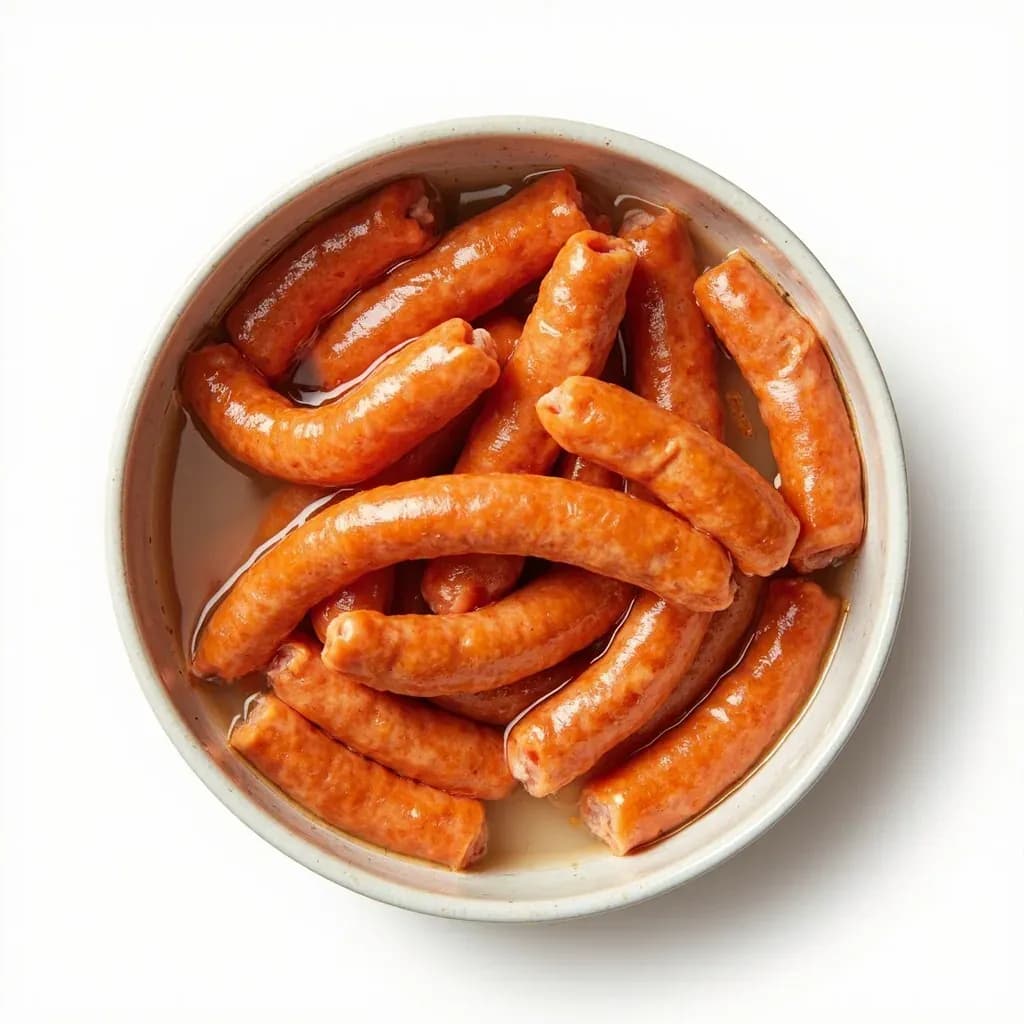
Prep & Assembly
Casing Soaking & Flushing
Soaking and rinsing natural sausage casings to soften them and clear out salt and grit.
Casing prep soaks salted natural casings in water to rehydrate and soften them, then flushes water through the interior to rinse out residual salt and impurities. This readies the casings to slide onto a stuffing tube and fill cleanly. Proper soaking makes them pliable so they stuff without splitting. Flushing also checks for holes that would leak during filling.
Natural sausage casings arrive from the packer as cleaned intestines buried under heavy salt — a preservation method that keeps them shelf-stable for months but leaves them stiff, gritty, and far too salty to wrap around meat. Soaking and flushing is the two-part routine that returns them to a supple, neutral, ready-to-stuff state: a long drink in cool water pulls the salt out of the collagen, and a stream of water pushed through the lumen sweeps out any remaining debris, residual odor, and loose tissue. Get this prep right and the casings slip onto a stuffing horn like wet noodles and shrink-snug around the meat after cooking; skip it or rush it and you'll fight torn casings and overseasoned sausage all afternoon.
The technique is essentially the same whether you're working with delicate sheep casings for breakfast links or beef middles wide enough to wrap a bologna, though diameter and fragility change how gently you handle them. Temperature matters more than most home sausage makers realize: cool or lukewarm water rehydrates collagen without weakening its structure, while water that's noticeably warm to the touch — roughly 85°F (29°C) and up — starts to soften the casing past its working strength and you'll feel it tear on the horn. Collagen and fibrous casings are a different material entirely and don't need any of this; this prep is specifically for natural casings packed in salt or salt brine.
- Difficulty
- Medium
Types & varieties
The everyday workhorse for fresh pork sausages, bratwurst, Italian sausage, and kielbasa. Sold by the hank or pre-cut in salt; 28–38 mm diameter.
Thin and delicate at 18–24 mm. Used for breakfast links, chipolata, merguez, and small snack sticks. Often sold tied in bundles and benefit from a vinegar splash in the soak water to neutralize odor.
Large-diameter (40–44 mm) casing from the small intestine of cattle; the classic choice for salami, soppressata, and summer sausage.
Wider than rounds; casings from the large intestine (colon) of cattle, used for bologna, mortadella, and other large coarse-ground sausages.
Casings from the large intestine of hogs; an alternative to beef middles for large-diameter fresh or cooked sausages.
Sold sitting in a salt-brine solution; skip the long soak and just rinse and use. Convenient but more expensive.
How to do it
- 1
Separate and measure the casings
Unroll or cut the amount of casing you need from the salt pack. A reliable rule of thumb is 1.2–1.5 m (4–5 ft) of casing per kg of meat for most fresh sausages. Reseal any unused casings back in their salt immediately so they don't dry out.
- 2
Soak to release the salt
Place the cut casings in a large bowl of cool to lukewarm water (under 85°F / 29°C) and gently work the salt loose with your fingers. Thirty minutes is plenty for recently packed casings; for casings that have been sitting in dry salt for many months, soak them overnight in the refrigerator.
- 3
Drain and find the open ends
Pour off the salty water and refill with fresh water. Locate the open end of each casing — sheep casings are often tied off, so snip the knot rather than pulling it. Untangle the hanks gently; pulling hard stretches and weakens the collagen and you'll pay for it at the stuffer.
- 4
Flush the lumen clean
Slide a faucet adapter or sink sprayer nozzle into the open end of a bundled group of casings and run cool water through until the water exiting the far end runs clear. For small casings or when no adapter is available, a turkey baster works in a pinch. You're looking for clear water and no gritty feel when you rub the casing between your fingers.
- 5
Bundle and store until stuffing
Gather the flushed casings into loose bundles of 5–10, place them in a sealed container of fresh cold water with a light pinch of salt, and refrigerate. Use within 2–3 days, changing the water daily; for longer holds, freeze the bundles submerged in their brine.
Why temperature matters
Natural casings are made of collagen, the same structural protein found in skin and tendons. Cool water lets the casing rehydrate while staying elastic and strong; warmer water progressively weakens the collagen until, well before it ever reaches the temperature where collagen converts to gelatin (roughly 140°F / 60°C and up), the casing is already too soft to survive being stretched over a stuffing horn. The practical rule is simple: if the soak water feels noticeably warm to your hand, it's too warm for the casings. Keep it cool to barely lukewarm and they'll handle like a wet noodle — pliable, strong, and ready for the stuffer.
Storage before and after prep
- Unopened in original salt: indefinite shelf life, kept cool and dry. This is how packers ship them.
- After the long soak and flush: refrigerated in fresh cold water with a pinch of salt, used within 2–3 days. Change the water daily.
- Frozen for long storage: bundle the soaked casings, submerge in brine in a sealed container or zip-top bag, and freeze. Thaw in the fridge and use within a day of thawing.
- Never return soaked casings to the original salt water — the salt concentration stays high and they'll remain stiff and overseasoning.
Common uses
Tips & pitfalls
- Use cool or lukewarm water only — hot water softens the collagen past its working strength and casings will split on the horn.
- Give very old or very dry salt-packed casings a full overnight soak in the fridge; a quick 30-minute rinse is enough for recently packed ones.
- Find both ends of the casing before you start. Salt-packed hanks often have a knot — snip it off with scissors rather than pulling, which can tear the casing.
- Bundle 5–10 casings together and flush them as a group through a faucet adapter to save time; this is how butcher shops do it.
- Flush until the water runs clear and there's no gritty feel when you rub the casing between your fingers — cloudy water means more debris to clear.
- Never let soaked casings dry out. They turn brittle and tear almost instantly once the water leaves them, so keep them submerged right up to the moment you slide them onto the horn.
- Store soaked casings in a sealed container of fresh cold water with a pinch of salt; change the water daily if you're holding them more than 24 hours.
- A splash of white vinegar in the soak water is standard butcher practice for sheep casings — it neutralizes the stronger residual odor.
- If a casing bursts while flushing, discard that piece; it's likely old or damaged and will only cause trouble at the stuffer.
Good to know
- Category
- Sausage-making prep technique
- Applies to
- Natural casings (hog, sheep, beef) packed in salt or salt brine
- Soak time
- 30 minutes for fresh-packed; up to overnight for very dry or long-stored casings
- Water temperature
- Cool to lukewarm, under ~85°F (29°C) — warmer water weakens the collagen
- Hog casing diameter
- 28–38 mm, the everyday workhorse for fresh pork sausages
- Sheep casing diameter
- 18–24 mm, thin and delicate for small links
- Beef round diameter
- 40–44 mm, classic for salami and summer sausage
- Hank yield (hog)
- ~91 m / 300 ft per hank, enough for 25–45 kg of meat
- Storage unopened
- Indefinite in original salt, kept cool and dry
- Storage after prep
- Fresh cold water, refrigerated, use within 2–3 days; or freeze submerged in brine
- Difficulty
- Low — mostly patience and a gentle hand
Also called
Casing Soaking · Casing Flushing
Related

Whisk
Beat ingredients smooth and aerated with a looping wire motion

Sift
Pass dry ingredients through mesh to aerate and remove lumps

Strain
Pour through mesh to separate solids from liquid for a smooth result

Filter
Pass liquid through fine material to clarify out the smallest particles

Rice
Press cooked potatoes through small holes for fluffy, lump-free texture

Mash
Crush soft cooked food into a rustic, creamy purée

Grind
Crush food into a coarse to fine texture, from spices to meat

Grate
Shred food into fine bits against a sharp-toothed surface