Prep & Assembly
Comb Harvesting
Cutting honeycomb from frames to collect honey, wax, and comb for the kitchen.
Comb harvesting is the beekeeping step of removing capped honeycomb from hive frames so the honey and wax can be used. Whole comb may be served as cut comb, crushed and strained for raw honey, or spun in an extractor. Cooks and producers handle it gently to keep the wax cells intact when selling comb honey, and time the harvest to when frames are fully capped and the moisture is low.
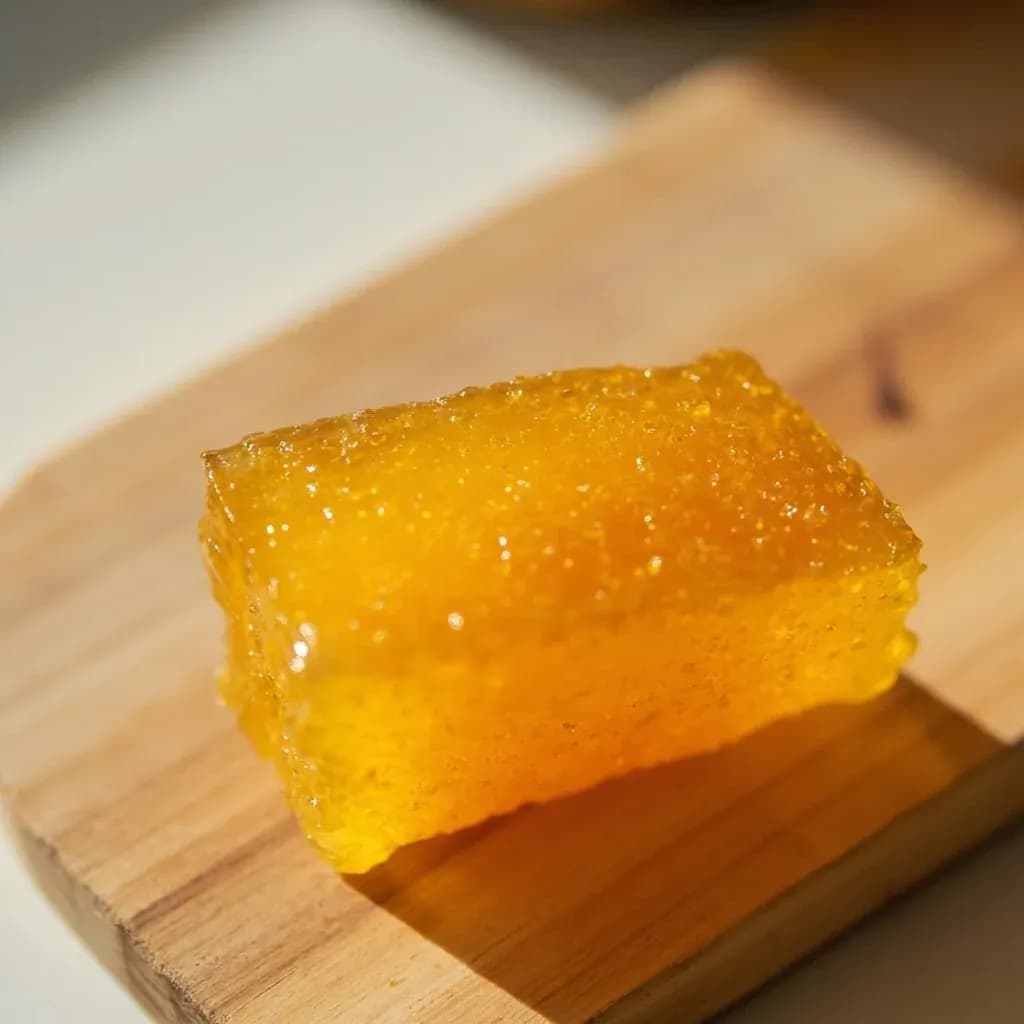
Comb harvesting is the practice of cutting intact beeswax comb — cells still filled with honey — directly from the frame, producing what is sold as cut comb or section comb honey. Unlike extracted honey, where the wax cappings are sliced off and the honey is spun out in a centrifuge before being strained, comb honey preserves the original hexagonal architecture of the bees' work and, with it, the volatile floral aromatics that are often lost when honey is heated, filtered, or pasteurized. For the cook, this is the entire point: comb honey is the most flavorful and most texturally interesting form of honey available, and it doubles as an edible garnish that does not need a plate of its own.
The technique is rooted in beekeeping but ends in the kitchen, and the cook's concerns differ from the beekeeper's. A chef or home cook wants visually clean pieces, even cuts, and the absence of pollen-darkened cells or brood-comb discoloration; they also need to understand the two failure modes — weeping, when under-ripe comb leaks stored honey, and granulation, when long-stored comb crystallizes inside the cells. Handled well, comb honey keeps well for many months and presents beautifully on a cheese board, a dessert plate, or beside a stack of warm biscuits.
The wax is fully edible. Chewing and discarding the wax cappings is traditional — much like chewing gum — but swallowing small amounts is harmless. Because comb honey is almost always served raw and unheated, it retains the single-apiary, single-floral notes that distinguish a particular harvest, which is why pastry chefs and cheesemongers pay a premium for it.
- Difficulty
- Medium
Types & varieties
Traditional format: comb is cut to fit small wooden boxes (4¼" squares), historically sold as a framed, retail-ready unit
Modern format: irregular or uniformly cut pieces of comb placed in plastic clamshells or trays
A piece of cut comb suspended in a jar of extracted liquid honey — comb and extracted honey combined in one package
Round plastic cassette system that forces bees to build comb in pre-formed rings; produces 4 oz rounds
Split cassette that splits apart for harvest; yields a flat, square slice of comb
Larger irregular pieces sold by weight to bakeries, restaurants, and cheesemakers
How to do it
- 1
Confirm the frame is ready to harvest
Lift each frame and check that at least three-quarters of the cells are capped with a thin wax layer. Hold the frame horizontally and give it a firm shake — uncapped honey will spray out; if nothing flies, the comb is dry enough to take.
- 2
Clear the bees from the frame
Use a soft bee brush, a one-way bee escape board installed the day before, or a gentle blower. Avoid smoking the comb heavily; smoke can leave flavor taint and darken the cappings.
- 3
Move frames to a clean, dry cutting area
Set up a sanitized work surface indoors with good light. Have a thin-bladed knife (unwaxed dental floss also works for very clean cuts), a comb-cutting grid, draining rack, parchment or food-grade paper, and packaging trays ready before you start.
- 4
Cut the comb from the frame
Stand the frame upright on a cutting board. With a warm, thin knife, slice down one side of the frame, then across the top and bottom of the comb, peeling it away from the wood in one or two large sheets. Cut in one smooth motion — do not saw or press, which crushes cells and releases honey.
- 5
Portion into retail or kitchen-sized pieces
Lay the comb sheet flat and cut to the size you want. For section packaging, cut squares to fit the container exactly; for cheese-board service, leave larger, irregular pieces roughly 2–4 inches across.
- 6
Drain briefly and inspect
Set cut pieces on a rack over a tray for a few minutes so stray honey drips off. Trim away any pollen cells, dark brood comb, or crushed edges with kitchen scissors.
- 7
Package immediately
Place each piece into a clamshell, plastic tray, or glass jar. For chunk honey, suspend a piece in a jar and fill slowly with extracted liquid honey to avoid trapping air bubbles. Seal the package the same day.
- 8
Freeze to protect against wax moths
Place sealed packages in a freezer at 0°F for 24–48 hours to kill any wax moth eggs, then move to cool, dry storage. Label with the harvest date — comb honey is best used within a year.
Comb honey vs. extracted honey
The two products are not interchangeable in the kitchen. Extracted honey has been uncapped, spun out in a centrifuge, and usually strained and sometimes pasteurized; comb honey is the untouched, in-frame product, packaged as the bees built it. Comb honey therefore keeps more of the volatile aromatic compounds that give a particular floral source its character (clover, tupelo, orange blossom, sourwood), and it adds a chewable wax component that extracted honey does not. The trade-off is cost, fragility, and a shorter practical shelf life — comb honey weeps, granulates, and is vulnerable to wax moth in a way that a sealed jar of extracted honey is not.
Reading a frame before you cut
The single most important skill in comb harvesting is judging ripeness from the frame itself. Three things to look for:
- Capping coverage — at least three-quarters of the cells on both sides should be sealed with a thin wax lid; shiny, flat, slightly domed cappings are ready; open, glistening cells are not.
- The shake test — hold the frame horizontally over the hive and give it a firm downward snap. If liquid honey flies out, the comb is too wet to cut. If nothing comes, the cells are dry enough.
- Cell color — honey-only comb is pale ivory to straw-yellow. Pollen stores show up as bright yellow, orange, or red bands; brood comb is darker brown and should be trimmed away for kitchen use.
Common uses
Tips & pitfalls
- Only harvest frames that are fully capped — any open cells risk fermentation in storage, and the cut comb will weep in the package within days.
- Use a thin, sharp knife (warm or hot) and a light, sawing motion; pressing crushes cells and releases honey that then pools at the bottom of the package.
- Work fast once frames leave the hive — comb honey picks up ambient moisture quickly and begins to weep if it sits uncovered for more than a few minutes.
- Do not refrigerate cut comb — condensation inside the package causes weeping and accelerates granulation of the honey inside the cells.
- Freeze finished packages for 24–48 hours to kill any wax moth eggs before long-term storage; without this step, wax moths can ruin stored comb honey.
- Trim away dark brood-comb or pollen-heavy cells; lighter, honey-only comb looks cleaner on a plate and tastes cleaner, without the stronger pollen and brood notes.
- Granulation over time is natural — gently warming the package (not above ~100°F) returns comb honey to liquid if you want to re-liquefy it for drizzling.
Good to know
- What it produces
- Cut comb honey — hexagonal beeswax cells still filled with honey, lifted from the frame in sheets or sections
- Readiness indicator
- At least 75–80% of cells must be capped with wax; uncapped honey ferments at room temperature
- Moisture threshold
- Honey in comb must be below ~18.6% moisture to remain stable on the shelf
- Section sizes
- Traditional wooden sections are 4¼" × 4¼" (≈1 lb); Ross Rounds ~4 oz; square cassettes ~12 oz
- Yield
- One medium Langstroth frame yields roughly 3–5 lbs of cut comb, depending on cell depth and cut size
- Storage temperature
- Cool, dry room temperature (around 50–60°F is ideal); never refrigerate
- Pest control
- Freezing packaged comb at 0°F for 24–48 hours kills wax moth eggs and larvae
- Shelf life
- Best within 6–12 months; comb honey gradually granulates and may weep over long storage
Also called
Honeycomb Harvesting
Related

Whisk
Beat ingredients smooth and aerated with a looping wire motion

Sift
Pass dry ingredients through mesh to aerate and remove lumps

Strain
Pour through mesh to separate solids from liquid for a smooth result

Filter
Pass liquid through fine material to clarify out the smallest particles

Rice
Press cooked potatoes through small holes for fluffy, lump-free texture

Mash
Crush soft cooked food into a rustic, creamy purée

Grind
Crush food into a coarse to fine texture, from spices to meat

Grate
Shred food into fine bits against a sharp-toothed surface