Transform & Preserve
Fluid Gel Making
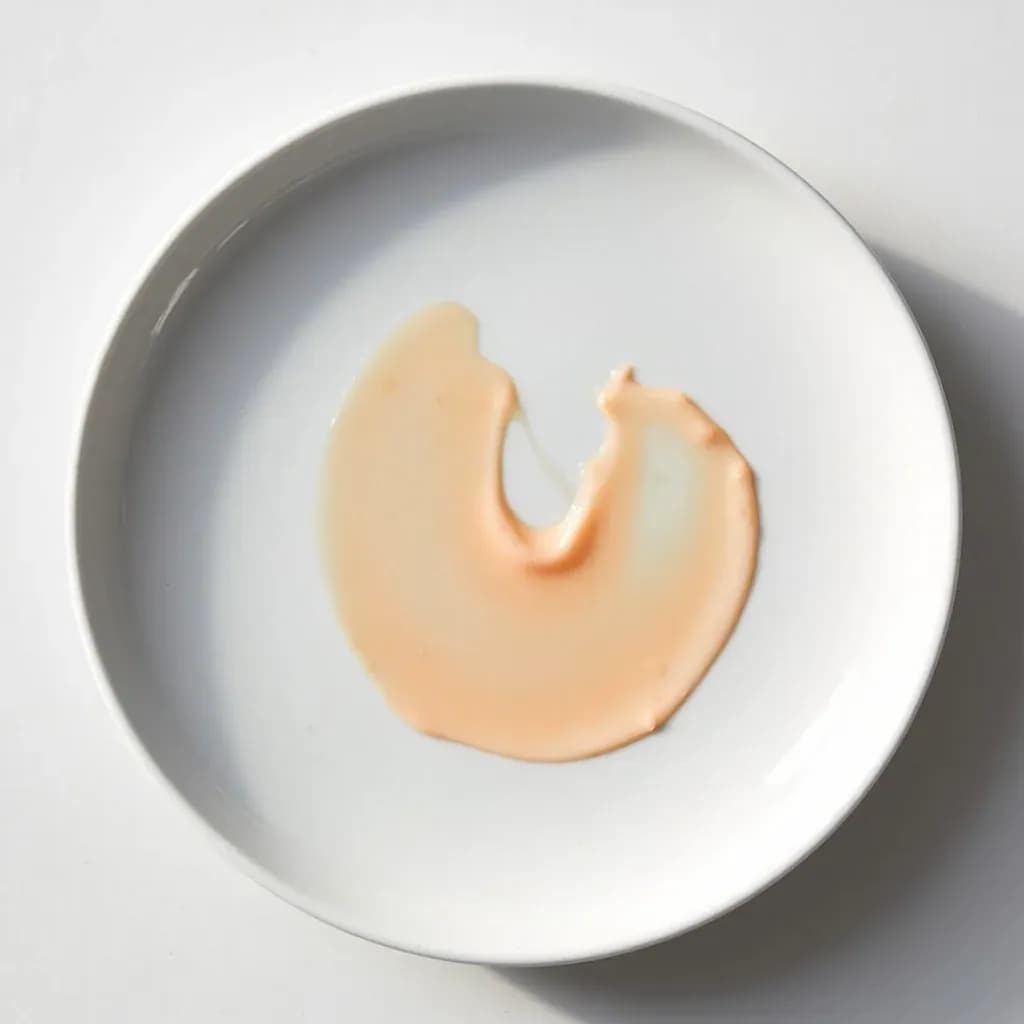
Setting a liquid into a firm gel, then blending it smooth into a pourable, glossy sauce.
Fluid gel making sets a flavored liquid with a gelling agent like agar or gellan, then blends the firm gel into a smooth, pipeable purée that flows under pressure but holds its shape at rest. It gives sauces a glossy body and lets them sit cleanly on a plate without bleeding. Modernist kitchens use fluid gels for vivid sauce swooshes and stable coatings.
A fluid gel is a sauce that thinks it's a solid. The cook gels a flavored liquid into a firm slab, then breaks that slab apart in a blender so the gel becomes a suspension of microscopic, water-locked particles suspended in the very liquid they came from. The result pours like a thin sauce but coats like a purée, and it holds that body on the plate, at room temperature, without weeping or splitting. The technique was codified inside the modernist cuisine movement of the 2000s and has since become standard in restaurants that plate glossy, intensely flavored purées, vinaigrettes, and consommés.
The magic is in the shearing. A whole gel is a continuous polymer network that traps water and behaves like jelly; once that network is chopped into tiny pieces, the pieces stop supporting one another and flow, but each one still carries its payload of water, flavor, and any suspended fat or pulp. The sauce feels rich and substantial in the mouth, yet a fork passes through it easily and it leaves a clean, glossy trail. Because no water has been boiled off, raw fruit, fresh herb, and citrus flavors survive intact, which is why fluid gels are the preferred carrier for purées that would be flattened by reduction.
In practice the technique is forgiving: hydrate a hydrocolloid, heat, pour, chill, blend, season. The precision lives in the dose — too little agent and the slab never sets; too much and the blender produces a paste. Once a cook has a few working ratios for their favorite gelling agent, fluid gels become a daily tool rather than a stunt.
- Difficulty
- Hard
Types & varieties
The workhorse version. Heat the liquid to a boil with 0.5–1.5% agar, pour shallow, chill, and blend. Produces a glossy, brittle gel that shears into a bright, pourable sauce and tolerates being warmed back up on the plate.
Needs a small amount of calcium ion (dairy, calcium chloride, or calcium lactate) to set. Yields an exceptionally clear, neutral-tasting gel that shears into a very glossy fluid; ideal when you don't want agar's faint marine note.
Sets at a higher temperature (around 70 °C) into a soft, elastic gel. Shears into a more spoonable, slightly elastic fluid gel with a satin rather than brittle mouthfeel.
Hot-set only. Hydrate methylcellulose in cold liquid, then blend while warm; the sauce gels as it cools on the plate, giving a warm-to-thick transition that no other fluid gel can deliver.
Shear-thinning fluid gel that sets with calcium. Smooth and elastic in the mouth, particularly well suited to dairy- and milk-based sauces where it complements the protein network.
Combinations such as agar with xanthan, or gellan with locust bean gum, fine-tune gloss, cling, and stability across temperature swings or in liquids that resist a single hydrocolloid.
How to do it
- 1
Choose and weigh the gelling agent
Pick a hydrocolloid matched to the liquid and the desired mouthfeel — agar for a clean, glossy, reheatable result; low acyl gellan for clarity and high-acid liquids; iota carrageenan for dairy; methylcellulose for hot-set sauces. Weigh the agent precisely; even a 0.1% change in dose can move the result from pourable to pasty.
- 2
Hydrate and dissolve
Whisk the gelling agent into the cold flavored liquid to disperse it. Agar and gellan hydrate almost instantly; methylcellulose should hydrate in cold liquid for 20–30 minutes before heating. Bring the dispersion to a full boil for 1–2 minutes with agar, or to roughly 90–95 °C with gellan, whisking, until no graininess or undissolved powder remains against the side of the pan.
- 3
Pour into a shallow mold
Pour the hot liquid into a tray, gastronorm pan, or silicone mold no deeper than about 10 mm. Thin layers set faster and more evenly, which gives a uniform slab that shears cleanly; deep molds hold residual heat and produce a partially set center.
- 4
Set fully and chill
Cool the tray at room temperature until the gel is firm to the touch, then refrigerate for at least 30–60 minutes until the slab is thoroughly cold. A fully set, cold slab shears into glossy particles; a warm or partially set slab will tear and collapse in the blender.
- 5
Break up the gel
Cut the firm slab into rough cubes with a knife or offset spatula and tip them into a high-speed blender or food processor. Pulse to break them up, then blend on high for 30 seconds to 2 minutes, until the gel becomes a glossy, pourable sauce that ribbons off a spoon.
- 6
Adjust and rest
If the sauce is too thick, blend in a small amount of the original base liquid; if it is too thin, the slab was under-gelled and the batch must be remade with a slightly higher dose of hydrocolloid. Transfer the blended fluid gel to a container and chill for 30–60 minutes so the sheared network relaxes to its final viscosity.
- 7
Strain and season to taste
For a perfectly polished, lump-free sauce, pass the fluid gel through a fine tamis or chinois, pressing gently with a spatula. Taste and adjust with salt, sugar, or acid — these will not damage the texture but will very slightly thin the gel.
Choosing the Right Hydrocolloid
The gelling agent dictates the mouthfeel, the temperature behavior, and the flavor compatibility of the finished sauce. Agar is the safest starting point: it dissolves easily, sets reliably, and produces a clean, glossy fluid gel that reheats well, which is why it is the agent used in most published recipes. Low acyl gellan is the choice when absolute clarity and a neutral taste are required, or when the liquid is acidic enough to weaken agar. Methylcellulose is reserved for warm applications where the cook wants a sauce to thicken as it crosses from kitchen to table. Iota carrageenan and high acyl gellan are specialty options, used mainly for dairy sauces and elastic body respectively.
- Use agar for fruit purées, stocks, herb infusions, and any liquid you might want to reheat.
- Switch to low acyl gellan when the liquid is very acidic (citrus, vinegar) or when you need a clear, almost invisible sauce.
- Use methylcellulose only when the fluid gel will be served hot, so the cooling-driven set is part of the presentation.
- Add a small amount of calcium (calcium lactate or chloride) whenever the recipe calls for low acyl gellan and the liquid does not already contain dairy or other calcium.
Why the Sheared Gel Behaves the Way It Does
A whole gel holds its shape because its polymer chains are linked into a single, continuous network that locks up the water. Blending slices that network into millions of tiny fragments, each still holding its own captive water and flavor. The fragments no longer support one another, so the sauce flows; but the moment the sauce lands on a plate or a piece of protein, those fragments stop moving, stack on one another, and hold a thick coating. This is the same physics behind a thickener like xanthan, but with the bonus that the sheared gel pieces also carry volatile aromatics in their trapped water, so flavor reads as more intense than a plain thin sauce of the same concentration.
- The fluid gel 'ribbons' off a spoon and holds a brief trail — that trail is the suspended gel network relaxing.
- It holds its body on a plate far better than a jus or vinaigrette of the same flavor intensity.
- A 30–60 minute rest in the refrigerator after blending lets the sheared network recover slightly, thickening the sauce to its final, stable body.
- Aggressive, prolonged blending can over-shear the network in some gellan and agar gels, breaking them back down into a thin liquid — blend in short pulses and check.
Common uses
Tips & pitfalls
- Start at the low end of the gelling-agent range and work upward in 0.1% steps. Over-gelling produces a thick purée or paste, not a pourable fluid gel, and the only fix is to remake the batch with less agent or to dilute it heavily.
- Pour into a shallow tray no deeper than 10 mm. Deep molds take longer to set, trap residual heat, and frequently leave a soft center that ruins the shearing step.
- Make sure the slab is fully set and thoroughly cold before blending. A warm, partially set gel collapses into a thin, watery liquid rather than breaking into the suspended particles that give a fluid gel its body.
- Use a high-speed blender, and finish by passing the fluid gel through a fine tamis. This is what produces the polished, glossy, restaurant-quality result rather than a slightly grainy one.
- Weigh liquids and hydrocolloid rather than measuring by volume. The dose window is narrow, and a tablespoon too much powder is the difference between a sauce and a rubber.
- Do not over-blend. Some gellan and agar gels, blended too long or too hard, lose their sheared network and revert to a thin liquid. Pulse first, then blend in short bursts, checking consistency frequently.
- Very acidic, very alcoholic, or very sugary liquids weaken agar. If a fluid gel refuses to set, either increase the agar dose, switch to low acyl gellan, or dilute the liquid slightly before gelling.
- Do not freeze fluid gels. Ice crystals shred the sheared network, and the gel thaws weepy, separated, and broken. Refrigerate in an airtight container for up to five days instead.
Good to know
- Technique type
- Hot-set or cold-set gelling followed by mechanical shearing
- Primary gelling agents
- Agar agar, gellan gum (low and high acyl), iota carrageenan, methylcellulose
- Typical agar concentration
- 0.5–1.5% by weight of liquid
- Typical gellan concentration
- 0.1–0.5% by weight of liquid
- Agar setting temperature
- Sets at roughly 32–40 °C; remelts at 85–95 °C, so it tolerates gentle reheating
- Equipment
- Saucepan, shallow tray or silicone mold, high-speed blender, fine tamis (optional)
- Yield
- Essentially 1:1 with the original flavored liquid; no concentration from reduction
- Storage
- Up to 5 days refrigerated in an airtight container; do not freeze
- Origin
- Codified within modernist cuisine in the 2000s; popularized by Modernist Cuisine and used at The Fat Duck, elBulli, and wd~50
- Also known as
- Sheared gel, shear-thinning gel, gelled fluid
Also called
Fluid Gels · Sheared Gel
Related

Confit
Cook slowly submerged in fat for silky tenderness and keeping

Cure
Draw out moisture with salt and time to preserve and concentrate

Pickle
Steep in acidic brine for bright, tangy, crunchy preservation

Ferment
Let friendly microbes transform food into tangy, complex flavor

Marinate
Soak in a seasoned mix to flavor and tenderize before cooking

Brine
Soak in salt water so meat stays juicy and seasoned throughout

Dehydrate
Slowly dry out moisture to concentrate flavor and extend shelf life

Cold-Smoke
Perfume cured food with smoke without cooking it through