Water & Steam
Gongfu Cha (Short High-Leaf Steeps)
Chinese tea method using a high leaf-to-water ratio and many short steeps to draw out evolving flavor.
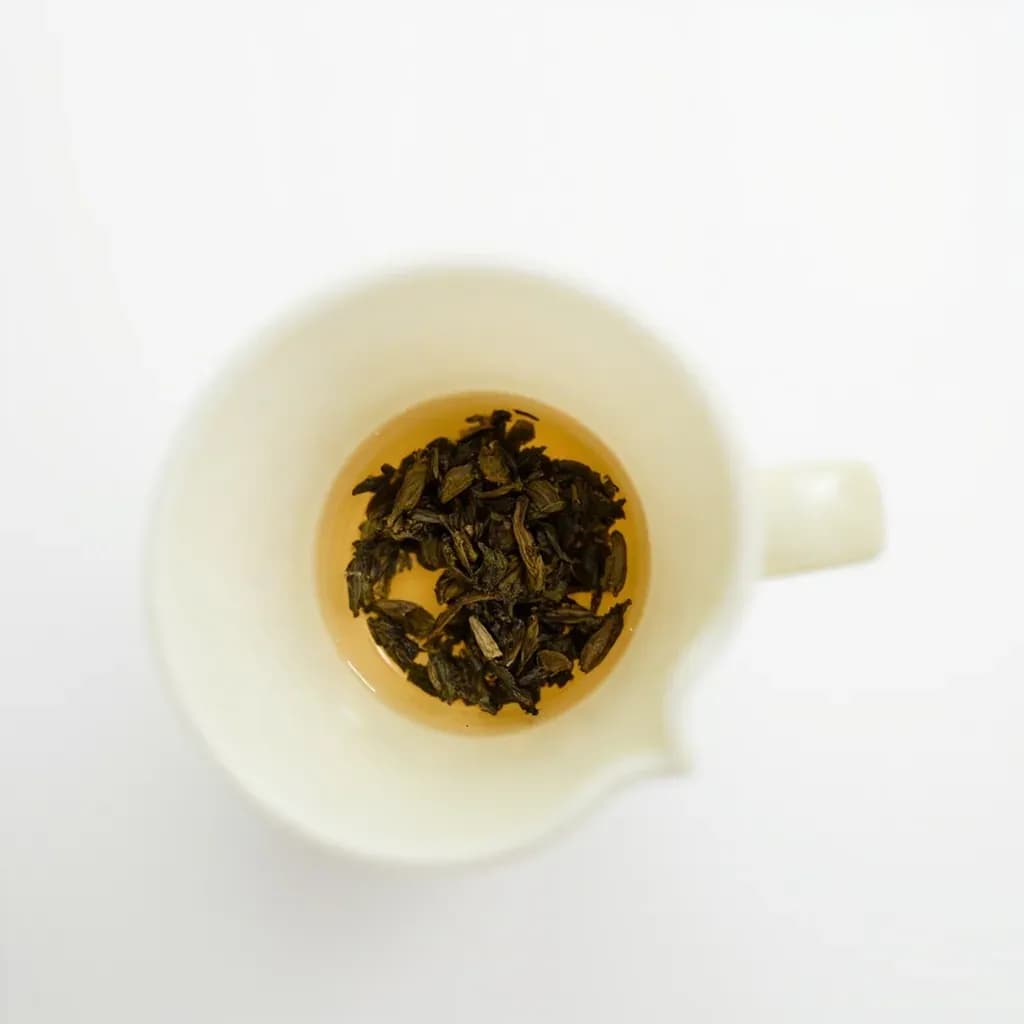
Gongfu cha brews tea with a large amount of leaf relative to a small vessel, steeping for short bursts of seconds and refilling many times. Each infusion reveals a different facet of the tea, so a single batch of leaves yields numerous cups. The method, central to Chinese tea culture, emphasizes precise water temperature, timing and attentive, repeated pours.
Gongfu cha (功夫茶, "tea made with effort") is a southern Chinese brewing method built on a deliberately dense ratio: a small vessel is packed with leaf, then flashed with hot water for a few seconds at a time, six to fifteen or more times in a sitting. Each steep yields a tiny cup of intensely flavored liquor, and as the leaves open and relax across rounds the character of the tea shifts noticeably — bright and aromatic early, deeper and rounder by the middle steeps, often softer and more mineral by the end. The point is not strength but resolution: a tea that would taste flat in a big Western pot reveals layered aromatics when met, steep by steep, on its own terms.
The method rose out of two regional tea cultures — Chaozhou (Teochew) in Guangdong and the Wuyi Mountains in northern Fujian — and traveled with the Chinese diaspora through the 19th and 20th centuries, which is why a gongfu setup today often pairs a Yixing zisha pot or porcelain gaiwan with a fairness pitcher (cha hai) and a tray (cha pan) sized to catch every drop of rinse water and every long pour. Equipment matters less than discipline: vessels are pre-warmed, infusions are decanted completely, and timing is adjusted in small increments rather than by piling in more leaf. The leaves themselves do the work; the brewer's job is to stay out of their way.
For the right tea — whole-leaf, twisted or rolled oolong, sheng or shou pu'er, a good yancha, an aged shoumei — gongfu is the most generous brewing method there is, because one session can run twenty to sixty minutes and give a clear picture of how the leaf was grown, rolled, and stored. For the wrong tea — broken grades, fannings, anything meant for a mug — there is simply nothing to unfold, and the method will only produce over-stewed bitterness.
- Difficulty
- Medium
Types & varieties
Built around Phoenix dancong oolongs, brewed in tiny Yixing pots or porcelain; the aroma cup (wen xiang bei) is central, and the first rinse is nearly mandatory.
Focused on yancha (rock oolong) from the Wuyi Mountains, traditionally in small unglazed zisha pots; the goal is to draw out yan yun, the "rock rhyme" that unfolds over many short steeps.
Used for both sheng (raw) and shou (ripe) pu'er; always opens with a quick wake-up rinse, then a long series of flash steeps that reveal how the cake will age.
Applied to aged shoumei, gongmei, and silver needle in a gaiwan at slightly lower temperatures; slower, more gradual steeps prized for honeyed, dried-fruit character.
Used in Fujian and Yunnan for zhenghe/congou and dianhong; the high leaf ratio brings out sweetness without the astringency a long Western steep would produce.
How to do it
- 1
Warm the vessels (cheng qing)
Pour hot water into the gaiwan or pot, swirl, then pour that water into the cha hai and from the cha hai into each cup. Discard. Every piece of the set should be hot before leaf touches water; cold porcelain will drop the steep temperature by 10 °C or more and mute the first round.
- 2
Measure the leaf
Aim for 5–8 g per 100 mL of vessel. Rolled or twisted leaves (dancong, wuyi yancha, sheng pu'er) can sit at the generous end; small-bud teas like silver needle need a touch less; broken or fannings grades should not be used at all.
- 3
Wake the leaf — optional rinse
For pu'er, aged white, and tightly rolled oolong, cover the leaf with hot water, swirl once, and decant after 1–3 seconds. Discard this infusion. Skip the rinse for delicate greens, fresh whites, and lightly oxidized oolongs — they have nothing to wash off and will simply lose their first round.
- 4
First infusion
Fill the vessel, cap it, and steep 5–10 seconds for rolled oolong or dancong, 8–15 seconds for sheng pu'er, 5–8 seconds for shou pu'er, 10–15 seconds for yancha. Pour into the cha hai, then into cups; do not linger in the pot.
- 5
Subsequent infusions
Add 3–5 seconds per round to start, then adjust by taste. A good dancong and a serious yancha will stretch past ten steeps; sheng pu'er often gives 12–20; shou pu'er 10–15. Once you know a tea, you can step in increments as small as 2 seconds.
- 6
Smell and adjust
Between rounds, smell the underside of the gaiwan lid, the empty cha hai, and the warm cups. Aroma changes faster than the liquor does, and the nose is usually right about whether the next steep should be longer, shorter, or held steady.
- 7
End the session
Stop when the leaves are spent — flavor goes thin, watery, grassy, or simply empty. Unfold a few spent leaves in the lid: evenness of brew, intactness of the bud, and color of the wet leaf tell you more about the tea than the last cup did.
- 8
Tasting order in a group
Drink from the same cup if you are comparing sessions. In a group, sip at the same pace so the next round is fair to everyone; the cha hai exists precisely so that no one's cup is stronger than another's.
Why a small vessel and a dense pack of leaf
Two things happen when you shrink the pot and double the leaf. First, the water-to-leaf contact is so intimate that even a five-second steep extracts a meaningful share of the leaf's soluble compounds, so flavor arrives fast and concentrated. Second, because the brew is short and the leaves are barely spent after each round, they have somewhere to go — each infusion tastes slightly different, and you can read the tea across the session instead of getting it all in one mug. A 150 mL gaiwan with 7 g of dancong is the classic shape of the problem: dense enough to give up its aroma in seconds, small enough to decant cleanly, and tight enough that water never cools much before it is poured.
- High leaf ratio = concentrated, fast extraction per round
- Small vessel = quick, complete decants between rounds
- Many short steeps = a tasting curve instead of one flat cup
Choosing a vessel
Two vessels cover nearly all of gongfu cha: the porcelain gaiwan (a lidded bowl) and the Yixing zisha teapot. Gaiwans are neutral and do not retain aroma, so the same bowl can be used for green, white, oolong, and pu'er without cross-contamination. Yixing pots are unglazed and porous; over months of use they season with the oils and aromatics of one tea category, which is why a serious gongfu drinker keeps a separate pot per family — one for sheng pu'er, one for shou, one for dancong, one for yancha. The trade-off is real: a well-seasoned zisha pot rounds a tea in a way porcelain cannot, but it is the wrong vessel the moment you switch categories.
- Gaiwan: neutral, versatile, the right default for learning and for delicate teas
- Yixing zisha: dedicated to one tea category, develops seasoning over time
- Glass or thin porcelain pots are fine for green tea and for tasting where neutrality matters
Common uses
Tips & pitfalls
- Always warm every vessel — gaiwan, pot, cha hai, and cups — before leaf goes in. Cold porcelain is the most common reason a first infusion tastes flat.
- Decant fully every round. Even a few seconds of lingering water over the leaf will pull bitterness and blunt the next cup.
- Use a cha hai (fairness pitcher) whenever you are pouring for more than one person; without it, the first cup is weak and the last is harsh.
- Smell the lid and the empty pitcher between rounds — the nose reads the tea one or two steeps ahead of the palate.
- Match vessel to tea: dedicate unglazed Yixing pots to a single category (one for sheng pu'er, one for dancong, one for yancha) and use porcelain or gaiwan for everything else.
- If a tea tastes weak, lengthen the steep before adding more leaf. Dumping in extra leaf to fix timing is how sessions turn harsh by the fourth round.
- Use filtered water with low mineral content; hard water mutes aroma and gives gongfu-style tea a chalky, flattened finish.
- A tea boat (cha pan) is functional, not decorative — over a 30–60 minute session it catches rinse water, overflowing pours, and hot spills without scorching the table.
Good to know
- Chinese name
- 功夫茶 (gōngfu chá), literally "tea made with effort or skill"
- Origin
- Chaozhou in Guangdong and the Wuyi Mountains in Fujian; spread by overseas Chinese communities
- Leaf-to-water ratio
- Roughly 1:15 to 1:25 (about 5–8 g per 100 mL), several times denser than Western brewing
- Vessel size
- Small pot or gaiwan, commonly 100–200 mL; tasting cups of 30–60 mL
- First steep
- 5–20 seconds for most whole-leaf teas
- Steep count
- Typically 6–15+ infusions per session
- Water temperature
- 70–80 °C for green and light white; 85–95 °C for most oolong and white; 95–100 °C for black and pu'er
- Session length
- 20–60+ minutes for a complete session
Also called
gongfu cha · kung fu tea · gongfu brewing
Related

Boil
Cook in vigorously bubbling liquid at full rolling heat

Simmer
Hold liquid at a gentle shimmer for tender, unhurried cooking

Poach
Cook gently in barely-trembling liquid for silky, tender results

Steam
Cook in rising vapor to keep color, nutrients, and shape intact

Blanch
Plunge briefly in boiling water, then shock cold to lock color

Braise
Sear, then cook slow in a little liquid until fall-apart tender

Stew
Simmer bite-sized pieces fully submerged into a rich, unified pot

Sous-Vide
Seal and cook in precise warm water for edge-to-edge doneness