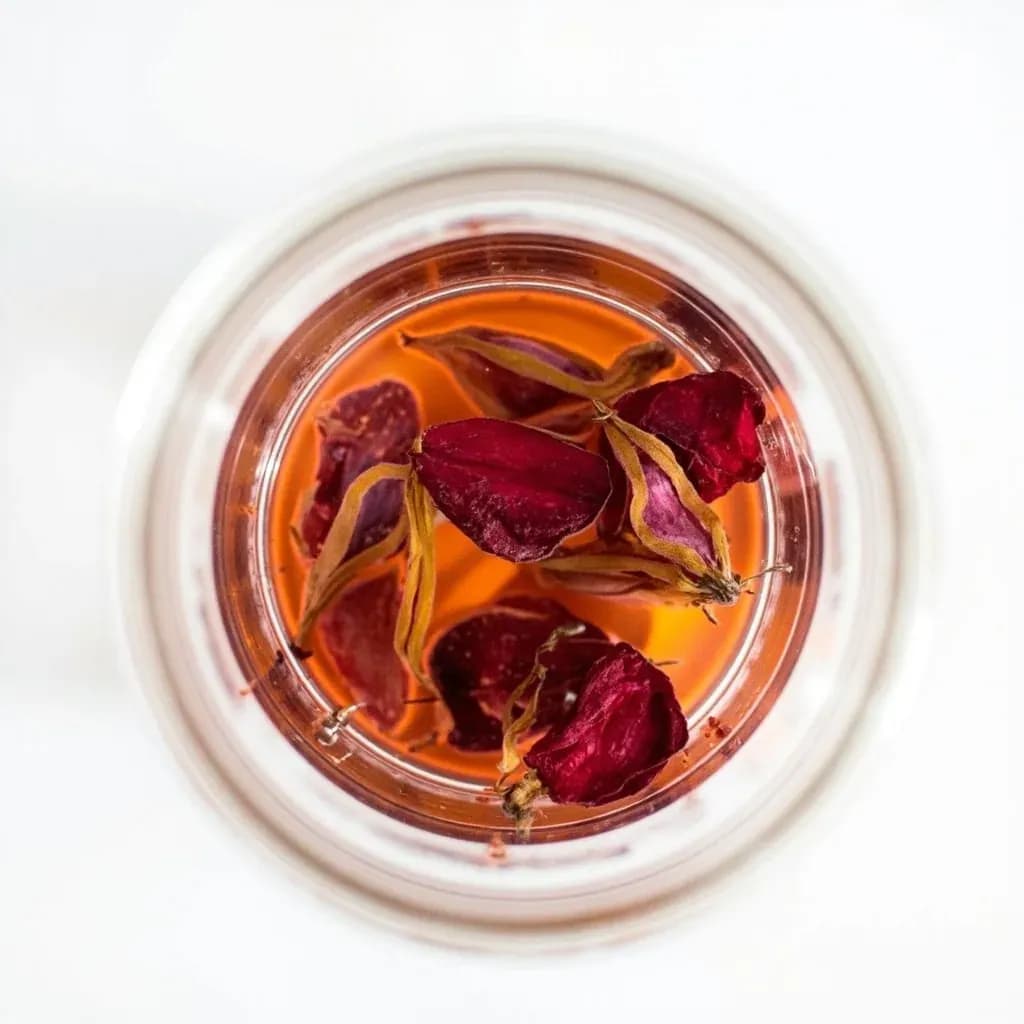
Transform & Preserve
Cold Steeping
Soaking ingredients in cold water or liquid over time to extract color, flavor, and tannins gently.
Cold steeping infuses water or another liquid with flavor by soaking ingredients without heat, often for hours. It is used for drinks like bissap (hibiscus) and to draw acid and pulp from tamarind, yielding smoother, less bitter extractions than boiling. Cold extraction pulls fewer harsh tannins, so the result is rounder and more aromatic. Time replaces temperature as the working force.
Cold steeping is extraction by patient contact rather than by heat. An ingredient — coffee, tea, botanicals, vanilla beans, citrus peel, dried chiles — is held in cold water or cool alcohol long enough for soluble compounds to migrate into the liquid, then strained. Because the solvent never climbs above roughly 20°C, the extraction is selective: sugars, color bodies, salts, and softer flavor molecules dissolve readily, while the harsher tannins, bitter caffeine peaks, and aggressive acids that hot water pulls out so aggressively stay largely behind. The result is a rounder, sweeter, less astringent product that often tastes more like the ingredient's mid-register than its full shout.
The trade-off is time. A French press finishes in four minutes; a cold steep in the refrigerator takes 12 to 18 hours, and a vanilla extract closer to two months. That delay is the technique's defining characteristic and the reason it exists at all — you cannot replicate cold-steep flavor with a fast hot method, no matter how carefully you brew. In professional kitchens and home pantries alike, the technique shows up wherever heat would either scorch delicate aromatics (rose, elderflower, fresh herbs) or simply taste wrong (iced coffee, sun-tea-style tisanes, bar tinctures). Treat it as slow cooking's quieter cousin: nothing happens for hours, and then a finished ingredient is sitting in your refrigerator.
- Difficulty
- Easy
Types & varieties
Coarse grounds steeped in cold water 12–24 h, then strained; produces a concentrate that is diluted for serving.
Ice water dripped very slowly (1–2 drops per second) through a column of grounds; cleaner, brighter, and more floral than immersion cold brew.
Loose or bagged tea steeped 4–12 h in cold water; the Japanese standard for green tea and gyokuro.
Loose tea set in a jar on a sunny windowsill 2–4 h; uses radiant warmth rather than refrigeration and carries a higher food-safety risk.
Overnight refrigerator steep, 6–12 h; the standard safe, repeatable home method for iced tea.
Botanicals, spices, or fruit macerated in 40–60% ABV spirit for weeks to months, then strained.
Bittering agents, spices, and aromatics cold-steeped in high-proof alcohol, then strained and balanced with glycerin or sugar.
Split vanilla beans macerated in vodka or rum 4–8 weeks; a true cold steep with no heat required.
Bones or aromatics soaked in cold water for hours before a brief simmer; draws out proteins gently for a clearer consommé-style result.
How to do it
- 1
Choose the ingredient and prepare it
Decide what you are extracting and prep it for the liquid. Coarsely grind coffee for concentrate, measure loose leaf tea, split vanilla beans lengthwise, bruise fresh herbs, lightly crack whole spices, and slice citrus peel thinly. The cold solvent cannot force its way into intact material the way hot water can, so cutting, crushing, or splitting is essential for full extraction.
- 2
Measure by weight, not volume
Weigh the ingredient against cold filtered water. Use a 1:4 coffee-to-water ratio for a concentrate you will dilute later, 1–2 g of tea per 250 ml of water, and roughly 25 g of botanicals per 500 ml of spirit for a tincture. A kitchen scale eliminates the guesswork that ruins more cold steeps than any other factor.
- 3
Combine in a clean vessel
Place the ingredient in a glass jar, French press, or infusion bottle. Pour over cold filtered water (or cool spirit) and stir gently to fully saturate. Make sure every ground, leaf, or pod is submerged — dry pockets of material will not extract.
- 4
Cover and refrigerate
Seal the vessel and set it in the refrigerator at 4°C. For alcohol infusions above 35% ABV, a cool dark pantry is acceptable and actually preferred (cold temperatures can slow maceration). Skip the sunny windowsill for any food steep longer than four hours; sun tea is the lone exception and should still be consumed within eight hours.
- 5
Steep for the right time
Green tea 4–6 h, oolong 6–10 h, black tea 8–12 h, coffee 12–18 h, dried herbs and citrus peels 24–48 h, vanilla 4–8 weeks, bitters and tinctures 2–4 weeks. Taste a small sample at the low end of the range; longer is not automatically better, and over-steeped cold brew turns woody and flat.
- 6
Strain thoroughly
Pour through a fine-mesh strainer, then pass the liquid through cheesecloth or a paper coffee filter for a clean, sediment-free result. For tinctures, decant after solids settle before filtering. Squeeze gently — pressing grounds or herbs hard will push bitter fines and chlorophyll through the cloth.
- 7
Dilute, bottle, and store
Cut a coffee concentrate with water, milk, or oat milk 1:1 to taste. Bottle tea in a sealed jar, tinctures and vanilla extract in dark glass with a tight cap. Refrigerate finished water-based products and use within 1–2 weeks (coffee) or 3–5 days (tea); high-proof alcohol infusions keep 6 months or longer in a cool dark place.
Why cold pulls a different flavor
Heat and time are not interchangeable in extraction. Hot water rushes past cell walls and yanks out a wide spectrum of compounds at once, including the catechins and chlorogenic acid derivatives responsible for bitterness, sharpness, and the dry pucker at the back of the palate. Cold water moves much more slowly, and slower solubility favors the larger sugar and color molecules first, leaving many of the harsher polyphenols largely in the leaf or bean. The volatile top notes — the floral lift in a jasmine tea, the bright citrus oil in a peel infusion — are also heat-sensitive and partly evaporate or degrade in a hot steep; cold steeping preserves more of them when the time is right. The net effect, depending on the ingredient, is a brew that tastes sweeter, fuller, and sometimes almost tea-like where coffee is concerned.
- Bitter and astringent compounds are suppressed relative to hot extraction.
- Aromatic top notes are preserved rather than driven off.
- Color is often more vivid and stable (deeper amber in tea, almost syrupy brown in coffee).
- Body feels heavier on the tongue because dissolved sugars, polysaccharides, and other dissolved solids are present in greater proportion to acid.
Food safety and storage
Cold steeps never reach pasteurizing temperatures, so anything water-based deserves the same care as a fresh-squeezed juice. The biggest mistake is leaving a steep at room temperature for 24 hours thinking that 'cold' means safe — the water is cold to the touch but not cold enough to stop bacterial growth. Water-based brews should be refrigerated from the first hour, strained promptly at the end of steeping, and discarded if they smell sour, turn cloudy after bottling, or develop any fizz. High-proof alcohol infusions (above 35% ABV / 70 proof) are an exception: the alcohol itself is the preservative, and these can sit in a cool, dark pantry for months.
Common uses
Tips & pitfalls
- Use filtered water; chlorine and heavy minerals mute cold extraction and leave the finished product tasting flat.
- Grind coffee coarse — fine grinds over-extract in cold water just as they do in hot, and they silt the final cup.
- Refrigerate, never counter-brew; cold temperatures slow but do not stop microbial growth, and a 24-hour room-temperature steep is a real food-safety risk.
- Filter twice — once through a fine mesh, once through cheesecloth or paper — for a clean, sediment-free result.
- Dilute coffee concentrate, typically 1:1 with water or milk; undiluted, it is harsh and over-caffeinated.
- Time it carefully: green tea 4–6 h, oolong 6–10 h, black tea 8–12 h, coffee 12–18 h. Over-steeped cold brew turns woody, not stronger.
- Cover the vessel; uncovered steeps absorb fridge odors and lose aromatics to oxidation.
- Reuse the spent grounds: cold-brewed coffee grounds can be re-steeped for a weaker second batch, or dried and folded into brownies, dry rubs, or a compost bin.
- For alcohol infusions, stay at or above 35% ABV (70 proof) for shelf stability; anything weaker must be refrigerated and used within a few days.
- Label every jar with the start date. A forgotten back-of-fridge infusion that has run three weeks too long is a regular cold-steeping casualty.
Good to know
- Temperature range
- 4–20°C (39–68°F); typically refrigerated (≈4°C) for food safety, or cool pantry for spirits above 35% ABV.
- Typical duration
- Tea 4–12 h; coffee 12–24 h; herbal tinctures 2–6 weeks; vanilla extract 4–8 weeks; cocktail infusions 24 h to 2 weeks.
- Coffee ratio (immersion)
- 1 part coarsely ground coffee to 4–8 parts water by weight; a 1:4 concentrate is usually cut 1:1 with water or milk to serve.
- Tea ratio
- Roughly 1–2 g loose tea (or one bag) per 200–250 ml cold water; longer for green, longest for black and pu'er.
- Grind (coffee)
- Coarse, similar to French press; fine grinds over-extract and turn the brew muddy and silty.
- Yield and shelf life
- Coffee concentrate keeps 1–2 weeks refrigerated; tea 3–5 days; alcohol-based infusions 6+ months in a cool dark place.
- Flavor profile vs. hot
- Smoother, less bitter and astringent; lower perceived acidity; rounder body; fewer volatile top notes.
- Caffeine
- Per ml of finished cup, cold brew typically contains more caffeine than hot drip, though concentrates are usually diluted 1:1 before drinking.
Also called
Cold Steeping (Bissap / Tamarind) · Cold Infusion
Dishes that rely on it

Related

Confit
Cook slowly submerged in fat for silky tenderness and keeping

Cure
Draw out moisture with salt and time to preserve and concentrate

Pickle
Steep in acidic brine for bright, tangy, crunchy preservation

Ferment
Let friendly microbes transform food into tangy, complex flavor

Marinate
Soak in a seasoned mix to flavor and tenderize before cooking

Brine
Soak in salt water so meat stays juicy and seasoned throughout

Dehydrate
Slowly dry out moisture to concentrate flavor and extend shelf life

Cold-Smoke
Perfume cured food with smoke without cooking it through