Transform & Preserve
Flavor Infusion
Steeping aromatics in a liquid or fat so their flavor transfers into it.
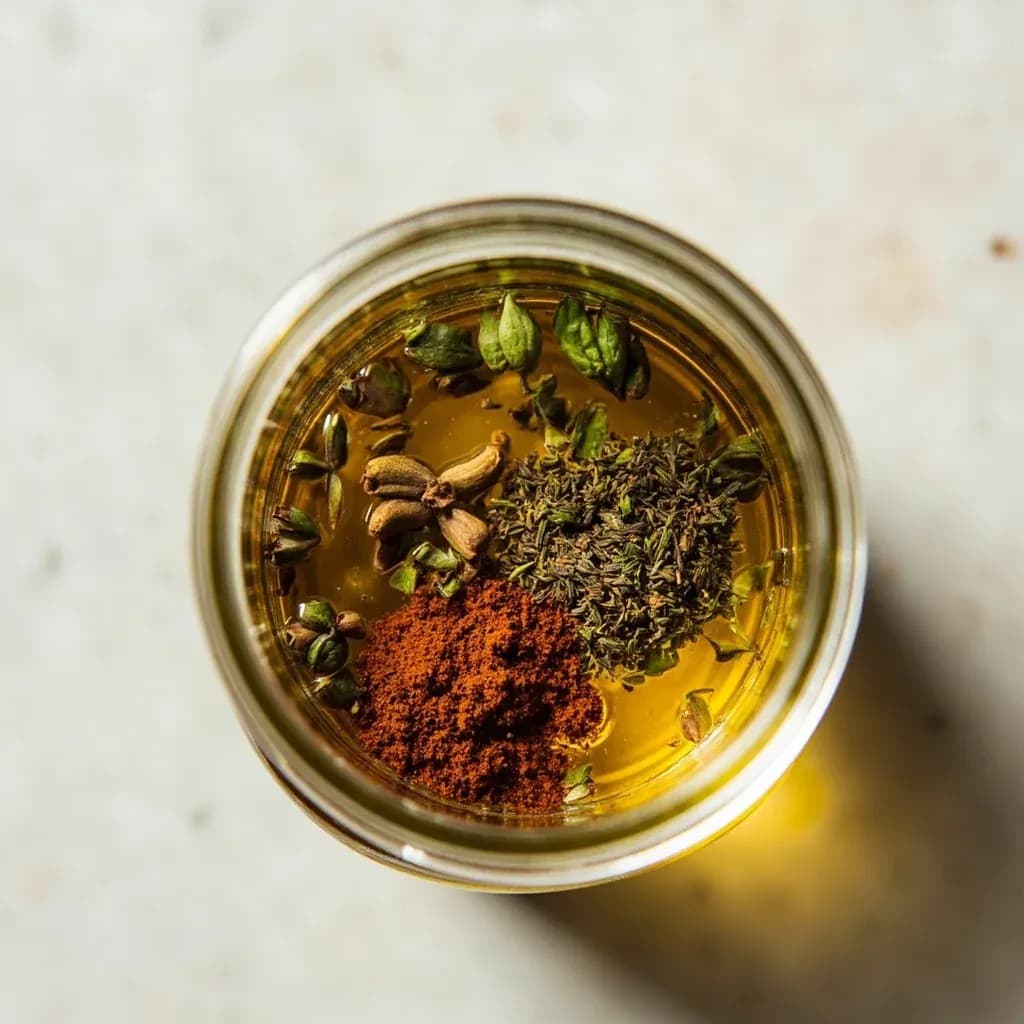
Infusing extracts flavor and aroma from herbs, spices, tea, or other aromatics by steeping them in a warm or cold liquid or fat until their compounds dissolve into the medium. It produces flavored oils, syrups, broths, and spirits, with hot infusion working fast and cold infusion giving a gentler, cleaner taste over hours. The infused aromatics are then strained out, leaving the carrier liquid carrying their essence.
Flavor infusion is the deliberate transfer of aromatic compounds from a solid ingredient into a surrounding liquid or fat. What makes it worth thinking about as its own technique is that the transfer is governed by three variables — time, temperature, and the surface area of the aromatic — and that the choice of solvent determines which compounds actually move. Water pulls water-soluble notes (tannins, sugars, certain acids); fat pulls fat-soluble ones (terpenes, capsaicin, many essential oils); alcohol pulls a wide spectrum including resins and alkaloids. Once you accept that simple framework, almost every decision in a stock, a tisane, a compound butter, or a bar infusion stops being guesswork.
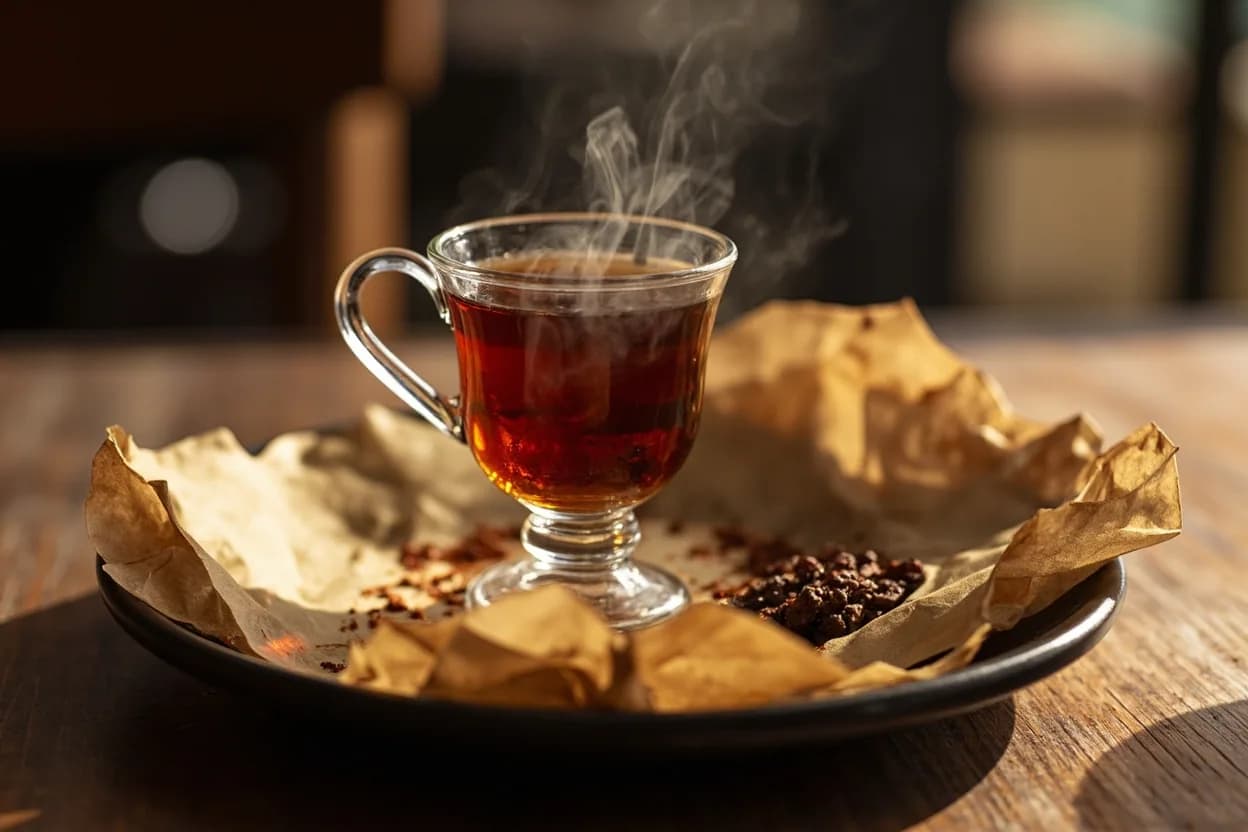
The technique is also one of the oldest and most universal. A cup of tea is an infusion. A pho broth — charred onion, ginger, star anise, cinnamon, and cloves steeped for hours in spiced stock — is an infusion. Earl Grey is black tea infused with bergamot oil; masala chai is a simultaneous infusion of spices, tea, and milk. Whether you are a home cook steeping lemon zest in cream for panna cotta or a bartender fat-washing bourbon with bacon, you are running the same basic operation, just at different scales and with different solvents.
The practical payoff is control. By calibrating time, temperature, and solvent, a cook can move a flavor from a shy background note to a clear, focused finish — and just as importantly, can avoid the failure modes: bitter tea, blackened basil oil, muddy vanilla extract, or the genuinely dangerous garlic-in-oil that supports botulism.
- Difficulty
- Easy
Types & varieties
Aromatic steeped in cold liquid (water, milk, or alcohol) for hours to days. Cleaner, less bitter, more delicate. Examples: cold-brew coffee, cold-steeped tisanes, limoncello, many herbal tinctures.
Aromatic steeped in heated liquid. Faster extraction with the risk of bitterness. Includes tea, broths, stocks, mulled wine, and chai.
Aromatics steeped in warm butter, ghee, olive oil, coconut oil, or rendered animal fats. Best for fat-soluble flavors — chilis, woody herbs, garlic, saffron, curry leaves, citrus zest. Compound butters (maître d'hôtel) are a centuries-old form of fat infusion.
A specialized fat infusion using liquid cooking oils, held below about 194°F / 90°C for delicate herbs to preserve color and avoid a cooked or grassy taste. Can also be done cold over many hours.
Aromatics macerated in spirits or high-proof alcohol. Shelf-stable; common for vanilla extract, bitters, limoncello, and medicinal tinctures.
Aromatics steeped in vinegar. Acidic and self-preserving; the basis of flavored vinegars (tarragon, raspberry, chili) and shrub concentrates.
Aromatic (often rendered bacon, butter, coconut, or sesame oil) melted into warm spirit, then frozen so the solid fat can be skimmed off. Leaves the spirit carrying fat-soluble flavor without greasiness. Popularized in modern bar programs around 2007.
Aromatic sealed with liquid or fat in a vacuum bag and held at a precise temperature (typically 131–158°F / 55–70°C) for 1 to 4 hours. Excellent control, no evaporation loss, and aromatics finish into the cooking liquid.
Aromatic and liquid placed under vacuum: trapped air in plant tissue expands and escapes, then when the vacuum is released, liquid rushes into the cells. Infusions complete in minutes. A modernist technique associated with the El Bulli and Pierre Gagnaire labs in the early-to-mid 2000s.
Hot water forced through compacted grounds under high pressure. A rapid, concentrated form of infusion.
Cold or hot smoke absorbed into a liquid, fat, or salt. Transfers smoke's phenolic and carbonyl compounds into the carrier; the mechanism is surface deposition rather than solvent extraction, which is why some references treat smoking as a separate technique.
How to do it
- 1
Match the solvent to the aromatic
Decide which compounds you want to extract. Use water, milk, or stock for vegetal, tannic, or floral notes; oil, butter, or rendered fat for herbs, chilis, citrus, and most spices; high-proof alcohol for resins, vanilla, and citrus peel; vinegar for sharp, preserved infusions where acidity is part of the flavor.
- 2
Prepare the aromatic
Bruise leafy herbs by slapping them between your palms or pressing with the back of a knife. Crack or coarsely crush whole spices and toast them briefly in a dry pan to wake up the volatile oils. Zest citrus with a microplane, taking care to leave the white pith behind. Slice roots, garlic, and ginger thin. Grind coffee or tea to a consistent size appropriate to the time you have available.
- 3
Heat the solvent to the correct temperature
Bring water or stock to a simmer (185–205°F / 85–96°C) for broth-style infusions. For tea, match water to leaf type — about 175°F / 80°C for green and white, 205°F / 96°C for black and herbal. For oil and butter, warm gently to 130–170°F / 55–77°C; never fry delicate herbs unless you are intentionally crisping them.
- 4
Combine and hold
Submerge the aromatic fully, weighting it with a small plate or lid if it floats. Hold the target temperature for the right window: 3 to 5 minutes for delicate green tea, 20 to 30 minutes for broths, 1 to 4 hours for sous vide fat infusions, 4 to 24 hours for cold steeps, and 1 to 6 weeks for some alcohol tinctures.
- 5
Strain and clarify
Pour through a fine-mesh strainer, then through a chinois or a coffee filter for a clear finish. For fat-washed spirits, return the liquid to the freezer and lift off the solidified fat. For oils, a second pass through cheesecloth catches the fine sediment that clouds the bottle.
- 6
Adjust, cool, and store
Taste the infusion and dilute with fresh solvent if it is too strong; correct with salt, sugar, or a small amount of acid if it tastes flat. Cool quickly — an ice bath for stocks and oils. Refrigerate water- and fat-based infusions in sealed containers; alcohol-based ones can sit at room temperature out of direct light.
Reading the three variables
If you remember nothing else, remember that time, temperature, and surface area are the only knobs you can turn. Roughly doubling surface area (chopping vs. leaving whole, bruising vs. intact) can cut infusion time dramatically. Raising temperature accelerates extraction but in a non-linear way: tannin and chlorophyll release climb faster than the sweet, floral top notes, which is why over-steeped black tea turns bitter and why over-warmed basil oil turns black and grassy. Cold infusion is the safest way to extract delicate, water- or alcohol-soluble aromatics when you want clarity over speed.
- Surface area: chop, slice, crack, zest, or bruise — whatever increases contact with the solvent.
- Temperature: stay low for delicate herbs and florals, go higher for woody spices, roots, and seeds.
- Time: scale up to compensate for low temperature, but stop before astringency climbs.
Solvent choice as a design decision
Choosing the solvent is not a formality; it is the most important choice in any infusion. The same aromatic can taste like two different ingredients in water and in fat — orange peel is bright and clean in syrup and perfumed, almost resinous, in olive oil; vanilla is sharp and fruity in alcohol and round, almost woody, in cream. Match the solvent to the compound you want, not just to the dish.
- Water / stock / milk: vegetal, tannic, floral, dairy-rich notes.
- Oil / butter / ghee: terpenes, capsaicin, fat-soluble essential oils, woody herbs.
- Alcohol: resins, alkaloids, citrus oils, vanilla, and shelf-stable extractions.
- Vinegar: sharp, preserved infusions where acid is part of the flavor.
Safety: garlic, alliums, and oil
Low-acid aromatics — garlic, shallots, fresh herbs, mushrooms — infused in oil at room temperature can support Clostridium botulinum, which thrives in anaerobic, low-acid, low-salt environments. This is not theoretical; outbreaks have been traced to homemade garlic-in-oil. Either refrigerate the infusion and use it within four to seven days, or acidify the aromatic first by soaking it in vinegar of at least 5% acidity before steeping in oil. Dried herbs are safer than fresh because of lower water activity, but the same cold-storage rule still applies.
- Refrigerate and use within 4 to 7 days, or acidify the aromatic first.
- Keep all aromatics fully submerged; floating pieces can mold.
- Dry fresh herbs thoroughly before oil infusion to limit moisture.
- Label every jar with the date it was made and the date it should be discarded.
Common uses
Tips & pitfalls
- Bruise leafy herbs before infusing — slapping between the palms or pressing with the back of a knife ruptures cells and releases the essential oils that never make it out of intact leaves.
- Toast whole spices in a dry pan before steeping; pre-ground spices lose their volatile oils quickly and rarely match the depth of freshly cracked, toasted seed.
- Zest citrus without the pith; pith is bitter and ruins alcohol and fat infusions faster than almost any other mistake.
- Keep delicate herb oils below 194°F / 90°C; hotter temperatures turn basil, tarragon, and chive blossoms black and grassy.
- Reserve a portion of the un-infused solvent to dilute at the end — it is far easier to add than to over-extract and start over.
- Strain oils and fats through both cheesecloth and a coffee filter; the filter pass is what gives you a clear, sediment-free bottle.
- For garlic-in-oil, either refrigerate and use within four to seven days, or soak the garlic in vinegar (at least 5% acidity) before infusing to inhibit botulism.
- Label and date every infusion; mark the day it must be strained or discarded, especially for water- and fat-based ones.
Good to know
- Core mechanism
- Diffusion and solubilization — flavor compounds migrate from the aromatic into the surrounding solvent (water, fat, oil, alcohol, or vinegar) until equilibrium is reached.
- Three governing variables
- Time, temperature, and the surface area of the aromatic; change any one and the result changes.
- Solvent polarity
- Water extracts water-soluble compounds; fat and oil extract fat-soluble compounds like terpenes and capsaicin; alcohol extracts a broad spectrum including resins and alkaloids.
- Temperature effect
- Higher temperature accelerates extraction but volatilizes delicate aromatics and pulls more bitter or astringent compounds, especially tannins from tea and herbs.
- Botulism warning
- Garlic, shallots, and other low-acid alliums infused in oil at room temperature create anaerobic conditions that favor Clostridium botulinum. Refrigerate and use within a few days, or acidify the garlic first in vinegar of at least 5% acidity.
- Cold infusion time
- 4 to 48 hours refrigerated for herbs, citrus zests, and spices in oil, water, or alcohol.
- Hot infusion time
- 5 to 30 minutes for tea; 20 minutes to several hours for stocks, broths, and dairy infusions.
- Storage
- Water-based infusions refrigerated 3 to 7 days; fat- and oil-based refrigerated 1 to 2 weeks; alcohol-based shelf-stable for months to years at 25% ABV or higher.
Also called
Flavor Infusion · Steeping · Cold Infusion · Hot Infusion
Dishes that rely on it
Related

Confit
Cook slowly submerged in fat for silky tenderness and keeping

Cure
Draw out moisture with salt and time to preserve and concentrate

Pickle
Steep in acidic brine for bright, tangy, crunchy preservation

Ferment
Let friendly microbes transform food into tangy, complex flavor

Marinate
Soak in a seasoned mix to flavor and tenderize before cooking

Brine
Soak in salt water so meat stays juicy and seasoned throughout

Dehydrate
Slowly dry out moisture to concentrate flavor and extend shelf life

Cold-Smoke
Perfume cured food with smoke without cooking it through