Transform & Preserve
Oil Infusing (Mayu / Rayu)
Steeping aromatics in oil so their flavor and aroma transfer into the fat for a finishing oil.
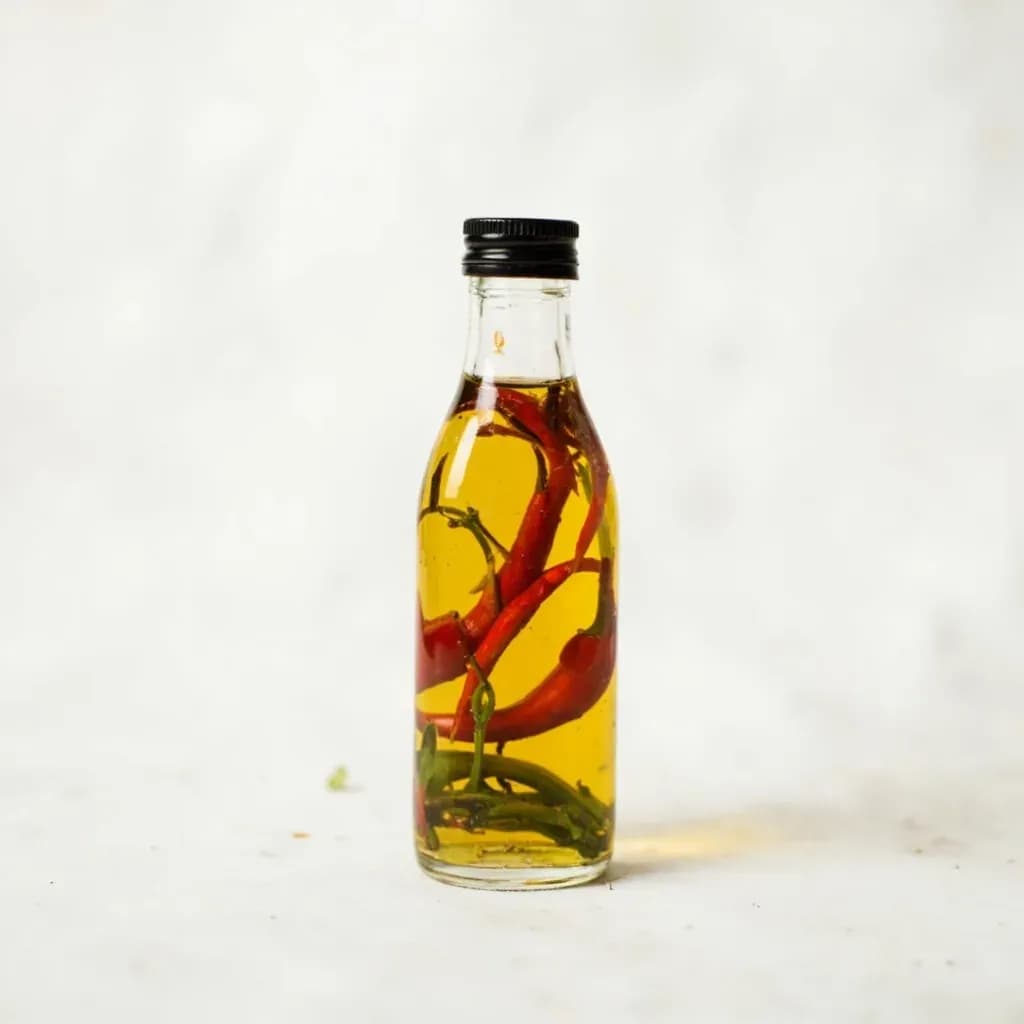
Oil infusing gently heats or steeps aromatics such as garlic, chili, herbs or scallion in oil so their fat-soluble flavors and color migrate into it, as with Japanese mayu (black garlic oil) and rayu (chili oil). The infused oil becomes a potent finishing condiment drizzled over ramen, noodles and vegetables. Because low-acid aromatics in oil can harbor botulism, infused oils should be used fresh or refrigerated, not stored at room temperature.
Oil infusing is the deliberate transfer of flavor from an aromatic into a carrier oil, then straining or keeping the result as a finishing condiment. The technique works because most of the compounds that give spices, chilies, garlic, herbs, and citrus their aroma and color are fat-soluble — they dissolve readily in oil and only poorly in water. Heat speeds the transfer; the absence of water keeps the system stable and the flavor concentrated.
The two practical paths are hot infusion, in which oil heated to roughly 150–170 °C is poured over dried aromatics, and cold infusion, in which the aromatic and oil sit together for days or weeks at room temperature or in the refrigerator. Hot infusion is faster and gives deeper color and a more toasted character; cold infusion preserves the bright, green notes of fresh herbs and citrus zest that heat would otherwise destroy. The choice of carrier oil — neutral for high-heat work, extra-virgin olive oil for Mediterranean-style infusions, toasted sesame oil as a finishing accent in Asian-style oils — shapes both the flavor and the functional range of the finished product.
The two hazards worth taking seriously are water and scorching. Any moisture left in the aromatic, or introduced through the vessel, can support Clostridium botulinum growth in the oxygen-poor environment of a sealed bottle of oil, so fresh-garlic and fresh-herb infusions must be refrigerated and used within a week or two, or acidified to pH 4.6 or below. Scorching is a flavor problem rather than a safety one: oil heated past its smoke point, or aromatics left on direct heat past their turn, give a bitter, acrid oil that no amount of finishing can rescue.
- Difficulty
- Easy
Types & varieties
Japanese black garlic-onion oil. Onions are charred until nearly carbonized, then steeped in hot neutral oil (sometimes finished with a splash of sesame oil) and blended to a smoky, inky paste. Drizzled over ramen, especially mazemen and abura soba.
Japanese adaptation of Chinese chili oil. Hot sesame or neutral oil is poured over toasted dried chilies, often with sichuan peppercorns, ginger, and garlic. Table condiment for gyoza, ramen, and rice bowls.
The parent style. Hot oil poured over crushed dried red chilies, sometimes with star anise, cassia, and sichuan peppercorns. Sichuan versions often include crunchy solids and become chili crisp (notably Lao Gan Ma and Wang Zhihe, among many regional producers).
Italian chili olive oil, typically made with whole or slivered dried peperoncino steeped in extra-virgin olive oil. Used on pizza, pasta, beans, and grilled vegetables.
North African. Olive or neutral oil poured over toasted cumin, coriander, caraway, smoked paprika, and dried chilies, sometimes blended with harissa paste.
Cold or low-temp infusion in olive or neutral oil. Basil is typically cold-infused to avoid discoloration; woody herbs tolerate a gentle warm infusion.
Made by cold steeping sliced garlic or pouring oil over confit garlic. Botulism risk means fresh-garlic versions must be refrigerated and used within 1–2 weeks, or acidified to pH 4.6 or below.
Dried zest (never fresh juice) steeped in olive oil; common in Mediterranean cooking and in salad dressings and marinades.
How to do it
- 1
Choose the aromatic and carrier oil
Match the carrier to the job: neutral oil (grapeseed, canola, rice bran) for high-heat infusions of dried chilies or spices; extra-virgin olive oil for low-temp herb and chili infusions meant for Mediterranean use; a neutral base finished with a splash of toasted sesame oil for Asian-style rayu. The aromatic must be fully dry unless the recipe specifically calls for fresh produce that will be used within days and kept refrigerated.
- 2
Prepare the aromatics
For dried chilies, toast whole or torn pods in a dry skillet over medium heat until fragrant and a shade darker, 1–3 minutes, then crush roughly. Toast whole spices (sichuan peppercorns, cumin, star anise, cassia bark) the same way. For mayu, slice onions thin, separate into strands, and char in a dry skillet or directly over a gas flame until blackened and partly ash-like. For herbs, dry them completely; for citrus, use only finely grated dried zest.
- 3
Heat the oil
Pour the oil into a heavy saucepan and bring it to the target temperature, monitored with a thermometer. Aim for 150–170 °C (300–340 °F) when the aromatic is dried chili, garlic, or spice; 110–130 °C (225–265 °F) for a garlic confit-style infusion; never above 90 °C (195 °F) for herbs or citrus zest, which are usually better cold-infused.
- 4
Combine and steep
Place the prepared aromatics in a heatproof bowl (stainless steel or ceramic is best) and pour the hot oil over them in a steady stream. The oil should sizzle gently and bloom the aromatics without violent sputtering. For tougher dried spices, return the oil-and-aromatic mixture to low heat and hold 5–10 minutes to extract more flavor. For mayu, blend the charred onions and oil to a coarse black paste while still warm, then press through a fine strainer or leave as a paste.
- 5
Cool and settle
Let the infusion cool to room temperature, uncovered, away from direct sunlight. Suspended particles will sink, and stopping the residual heat prevents the aromatics from drifting into bitterness.
- 6
Strain (optional)
For a clear finishing oil, strain through a fine-mesh strainer lined with muslin or a paper coffee filter. For a chili-crisp style, leave the solids in and finish with a pinch of flaky salt and a spoon of toasted sesame seeds once cool.
- 7
Bottle and store
Decant into a sterilized glass bottle or jar, seal, and label with the date. Refrigerate any infusion made with fresh garlic, fresh herbs, fresh chilies, or any product to which water has been added; use within 1–2 weeks. Fully dried-spice infusions in sealed bottles keep 2–6 months in a cool, dark pantry. Discard if the oil smells rancid, foamy, or off, or if the bottle pressurizes.
Hot vs. cold infusion: when to use which
The decision between hot and cold infusion comes down to the aromatic and the flavor you want. Match the method to the ingredient, and remember that water content in the aromatic is the single biggest driver of both shelf life and food-safety risk.
- Hot infusion (150–170 °C oil) — best for dried chilies, dried garlic, toasted whole spices, and any aromatic you want deeply browned, toasty, or smoky. The heat drives off residual moisture and drives Maillard browning on the surface, building the kind of flavor that defines mayu, rayu, and là yóu.
- Warm infusion (110–130 °C oil) — suited to confit garlic, citrus zest, and woody herbs like rosemary and thyme. Gentle heat extracts flavor without browning, preserving aroma while still giving a faster result than cold infusion.
- Cold infusion (room temperature or refrigerated) — the standard method for fresh basil and other fresh herbs, and for any aromatic where the green, floral, or citrus character would be destroyed by heat. Slower (3 days to 4 weeks) but the truest expression of the fresh aromatic.
- Water is the enemy. If the aromatic is wet, expect to either dry it first or treat the finished infusion as a refrigerated, short-shelf-life condiment. Commercial chili crisps get their long shelf life from very low water activity in the dried chili matrix plus hot-bottle sealing; home cooks should not assume the same stability.
Common uses
Tips & pitfalls
- Always use completely dried spices, herbs, chilies, and garlic. Fresh aromatics or any water introduced into the oil create a botulism risk; refrigerate and use within a week, or acidify with lemon juice or vinegar to about pH 4.6 or below.
- Toast whole dried spices and chilies in a dry pan first to deepen flavor and drive off residual moisture before they meet the oil.
- Heat the oil to the right temperature for the aromatic: 150–170 °C (300–340 °F) for dried chilies, garlic, and spices; below 100 °C (212 °F) for herbs and citrus zest, which are usually better cold-infused.
- Pour the oil over the aromatics rather than heating the two together. Pouring gently cooks the surface, releases fat-soluble flavor and color, and avoids burning the aromatics on direct heat.
- Sterilize the storage bottle by boiling it, running it through a dishwasher cycle, or drying it in a hot oven. A wet or contaminated jar is the most common reason an otherwise good infusion goes off.
- For mayu, char the onions until genuinely black on the outside, almost burnt. The bitter, smoky notes are the point; pale onions give a sweet result that is not mayu.
- Add a small splash of toasted sesame oil at the end of an Asian-style infusion for aroma. Don't use sesame oil as the sole carrier for very high-heat work — its smoke point is lower than neutral oils and it will scorch.
Good to know
- Technique type
- Hot infusion and cold infusion of aromatics into a carrier oil
- Carrier oils commonly used
- Neutral (canola, grapeseed, sunflower, rice bran) for high-heat work; toasted sesame oil for Asian-style oils; extra-virgin olive oil for Mediterranean herb and chili oils
- Oil temperature (hot infusion)
- 150–170 °C (300–340 °F) for dried chilies, garlic, and spices; below 100 °C (212 °F) for herbs and citrus zest
- Aromatic-to-oil ratio
- Roughly 1:5 to 1:10 by weight for dried spices and chilies; higher for paste-style infusions like mayu
- Infusion time
- 10–30 minutes steeped for hot infusion; 3 days to 4 weeks at room temperature (or 1–2 weeks refrigerated) for cold infusion
- Yield
- Approximately 90–95% of starting oil volume after straining; paste-style mayu yields far less
- Shelf life
- 1–2 weeks refrigerated for fresh-aromatic infusions; 2–6 months in a cool, dark pantry for fully dried-spice infusions
- Key equipment
- Heavy saucepan, instant-read or candy thermometer, heatproof bowl, fine-mesh strainer, muslin or coffee filter, sterilized glass bottle
Also called
infuse-oil · infused oil · flavored oil · mayu · rayu
Related

Confit
Cook slowly submerged in fat for silky tenderness and keeping

Cure
Draw out moisture with salt and time to preserve and concentrate

Pickle
Steep in acidic brine for bright, tangy, crunchy preservation

Ferment
Let friendly microbes transform food into tangy, complex flavor

Marinate
Soak in a seasoned mix to flavor and tenderize before cooking

Brine
Soak in salt water so meat stays juicy and seasoned throughout

Dehydrate
Slowly dry out moisture to concentrate flavor and extend shelf life

Cold-Smoke
Perfume cured food with smoke without cooking it through