Transform & Preserve
Vacuum Compression
Vacuum-sealing fruit or vegetables to collapse air pockets, intensifying color, density, and flavor.
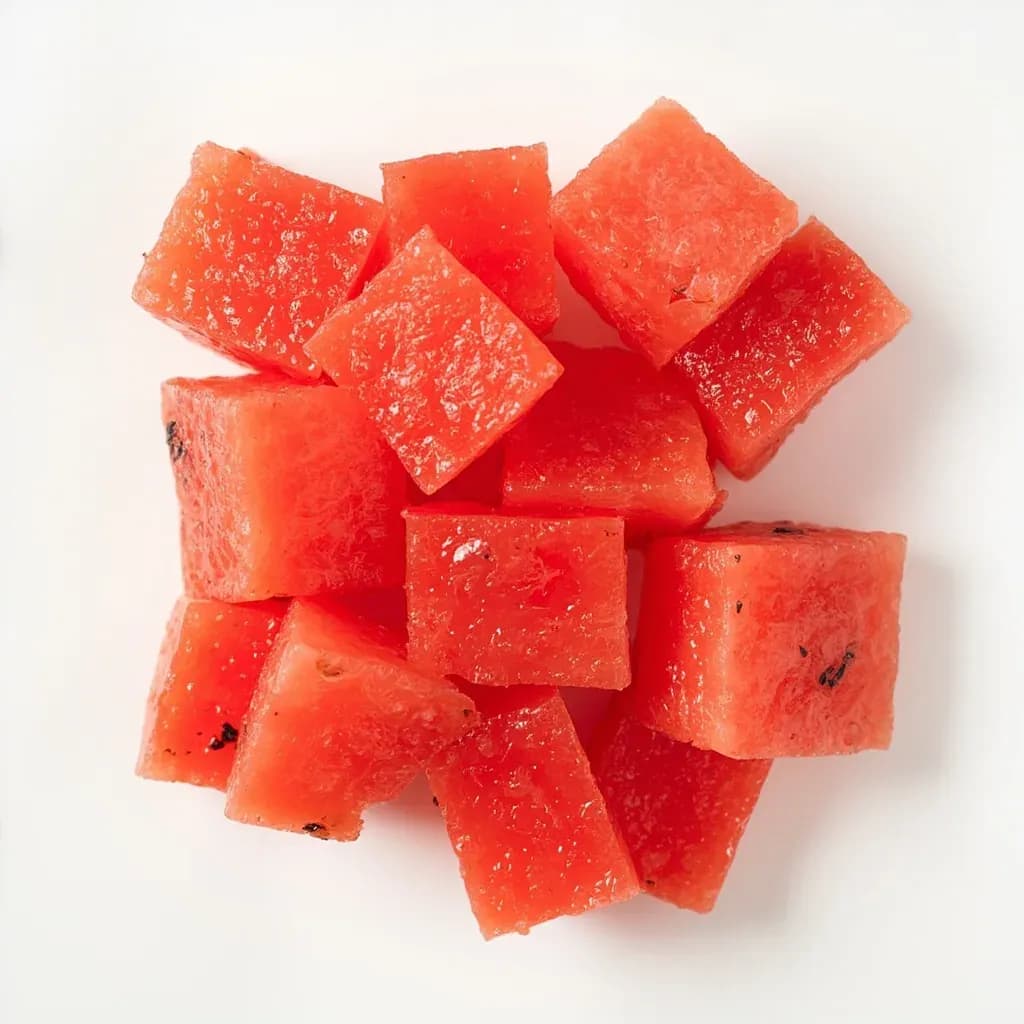
Vacuum compression seals produce in a chamber vacuum machine, removing air so the cells collapse and the texture turns dense, glassy, and translucent. The technique intensifies flavor and lets the food absorb marinades or syrups quickly. It is a modernist favorite for watermelon, apple, and other fruits that gain a striking crunch and saturated color.
Vacuum compression is a modernist prep technique in which porous food is sealed in a chamber vacuum bag and subjected to near-complete evacuation, collapsing the air trapped between and inside the cells. As the chamber pressure drops, the trapped gas in the tissue expands and is forced out through the cut surfaces or surrounding liquid, and when the vacuum is released atmospheric pressure crushes the now-gas-free structure into a denser, flatter, more vividly colored piece. The cook gains three things at once: a more concentrated flavor (the same sugars, acids, and aromatics are now packed into a smaller volume), a uniform seasoning when a flavored liquid is in the bag (atmospheric pressure literally pushes the liquid back into the tissue as the vacuum equalizes), and a striking, almost lacquered surface that holds its shape on the plate.
The catch is that the food is a temporary sculpture. Once out of the bag, air seeps back in and the piece relaxes toward its original dimensions within ten to fifteen minutes, so vacuum compression is strictly a same-service technique. It is distinct from sous-vide: the chamber sealer is the same tool, but compression is a cold prep step with no heat, used to transform texture and flavor rather than to cook. Popularized by Ferran Adrià at elBulli from around 2003, the technique has become a quiet workhorse in fine-dining kitchens for everything from compressed watermelon garnishes to flash-marinated proteins.
- Difficulty
- Medium
Types & varieties
Food vacuumed alone or with dry seasonings; collapses internal air pockets, densifies texture and deepens color — the classic compressed watermelon or strawberry.
Food sealed with a flavored liquid (brine, stock, juice, spirit, or oil); vacuum forces the liquid into the tissue for a fast marinade or cure.
Herbs, citrus peel, chilies, or aromatics sealed with neutral oil under vacuum, then strained — yields a clear, intensely flavored oil without heat or cloudiness.
Cooked or raw vegetables layered with vinaigrette in a chamber bag; emerge uniformly seasoned, slightly flattened, and ready to plate.
Delicate fruit such as strawberries or peaches vacuumed briefly with citrus juice or verjuice to concentrate flavor and add a glossy, cured sheen.
How to do it
- 1
Select and prep the food
Choose porous, ripe-but-firm produce (watermelon, strawberry, pineapple, cucumber, cooked beet). Cut into uniform pieces roughly 2–3 cm thick so they compress evenly. Wash and pat completely dry with towels — surface moisture is the main reason compression fails and the bag clouds with juice.
- 2
Set up the chamber sealer
Turn on the chamber vacuum sealer and set it to full vacuum (≈99.9%). Fit a channeled food-grade pouch large enough to lay the food flat in a single layer with headroom. For infusion, place a small rack or weighted tray on top of the food so it stays submerged once liquid is added.
- 3
Add the food and optional liquid
Lay the food in the bag. For dry compression, add only dry salt, sugar, or dry spices. For infusion, pour in just enough chilled liquid (juice, brine, stock, spirit, or oil) to cover the food by about 1 cm once it collapses. Pre-chill both food and liquid to 34–40°F.
- 4
Seal the bag edge and pull vacuum
Lay the open edge of the bag across the seal bar, close the lid, and start the cycle. The chamber evacuates; trapped air in the tissue expands and exits through the cut surfaces while the bag wraps tight around the food.
- 5
Hold under vacuum
Once the gauge bottoms out, hold for 30 seconds for plain compression, 2–5 minutes for a quick marinade, or 10–20 minutes for a deep infusion into fruit or spirit. Holding is when tissue collapse and liquid penetration actually occur; releasing immediately after the gauge maxes out under-infuses.
- 6
Seal the bag
While the chamber is still under vacuum, trigger the heat seal, then release the chamber pressure. Opening the lid now keeps the food compressed until you are ready to plate.
- 7
Release and plate
When ready to serve, snip the bag open and lift the food out gently. Pat dry if needed and plate immediately — the piece will slowly re-expand and lose its compressed character within 10–15 minutes at room temperature.
Choosing and using the right equipment
The single most important decision is the sealer. A chamber machine — VacMaster, Weston, Anova, PolyScience, Henkelman, and similar — pulls vacuum on the entire chamber containing the bag, so it can handle liquids and crush soft food without sucking juice into the pump. An edge-clamp external sealer only draws air from inside the bag while atmospheric pressure pushes back on the food from outside, which both resists full collapse and tends to wick liquid straight into the seal bar. A domestic chamber sealer in the $300–700 range is enough for almost all culinary work; commercial kitchens step up to larger chambers and stronger pumps.
Use channeled, food-grade pouches around 3 mil thick. Under-3 mil bags wrinkle and can puncture against sharp corners; thicker bags seal better and survive multiple uses. A reusable silicone or polyethylene rack inside the bag keeps the food submerged once the liquid rises, and a small sheet pan or weight on top of the food prevents buoyant pieces (pineapple, citrus) from bobbing above the liquid line and missing the infusion.
Why it works: the physics in plain terms
Plant tissue is mostly water held inside cells by turgor pressure, with a network of intercellular air spaces that scatters light and softens color. When the chamber pressure drops, the gas in those spaces expands and escapes outward, and any liquid in the bag flows into the voids. When the chamber re-pressurizes on release, atmospheric pressure drives the liquid deeper into the now-open structure. The result is denser, glossier, and more flavorful food, but the cells are physically stressed, so over-compression ruptures walls and the food turns to purée.
Common uses
Tips & pitfalls
- Use a chamber sealer, not an edge-clamp machine — edge sealers rarely pull enough vacuum to collapse tissue and will leak liquid into the pump.
- Pat food completely dry before bagging; surface water blocks the air's escape path and slows compression.
- Cut pieces to a uniform 2–3 cm thickness so they collapse evenly; thin slices turn to mush before thick ones compress.
- Hold under full vacuum for at least 30–60 seconds after the gauge maxes out — that hold time is when tissue collapse and liquid penetration actually happen.
- Do not over-compress; past about 30 minutes the cell walls rupture and the food becomes purée.
- Serve within 10–15 minutes of opening the bag — the piece rebounds as air re-enters and the effect is lost.
- Avoid raw garlic, raw onion, or other strong raw alliums under long vacuum; sulfur compounds turn harsh and metallic.
- Reuse the same flavored liquid across batches (like a starter) to build a more concentrated, balanced infusion.
Good to know
- Technique family
- Modernist / contemporary prep, sous-vide adjacent
- Required equipment
- Chamber vacuum sealer (edge-clamp 'FoodSaver'-type machines do not pull enough vacuum)
- Typical chamber vacuum
- Approximately 29.5–29.9 inHg (near full vacuum, ≈99.9%)
- Best-suited foods
- Porous, high-water produce such as watermelon, strawberry, cucumber, pineapple, and cooked beet
- Contact time
- 30 seconds for plain compression, up to 20 minutes for a deep infusion
- Working temperature
- Chilled, 34–40°F / 1–4°C, to keep texture and color
- Difficulty
- Moderate — equipment-dependent, but very low active labor
- Origin
- Popularized in modernist kitchens, especially elBulli under Ferran Adrià, circa 2003
Also called
Vacuum Compression (Fruit/Veg) · Compression · Vacuum Infusion
Dishes that rely on it
Related

Confit
Cook slowly submerged in fat for silky tenderness and keeping

Cure
Draw out moisture with salt and time to preserve and concentrate

Pickle
Steep in acidic brine for bright, tangy, crunchy preservation

Ferment
Let friendly microbes transform food into tangy, complex flavor

Marinate
Soak in a seasoned mix to flavor and tenderize before cooking

Brine
Soak in salt water so meat stays juicy and seasoned throughout

Dehydrate
Slowly dry out moisture to concentrate flavor and extend shelf life

Cold-Smoke
Perfume cured food with smoke without cooking it through