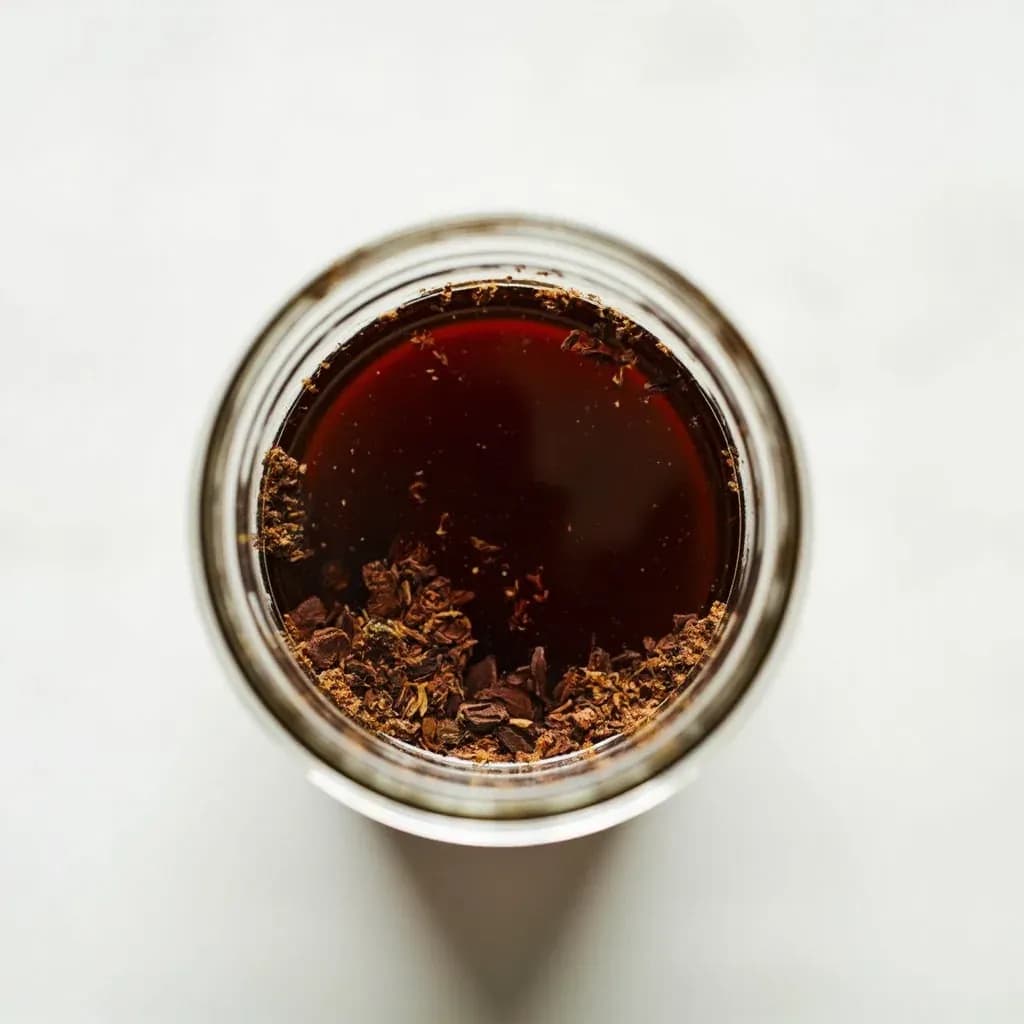
Transform & Preserve
Cold Extraction
Drawing flavor or oil from an ingredient without heat, using time and pressure.
Cold extraction pulls flavor, color, or oil from ingredients at low or room temperature rather than with heat, preserving volatile aromatics and avoiding bitterness. Examples include cold-brew coffee, cold-pressed oils, and cold-steeped infusions. The trade-off is time: extraction is slower, often hours to days, but the result is smoother and brighter.
Cold extraction is a family of techniques that draw flavor, oil, or soluble compounds from a raw material using time, pressure, and solubility rather than applied heat. The shared principle is simple: no external heat, so ambient or chilled temperatures do the work — whether through mechanical pressure, prolonged steeping, or long, cool contact with a liquid. Because volatile aromatics, chlorophylls, and fragile antioxidants are not driven off, the results tend to be greener, more aromatic, and more nutritionally complex than their heat-treated equivalents. The trade-offs are equally real: yields are lower, shelf life is shorter, and any flaw in the raw material — bruising, mold, oxidation, residual moisture — shows up clearly in the finished product.
For the home cook, cold extraction shows up most often as cold-infused oils and vinegars, vanilla extract, cold brew coffee, and the cold-water soaking of dried legumes, grains, and mushrooms. For producers, the term carries legal and commercial weight: in the EU, "first cold extraction" is a protected phrase for olive oil pressed below 27°C (81°F), and it is the defining quality marker of premium extra-virgin categories. Outside olive oil, "cold-pressed" generally means mechanical extraction kept under roughly 49°C (120°F) — a threshold that expeller runs can easily cross if friction at the nozzle is not monitored.
- Difficulty
- Easy
Types & varieties
Legally protected term for olive oil obtained mechanically below 27°C with no chemical treatment; the standard for the EU extra-virgin category.
Screw-press method where friction heat at the nozzle is monitored and kept below the cold-pressed threshold. Most commercial "cold-pressed" nut and seed oils are produced this way.
A hydraulic ram rather than a screw applies pressure, generating very little friction heat. Preferred for delicate oils such as hemp, walnut, and pumpkin seed.
Submerging herbs, citrus peel, chili, garlic, vanilla pods, or truffles in a cold or room-temperature liquid (oil, vinegar, alcohol) for hours to weeks.
Extended low-temperature water contact used for coffee, tea, and certain tisanes, typically 8–24 hours at 4–20°C.
Historical technique in which odorless fat at room temperature absorbs fat-soluble fragrance compounds from delicate flowers such as jasmine and tuberose. Now mostly confined to perfumery and rare haute-cuisine garnishes.
Soaking or rinsing to leach starch, bitterness, or salt — rice rinsing, tamarind pulp soaking, dried mushroom rehydration, desalting capers.
How to do it
- 1
Select and prepare the raw material
Choose ripe, undamaged fruit, seeds, or nuts. Sort out debris and adjust moisture to the producer's target — typically 8–12% for most oilseeds, lower for nuts. For infusions, wash and thoroughly dry any fresh aromatics; surface water will cloud the oil and shorten its life.
- 2
Grind or crush the material
Pass through a stone mill, hammer mill, or mortar and pestle to rupture the cell walls. The grind should be coarse enough to let oil escape yet fine enough to release it; overly fine paste clogs the press and overheats through friction.
- 3
Condition (optional)
Some seeds are warmed very slightly to improve yield. For a true cold extraction, this step is omitted or kept well under 27–30°C.
- 4
Press mechanically
Feed the paste into a hydraulic or screw press at low pressure, ramping gradually. Monitor the temperature at the spout with a probe — friction can push an expeller run above the cold threshold even when the feedstock is cool.
- 5
Filter and settle
Pass the crude oil through cheesecloth or a plate filter, or let it settle in a stainless or glass vessel for 24–72 hours at 15–18°C, then decant or filter again. Suspended mucilage and water will ferment and turn the oil rancid within days if left in.
- 6
Bottle and store
Transfer to dark glass, fill to minimize headspace, seal, and store at 12–18°C away from light. For infusion-based cold extractions, steep the aromatic in a sealed jar of oil, vinegar, or alcohol, strain, and bottle the finished liquid the same way.
How cold extraction differs from heat-driven methods
Heat-based oil recovery (hot pressing, rendering, centrifugal extraction, solvent extraction with hexane) trades aroma and color for yield and shelf stability. The temperature cooks off the very compounds that give a fresh oil its character — the green, grassy notes of a fresh extra virgin, the resinous bite of a good unrefined pumpkin seed oil, the clean coconut perfume of a fresh cold-pressed coconut oil. Solvent extraction goes further, stripping the oil almost completely from the seed and then refining, bleaching, and deodorizing it. The result is bland and stable but bears little resemblance to the original raw material. Cold extraction sits at the opposite end of that spectrum: lower yield, shorter shelf life, and an honest translation of what was in the fruit, seed, nut, or herb in the first place.
Food safety in cold infusions
Garlic, fresh herbs, and other low-acid aromatics steeped in oil at room temperature create the classic Clostridium botulinum risk — a low-acid, anaerobic, unrefrigerated environment is exactly where the organism thrives. The toxin is odorless and tasteless, which makes it especially dangerous. A few reliable safeguards:
- Refrigerate herb- and garlic-in-oil infusions and use them within 4–7 days.
- Acidify properly to a pH below 4.6 using vinegar or citrus juice, or switch to dried (not fresh) aromatics, which carry a much lower risk.
- For longer storage, freeze the finished oil in small portions; the botulinum organism cannot multiply below freezing.
- Never taste an infused oil that smells off, has bubbles, or has a cloudy, slimy sediment.
Reading a label
"Cold-pressed," "cold extraction," "extra virgin," "virgin," and "unrefined" are not interchangeable. Cold-pressed describes the mechanical temperature of extraction. Extra virgin and virgin describe free acidity and sensory defects (officially, for olive oil, less than 0.8% free acidity for extra virgin, less than 2% for virgin, with no sensory defects). Unrefined means the oil has not been bleached, deodorized, or chemically treated. A cold-pressed oil can still be refined after pressing, and a refined oil is not extra virgin. The most informative label combines all three: "first cold extraction, extra virgin, unrefined."
Common uses
Tips & pitfalls
- Start with fresh, defect-free raw material. With no heat to mask flaws, bruises, mold, and oxidation show up clearly in the finished oil.
- Grind or crush before pressing; intact cells release very little oil under mechanical pressure.
- Monitor press temperature with a probe at the nozzle. Friction can push an expeller run above the cold threshold even when the motor and feedstock are cool.
- Filter or settle immediately after pressing. Suspended mucilage and water will ferment and turn the oil rancid within days.
- Store cold-extracted oils in dark glass with minimal headspace and refrigerate once opened. Nut and seed oils in particular turn quickly at room temperature.
- For cold brew coffee, use a coarse grind at a 1:8 to 1:10 coffee-to-water ratio. Finer grinds over-extract tannins even at cold temperatures.
- For cold-infused oils, pat ingredients thoroughly dry before submerging — water introduces cloudiness and shortens shelf life.
- Use unwaxed citrus peel for cold-extracted zest oils. Commercial wax blocks aroma release and can carry pesticide residues.
Good to know
- Core principle
- Separation of oils, flavors, or soluble compounds driven by mechanical pressure or time-based solubility at ambient or below-ambient temperature, with no external heat applied.
- EU legal threshold (olive oil)
- "First cold extraction" is legally defined as mechanical extraction performed below 27°C (81°F), with no chemical treatment.
- Industry threshold (general)
- Most producers and trade bodies use 49°C (120°F) as the practical upper limit for an oil labeled "cold-pressed."
- Yield versus solvent extraction
- Cold pressing typically recovers 60–80% of available oil; solvent (hexane) extraction reaches 95% or higher.
- Flavor and nutrient retention
- Volatile aromatics, chlorophylls, tocopherols, and polyphenols survive intact, giving greener color, stronger aroma, and higher antioxidant content than hot-extracted equivalents.
- Shelf life
- Shorter than refined oils — typically 6–18 months unopened when stored cool and dark, because the same retained compounds oxidize readily.
- Typical equipment
- Hydraulic press, screw/expeller press, stone mill, centrifuge, mortar and pestle; for infusions, sealed glass vessels and cheesecloth or filter paper.
- Storage
- Amber or green glass, filled to the neck, sealed, kept at 12–18°C away from light; refrigeration is recommended for opened nut and seed oils.
Also called
cold pressing · cold steeping
Dishes that rely on it
Related

Confit
Cook slowly submerged in fat for silky tenderness and keeping

Cure
Draw out moisture with salt and time to preserve and concentrate

Pickle
Steep in acidic brine for bright, tangy, crunchy preservation

Ferment
Let friendly microbes transform food into tangy, complex flavor

Marinate
Soak in a seasoned mix to flavor and tenderize before cooking

Brine
Soak in salt water so meat stays juicy and seasoned throughout

Dehydrate
Slowly dry out moisture to concentrate flavor and extend shelf life

Cold-Smoke
Perfume cured food with smoke without cooking it through