Water & Steam
Impepata di Cozze (Steaming Shellfish Open)
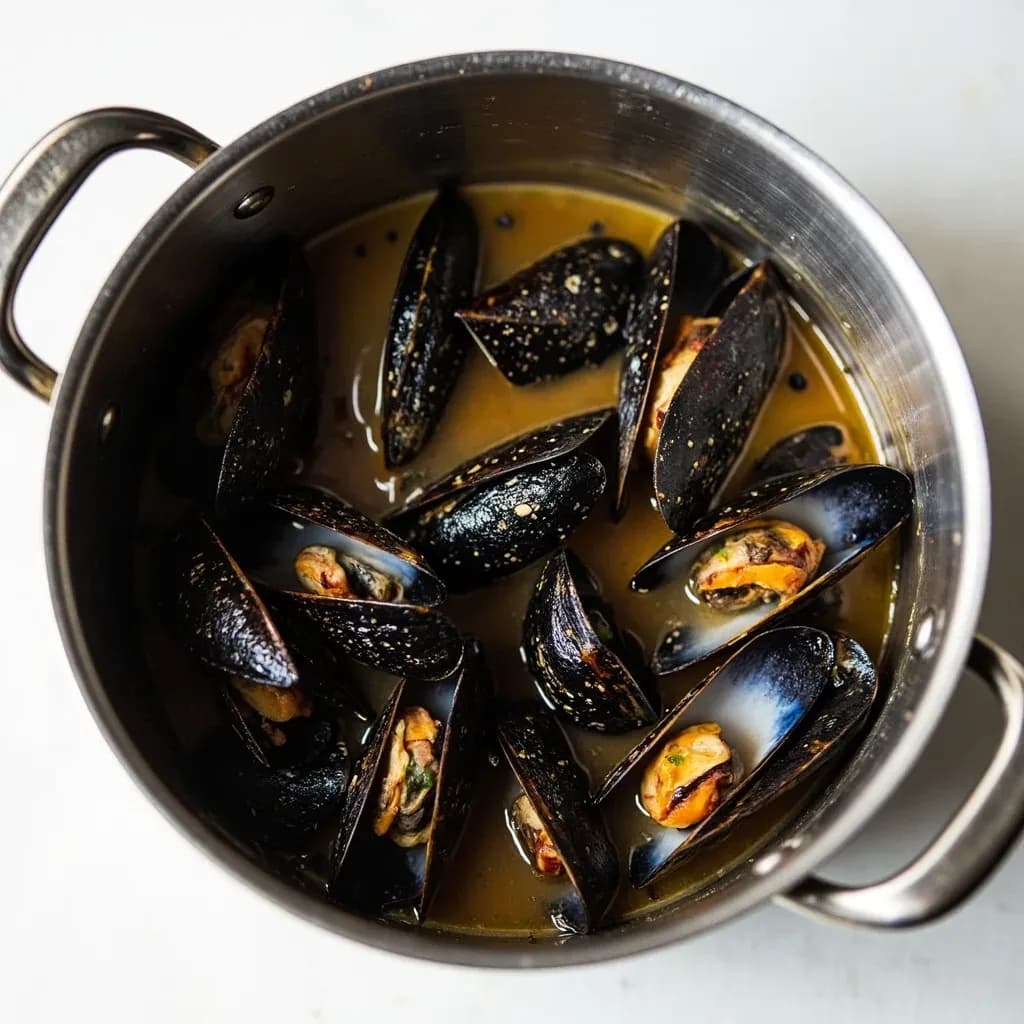
Neapolitan method of steaming mussels open in their own liquor with cracked black pepper.
Impepata is a southern Italian technique of cooking mussels (or clams) covered over high heat with little more than their own brine, cracked black pepper, and a splash of wine. The shells pop open in a few minutes, releasing a peppery broth that becomes the dish. Lemon and parsley finish it; the simplicity depends on very fresh shellfish.
Impepata di cozze is a Neapolitan shellfish preparation that strips cooking down to its barest elements: mussels, olive oil, garlic, and a startlingly heavy hand of coarsely cracked black pepper. The technique is a closed-pan steam — the mussels are tipped into a wide pot with seasoned oil, the lid is clamped on, and they are left to open in their own released liquor, with no added water and very little else. The Italian name says it plainly: impepare means "to cover with pepper," and in this dish pepper is treated less as a seasoning than as a co-flavoring agent, pungent and aromatic enough to define the broth on its own.
What distinguishes impepata from neighboring shellfish dishes like cozze alla marinara or sautéed clams is restraint and the lean broth it produces. Because nothing is added beyond what the mussels themselves release, the resulting liquid is concentrated, slightly briny, and almost aggressively peppery — Neapolitans call this il sugo and consider it the actual point of the plate. The technique works because mussels are mostly water and release enough of their own liquor to steam themselves inside a closed pot within minutes, which is why a tight lid and full-high heat are non-negotiable.
The method is also a useful template more than a single recipe: it applies to vongole, cockles, and small oysters with adjusted timing, and the cook can bend the dish in several directions — wine, chili, cherry tomato, lemon — without leaving the underlying technique. At the table the protocol is simple: serve immediately in a wide bowl with toasted bread to capture the broth, eat with your hands, and use an empty shell as a pincer for the others.
- Difficulty
- Easy
Types & varieties
Mussels steamed with garlic, olive oil, and a heavy hand of cracked black pepper; finished with flat-leaf parsley.
Same technique applied to small clams (vongole veraci); pepper plays the same co-starring role, cook time slightly shorter.
A small splash of dry white wine added just before covering; brightens and lightens the broth slightly.
Dried red chili or a fresh chili added with the garlic for heat that runs alongside the pepper rather than competing with it.
Cherry tomatoes added toward the end; this version drifts toward a cozze alla marinara style and is less austere than the classic.
A thin strip of peel goes into the pot during cooking, finished with a small squeeze of juice at the end for brightness.
How to do it
- 1
Clean and purge the mussels
Rinse 1 kg mussels under cold running water, scrubbing the shells with a stiff brush. Pull off the beards by tugging toward the hinge, and scrape off any barnacles with a paring knife. Discard any with cracked shells or that stay open when tapped. Soak in a bowl of heavily salted cold water (about 35 g salt per liter) for 30–60 minutes so the mussels purge sand; change the water once if it clouds.
- 2
Rinse and drain
Lift the mussels out of the soak water (do not pour — the sand settles at the bottom) and rinse once more under cold water. Drain well in a colander and let them sit for a minute to shed excess liquid.
- 3
Build the base
In a wide, heavy pot, pour in about 80–100 ml extra-virgin olive oil — generous, since it will emulsify with the mussel liquor. Add 2 lightly smashed garlic cloves and an optional thin strip of lemon peel. Warm over medium heat for about 1 minute until the garlic just sizzles — do not let it brown. Remove the garlic if you want a cleaner, sharper broth, or leave it for a rounder flavor.
- 4
Add mussels and pepper
Tip the drained mussels into the pot in as even a layer as the shells allow. Add 1 to 1.5 tablespoons of coarsely cracked black peppercorns — yes, that much. Toss briefly so the mussels are slicked with oil and peppered on all sides.
- 5
Cover and steam
Crank the heat to high, clamp the lid on tight, and let the mussels steam in their own liquor for 3–5 minutes. After 2 minutes, pick up the pot with a folded kitchen towel and shake it once firmly to redistribute the shells and liquor — this is gentler than stirring, which breaks shells and loses liquid.
- 6
Check doneness
From 3 minutes onward, lift the lid briefly every 30 seconds. The dish is ready the moment virtually every shell is gaping open and the pot is full of a steaming, peppery broth. Pull it off the heat immediately — overcooking turns the meat to rubber within a minute.
- 7
Finish and discard
Pull out any mussels that remain shut and discard them; they were dead before the heat went on. Fish out the lemon peel and the garlic cloves. Scatter a generous handful of chopped flat-leaf parsley over the top. For a brighter finish, add a small squeeze of lemon juice at this point.
- 8
Serve at once
Pour everything into a wide shallow bowl or platter so the broth pools around the shells. Bring to the table with thick slices of toasted country bread or grilled crostoni for soaking up the broth — it is the second ingredient of the dish, and wasting it is a Neapolitan sin. Eat with your hands and a small fork, using an empty shell as a pincer to pull the meat from the others.
The pepper protocol
Impepata is the rare shellfish dish where pepper is counted in tablespoons rather than grinds. The quantity — usually 1 to 1.5 tablespoons of coarsely cracked peppercorns per kilo of mussels — is what gives the broth its signature warm, almost medicinal heat and a slight gray-flecked appearance. Two practical rules follow. First, the pepper must be cracked fresh: pre-ground fine pepper dissolves into the broth, dulls its color to muddy gray, and loses the volatile oils that give the dish its aromatic edge. Second, the pepper goes in with the raw mussels, not at the end — it needs the few minutes of steam to leach its flavor into the oil and released liquid. Treat the pepper with the same care you would treat a spice paste in a long-cooked dish; it is doing structural work, not just adding a final kick.
Choosing and purging mussels
Mediterranean mussels (Mytilus galloprovincialis) in the 5–7 cm range are ideal — large enough to give generous meat, small enough to steam evenly. Most mussels sold today are farmed and arrive reasonably clean, but purging is still non-negotiable for the texture of the broth.
- Soak in heavily salted cold water (about 35 g salt per liter) for 30–60 minutes; the salt mimics seawater and encourages the mussels to expel sand.
- Lift the mussels out rather than pouring the soak water through the colander — sand settles to the bottom and will redeposit on the shells if you pour.
- Scrub each shell with a stiff brush under running water and pull the beard toward the hinge to remove it cleanly without tearing the meat.
- Discard any mussel with a cracked shell or one that stays open when tapped against the counter — it was likely dead before cooking began.
Common uses
Tips & pitfalls
- Purge mussels in heavily salted cold water for at least 30 minutes, even farmed ones that look clean — sand is the one thing that ruins this broth more than the meat itself.
- Crack the pepper fresh and coarsely; pre-ground fine pepper turns the broth gray and dulls the sharp bite the dish is built on.
- Do not add water unless the pan is dry before the mussels open — the liquor they release is the cooking medium and the entire point of the dish.
- Cook over high heat with the lid clamped tight; a weak steam means the mussels stew in their liquid and turn rubbery.
- Shake the covered pot once or twice instead of stirring with a spoon, which breaks the shells and loses the broth you are trying to build.
- Discard any mussel that stays firmly closed after cooking — it was dead before the heat went on and is not safe to eat.
- Eat immediately. The broth turns fishy and the meat toughens within minutes of leaving the heat.
- Garlic should be left whole or only lightly crushed; minced garlic burns in 30 seconds under the brief, high-heat steam.
- If using farmed mussels, taste one raw first; some are noticeably briny and you may want to skip added salt entirely.
Good to know
- Italian name
- Impepata di cozze (also written impepata di mitili)
- Literal meaning
- "Peppered mussels" — from impepare (to cover with pepper) and cozze (mussels)
- Region
- Naples, Campania, southern Italy
- Course
- Antipasto or secondo di mare; also a seafood snack with bread
- Cooking method
- Steam-braising in the mollusks' own released liquor, tightly covered
- Primary fat
- Extra-virgin olive oil, used generously to emulsify the broth
- Signature seasoning
- Coarsely cracked black peppercorns — used in unusually high quantity, treated as a co-flavor
- Typical aromatics
- Garlic (often left whole and lightly smashed), flat-leaf parsley, sometimes a strip of lemon peel
- Added liquid
- None required; optional splash of dry white wine
- Cook time
- 3–6 minutes once the pot is covered and at a full steam
- Total time
- About 20–30 minutes including cleaning and purging
- Yield
- 1 kg live mussels yields roughly 250–300 g shucked meat plus 200–250 ml broth
- Best mussels
- Small to medium Mediterranean mussels (Mytilus galloprovincialis); 5–7 cm is ideal
- Equipment
- Wide, heavy pot or large skillet with a very tight lid; stiff brush for scrubbing
- Difficulty
- Easy; the main risks are overcooking and sand from poorly purged mussels
Also called
Impepata · Impepata di Cozze · Peppered Mussels
Related

Boil
Cook in vigorously bubbling liquid at full rolling heat

Simmer
Hold liquid at a gentle shimmer for tender, unhurried cooking

Poach
Cook gently in barely-trembling liquid for silky, tender results

Steam
Cook in rising vapor to keep color, nutrients, and shape intact

Blanch
Plunge briefly in boiling water, then shock cold to lock color

Braise
Sear, then cook slow in a little liquid until fall-apart tender

Stew
Simmer bite-sized pieces fully submerged into a rich, unified pot

Sous-Vide
Seal and cook in precise warm water for edge-to-edge doneness