
Prep & Assembly
Laminate
Fold butter into dough through repeated turns for flaky layers
Laminating encases a block of butter in dough and folds it through repeated rolls and turns, building dozens of paper-thin alternating layers that puff into flaky pastry — croissants, puff, Danish. It's exacting work. Keep everything cold so the butter stays in distinct sheets and doesn't melt into the dough.
Laminating encases a block of butter in dough and folds it through repeated rolls and turns, building dozens of paper-thin alternating layers that puff into flaky pastry — croissants, puff, Danish. It's exacting work. Keep everything cold so the butter stays in distinct sheets.
- Difficulty
- Advanced
How to do it
- 1
Enclose a flat butter block fully in the dough.
- 2
Roll into a long rectangle, keeping edges square.
- 3
Fold in thirds (a letter fold) to multiply layers.
- 4
Chill, then repeat the roll-and-fold several times.
Why temperature is everything
The whole technique depends on butter staying solid and pliable — a distinct sheet, not melted into the dough. Too warm and the layers merge; too cold and the butter shatters and tears through.
- Butter must bend, not crack or melt
- Chill between every turn
- Work fast in a cool kitchen
Common uses
Tips & pitfalls
- Rest the dough in the fridge between turns to relax the gluten.
- Keep edges square so layers stay even, not bunched at the ends.
- A marble surface or cool room keeps the butter in line.
Good to know
- Tool
- Rolling pin, cold butter block, the fridge
- Best for
- Croissants, puff pastry, Danish
- Difficulty
- Advanced — temperature and precision critical
Also called
lamination · butter folding
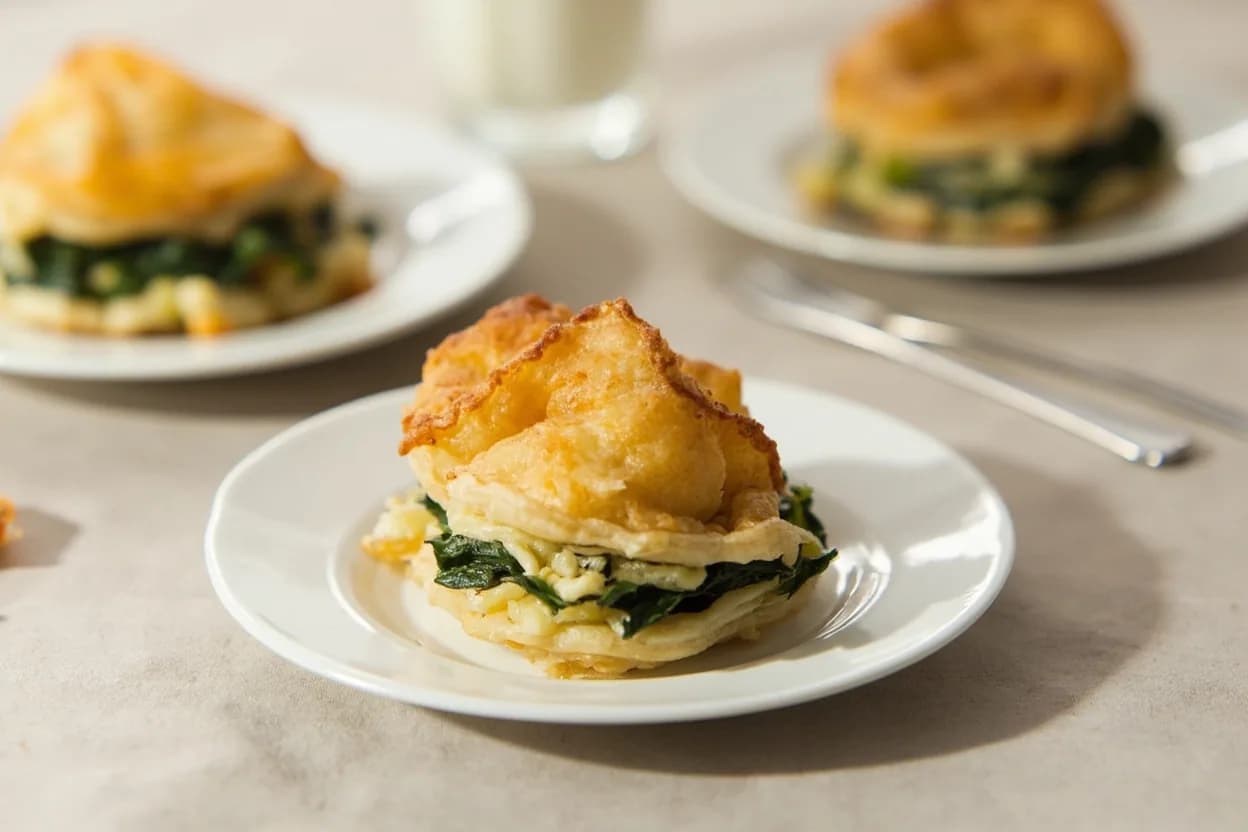
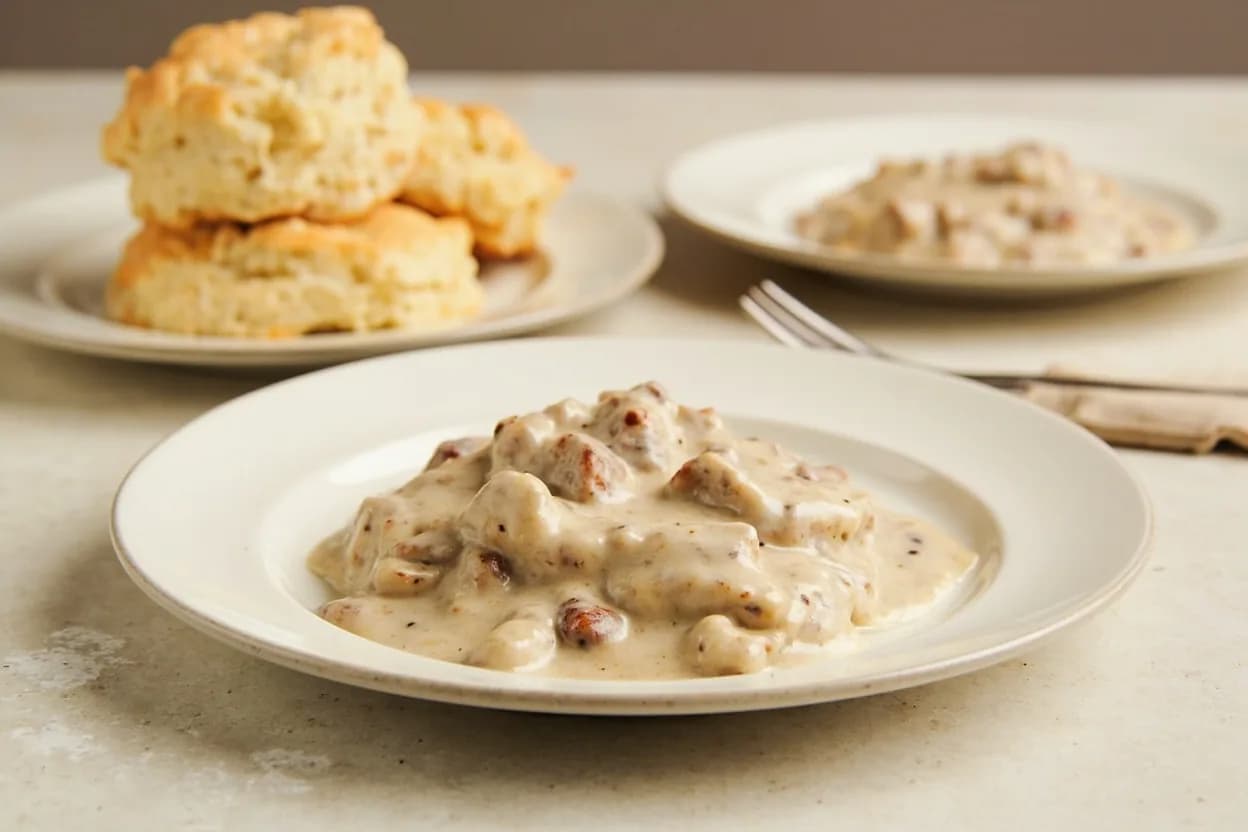
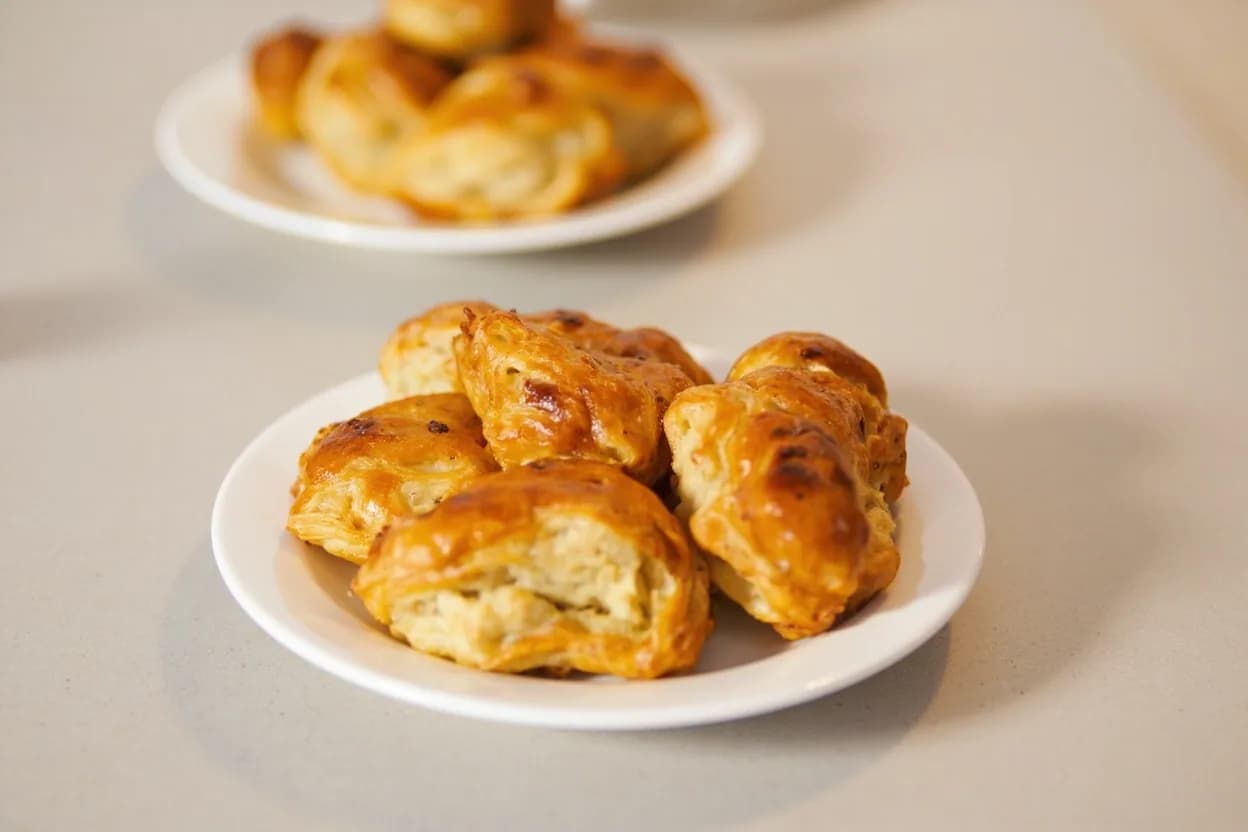
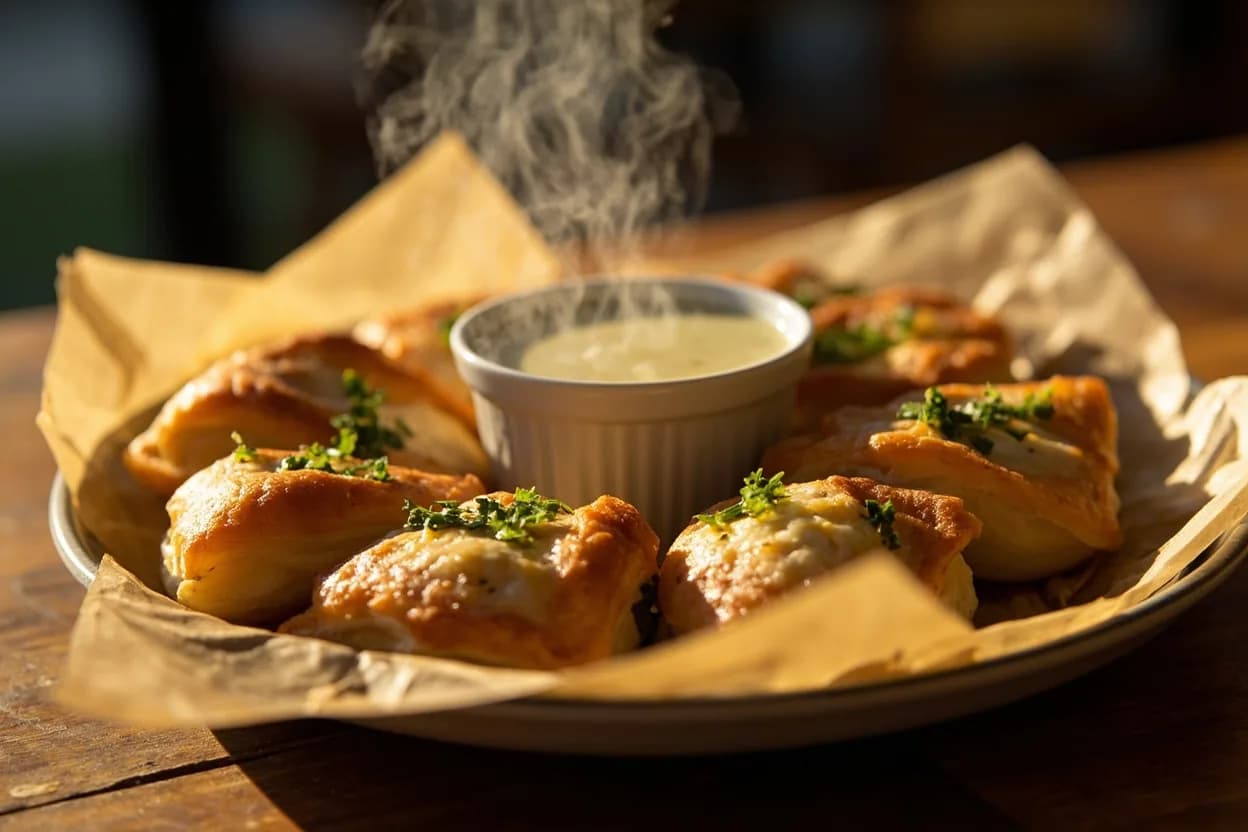
Dishes that rely on it

Related

Whisk
Beat ingredients smooth and aerated with a looping wire motion

Sift
Pass dry ingredients through mesh to aerate and remove lumps

Strain
Pour through mesh to separate solids from liquid for a smooth result

Filter
Pass liquid through fine material to clarify out the smallest particles

Rice
Press cooked potatoes through small holes for fluffy, lump-free texture

Mash
Crush soft cooked food into a rustic, creamy purée

Grind
Crush food into a coarse to fine texture, from spices to meat

Grate
Shred food into fine bits against a sharp-toothed surface