Prep & Assembly
Larb Minced-Meat Mixing
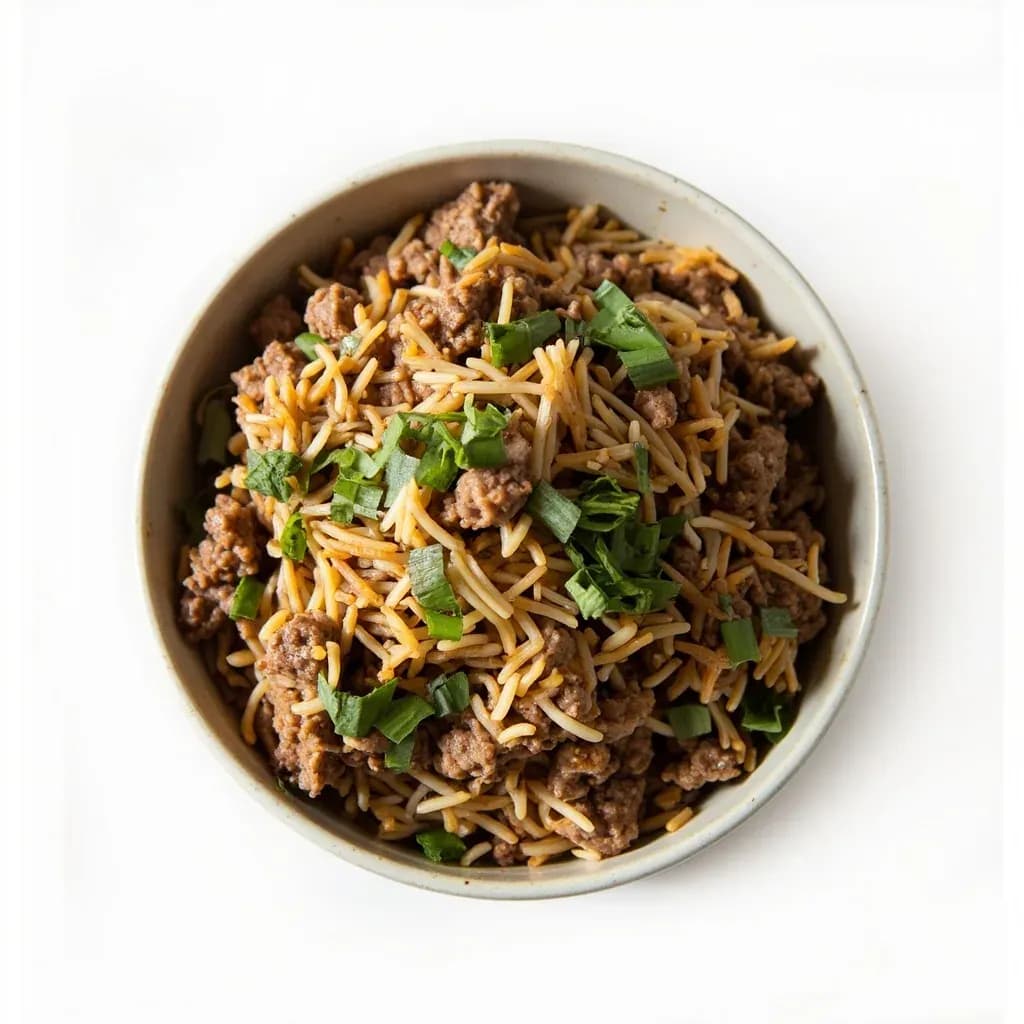
Tossing minced meat with toasted rice powder, lime, fish sauce and herbs into a tangy Lao-Thai salad.
Larb mixing combines cooked minced meat with lime juice, fish sauce, chili, shallots, fresh herbs and ground toasted sticky rice (khao khua) into a bright, savory-sour salad. The toasted rice powder is the key, adding nutty aroma and a slightly gritty texture that thickens the dressing. The components are folded together gently so the seasoning coats every bit while the herbs stay fresh.
Larb mixing is the assembly technique behind Laos's national dish and one of the defining preparations of Isan and northern Thai cooking. At its core it is a warm meat salad: cooked (or sometimes raw) minced protein tossed with toasted glutinous-rice powder, then balanced with fish sauce, fresh lime juice, chili, sliced shallots, and a generous handful of fresh herbs. The technique is simple in execution but unforgiving in balance — every component pulls on the same four-flavor axis of sour, salty, hot, and savory, with the toasted rice adding a fifth, nutty dimension that distinguishes larb from any other minced-meat salad in the region.
What makes the method distinctive is the order of operations. The rice is dry-toasted until deep golden and only then ground, which gives larb its characteristic toasted-grain aroma and a slightly absorbent grit that clings to the meat. Liquids go in after the rice powder has coated the protein, so the granules swell and bind the dressing into something more substantial than a simple vinaigrette. The warm-meat toss is equally important: heat helps the rice adhere and opens the aromatics, but if the meat is too hot the herbs will wilt and the shallots will lose their bite.
In Laos, larb is a shared dish at the center of the table, eaten by hand with balls of sticky rice; in Isan it is often a one-plate meal alongside raw greens and jaew bong chili paste. Once you understand that the technique is really about layering textures and temperatures — warm meat, crisp raw shallots, cool herbs, sharp acid — it becomes a template you can apply to pork, beef, duck, fish, mushrooms, or tofu with surprisingly little variation.
- Difficulty
- Easy
Types & varieties
The everyday standard; minced pork shoulder or neck, sometimes with a small amount of pork liver for depth
Often grilled or simmered first; in some Isan preparations served with raw beef blood for richness
Lighter and quicker; chicken thigh is preferred over breast for flavor and moisture
Common in northern Thailand, often built around smoked or grilled duck
Made with flaked freshwater fish such as tilapia or catfish, paired with plenty of raw greens
A dry-fried variant in which the meat is cooked together with the toasted rice powder in a wok
Isan specialty using finely minced raw beef that is 'cooked' by the lime juice; typically a restaurant dish made to order
Central-Thai style with milder chili and a slightly sweeter finish
Vegetarian adaptation using crumbled firm tofu or torn oyster mushrooms in place of meat
How to do it
- 1
Toast the rice
Heat a dry wok or skillet over medium-low. Add 2–3 tablespoons of raw sticky (glutinous) rice and toast, stirring constantly, 8–12 minutes until deep golden brown and fragrant. If grains blacken, the salad will taste bitter — discard and start over.
- 2
Grind the rice powder (khao khua)
Tip the toasted rice into a mortar and pound briefly, or pulse in a spice grinder, to a coarse, sand-like texture. Set aside; do not grind to a fine flour, which would turn the salad pasty.
- 3
Cook and mince the meat
Use pork, beef, chicken, or duck. Simmer in lightly salted water until just cooked, or grill or pan-sear for smoky depth. Cool briefly, then chop finely or pass through a coarse mincer. Aim for rice-grain-size pieces, not a paste.
- 4
Toss meat with rice powder while warm
Place the warm minced meat in a mixing bowl. Add 1–2 tablespoons of the toasted rice powder and toss with a fork or spoon so every grain of meat is lightly coated. This is the heart of the technique — the rice absorbs juices and contributes its nutty aroma before any liquid is added.
- 5
Season with fish sauce and lime juice
Add Thai or Lao fish sauce and fresh lime juice a little at a time, tossing and tasting between additions. Aim for a sharp, balanced tangy-salty edge that lifts the meat without drowning it. Get the balance right before moving to the aromatics.
- 6
Add chili
Stir in prik bon (dried Thai chili flakes) to taste, and optionally a few sliced fresh bird's eye chilies. Remember the heat builds after about a minute, so err on the side of tasting before adding more.
- 7
Fold in aromatics and herbs
Add thinly sliced shallots, sliced spring onions, chopped cilantro, mint, and (if using) Thai basil or sawtooth coriander. Toss gently — do not crush — so the herbs stay bright and the shallots keep their snap.
- 8
Final taste and serve
Adjust fish sauce, lime, or chili as needed. Pile onto a plate and serve immediately with sticky rice and raw or lightly blanched vegetables such as cabbage wedges, long beans, or Thai eggplant.
The Role of Khao Khua (Toasted Rice Powder)
Khao khua is the element that separates larb from a generic Southeast Asian minced-meat salad. It does three things at once: it adds a deep, roasted-nut aroma that no other seasoning can replicate, it acts as a light thickener that binds the lime and fish sauce into a clinging dressing, and it gives the salad a faint, pleasant grittiness on the palate. The rice must be toasted in a dry pan over medium-low heat until it smells strongly nutty and turns a deep golden brown; pale rice is flavorless and floury. It is then pounded or pulsed only until coarse — about the texture of cracked black peppercorns or coarse sand. A fine grind will dissolve into the dressing and turn the salad pasty; whole grains will not adhere to the meat. The granules are tossed with the warm meat first, before any liquid, so they can stick to the protein and swell in place.
- Use raw sticky (glutinous) rice, not long-grain or jasmine — glutinous rice toasts more evenly and yields a rounder flavor.
- Toast 2–3 tablespoons of rice for every 500 g of meat; you can always hold extra toasted rice in a jar for several weeks.
- Aim for the color of dark caramel. If the grains blacken, the powder will taste bitter and the whole salad will be off — start over.
Balancing the Four Flavors
Larb lives on a tightrope between sour, salty, hot, and savory, and the toasted rice is the fifth pillar holding the other four up. The standard approach is to season the rice-coated meat with fish sauce and lime in small increments, tasting between each addition, before bringing in chili and herbs. Fish sauce contributes salt and umami; lime carries the sourness that brightens the meat; prik bon and fresh bird's eye supply heat; the meat itself provides the savory base. If the salad tastes flat, reach for lime first, not fish sauce — acidity is what carries the dish, and a heavy hand with fish sauce will make the salad taste cured rather than fresh. Chili heat also builds over a minute or two after mixing, so always taste after a brief pause before adding more.
- Taste on a clean spoon after each addition of fish sauce or lime; the meat and rice coat the tongue and mute intensity.
- A finished larb should make your mouth water — that is the sign the sour-salt balance is right.
- If using pork or duck, lean slightly more lime; with lean chicken or fish, lean slightly more fish sauce to keep the salad from tasting thin.
Common uses
Tips & pitfalls
- Toast the rice until it smells strongly nutty and is the color of dark caramel; pale rice gives a flat, floury salad, and blackened rice tastes bitter.
- Grind the toasted rice coarsely — about the texture of cracked peppercorns. Fine powder makes the salad pasty; whole grains will not adhere.
- Mix the rice powder into the meat while the meat is still warm so the granules stick and absorb juices before any liquid goes in.
- Add fish sauce and lime in small increments and taste between each addition; balance matters far more than exact quantities.
- Use only fresh-squeezed lime juice. Bottled juice tastes metallic and will throw off the entire salad.
- Use Thai or Lao fish sauce (nam pa or nam pu), not Vietnamese nuoc cham or Chinese light soy — the salt-to-umami ratio is different and the flavor will not land.
- Fold shallots and herbs in at the end with a gentle hand; aggressive mixing bruises the herbs and turns the salad soggy.
- If the salad tastes flat, it almost always needs more lime, not more fish sauce — acidity is what carries larb.
- Serve immediately after mixing. The toasted rice continues to absorb liquid as it sits, and a held larb dries out and dulls within 20–30 minutes.
Good to know
- Origin
- Laos (national dish); central to Isan (northeastern Thai) and northern Thai cuisines
- Signature element
- Khao khua — dry-toasted glutinous rice ground to a coarse powder, not a fine flour
- Core flavor profile
- Hot, sour, salty, and savory, with a toasted-nutty backbone from the rice powder
- Traditional protein state
- Meat is cooked (grilled or simmered) then minced; raw-meat versions are regional and usually made to order
- Primary seasoning liquids
- Fresh lime juice and Thai/Lao fish sauce (nam pa/nam pu); no oil of any kind
- Key aromatics
- Thinly sliced shallots, spring onions, cilantro, mint, and often Thai basil or sawtooth coriander
- Typical service
- Warm or room temperature, immediately after mixing, with sticky rice and raw vegetables
- Active time
- 20–30 minutes once the toasted rice, meat, and herbs are prepped
Also called
Larb / Minced-Meat Salad Mixing · laab mixing
Related

Whisk
Beat ingredients smooth and aerated with a looping wire motion

Sift
Pass dry ingredients through mesh to aerate and remove lumps

Strain
Pour through mesh to separate solids from liquid for a smooth result

Filter
Pass liquid through fine material to clarify out the smallest particles

Rice
Press cooked potatoes through small holes for fluffy, lump-free texture

Mash
Crush soft cooked food into a rustic, creamy purée

Grind
Crush food into a coarse to fine texture, from spices to meat

Grate
Shred food into fine bits against a sharp-toothed surface