Water & Steam
Lungo Extraction
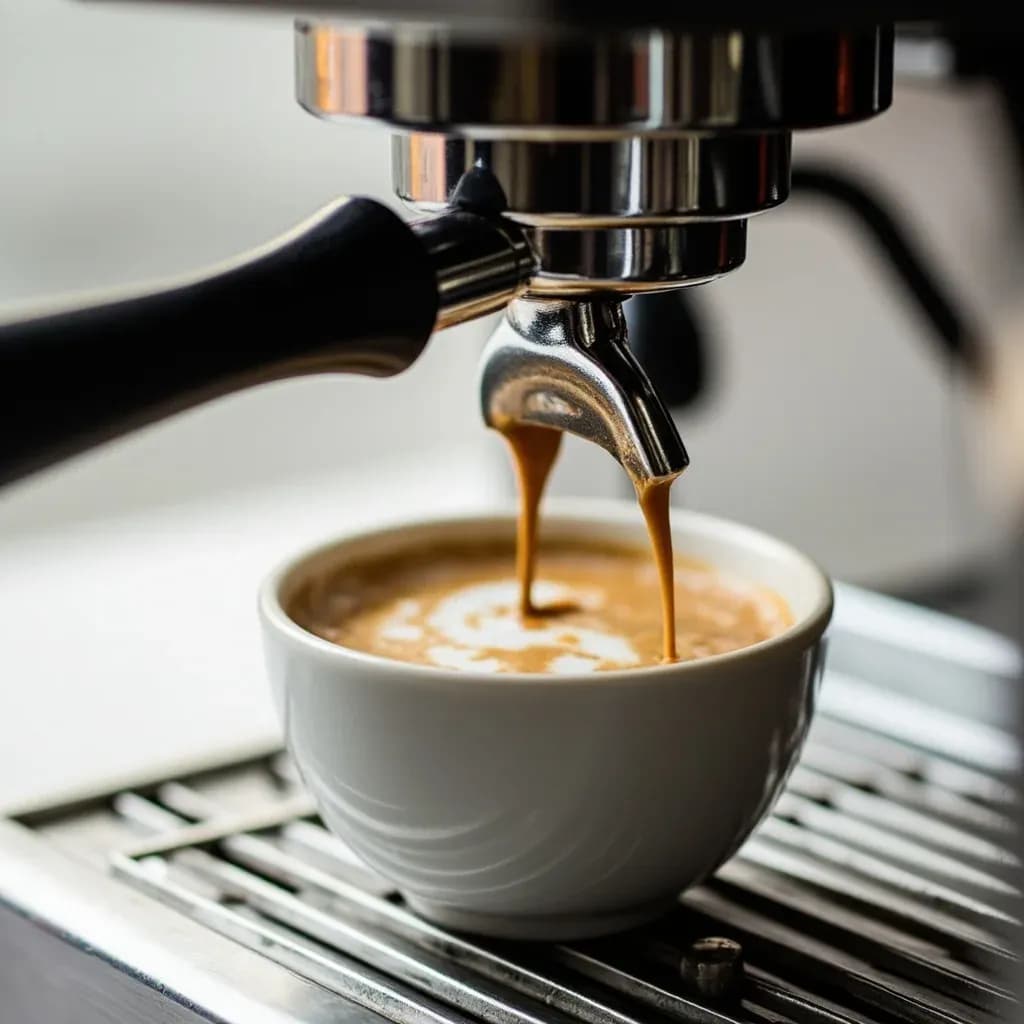
Pulling a long espresso shot with extra water for a larger, milder, more bitter cup.
A lungo is an espresso pulled with roughly double the usual water passing through the same dose of grounds, producing a longer, larger shot. The extended extraction pulls more soluble compounds, giving a less intense but more bitter cup than a standard espresso. Baristas balance grind and time so the longer flow does not become harshly over-extracted.
A lungo is a stretched espresso extraction — the same coffee dose, the same pump pressure, the same portafilter basket, but with the pump held open for noticeably longer. Where a standard espresso lands at 20–30 seconds, a lungo runs 45–90 seconds and yields roughly 1.5× to 3× the volume. The defining point is that lungo is not diluted espresso: the longer water pass simply keeps dissolving compounds out of the puck, and those late-extracted compounds taste distinctly different from what you get in a normal shot.
That difference is the whole reason lungo exists. A well-pulled lungo trades the dense, syrupy concentration of a ristretto and the bright, sharp focus of a 25-second espresso for a softer, more rounded cup with a longer body and a more pronounced bitter-astringent finish. Crema is thinner and paler because the gas that holds it has been broken up by the long pour. When the grind and run time are dialed in, the result is a mellower drink that still tastes like coffee rather than like espresso watered down — which is exactly what an Americano, a different technique, is.
In Italian bar culture a lungo is the everyday morning pour for drinkers who want a longer cup without the muted character of adding hot water. In specialty cafés it is more controversial, often dismissed as over-extracted espresso by default. The truth is in the dialing: stop the shot by weight, treat grind as the main variable, and a lungo at roughly a 1:6 to 1:7 ratio can be one of the cleanest ways to taste the back end of a bean's flavor profile.
- Difficulty
- Medium
Types & varieties
The standard bar pour — about 50–60 ml from a 7 g dose, roughly a 1:7 ratio. Sometimes listed on European café menus as a 'long black.'
Pulled from a double basket (14–18 g) for a yield of 100–110 ml, used when a single lungo cup is too small to satisfy.
The French café equivalent — a similarly extended espresso pull of about 60–70 ml from a single dose, common in Parisian counters.
Swiss and Austrian cousin, pulled slightly longer than a standard espresso with a lighter, foamier crema on top.
Looks similar in the cup but is a normal espresso cut with hot water after extraction — a separate technique with a different flavor profile.
How to do it
- 1
Weigh and dose
Weigh 7–9 g of freshly roasted beans for a single basket or 14–18 g for a double. Use exactly the dose you would for a normal espresso — lungo is a longer extraction, not a heavier one. Doubling the dose is the most common home mistake and produces a choked, bitter shot.
- 2
Grind
Grind to standard espresso fineness. If your normal espresso grind pulls in 22–28 seconds, start one click coarser so the long run does not choke the puck. The grind is your main dial for controlling extraction yield across the longer time.
- 3
Distribute and tamp
Distribute the grounds evenly (WDT tool or a gentle tap to settle), then tamp level with firm, consistent pressure — roughly 13–15 kg or 30 lb. An uneven puck channels water and ruins the long pull, because any channel runs for 60+ seconds instead of 25.
- 4
Lock in and prep the cup
Lock the portafilter into the group head, place a pre-warmed cappuccino cup beneath the spouts, and start the pump immediately. Pre-warming matters: a lungo cools faster than a milk drink, and a cold cup steals aroma.
- 5
Pull the shot
Run the extraction for 45–90 seconds, well past a normal espresso. Watch the stream: it should begin with the usual dark honey pour, then lighten and thin as the shot progresses. If the flow turns pale and watery before you hit your target weight, you have gone too far.
- 6
Hit the target yield
Stop the shot at roughly 50–110 ml depending on style — a reliable single lungo target is about 60 ml, or about 1.5×–2× a normal espresso. Weigh the output on a scale; eyeballing volume is the single most common home-barista error and guarantees inconsistent results.
- 7
Stir and serve
Give the cup a small stir with a spoon to integrate the thin crema with the body, then serve immediately. Taste on its own before adding sugar or milk — the longer pull brings more bitter compounds, so a well-dialed lungo should need no sweetness.
The science of the long pull
Espresso extraction is not a single event but a sequence. In the first 10–15 seconds, water dissolves the most soluble compounds: acids, sugars, caffeine, aromatic oils. The middle of the shot balances sweetness, body, and acidity. Beyond about 30 seconds, the water starts pulling heavier, less pleasant solubles — bitter phenylindanes, astringent tannins, woody dry-end notes. A lungo is, by design, a deliberate visit to that later stage.
- Late extraction is why lungo tastes softer up front but finishes with more bitterness and a drying sensation on the tongue.
- A thinner crema is structural: the CO2 and emulsified oils that build crema have been pushed past their stable window by the long pour.
- The classic lungo mistake is leaving the pump on until the cup 'feels' full — by then you are well into over-extraction. Stop by weight, every time.
- If bitterness dominates, the fix is almost always grind (coarser) or stop point (earlier), not dose. Adding more coffee cannot rescue an over-extracted lungo.
Lungo versus its neighbors
Three drinks sit close to lungo and are regularly confused with it. The differences are worth knowing because each responds to different dialing.
- Ristretto: same dose, less water, shorter time. Sweetest, most concentrated, thickest crema of the three.
- Lungo: same dose, more water, more time. Milder, more bitter, thinner crema, longer body.
- Americano: normal espresso plus separately heated water. Same strength as espresso once diluted; lungo is stronger-tasting than an Americano of equal volume because nothing has been added after extraction.
- Filter coffee: very different brew method, much coarser grind, no pressure. Lungo is the closest pressurized relative but is brewed at espresso ratio, not filter ratio.
Common uses
Tips & pitfalls
- Keep the dose identical to your normal espresso. Lungo is about water and time, not more coffee in the basket.
- If the shot pulls in under 30 seconds, grind finer; if it drags past 90 seconds and tastes harshly bitter, grind coarser or shorten the run.
- Do not confuse lungo with Americano. Lungo is one extended extraction; an Americano is a normal espresso cut with separately heated water.
- Pre-warm the cup. Lungo sits in an awkward temperature range — cooler than espresso, hotter than a milk drink — and a cold cup flattens the aromatics fast.
- Taste before sweetening. The longer pull brings out more bitter compounds, so dialing in grind matters more than for espresso; sugar is not a substitute for good extraction.
- When bitterness dominates, the brew is almost always over-extracted or ground too fine. Adjust grind and stop point before changing dose.
- Weigh both dose and yield on a scale every single time. Eyeballing volume is the most common home-barista mistake on long pulls.
- Stop by weight, not by a fixed number of seconds. Time is a useful guide; weight is the contract.
Good to know
- Italian name
- caffè lungo — literally 'long coffee'
- Typical dose
- 7–9 g single basket, 14–18 g double — identical to a standard espresso
- Target yield
- About 50–110 ml, roughly 1.5× to 3× the volume of a normal espresso
- Brew ratio
- Approximately 1:5 to 1:8 (coffee to water)
- Extraction time
- 45–90 seconds, clearly longer than espresso's 20–30 seconds
- Pressure
- 9 bars of pump pressure — same as standard espresso
- Grind
- Standard espresso fineness; many baristas nudge one click coarser to keep the puck from choking under the long run
- Origin
- Italian bar tradition, popular across Europe; term codified alongside espresso in 20th-century Italian café culture
- Crema
- Thinner and paler than ristretto or standard espresso because the long water pass breaks up the emulsion
- Cup
- Served in a pre-warmed cappuccino cup (~150 ml) so the longer pull fits without spillage
- Strength
- Less concentrated than espresso but stronger-tasting than an Americano of equal volume, because no water is added after the shot
Also called
long shot · long espresso
Related

Boil
Cook in vigorously bubbling liquid at full rolling heat

Simmer
Hold liquid at a gentle shimmer for tender, unhurried cooking

Poach
Cook gently in barely-trembling liquid for silky, tender results

Steam
Cook in rising vapor to keep color, nutrients, and shape intact

Blanch
Plunge briefly in boiling water, then shock cold to lock color

Braise
Sear, then cook slow in a little liquid until fall-apart tender

Stew
Simmer bite-sized pieces fully submerged into a rich, unified pot

Sous-Vide
Seal and cook in precise warm water for edge-to-edge doneness