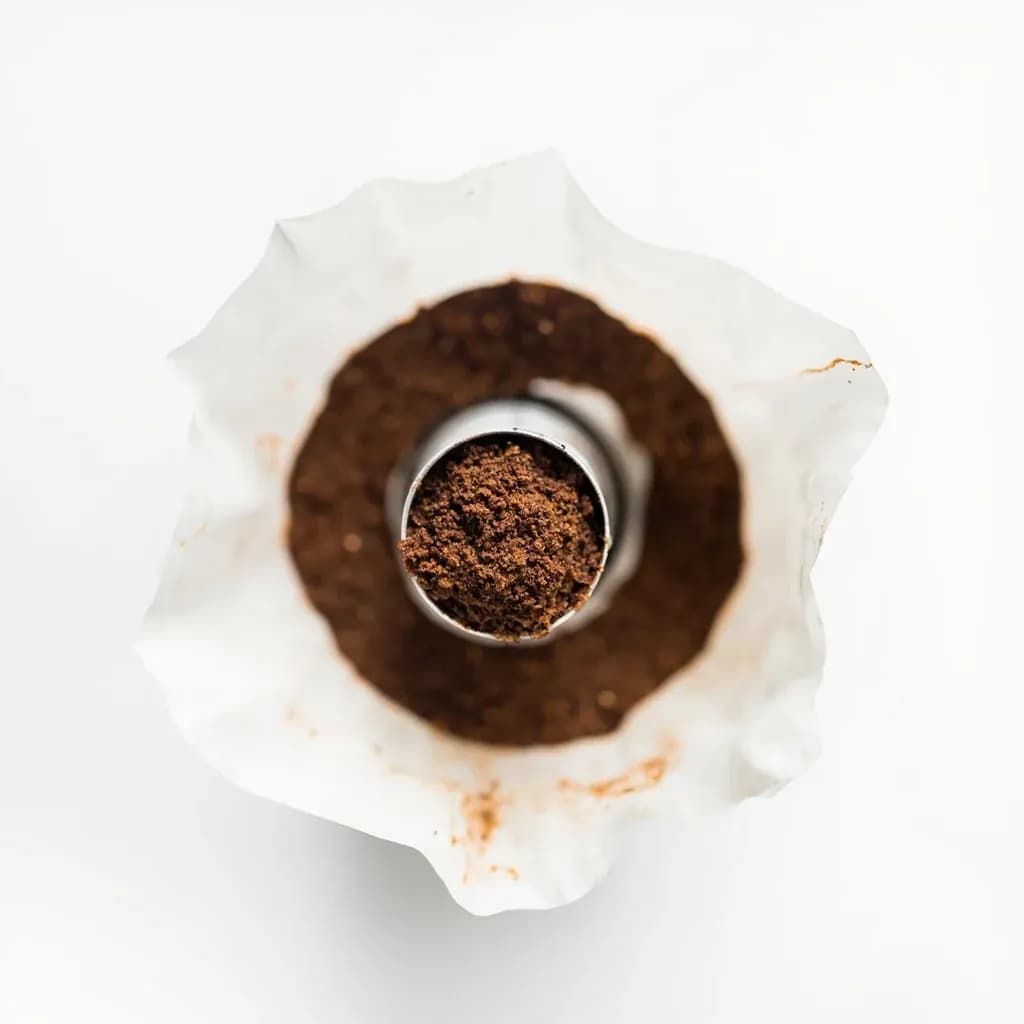
Prep & Assembly
Dialing In the Grind
Adjusting coffee grind size to hit a target extraction and shot time.
Dialing in is the iterative tuning of grind size (and dose) to control how fast water flows through coffee and how much it extracts. A finer grind slows the shot and increases extraction; coarser speeds it up. Baristas adjust grind until the shot lands within a target weight and time window, tasting for balance between sour under-extraction and bitter over-extraction.
Dialing in the grind is the iterative process of adjusting a burr grinder's setting until the brew — most often an espresso shot, but also a pour-over, AeroPress, or French press — lands on a target time, weight, and flavor. It is less a single act than a small feedback loop: change the grind, pull a shot or brew, weigh and time it, taste it, and adjust again. The grind setting is the lever baristas reach for first because it is fast, reversible, and it influences extraction more directly than almost any other variable a brewer can change in real time.
The underlying logic is straightforward. Finer grounds slow water flow and increase extraction; coarser grounds speed it up. The art lies in holding everything else constant — dose, distribution, tamp, water temperature, pressure, and ratio — so that changes in the cup can be attributed to grind size alone. Done well, dialing in turns a multi-variable system into a predictable one and gives the brewer a working recipe that can be re-established whenever the beans, the weather, or the equipment changes.
The phrase itself is specialty-coffee vernacular, popularized in the early 2000s alongside third-wave espresso culture, but the practice — grind, taste, adjust — is as old as the burr grinder. What the modern term adds is rigor: weighing dose and yield, timing shots, logging results, and treating taste as data rather than opinion.
- Difficulty
- Medium
Types & varieties
Adjusting grind to hit a target shot time and beverage weight, typically 25–35 s for a 1:2 ratio.
Finer for body and clarity, coarser for a cleaner, thinner cup; target brew time varies by device — roughly 2:30–3:30 for a 1-cup V60, longer for Chemex.
Coarse, even grind to reduce fines; dialed in primarily for sediment and mouthfeel rather than extraction yield.
Medium-fine; adjust grind to control total brew time and body.
Very coarse grind to limit over-extraction during long steep times of 12–24 hours.
Extra-fine, flour-like grind; less about dialing in the conventional sense, but the setting still affects foam and clarity.
How to do it
- 1
Define the target recipe
Decide the dose in (e.g., 18 g), the beverage weight out (e.g., 36 g), the ratio (1:2), the water temperature (typically 92–96 °C for espresso), and the target shot time (often 27–32 s for modern light roasts, up to 35 s for darker). For pour-over, set the dose, water volume, pour structure, and target brew time for the device.
- 2
Set a sensible starting grind
For espresso, start near the middle of the grinder's range. For pour-over, start at the setting recommended for the device. This avoids overshooting in either direction and reduces the number of shots needed to land on the target.
- 3
Prep the puck identically each time
Weigh the dose, distribute the grounds with WDT or a distributor, and tamp level with consistent pressure. The goal is to change only one variable — grind size — between attempts, so prep must be repeatable.
- 4
Pull a shot and time it
Start the timer the moment the pump engages. Stop it when the target beverage weight is reached. Note the first-drip time, the total time, and the visual character of the tail (thin and blond, or thick and syrupy).
- 5
Taste and diagnose
Sip the shot as it cools from hot through warm. Sour, salty, or thin flavors indicate under-extraction (grind too coarse, shot too fast). Bitter, dry, hollow, or ashy flavors indicate over-extraction (grind too fine, shot too slow). Sweet, balanced, and juicy signals a shot in the zone.
- 6
Adjust the grind
If the shot is too fast or sour, grind one step finer. If it is too slow or bitter, grind one step coarser. On a stepped grinder, this is one click or number; on a stepless grinder, a small turn. Large jumps make it hard to land on the target and waste beans.
- 7
Purge and re-pull
After changing the setting, run 1–2 g of coffee through to clear retained grounds from the chute, then pull another shot. The first shot after a change often blends old and new grinds, so a second pull gives a cleaner read.
- 8
Lock in and log
Once the shot tastes right and the time and weight match the target, record the grinder setting, dose, yield, time, and the bean and roast date. Re-dial whenever the beans, environment, or equipment changes — expect 3–6 shots to fully re-establish a setting when switching coffees.
Why Grind Is the Primary Lever
Of all the variables in a brew — dose, yield, water temperature, pressure, distribution, tamp, contact time — grind size is the easiest to change quickly and reversibly. A twist of the adjustment collar takes seconds and does not require rebalancing the recipe. Particle size also has an outsized effect on extraction: smaller particles expose more surface area to water, slowing flow and increasing contact; larger particles do the opposite. Because the relationship is so direct, grind becomes the variable brewers isolate when they want to land on a target time and taste, leaving the rest of the recipe fixed.
- Fine grind → more surface area → slower flow → longer contact → more extraction.
- Coarse grind → less surface area → faster flow → shorter contact → less extraction.
- Holding dose, distribution, tamp, temperature, and pressure constant isolates grind as the cause of any change in the cup.
- Time is a useful proxy for extraction, but taste is the final arbiter.
Common Dialing-In Mistakes
Most failed attempts to dial in come from moving too far, too fast, or changing more than one variable at a time. A barista who jumps three notches finer and also redistributes the puck and changes the dose has three unknowns and no idea which one moved the shot. The fix is discipline: change one thing, observe, log, and only then change again.
- Adjusting by large increments — the setting overshoots in both directions.
- Forgetting to purge retained grounds from the chute, so the first shot is a blend of old and new grinds.
- Trusting the timer over the taste — a 30-second shot can still be sour or bitter.
- Not logging — without a record, the same grind setting must be rediscovered every time the beans or weather changes.
- Compensating in the grinder for sloppy distribution or tamping instead of fixing the prep.
Common uses
Tips & pitfalls
- Change one variable at a time — usually grind size only, holding dose, yield, tamp, and distribution fixed.
- Make small adjustments: one to two clicks or numbers on a stepped grinder, small turns on a stepless one.
- Purge 1–2 g of grounds after a setting change so the new grind is in the basket, not the chute.
- Pull at least two shots after a change — the first often blends old and new grounds.
- Taste before trusting the timer; time is a useful proxy, not the goal.
- Track dose, yield, time, and taste notes in a log until the grinder's behavior is learned.
- If a shot tastes sour and runs fast, go finer. If it is bitter and slow, go coarser.
- WDT (Weiss Distribution Technique) and consistent tamping reduce the need to compensate in the grinder for sloppy prep.
- Account for diurnal shift: grind may drift as the shop warms and humidity changes, especially with hopper-fed grinders.
- Let the grinder warm up for 10–15 minutes in busy service to reduce thermal drift in grind size.
Good to know
- Also known as
- Calibrating the grind; finding the grind size
- Primary context
- Espresso, though the logic applies to any grind-and-brew method
- Grinder type required
- Burr grinder (conical or flat); blade grinders cannot be dialed in reliably
- Typical espresso target
- 25–35 seconds for a 1:2 ratio (e.g., 18 g in, 36 g out)
- Acceptable extraction yield (SCA)
- 18–22% for espresso; 20% ± 2 is the often-cited sweet spot
- Direction of adjustment
- Grind finer to slow the shot and increase extraction; coarser to speed it up
- Under-extraction cues
- Sour, acidic, thin, salty, lacking sweetness
- Over-extraction cues
- Bitter, dry, hollow, ashy, woody
- Time per adjustment
- Allow 1–3 shots after a change for retained grounds to clear and the grind to stabilize
Also called
Grind Size Adjustment
Related

Whisk
Beat ingredients smooth and aerated with a looping wire motion

Sift
Pass dry ingredients through mesh to aerate and remove lumps

Strain
Pour through mesh to separate solids from liquid for a smooth result

Filter
Pass liquid through fine material to clarify out the smallest particles

Rice
Press cooked potatoes through small holes for fluffy, lump-free texture

Mash
Crush soft cooked food into a rustic, creamy purée

Grind
Crush food into a coarse to fine texture, from spices to meat

Grate
Shred food into fine bits against a sharp-toothed surface