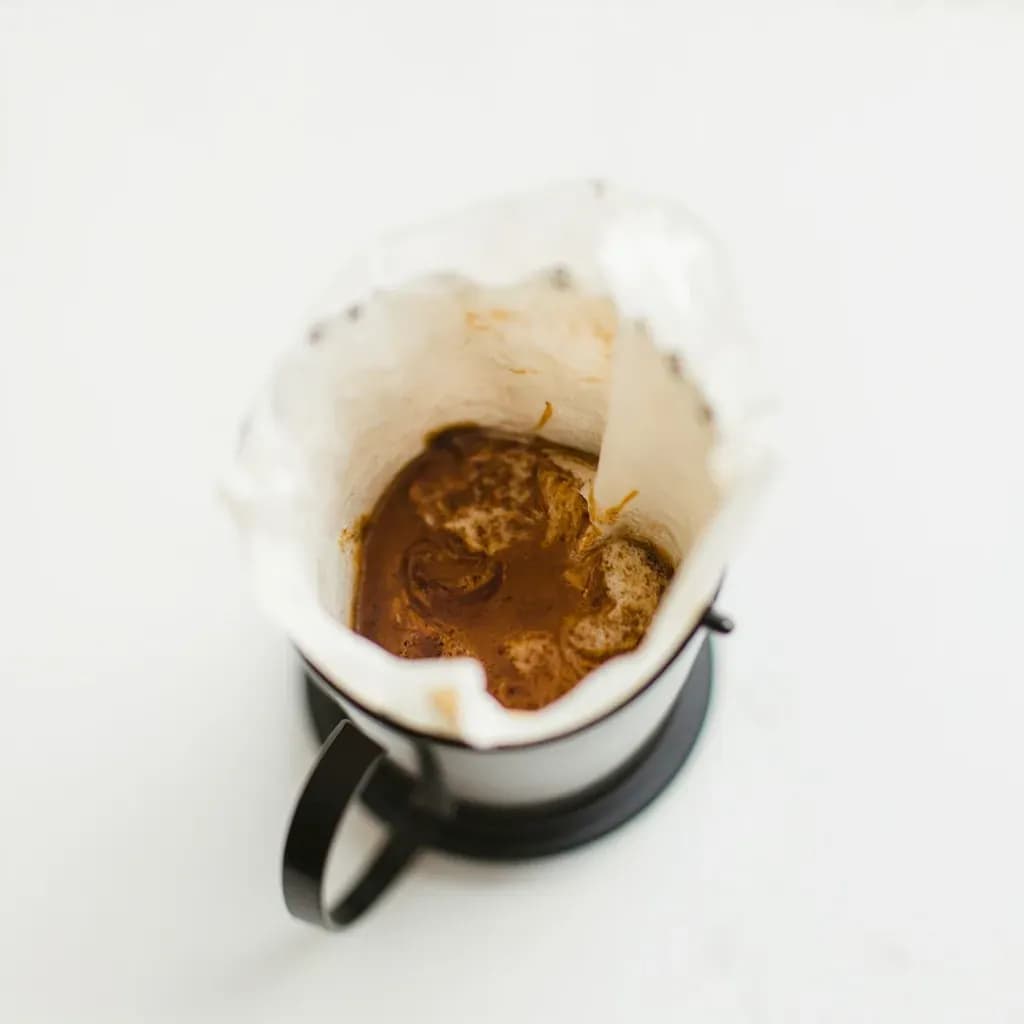
Appliances & Heat
AeroPress
A hand-pressed brewer that pushes hot water through coffee grounds for a quick concentrated cup.
The AeroPress is a compact manual coffee maker consisting of a chamber and a plunger that forces hot water through a bed of grounds and a paper or metal filter. The short immersion plus air pressure yields a smooth, low-acidity cup or concentrate in under a minute, brewed directly into a mug. Its portability and easy cleanup make it popular for travel and single-serving brewing.
The AeroPress is a manual brewer consisting of a cylindrical chamber and a fitted plunger with a silicone seal. Hot water is poured over coffee grounds held in a paper or metal filter at the base, steeped briefly, then forced through the filter by hand pressure. Because the user supplies the pressing force rather than relying on gravity alone, extraction finishes in seconds and the brewer can be lifted off the cup the moment the airlock hisses — a built-in signal that the brew is done.
What makes the device distinctive is where it sits on the brewing spectrum. The full-immersion steep pulls soluble compounds evenly from the grounds, while the short, forceful press produces a concentrated cup closer in body to espresso than to drip coffee — though without the 9-bar pressure and crema of true espresso. The combination of short brew time, precise dose control, and easy cleanup has earned it a devoted following among home brewers, café baristas, and the competitors of the annual World AeroPress Championship.
The cup you get depends heavily on filter choice and grind. Paper micro-filters catch nearly all fines and oils, yielding a clean, bright, almost tea-like clarity. Reusable metal disc filters let oils and micro-fines through, producing a heavier, more textured mouthfeel. Because immersion time is so brief, evenness of grind and dose precision matter more than they do with drip brewing — small changes in grind size, water temperature, or steep length produce noticeable swings in the final cup.
Alternatives
Types & varieties
The flagship model; chamber and plunger with paper micro-filters. Now sold alongside newer versions.
Smaller-capacity travel version with an integrated 16 oz tumbler that doubles as a carrying case.
Transparent Tritan-plastic body, released 2023, allowing visibility of the brew bed and bloom.
Larger-capacity brewer introduced 2024, intended for brewing up to about three cups in one go.
Disposable white paper discs that produce a clean, sediment-free cup.
Reusable fine-mesh stainless discs (sold by Able Disk, Aesir, and others); allow more oils through for a fuller body.
Standard vs. inverted method
In the standard method, the chamber sits on top of the mug with the filter cap already in place. Coffee and water go in, steep briefly, then the plunger drives the brew through the filter and into the cup. It is fast and tidy but limits steep time, because once water hits the grounds it begins dripping through the filter on its own. The inverted method flips the chamber upside down so the plunger seals the bottom: water and coffee steep without any drip-through, the filter cap is attached after steeping, and the whole unit is flipped onto a mug for the press. Inverted brewing gives precise control over steep time (useful for light roasts or for experimenting with longer extractions) at the cost of one extra step and slightly higher risk of spills.
- Standard: faster, simpler, fewer parts to handle; the default for daily brewing.
- Inverted: longer, controlled steep with no drip-through; preferred for light roasts and recipe development.
- Filter choice and grind consistency tend to shape the final cup more than method choice itself.
Filter choice and cup character
The paper micro-filter is the default and produces a bright, clean cup with very little sediment — most drinkers find this clarity highlights acidity and aromatic notes in light and medium roasts. Reusable metal disc filters let oils and a small amount of micro-fines through, giving the cup more body, a heavier mouthfeel, and a slightly sweeter, more rounded flavor profile. Metal filters also cut ongoing cost and waste; the trade-off is a small amount of sediment in the cup and a need for occasional backflushing to keep the disc clear.
- Paper: clean, bright, sediment-free; discard after each brew.
- Metal: fuller body, more oils, slight sediment; rinse or backflush between uses.
- Switching filters changes the cup more than changing grind size within a narrow range.
Common uses
Tips & pitfalls
- Pre-wet the paper filter in the basket before adding coffee; it removes the papery taste and helps the filter seat against the disc.
- Use a scale and timer for repeatability — eyeballing dose and steep time makes results swing wildly between cups.
- Stir gently after pouring water in, just enough to wet all the grounds; aggressive stirring pulls fines into the filter and slows the press.
- Press with a slow, even 20–30 second push. Forcing the plunger fast channels water and over-extracts, producing bitterness.
- Try the inverted method (chamber flipped upside down) when you want full control of steep time before attaching the filter cap.
- Grind slightly coarser if the press stalls, and slightly finer if the cup tastes thin or weak — grind size is the main lever for strength and body.
- Rinse the plunger seal after every use; coffee oils build up and can cause leaks or off-flavors over time.
- Dilute the concentrate to taste — about 1:1 with hot water for a regular-strength cup, or with milk for a latte-style drink.
Good to know
- Inventor
- Alan Adler, founder of Aerobie, Inc.
- Year introduced
- 2005, debuted at the Specialty Coffee Association of America conference
- Chamber capacity
- Roughly 7 fl oz / 207 mL in the Original; the XL model brews about three cups
- Materials
- BPA-free polypropylene body with a silicone plunger seal
- Filter type
- Proprietary ~62 mm paper micro-filter discs; reusable stainless disc filters sold by third parties
- Grind recommendation
- Medium-fine, roughly the texture of table salt for the standard method
- Typical ratio
- 1:15 to 1:17 coffee-to-water for brewed coffee; up to 1:6 for concentrate to dilute
- Press time
- 20–30 seconds of slow, even pressure
- Water temperature
- 195–205 °F (90–96 °C); drop to ~175 °F for very light roasts
Also called
Aero Press · Aeropress Coffee Maker
Related

Stovetop
The everyday burners where most cooking actually happens

Oven
Enclosed dry heat for roasting, baking, and braising

Grill
Live-fire or gas grates for char, smoke, and high heat

Smoker
Low, slow heat and wood smoke for barbecue and brisket

Air Fryer
Countertop convection that crisps with little or no oil

Slow Cooker
Set-and-forget low heat for stews, beans, and braises

Pressure Cooker
Sealed steam pressure that cooks tough food in a fraction of the time

Rice Cooker
Foolproof, perfectly steamed rice every single time