Appliances & Heat
French Press
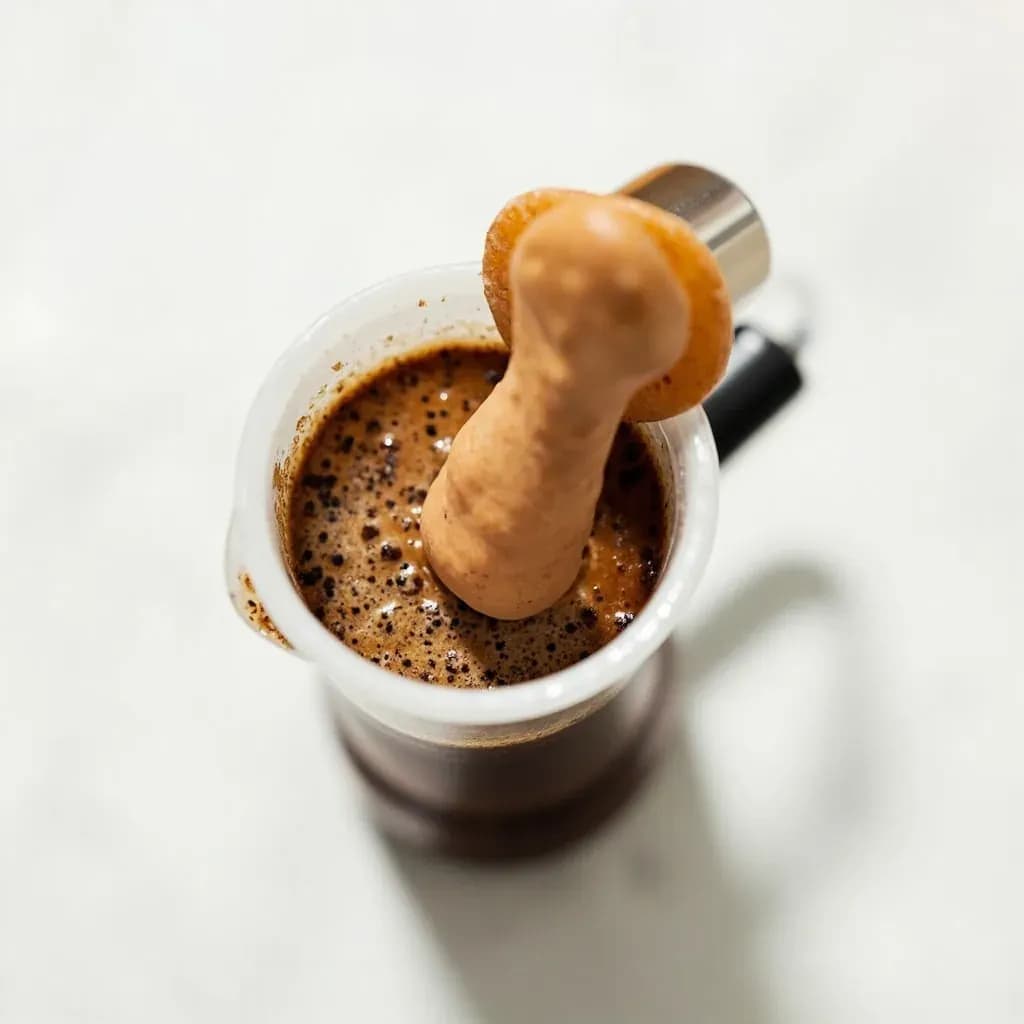
A plunger coffee maker that steeps grounds in hot water, then filters with a mesh screen.
A French press is a cylindrical carafe with a plunger fitted with a fine metal mesh filter. Coarse coffee grounds steep directly in hot water for a few minutes, then the plunger is pressed down to separate the grounds from the brew. Because it uses a metal rather than paper filter, it produces a full-bodied cup that retains the coffee's natural oils; it can also be used to froth milk or steep loose tea.
The French press is a full-immersion brewer: ground coffee and hot water share a beaker for several minutes, then a fitted mesh plunger descends through the bed of grounds to strain the liquid into the carafe below. Unlike drip or pour-over methods that pass water through a filter, the press extracts by prolonged contact, which is why the resulting cup is fuller-bodied, more textured, and often described as heavier on the palate than drip coffee.
It matters because it is the most forgiving brewer in the home kitchen. There is no delicate pouring technique, no paper filter to manage, no pressure to dial in — the variables that determine quality are simply grind size, water temperature, coffee-to-water ratio, and steep time. Get those roughly right and the cup is excellent; nudge them and the result shifts in predictable ways rather than failing outright. That tolerance is why the press is the default first brewer for new coffee drinkers and a reliable tool for anyone who wants good coffee without ceremony.
What a French press asks of the cook is the same thing it asks of any immersion method: control the grind and the time. A coarse, even grind keeps the mesh clear; a fine or uneven grind produces sediment and bitterness. Plunge and decant promptly when the timer is up, because the brew keeps extracting against the grounds as long as it sits in the beaker. Master those two points and the press will outperform much more elaborate equipment.
Alternatives
Types & varieties
The classic, inexpensive design; lightest body but loses heat quickly and is the most fragile.
Retains heat far longer and is far more durable than glass; the practical choice for everyday use once a glass beaker inevitably breaks.
Press and insulated tumbler combined, with the plunger built into the lid so coffee can be brewed and drunk from the same vessel.
Lightweight, rugged version aimed at camping, travel, and households with children; typically lower-cost and with weaker thermal performance than insulated steel.
Two fine mesh screens (sometimes with a paper filter disc) intended to cut sediment; a notable commercial refinement of the basic single-mesh.
Smaller 240–350 ml bodies for one mug; useful for solo drinkers and for small-batch cold brew.
Beyond Coffee: Secondary Uses
The same mesh-and-plunger mechanism that filters grounds from water will strain almost anything you steep in the beaker. The press is rarely the most efficient tool for these jobs, but it is often the one already on the counter, and it does them cleanly in a single step.
- Loose-leaf tea: treat the press like a teapot, using about 1 tablespoon of leaves per cup and steeping 3–5 minutes before plunging; the mesh strains most whole-leaf teas cleanly in one pass.
- Cold brew concentrate: combine coarse grounds and cold water at a 1:4 to 1:8 ratio and refrigerate 12–18 hours before plunging; dilute the concentrate roughly 1:1 with water or milk to serve.
- Botanical infusions: lavender, citrus peel, vanilla, or chili can be steeped in simple syrup, vinegar, or neutral spirit and pressed clean in one step, leaving a clear, sediment-free result.
- Stock clarification: a casual pass through the press will catch large particles from a finished stock or consommé in a home kitchen, though a chinois or coffee filter is the proper tool for restaurant work.
- Milk frothing: the tall, narrow beaker doubles as a pitcher for a handheld milk frother, useful for a single cappuccino or a small batch of café au lait.
Common uses
Tips & pitfalls
- Use a true coarse, even grind; a blade grinder produces fines that clog the filter and end up as silt in the cup. A burr grinder set to its coarsest setting is the right tool.
- Preheat the empty press with hot water, then discard it, before adding coffee — a cold beaker drops the brew temperature several degrees and slows extraction.
- Bloom the grounds: pour just enough water to saturate them, wait 30–45 seconds, then add the rest. This degasses CO₂ from fresh grounds and noticeably improves evenness of extraction.
- Weigh coffee and water with a scale. Volume-based scoops are inconsistent grind to grind and cup to cup, and a French press has no other way to compensate.
- Plunge slowly and steadily over about 20–30 seconds. Jamming the plunger stirs the bed of grounds and pushes fines through the mesh, which is a leading cause of a gritty cup.
- Decant the brewed coffee out of the press immediately after plunging. Coffee left in contact with the grounds keeps extracting and turns bitter within minutes.
- Skim the floating crust of fine grounds from the surface with a spoon before plunging to reduce sediment in the cup.
- Clean the mesh filter thoroughly after every use. Trapped oils turn rancid quickly and stale-flaw the next pot; a disassembled filter can be soaked in a baking-soda solution to cut the film.
- Replace filters that have developed holes or stretched mesh; the seal between disc and wall is what keeps grit out of the cup.
- Use filtered water when possible; chlorine and high-mineral water flatten coffee flavor.
Good to know
- Also known as
- Press pot, coffee press, plunger pot, cafetière à piston, caffettiera a stantuffo
- Origin
- First patented in 1929 by Italian Attilio Calimani; the modern piston-and-mesh design traces to Faliero Bondanini's 1958 patent, later commercialized by Martin S.A. in Switzerland and Bodum in Denmark
- Typical materials
- Borosilicate glass beaker, stainless steel frame and plunger, fine stainless steel (or occasionally nylon) mesh filter
- Standard sizes
- 3-cup (≈350 ml), 4-cup (≈500 ml), 8-cup (≈1 L), 12-cup (≈1.5 L); the 'cup' is generally 4–5 oz (120–150 ml)
- Ideal grind
- Coarse and uniform, roughly the texture of raw sugar or coarse sea salt
- Brew ratio
- 1:15 to 1:17 coffee-to-water by weight for balanced strength (e.g., 30 g coffee to 450 g water for a 4-cup press)
- Water temperature
- 195–205 °F (90–96 °C); water just off the boil
- Steep time
- 4 minutes is the conventional benchmark; 3–5 minutes is the workable range
Also called
Stempelkande · Cafetière · Press Pot · Plunger Pot
Related

Stovetop
The everyday burners where most cooking actually happens

Oven
Enclosed dry heat for roasting, baking, and braising

Grill
Live-fire or gas grates for char, smoke, and high heat

Smoker
Low, slow heat and wood smoke for barbecue and brisket

Air Fryer
Countertop convection that crisps with little or no oil

Slow Cooker
Set-and-forget low heat for stews, beans, and braises

Pressure Cooker
Sealed steam pressure that cooks tough food in a fraction of the time

Rice Cooker
Foolproof, perfectly steamed rice every single time