Prep & Assembly
Grounds Distribution
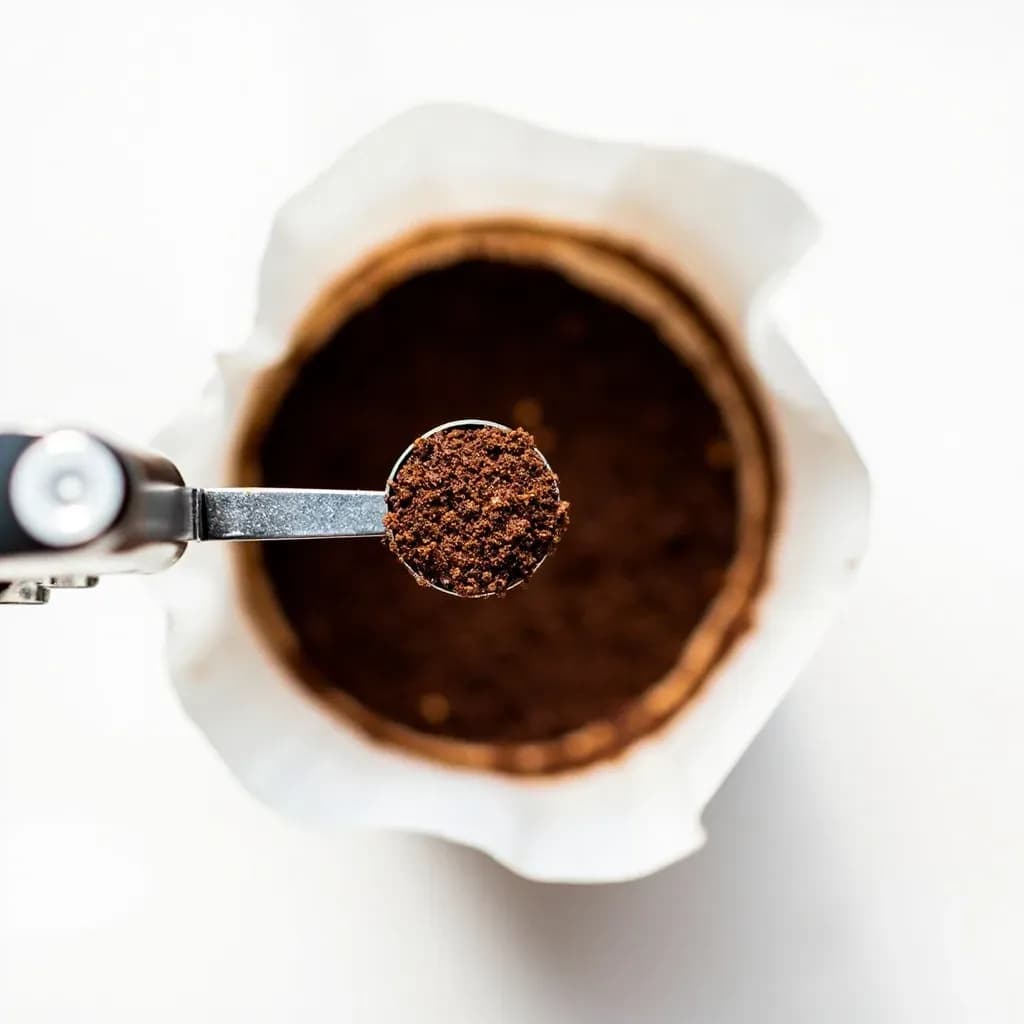
Evenly leveling coffee grounds in the basket so water extracts uniformly.
Grounds distribution evens out the coffee bed in a portafilter, eliminating clumps and high or low spots so pressurized water flows uniformly. Baristas use techniques like WDT (stirring with fine needles) before tamping to prevent channeling, where water rushes through weak points and ruins extraction. Even distribution is a prerequisite for a balanced espresso shot.
Grounds distribution is the espresso prep step that levels and evens the density of coffee in the portafilter basket after dosing but before tamping. The grinder chute drops grounds into the basket in a heap with a central mound and uneven compaction — denser under the mound, looser at the walls. Distribution addresses both problems, and it is the single most effective intervention against channeling, the phenomenon where water finds the path of least resistance through the puck and extracts unevenly, leaving the shot sour on one side and bitter on the other.
Where tamping compresses the bed, distribution evens it. The two techniques solve different problems and are not interchangeable. A perfectly level tamp of a poorly distributed bed will still channel, because water moves through loose spots faster than dense ones. Modern specialty practice treats distribution as the de facto standard rather than an optional extra, particularly in single-dose workflows where each grind is dumped fresh and prone to clumping.
The technique matters most in espresso, where nine-bar pressure amplifies any puck irregularity into a flaw in the cup. The same principle — break clumps, level the bed, settle gently before compressing — applies to any brewer that relies on a uniform bed, including moka pot baskets and the inverted Aeropress fitted with a paper filter.
- Difficulty
- Medium
Types & varieties
Stir with thin needles in expanding circles from center outward; breaks clumps and evens density before tamp.
A flat-blade lever spun once through the bed to level it in a single fast motion.
A weighted disc that levels the bed and tamps in one press (e.g., Pesado, Reg Barber, Cafflano).
A gentle side-to-side shake and tap to settle grounds — minimal tool, lower consistency.
Use a finger or small tool to break the central mound left by the grinder chute.
Built into grinders such as the Mahlkönig E80 with clump-crushers and anti-pop devices; some high-end machines integrate similar logic.
How to do it
- 1
Dose into the portafilter
Grind the desired dose (typically 14–22 g) directly into a dry portafilter fitted with a dosing ring or funnel to catch spillage.
- 2
Initial settle (optional)
Tap the portafilter once firmly against the bench, or give it a light shake, to collapse the initial pile and release trapped air.
- 3
Stir with WDT needles
Hold the WDT tool vertically with the needles just touching the bed. Stir in slow expanding circles from the center to the edge for 5–10 seconds, letting the tool's own weight do the work. Do not press down.
- 4
Alternative: Stockfleth pass
If using a Stockfleth lever, rest the flat blade level on the bed and spin it once or twice through the grounds. Lift straight out without tilting.
- 5
Final level and tap
The bed should be flat, with no central mound, no voids at the wall, and no visible clumps. Give the portafilter one light side-tap to settle the bed.
- 6
Tamp
Place a calibrated tamper level on the bed and press straight down with roughly 30 lb of force, finishing level. Pull the shot immediately.
Choosing Your Method
Each variant has trade-offs in speed, cost, and consistency. The right choice depends on your grinder, your workflow, and how much clumping your dose produces.
- WDT is the most consistent method for clumpy single-dose grinds and is the de facto standard in modern specialty cafes and home setups. Cost is low — a DIY tool with acupuncture needles runs under $5.
- The Stockfleth is faster (a single spin) and works best with grinders that already deliver fluffy, even grinds. It remains especially popular in Australian and European barista culture.
- Distributor-tamper combos are the fastest path from dose to puck and lower the skill ceiling for tamping level, but they compact the bed more than they stir it, so they suit pre-ground dosing more than clumpy single-dose work.
- Shake-and-tap is a fallback when no tool is at hand; it is reliable for forgiving beans and slightly coarser espresso but cannot fully fix dense clumps.
- If your grinder has a built-in clump crusher or anti-pop device, you may be able to skip a separate distribution step entirely — though a quick Stockfleth pass still helps level the surface.
Common uses
Tips & pitfalls
- Use 0.3–0.4 mm WDT needles — thicker than 0.5 mm will push grounds aside rather than stir them through the bed.
- More needles (5–8) cover the basket faster; fewer needles work just as well but take longer to reach the walls.
- Use a dosing funnel or collar around the basket to keep grounds from spilling over the rim during stirring.
- Don't press down with the WDT tool — let the needles glide on their own weight; downward pressure compacts the bed unevenly and undoes the work.
- Move in expanding circles from the center outward, then optionally one slow pass back inward to finish the edge.
- Keep the Stockfleth level as you lift out — tilting creates a sloped bed that channels toward the low side.
- Distribution does not replace tamping. Tamp pressure stays at roughly 30 lb regardless of how well you distribute.
- Clean WDT needles weekly; coffee oils build up and create static that resists even distribution.
Good to know
- Kind
- Espresso preparation technique
- Position in workflow
- Step 3 of espresso prep (after dose, before tamp)
- Primary purpose
- Even out coffee grounds across the basket to prevent channeling during extraction
- Typical duration
- 5–15 seconds depending on method
- Skill level
- Beginner to intermediate; easy to learn, hard to perfect
- WDT inventor
- John Weiss (technique popularized on Home-Barista and CoffeeGeek forums in the early 2000s)
- WDT needle spec
- 0.3–0.4 mm diameter stainless or acupuncture needles, 5–8 per tool
- Common tools
- WDT tool, Stockfleth lever, distributor-tamper combo, dosing funnel
- Equipment cost range
- $5 (DIY WDT) to $80+ (premium distributor-tamper combos)
Also called
WDT (Weiss Distribution Technique)
Dishes that rely on it

Related

Whisk
Beat ingredients smooth and aerated with a looping wire motion

Sift
Pass dry ingredients through mesh to aerate and remove lumps

Strain
Pour through mesh to separate solids from liquid for a smooth result

Filter
Pass liquid through fine material to clarify out the smallest particles

Rice
Press cooked potatoes through small holes for fluffy, lump-free texture

Mash
Crush soft cooked food into a rustic, creamy purée

Grind
Crush food into a coarse to fine texture, from spices to meat

Grate
Shred food into fine bits against a sharp-toothed surface