
Transform & Preserve
Macerate
Steep fruit in sugar or liquid to draw out a syrupy juice
Macerating tosses fruit with sugar, citrus, or spirits and lets it rest, drawing out the juices into a light syrup while softening the flesh. It's how strawberries get glossy and saucy for shortcake. Just sugar and time do the work — no heat required.
Macerating is the no-heat cousin of cooking down fruit: toss it with sugar, citrus, or a splash of spirit and let it sit. Osmosis does the work — sugar draws juice out of the fruit, which dissolves into a light, glossy syrup while the flesh softens and its flavor intensifies. Strawberries go from firm to saucy and luscious for shortcake; stone fruit slumps into spoonable sweetness. It takes nothing but a bowl and a little patience, and the longer it sits (within reason) the more syrup pools at the bottom.
- Difficulty
- Easy
Types & varieties
Fruit tossed with sugar to draw out a natural syrup — the classic for berries.
Fruit steeped in liqueur, wine, or spirits for desserts and cocktails.
Citrus juice and zest to brighten and lightly 'cook' the fruit's surface.
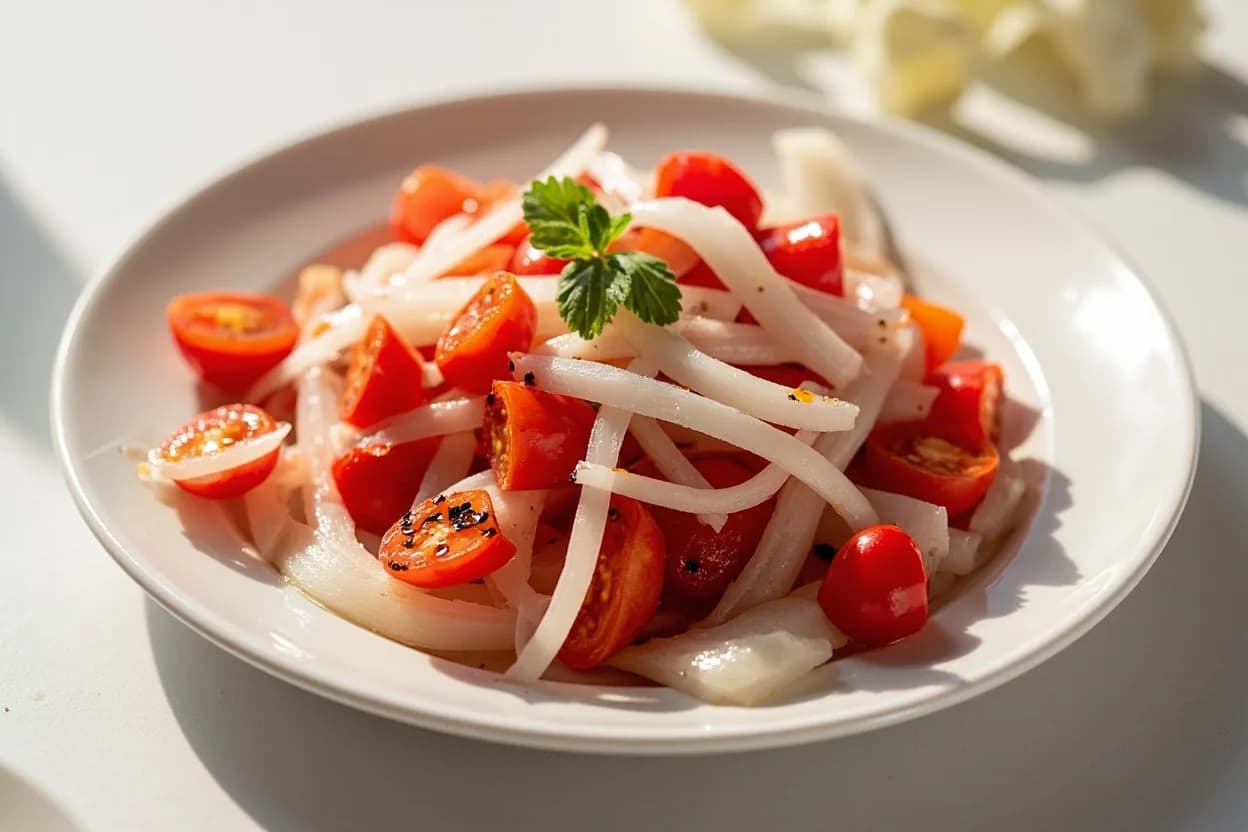
Onions or shallots steeped in vinegar or citrus to soften their bite.
How to do it
- 1
Prep the fruit
Hull, pit, and slice the fruit into even pieces so it softens and releases juice uniformly.
- 2
Add the sweetener
Sprinkle sugar (or drizzle honey) over the fruit, plus any citrus or spirit you want.
- 3
Toss gently
Turn the fruit to coat it evenly without crushing the pieces.
- 4
Let it rest
Leave it at room temperature or in the fridge while osmosis draws the juices into a syrup.
- 5
Stir occasionally
Give it a gentle stir now and then to redistribute the sugar and pooling syrup.
- 6
Serve in its syrup
Spoon the softened fruit and its syrup over whatever you're dressing.
How it works
Sugar on the fruit's surface creates a concentration gradient: water inside the fruit cells migrates out toward the sugar by osmosis, carrying flavor and pigment with it and dissolving the sugar into a syrup. The fruit softens as it loses some internal water, and its taste concentrates. Acid and alcohol add flavor and can lightly break down the surface, which is why a little citrus or liqueur deepens the effect.
Common uses
Tips & pitfalls
- Less sugar keeps the fruit's shape; more sugar makes more syrup.
- A squeeze of citrus brightens and balances the sweetness.
- Macerate just before serving for fresh fruit, longer for a saucier result.
- Save the leftover syrup for drinks, soaking cake, or drizzling.
- A pinch of salt or black pepper makes strawberries taste even more of themselves.
Good to know
- Steeping agent
- Sugar, honey, citrus juice, or a splash of liqueur
- Time
- 30 minutes to a few hours; some fruits overnight
- Temperature
- Room temperature or refrigerated — no heat
- Sugar amount
- A modest sprinkle; more sugar draws more syrup
- Result
- Softened fruit in its own light syrup
Also called
maceration
Dishes that rely on it
Related

Confit
Cook slowly submerged in fat for silky tenderness and keeping

Cure
Draw out moisture with salt and time to preserve and concentrate

Pickle
Steep in acidic brine for bright, tangy, crunchy preservation

Ferment
Let friendly microbes transform food into tangy, complex flavor

Marinate
Soak in a seasoned mix to flavor and tenderize before cooking

Brine
Soak in salt water so meat stays juicy and seasoned throughout

Dehydrate
Slowly dry out moisture to concentrate flavor and extend shelf life

Cold-Smoke
Perfume cured food with smoke without cooking it through