Prep & Assembly
Mar i Muntanya (Surf and Turf Combining)
Catalan tradition of combining seafood and meat in one dish for layered savory depth.
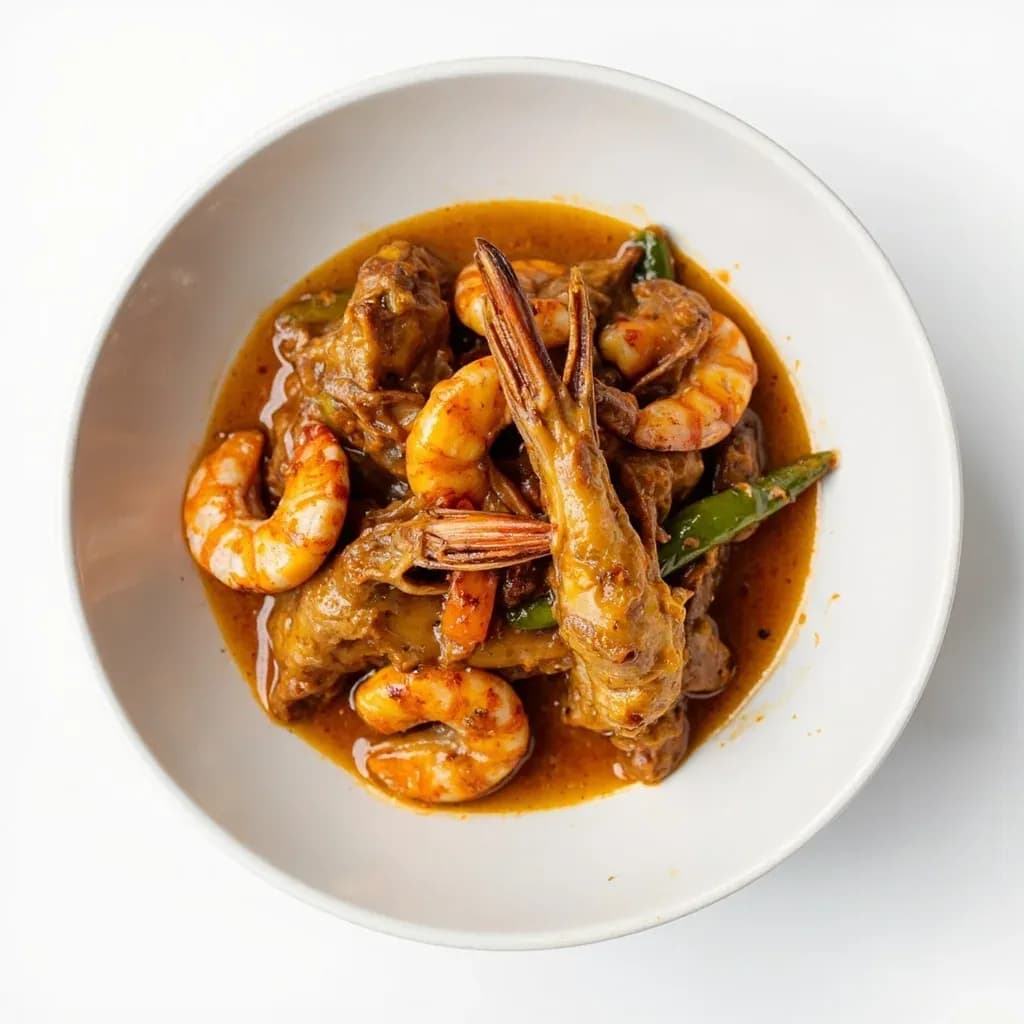
Mar i muntanya, literally sea and mountain, is the Catalan approach of cooking seafood and meat together in a single dish, such as chicken with prawns or rabbit with langoustines. The two proteins are usually braised together with a sofrito and often a picada to bind their flavors into a rich, complex sauce. The pairing is built around contrast and the way their juices enrich each other.
Mar i muntanya — literally 'sea and mountain' in Catalan — is less a single recipe than a cookery technique category: a way of braising meat and seafood together in one pot until they share a single glossy sauce. It grew from a geographical fact of Catalonia, where the Pyrenees and the Mediterranean are only a few hours apart, so mountain proteins and coastal proteins landed in the same market basket routinely. The cook's central problem is that the two protein groups have very different required cook times, and the technique is essentially a method for reconciling them.
The architecture is consistent across the tradition. A sofregit of slow-cooked onion (often with garlic and ripe tomato) is the base; the meat is seared hard in it to build fond, then simmered in white wine and stock until it is nearly done; seafood is added in stages according to its own cook time, fast-cooking shellfish last; the dish is finished with a picada of toasted ground nuts, garlic, and parsley whisked into a little sauce and stirred back in. That picada is the signature flourish — it thickens the juices, glosses the sauce, and gives the dish its characteristic Catalan voice.
What changes from kitchen to kitchen is the protein pairing, not the method. Chicken with prawns, pork-and-beef meatballs with cuttlefish, rabbit with prawns and wild mushrooms — all are valid mar i muntanya, all are governed by the same logic. The technique is forgiving on choice of ingredients but unforgiving on timing: overcook the seafood and the entire dish turns rubbery and flat, which is why every experienced Catalan cook treats the final five minutes as the only minutes that matter.
- Difficulty
- Medium
Types & varieties
Chicken pieces braised with whole prawns; the canonical example, usually finished with a picada of almonds, garlic, and parsley.
Pork-and-beef meatballs simmered with cuttlefish (or squid) in a tomato-based sauce, often tinted with ñora pepper.
A paella-style rice that incorporates both chicken or rabbit and shellfish, cooked uncovered so the bottom layer forms socarrat.
The same principle applied to short toasted noodles (fideus) instead of rice, with meat and seafood sharing the pan.
A free-form earthenware stew; the proteins vary with season and pantry — chicken, rabbit, pork, monkfish, prawns, mussels, and cuttlefish are all valid.
An autumn variant adding wild mushrooms (ceps, chanterelles/rossinyols) to bridge sea and land flavors with deep umami.
How to do it
- 1
Plan the pairing and ratio
Choose one meat and one to two seafoods whose cook times and intensities are compatible. A balanced visual and weight ratio is roughly 60 percent meat to 40 percent seafood. Classic pairings: chicken with prawns; pork-and-beef meatballs with cuttlefish; rabbit with prawns and mushrooms; monkfish with pork belly.
- 2
Prepare a shellfish base liquid (optional but worth it)
Sweat prawn shells and a chopped onion in olive oil for five minutes, deglaze with a splash of brandy or dry white wine, cover with water, and simmer twenty minutes. Strain. This stock can replace part or all of the braising liquid and adds real depth.
- 3
Build the sofregit
In a wide cassola or paellera over medium-low heat, sweat finely chopped onion in olive oil with a pinch of salt until translucent and beginning to color, eight to ten minutes. Add grated or blended ripe tomato and cook until jammy and the oil begins to separate at the edges of the pan.
- 4
Sear the meat hard
Pat the meat dry, season, and add to the sofregit. Brown on all sides over medium-high heat without moving it; this fond is what carries the dish once the seafood is in. Work in batches rather than crowding, which would steam the meat instead of caramelizing it.
- 5
Deglaze and simmer the meat
Pour in dry white wine or fino sherry and scrape up every bit of fond. Add stock — a mix of the shellfish stock above and a chicken or meat stock works beautifully. Bring to a simmer, partially cover, and cook the meat until it is about three-quarters done: roughly fifteen to twenty-five minutes for chicken pieces, longer for rabbit or pork, less for small meatballs.
- 6
Add slow-cooking seafood
If the recipe includes cuttlefish, squid, octopus, or chunks of monkfish or hake, add them now so they have at least ten to fifteen minutes of cooking time. They will absorb the sauce and stay tender rather than turning chalky.
- 7
Add fast-cooking seafood last
Stir in whole prawns, langoustines, and clams or mussels in the final three to five minutes. Cover just until the shells pop open; discard any that stay shut. Prawns should be just opaque and still slightly springy at the thickest part of the tail.
- 8
Finish with a picada
Off the heat, whisk toasted ground almonds or hazelnuts, minced garlic, and chopped parsley with a ladle of the sauce to make a loose paste, then stir it back in. The sauce will thicken, gloss, and brighten. A small piece of toasted dried ñora pepper, ground, is the traditional optional accent.
- 9
Rest and serve
Let the cassola sit off the heat for five minutes so the sauce settles and the seafood finishes gently from residual heat. Serve directly from the pan, with crusty pa de pagès, plain white rice, or fideus alongside to soak up the sauce.
The two-protein timing problem
Mar i muntanya is best understood as a timing exercise disguised as a stew. Land proteins — chicken thighs, rabbit legs, pork meatballs, beef short rib — want a long, moist simmer to become tender and to give up their gelatin and fond. Most seafood wants almost no time at all: prawns are perfect in three minutes, monkfish in six, mussels simply until they open. The technique resolves this by cooking the meat to roughly three-quarters doneness first, then staging seafood into the simmering sauce in order of required time. Cuttlefish, squid, and firm white fish go in with ten or more minutes to go; prawns and langoustines in the last three; clams and mussels in the last two. Get this sequence right and the proteins finish together, sharing one sauce. Get it wrong and the seafood turns to rubber while the meat is still tough, or the meat dries out while you wait for shellfish to open.
Building the sauce: sofregit, fond, and picada
Three structural elements carry a mar i muntanya, and once you understand them the rest is protein choice. The sofregit is a slow-cooked onion base, often extended with garlic and grated ripe tomato cooked until jammy and the oil begins to split from the pan at the edges. It is the flavor platform. The fond is the caramelized crust the meat leaves on the pan after a hard sear; deglazing with dry white wine or fino sherry lifts it into the braising liquid, and that caramel is the source of the dish's deep savory note. The picada — toasted ground almonds or hazelnuts, garlic, parsley, and sometimes a small dried ñora pepper, whisked with a ladle of the cooking liquid into a paste and stirred back in at the end — thickens, glosses, and adds the final aromatic lift. None of these three are optional if you want a result that tastes Catalan rather than merely braised.
Common uses
Tips & pitfalls
- Brown the meat hard and leave it undisturbed; the caramelized crust is what carries the dish once seafood is added.
- Cook the meat to about three-quarters doneness before any seafood joins the pan, then use the final simmer to finish both proteins together.
- Add raw shellfish — prawns, langoustines, mussels, clams — only in the last three to five minutes so they stay sweet and tender.
- Use the seafood shells and heads to make the cooking liquid; a quick stock of prawn shells, onion, and a splash of brandy pays back many times over in depth.
- If the recipe includes cuttlefish or squid, give it a separate longer simmer of forty to sixty minutes first; it toughens briefly then turns silky, which a quick braise cannot achieve.
- Season in two stages: salt the meat early, then adjust only after the seafood goes in, because seafood brings its own salinity.
- Common mistake: drowning the dish. The proteins should sit in just enough sauce to glaze, not swim; excess liquid steams the seafood and turns it rubbery.
- Common mistake: tossing in all seafood at once. Stagger by cook time — firm white fish first, prawns next, then mussels or clams that only need to open.
- Common mistake: pairing strongly oily or iodine-heavy fish like mackerel or sardine with meat; their flavors fight. Lean, sweet shellfish and white fish (monkfish, hake, cuttlefish) are the safer choices.
Good to know
- Origin
- Catalonia, Spain; also practiced in Valencia and the Balearic Islands under the same Catalan naming
- Name language
- Catalan — 'Mar i Muntanya' literally means 'Sea and Mountain'
- Concept
- A combined-protein cookery tradition uniting seafood and land-animal proteins in a single pot, sauce, or rice
- Signature dishes
- Pollastre amb gambes (chicken with prawns) and mandonguilles amb sípia (meatballs with cuttlefish)
- Typical cookware
- Wide, shallow earthenware cassola (terracotta), a paellera, or a heavy braiser
- Base and finish
- Sofregit of onion (sometimes with garlic and tomato), finished with a picada of toasted nuts, garlic, and parsley
- Cooking liquid
- Dry white wine, fino sherry, fish stock, or a blend of fish and chicken stock
- Cooking logic
- Meat is browned first and simmered longest; seafood is added in stages so it finishes in the final minutes
- Skill level
- Intermediate — staging two protein groups with different cook times is the central challenge
- Active time
- Roughly 20–30 minutes of active work, excluding optional stock-making and longer meat simmers
Also called
surf and turf · sea and mountain
Related

Whisk
Beat ingredients smooth and aerated with a looping wire motion

Sift
Pass dry ingredients through mesh to aerate and remove lumps

Strain
Pour through mesh to separate solids from liquid for a smooth result

Filter
Pass liquid through fine material to clarify out the smallest particles

Rice
Press cooked potatoes through small holes for fluffy, lump-free texture

Mash
Crush soft cooked food into a rustic, creamy purée

Grind
Crush food into a coarse to fine texture, from spices to meat

Grate
Shred food into fine bits against a sharp-toothed surface