
Heat & Fire
Socarrat
Coax a crisp, caramelized crust on the bottom of the rice
Socarrat is the prized golden crust that forms on the base of a paella when the rice toasts against the hot pan at the end. It's the most coveted part of the dish. Crank the heat for the final minutes and listen — a gentle crackle, not a burnt smell, means it's there.
Socarrat is the prized, golden, caramelized crust that forms on the bottom of a paella when the rice toasts against the hot pan in the dish's final minutes — for many, the single best part of the dish. It isn't a separate recipe so much as a finishing move: once the liquid has nearly cooked away, you raise the heat for a short burst so the bottom layer of rice fries, caramelizes, and crackles against the metal without burning. The whole thing rides on your ears and nose — a gentle toasty crackle and a nutty, popcorn-like smell mean it's forming; an acrid smell means you've gone too far.
- Difficulty
- Advanced
Types & varieties
A final blast of direct flame under the pan to crisp the base.
Cooked over wood or coals, the traditional and most flavorful route.
A non-traditional finish under top heat — but true socarrat is bottom-up.
How to do it
- 1
Cook the rice nearly dry
Let the paella simmer undisturbed until almost all the liquid is absorbed and the rice is just tender — don't stir.
- 2
Listen for the dry point
When the bubbling quiets and you hear faint sizzling, the liquid's gone and it's time to make the crust.
- 3
Raise the heat
Turn the flame up for a short burst so the bottom layer of rice begins to fry and toast against the pan.
- 4
Use your ears and nose
Listen for a gentle crackle and smell for a nutty, toasted aroma — that's socarrat forming, not burning. The crust forms quickly, in roughly 1–3 minutes of raised heat.
- 5
Pull at the toasty smell, not the acrid one
Kill the heat the instant it smells deeply toasted; an acrid, smoky smell means it's tipping into burnt. If you're unsure of the smell, lift an edge of the rice with a spoon to check for golden-brown — not black — as a visual backstop.
- 6
Rest, then serve
Let the paella rest a few minutes off the heat; scrape up the crisp socarrat as you serve.
Why a wide thin pan matters
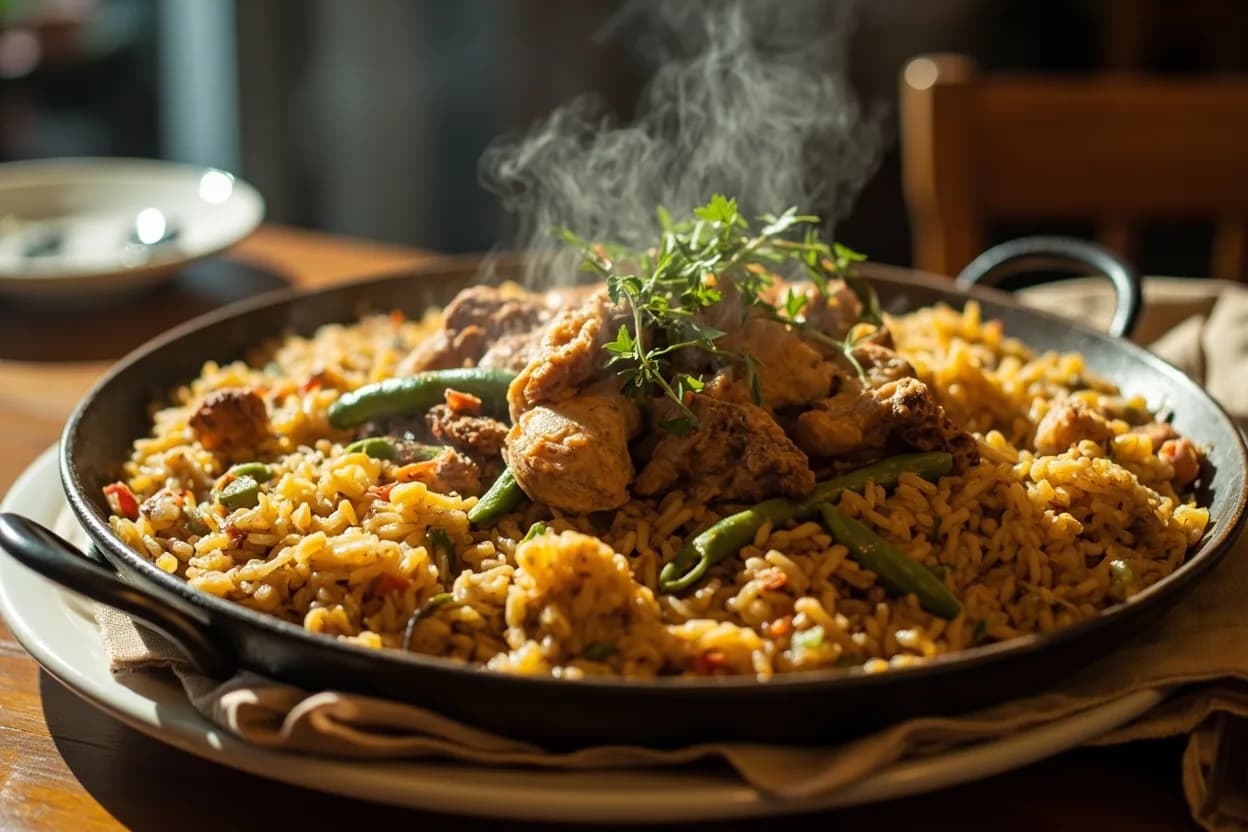
Socarrat depends on a thin, even layer of rice in direct contact with a broad expanse of hot metal — which is exactly what a true paellera is designed for. The shallow, wide shape spreads the rice in a thin film so the liquid evaporates quickly and the whole base can toast at once rather than the deep, steamy mound a tall pot would create. Caramelization (and a touch of Maillard browning) happens at the rice-to-metal interface once the water is gone and the temperature there climbs past the boiling point; a heavy or deep pan, or stirring the rice, prevents that crust from ever setting. It's why paella is never stirred once the rice goes in — disturbing it stops the bottom from forming the prized crust.
Common uses
Tips & pitfalls
- Never stir the rice once it's in — the crust can only form on an undisturbed bottom.
- Trust your ears and nose more than the clock; the window is short.
- Use the widest pan you can fit on the heat so the rice layer stays thin.
- Rotate the pan over the flame to brown the base evenly if your burner has hot spots.
Good to know
- Heat level
- High burst for the final 1–3 minutes
- Best for
- Paella and other dry-rice dishes finished in a wide pan
- Equipment
- Wide, thin paella pan (paellera) for an even crust
- Fat needed
- The oil already in the dish
- Time
- 1–3 minutes at the very end
Also called
paella crust · rice crust
Dishes that rely on it
Related

Sear
Blast the surface hot for a deep-browned, savory crust

Sauté
Cook quickly in a little fat over lively heat, tossing as you go

Stir-Fry
Toss bite-sized pieces over roaring heat for fast, smoky cooking

Pan-Fry
Crisp food in a shallow layer of hot fat, turning once or twice

Deep-Fry
Submerge in hot oil for an all-over crackling crust

Roast
Cook uncovered in dry oven heat for browned edges and tender centers

Bake
Cook with steady, surrounding oven heat — the soul of bread and pastry

Broil
Hit food from directly above with fierce overhead heat