Heat & Fire
Deep-Frying
Submerging food in hot oil for an all-over crisp crust and quick, even cooking.
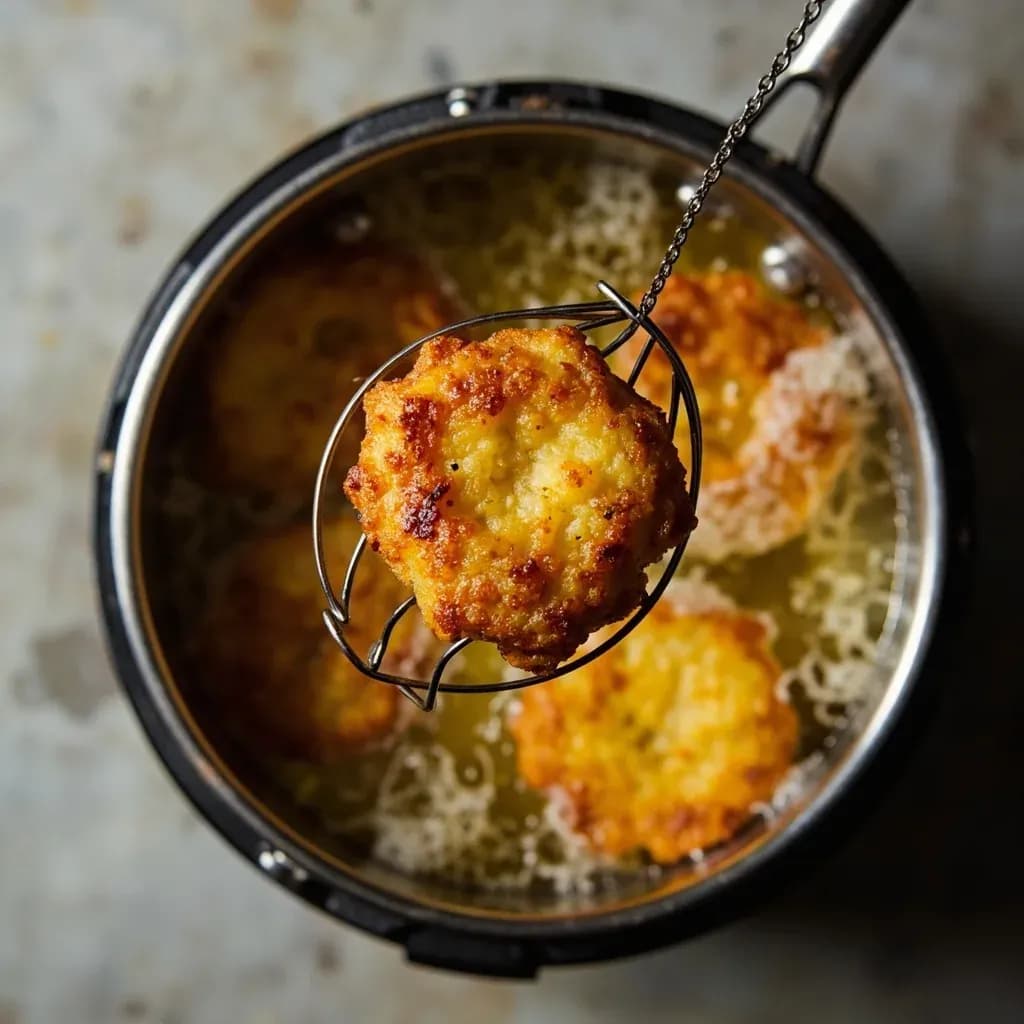
Deep-frying cooks food by fully immersing it in oil hot enough (typically 160-190C) to set a crisp exterior while steaming the interior moist. It is used worldwide for battered seafood, dough fritters, croquettes, and tempura (agemono). Keeping the oil temperature steady is key: too cool and food turns greasy, too hot and it browns before cooking through.
Deep-frying is the technique of cooking food by fully or partially submerging it in hot fat, typically at 325–375°F (165–190°C). In that narrow band of temperature, the surface dehydrates and browns faster than the interior overcooks, so a brittle, golden crust forms while steam escaping from inside keeps the food tender. The result is a textural contrast that no other dry-heat method can match: a crisp shell that shatters, a juicy or airy interior, and the savory, toasty flavors of the Maillard reaction and starch caramelization working in seconds.
What separates a good fry from a greasy one is control—over oil temperature, batch size, and the moisture content of the food going in. Oil that is too cool allows food to sit and soak; oil that is too hot scorches the crust before the center cooks; a crowded pot drops the temperature and produces heavy, oil-logged results. A heavy pot, an accurate thermometer, and a wire rack for draining do more than any gadget to produce consistent, restaurant-quality fried food at home.
Deep-frying sits at the heart of many of the world's most loved foods—French fries, doughnuts, fried chicken, tempura, falafel, chicharrón, samosas, and pakoras—each culture tuning batter, dredge, oil, and temperature to its own end. It is also the technique that demands the most respect: hot oil is unforgiving of carelessness with water, batch size, or unattended heat.
- Difficulty
- Medium
Types & varieties
Two-stage fry: an initial lower-temperature cook around 300°F (150°C) to cook through, then a brief higher-temperature fry around 375°F (190°C) for crispness. Standard for Belgian-style fries, Korean fried chicken, and Japanese karaage.
Sealed fryer that cooks under pressure, raising the boiling point of water and shortening cook time. Associated with KFC-style fried chicken and commercial chicken operations.
Frying under reduced pressure so oil and moisture vaporize at lower temperatures, preserving color and reducing oil uptake. Used commercially for fruit and vegetable chips.
Very brief immersion (seconds) in very hot oil to set a crust or color before finishing by another method. Used for sealing dumpling wrappers, spring-roll wrappers, and blanched potatoes before a second fry.
Japanese style using a thin, lacy batter of cold water, soft-wheat flour, and sometimes egg yolk, fried at 320–340°F (160–170°C) for a light, crisp, non-greasy coating.
Italian tradition of deep-frying in olive oil or a mix of olive and seed oils, often with a light flour or semolina dredge; includes fish, vegetables, and rice balls.
How to do it
- 1
Choose the right oil and pot
Select a neutral oil with a smoke point above 400°F (205°C) such as peanut, canola, sunflower, safflower, or rice bran. Use a heavy-bottomed pot (a 5–7 quart Dutch oven is ideal) or a countertop deep-fryer. Fill no more than halfway with oil—food displaces oil as it goes in, and the pot needs headspace for bubbling.
- 2
Set up a draining station
Place a wire rack over a rimmed sheet pan nearby. This allows excess oil to drip away while air circulates under the food to keep the crust crisp. Have a spider skimmer or slotted spoon, tongs, and paper towels ready, and clear the area of clutter and moisture.
- 3
Heat oil to target temperature
Heat the oil over medium to medium-high heat and attach a deep-fry or candy thermometer to the side of the pot, making sure it does not touch the bottom. Aim for 350–375°F (175–190°C) for most foods; lower (320–340°F / 160–170°C) for thick or wet batters like tempura, and higher (375–400°F / 190–205°C) for thin, quick-frying items and the second stage of a double-fry.
- 4
Prepare the food
Dry the food thoroughly with paper towels—surface moisture is the most common cause of dangerous splattering and prevents proper browning. Bread, batter, or dredge as the recipe requires, working in small batches so the oil is not waiting on a wet, breaded pile. Season the food lightly before or after frying, not heavily into wet batter.
- 5
Test the oil
Drop in a small piece of batter or a ½-inch cube of bread. It should sizzle immediately, rise steadily to the surface, and turn golden in about 60 seconds. If it sinks and barely sizzles, the oil is too cool (food will absorb oil and turn greasy); if it browns in under 30 seconds, the oil is too hot (food will burn outside before cooking inside).
- 6
Fry in small batches
Lower food gently into the oil away from your body, head turned slightly to the side. Add only a single layer at a time—crowding drops the temperature sharply and unevenly. Stir or turn only as needed, and watch for the visual cues that signal doneness: golden color, a steady bubble pattern, and in many cases, the food floating to the surface.
- 7
Monitor and adjust heat
Watch the thermometer throughout the cook. If temperature rises above your target, briefly turn off the heat and let it settle. If it falls below 325°F (165°C), let it recover before adding the next batch; frying in oil that is too cool is the single most common cause of greasy, heavy results.
- 8
Drain and season
Lift food out with the spider skimmer or slotted spoon, letting excess oil drip back into the pot for a few seconds, then transfer to the wire rack. Season with salt or a finishing spice within a minute while the surface is still oily enough for the seasoning to adhere. Hold fried food in a low oven (200°F / 95°C) on the rack if you are frying in waves.
- 9
Strain, store, or discard the oil
Let oil cool to about 100°F (38°C), then strain it through a fine-mesh sieve or cheesecloth into a clean, dry container. Label with the date and oil type; reuse within a few weeks for similar foods, or discard if it is darkened, foamy, smokes below its usual temperature, or smells off. Never pour used oil down the drain—cool, contain, and dispose with household waste or at a recycling drop-off.
How deep-frying actually cooks food
When food enters hot oil, the surface water instantly vaporizes and escapes as steam, creating the vigorous bubbling you see at the fryer's surface. That rapid surface dehydration is what allows the crust to climb above 212°F (100°C) and start browning through the Maillard reaction and starch caramelization. Inside the food, that same escaping steam keeps the temperature near boiling, so the interior cooks gently by its own moisture while the crust turns brittle. The trick is keeping the surface above the browning zone long enough to crisp before the inside dries out—and that is what oil temperature control manages.
- Surface dehydration drives crust formation and crispness.
- Steam escaping from the food keeps the interior moist and regulates its temperature.
- Browning flavors come from Maillard reactions on proteins and caramelization of starches and sugars.
- Oil that is too cool lengthens frying time and increases oil absorption, producing greasy food.
- Oil that is too hot sets the crust before the interior has time to cook through.
Oil selection
Choose a neutral-flavored oil with a smoke point well above your frying temperature—peanut, canola, sunflower, safflower, rice bran, and refined soybean all work. Peanut oil is the traditional choice for French fries and fried chicken because it handles high heat cleanly and contributes a faint nutty note. Olive oil is excellent for Italian frittura at moderate temperatures but smokes too readily above 375°F (190°C). Avoid unrefined oils and butter, which smoke below the working temperature. Refined lard handles moderate temperatures and is the traditional fat for Belgian-style fries, though quality varies.
- Smoke point should sit comfortably above your frying temperature, with margin to spare.
- Neutral oils (canola, sunflower, rice bran) let the food's flavor read clearly.
- Peanut oil is a traditional favorite for high-heat frying and fried chicken.
- Olive oil works for low-temperature Italian-style frying but is not suited to 375°F (190°C) work.
- Refined lard can deep-fry at moderate temperatures; unrefined oils and butter cannot.
Safety
Deep-frying is the most hazard-prone routine technique in the home kitchen, and almost every accident traces back to water meeting hot oil, oil left unattended, or a pot filled too high. Dry every piece of food thoroughly before it goes in, lower it gently away from your body, and never add food to oil that is not at temperature. Keep a metal lid or a class-K fire extinguisher within reach; never use water on an oil fire, and never carry a pan of burning oil.
- Surface water causes violent splattering—dry all food before frying.
- Never fill the pot more than half full; food and bubbles displace oil upward.
- Never leave heating oil unattended, even for a minute.
- Keep a metal lid nearby to smother a flare-up; have a class-K extinguisher for larger fires.
- Cool used oil fully before straining and never pour it down the drain.
Common uses
Tips & pitfalls
- Use a thermometer—guessing temperature is the most common cause of greasy or burnt results.
- Pat food thoroughly dry before battering; surface water in contact with hot oil causes violent splattering and dangerous boil-overs.
- Fry in small batches; adding too much food drops oil temperature and causes soggy, oil-soaked results.
- Let the oil recover to target temperature between batches before adding more food.
- Drain on a wire rack set over a sheet pan, not on paper towels, which trap steam and soften the crust.
- Season fried food within a minute of removing it from the oil so salt sticks to the oily surface.
- Reuse oil only if it is clean and strained; discard if it smells off, smokes below its usual temperature, or is dark and foamy.
- Never leave hot oil unattended; keep a metal lid or class-K fire extinguisher nearby—water on an oil fire is catastrophic.
- Choose oil for the job: peanut for high heat and traditional flavor; neutral oils like canola, sunflower, or rice bran when you want a clean taste.
- Do not fill the pot more than half full of oil; food displaces oil and can cause it to overflow.
Good to know
- Oil temperature range
- Typically 325–375°F (165–190°C); most foods fry best at 350–375°F (175–190°C).
- Minimum smoke point
- Use oil with a smoke point well above the frying temperature, generally 400°F (205°C) or higher.
- Common frying oils
- Peanut, canola, sunflower, safflower, rice bran, soybean, and refined vegetable oils.
- Cooking time
- Small items (shrimp, fritters) cook in 2–4 minutes; larger items (whole chicken, thick chops) may take 12–18 minutes or more.
- Origin
- Frying in oil dates to at least ancient Egypt and Rome; deep-frying as a defined technique is documented across many cuisines, with the modern doughnut emerging in 19th-century Europe and America.
- Equipment
- Heavy-bottomed pot or countertop deep-fryer, deep-fry or candy thermometer, wire rack and sheet pan, spider or slotted spoon, fine-mesh strainer, instant-read thermometer for food doneness.
- Oil depth for home pots
- Fill no more than half the pot's depth; usually 1.5–3 inches of oil for partial submersion, more for full submersion in a tall pot.
- Batch size & recovery
- Fry no more than a single layer; a well-sized pot recovers frying temperature in 30–60 seconds between small batches, while a too-small pot may take 2–3 minutes.
Also called
Deep Frying · Agemono
Dishes that rely on it
Related

Sear
Blast the surface hot for a deep-browned, savory crust

Sauté
Cook quickly in a little fat over lively heat, tossing as you go

Stir-Fry
Toss bite-sized pieces over roaring heat for fast, smoky cooking

Pan-Fry
Crisp food in a shallow layer of hot fat, turning once or twice

Deep-Fry
Submerge in hot oil for an all-over crackling crust

Roast
Cook uncovered in dry oven heat for browned edges and tender centers

Bake
Cook with steady, surrounding oven heat — the soul of bread and pastry

Broil
Hit food from directly above with fierce overhead heat