Heat & Fire
Double-Frying
Frying food twice — once low to cook through, once hot to crisp — for an extra-shattering crust.
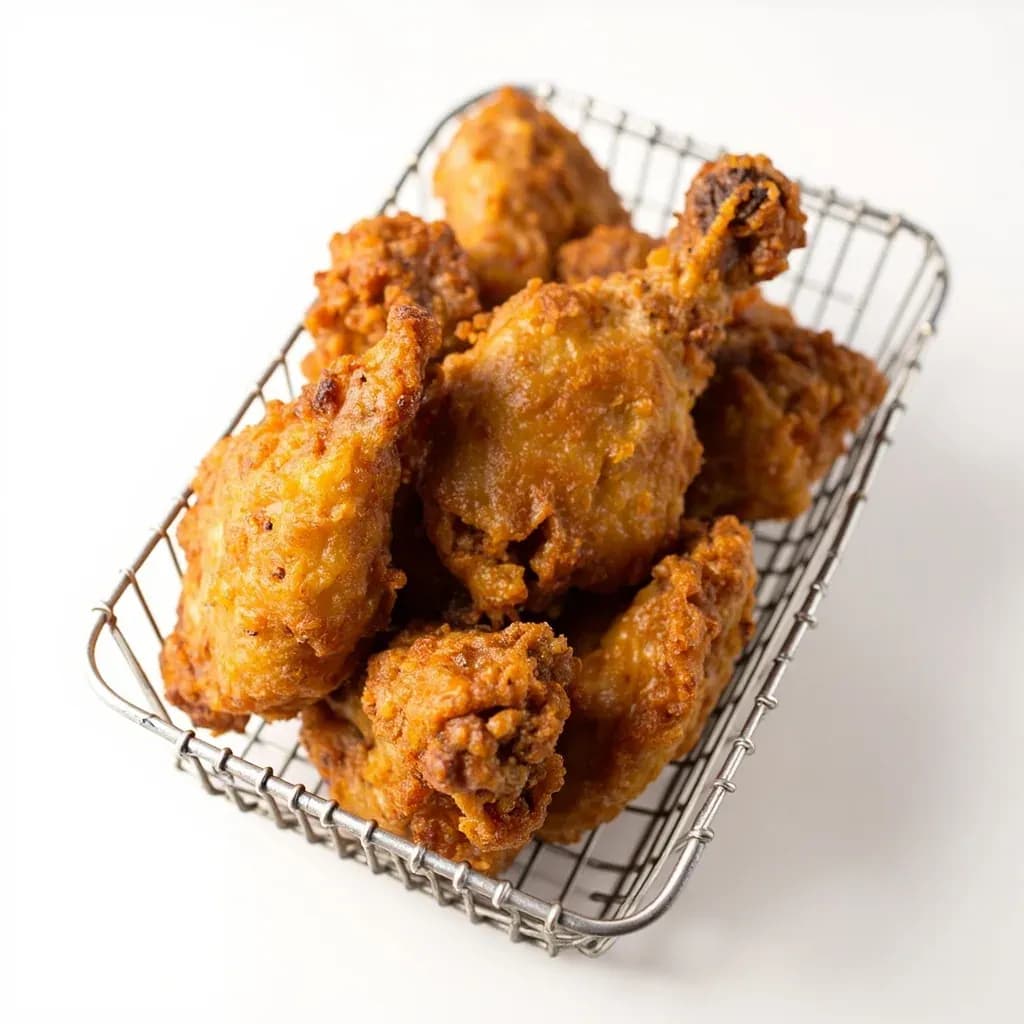
Double-frying cooks an item in oil at a lower temperature first to render fat and cook the interior, then fries it again hotter to drive off surface moisture and crisp the exterior. It is the standard for Korean fried chicken, twice-cooked fries, and many fritters. The first fry sets the structure while the second creates a durable, lacquered crunch that holds up even after saucing.
Double-frying cooks food in oil twice, at two deliberately different temperatures, with a brief rest in between. The first bath — moderate heat, around 150–165 °C / 300–330 °F — finishes the interior and drives moisture outward without coloring the crust. After the rest, the food returns to hotter oil, usually 175–190 °C / 350–375 °F, for a short, aggressive finish that browns and dehydrates the now-dry surface. The result is a shell that is audibly crisp, surprisingly light, and unusually resistant to sogginess — qualities no single fry at one temperature can deliver.
Frying is, at heart, a moisture-management problem. A single hot fry must cook the interior, drive off water, and brown the crust all at once — and the brown crust usually arrives before the inside is done, so cooks compromise on one or the other. Splitting the job into two passes lets the first bath fully gelatinize starches and migrate water to the surface, where the rest evaporates it. By the second fry, the crust is already set and dry, so the hot oil can focus purely on browning and final crisping without overcooking the inside. The dense, glassy crust that emerges is also why double-fried foods hold sauces far longer than their single-fried cousins.
- Difficulty
- Medium
Types & varieties
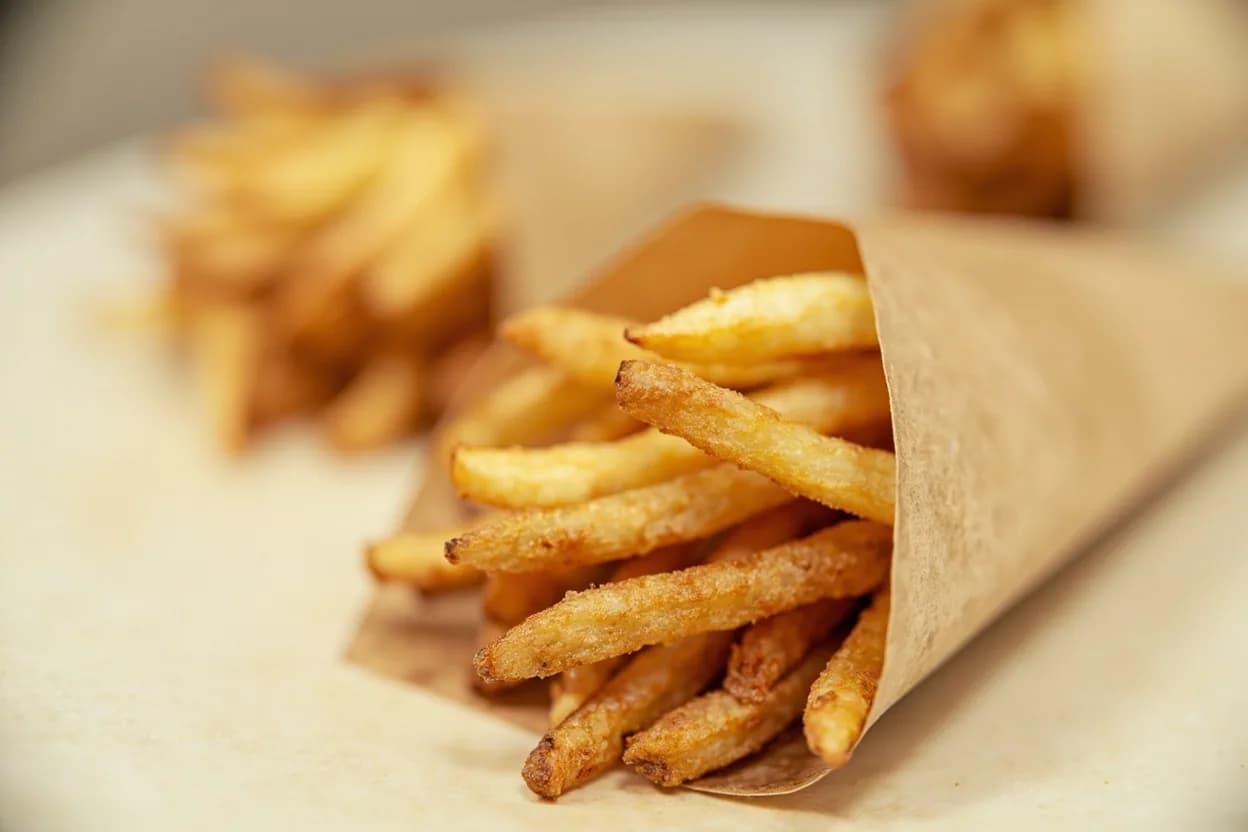
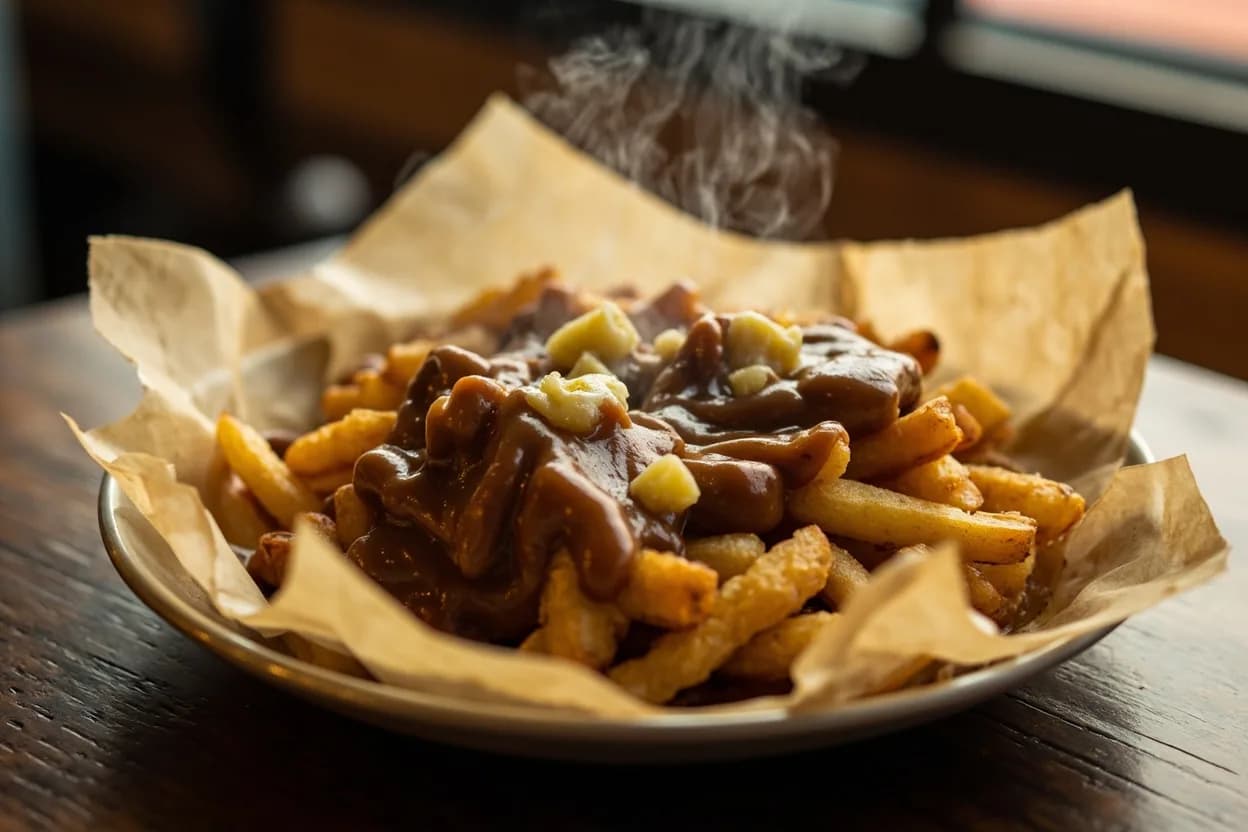
The canonical example; blanch-cut potatoes double-fried in beef tallow or a tallow–oil mix, served with mayonnaise.
Bone-in or boneless pieces dredged in a wet starch slurry or dry starch blend, double-fried for a glassy, ultra-crisp shell that holds sauce.
Marinated chicken thigh dredged in potato starch, double-fried; second fry is very short, just to refresh the crust.
Steak-cut potatoes, first fry at 325 °F, rest, second fry at 375 °F until deeply bronzed.
Firm tofu pressed, dredged in cornstarch, double-fried for a brittle, almost popcorn-like shell with custardy interior.
Slices fried once to cook, rested, then fried again briefly to re-crisp before sitting in dashi.
Pork belly or rinds first cooked at lower temp to render, rested, then second-fried hot to puff and shatter.
How to do it
- 1
Prep the food
Cut, trim, and dry the food. For fries, soak cut potatoes in cold water 30 minutes, then drain and pat very dry. For chicken, pat pieces dry and dredge or batter as your recipe requires. For tofu, press for 20–30 minutes to remove excess water.
- 2
Heat oil for the first fry
Fill a heavy pot with 5–8 cm (2–3 in) of neutral high-smoke-point oil and heat to 150–165 °C / 300–330 °F. Confirm with a thermometer.
- 3
First fry — cook through, do not brown
Add food in small batches. Fry until the interior is fully cooked and the exterior is set but still pale — about 3–6 minutes for fries, 8–12 minutes for chicken pieces. The goal is gelatinization of starches and full moisture migration to the surface, not color.
- 4
Rest and drain
Transfer to a wire rack (not paper towels, which trap steam) and let rest at least 5–10 minutes at room temperature, or refrigerate up to 24 hours. The surface must dry and feel matte, not glossy, before the second fry.
- 5
Heat oil for the second fry
Raise oil temperature to 175–190 °C / 350–375 °F. Skim any loose bits from the oil between the two fries.
- 6
Second fry — crisp and color
Return the food to the hot oil in small batches and fry 2–4 minutes, just until deeply golden, audibly crisp, and fragrant. The Maillard reaction drives the browning and final water expulsion here.
- 7
Drain, season, serve immediately
Lift onto a rack, season with fine salt or finishing salt within 30 seconds, and serve at once. Double-fried food waits badly — the crust is at peak the first few minutes out of the oil.
The science of the two baths
Each fry does a distinct job, and understanding the split makes the technique intuitive rather than rule-bound. The first bath is essentially a blanch in oil: it pushes the interior to a safe, fully cooked state, gelatinizes surface starches into a thin gelled layer, and uses gentle heat to migrate water from the food's center toward its surface. Crucially, the temperature is too low for meaningful Maillard browning, so the food emerges pale and slightly flexible, with a damp-looking exterior.
The rest is where the magic actually happens. Steam escapes the surface, the gelled starch layer dries to a matte finish, and the food's interior finishes relaxing and equilibrating. By the time the food returns to the oil, its surface is dry enough that the second fry does not have to fight through trapped steam — it can devote its energy to rapid browning and a final burst of moisture expulsion. That is why a properly rested second fry produces a brittle, almost lacquered crust rather than a greasy one.
Oil, equipment, and setup
A heavy pot — a Dutch oven is the home-cook standard — holds temperature better than thin cookware and recovers faster between batches. A deep-fry or instant-read thermometer is non-negotiable; oil temperature drifts of even 10 °C change the outcome noticeably. A wire rack set over a sheet pan is the right resting surface; paper towels trap steam and soften the crust you just built.
- Use 5–8 cm (2–3 in) of oil in a heavy pot for safe, even frying.
- Skim loose crumbs between the two fries — burnt debris darkens the oil and flavors the second bath.
- Rest on a rack, not paper towels; trapped steam is the enemy of the second fry.
- Plan for a 10–15 °C oil-temperature dip after each batch; wait for full recovery before adding more food.
Common uses
Tips & pitfalls
- Always use a thermometer — guessing oil temperature is the single most common reason double-fries fail.
- Pat food thoroughly dry before the first fry; surface water drops oil temperature and causes greasy, uneven crust.
- The rest between fries is non-negotiable: at least 5 minutes, longer for thick items. Skipping it traps steam and the second fry steams instead of crisps.
- First-fried batches can be blanched ahead, cooled on the rack, refrigerated overnight, and finished to order — standard practice in fry shops and Korean BBQ restaurants.
- Salt or season the moment food leaves the second fry, while the surface is still hot and oily; salt will not adhere to a dry crust.
- Don't crowd the basket. Crowding drops oil temp and produces limp, oil-logged food — the most common home-cook mistake.
- For Korean-style chicken, dredge in a starch-heavy wet batter (flour + cornstarch + a splash of vodka or soju, or simply water); the starch is what makes the crust shatter.
- For fries, soak cut potatoes in cold water for 30 minutes to leach surface starch; dry thoroughly before frying or the first bath will sputter and the crust will not set.
- Avoid reusing oil that has broken (smokes, foams, dark brown) for the second fry — the short, hot bath leaves no time for off-flavors to cook out, and they land directly on the finished crust.
Good to know
- Origin
- Documented in Belgium and northern France in the 17th–18th centuries for pommes frites; widely adopted in 21st-century Korean fried chicken (chimaek).
- First-fry temperature
- 150–165 °C / 300–330 °F — lower for thick-cut fries, slightly higher for chicken.
- Second-fry temperature
- 175–190 °C / 350–375 °F.
- Rest between fries
- At least 5–10 minutes at room temperature; Korean restaurants commonly rest 10–30 minutes; can be extended to overnight refrigeration for service prep.
- Why it works
- First fry gelatinizes starches and drives interior moisture outward; rest lets steam escape and surface dry; second fry crisps the now-dry crust through the Maillard reaction and final moisture expulsion.
- Oil type
- Neutral, high-smoke-point: peanut, rice bran, sunflower, canola, or beef tallow (traditional for Belgian frites).
- Yield note
- Food loses roughly 25–40% of raw weight through double-frying and resting; oil absorption is lower than a single long fry because the second bath is short.
- Difficulty
- Moderate — timing and temperature control are the main variables.
Also called
twice-frying · double-fry
Dishes that rely on it
Related

Sear
Blast the surface hot for a deep-browned, savory crust

Sauté
Cook quickly in a little fat over lively heat, tossing as you go

Stir-Fry
Toss bite-sized pieces over roaring heat for fast, smoky cooking

Pan-Fry
Crisp food in a shallow layer of hot fat, turning once or twice

Deep-Fry
Submerge in hot oil for an all-over crackling crust

Roast
Cook uncovered in dry oven heat for browned edges and tender centers

Bake
Cook with steady, surrounding oven heat — the soul of bread and pastry

Broil
Hit food from directly above with fierce overhead heat