Heat & Fire
Twice-Frying
Frying food twice — once to cook, then hotter to crisp — for an extra-crunchy result.
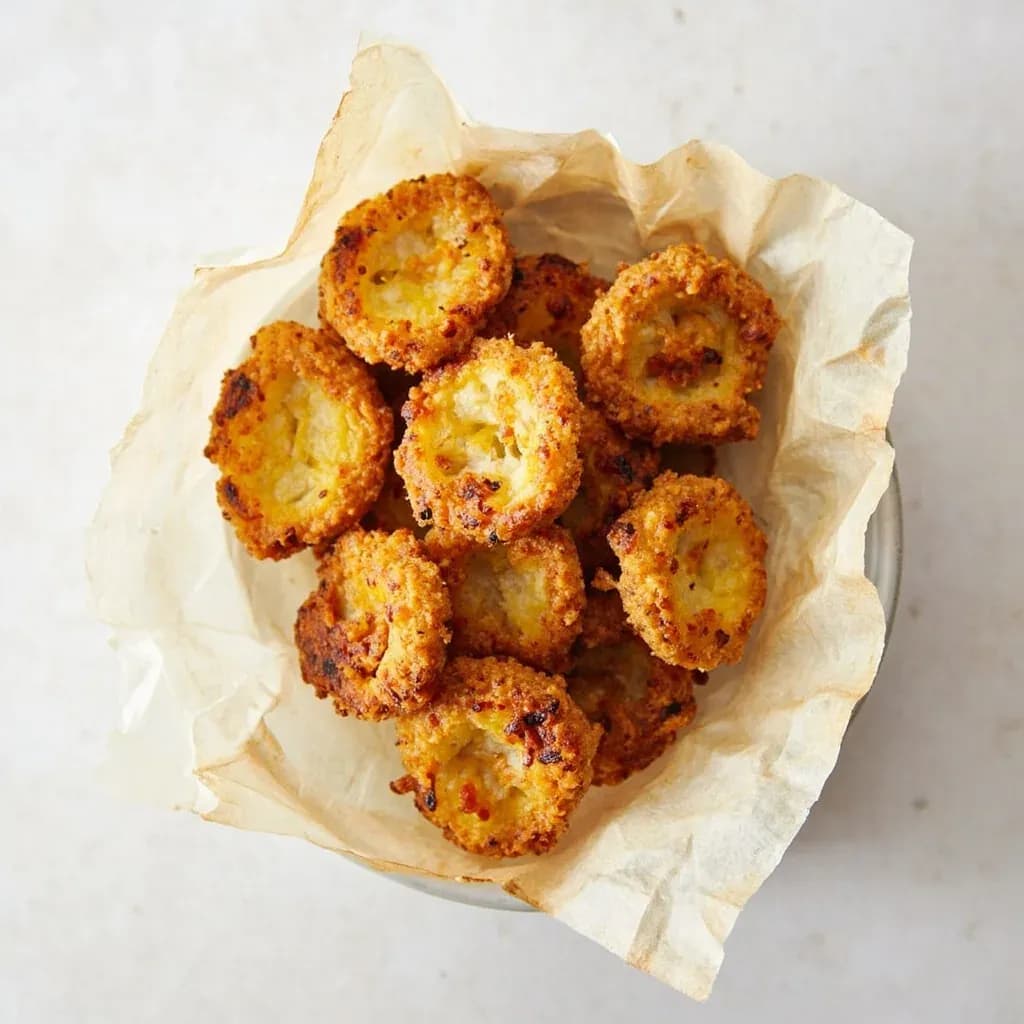
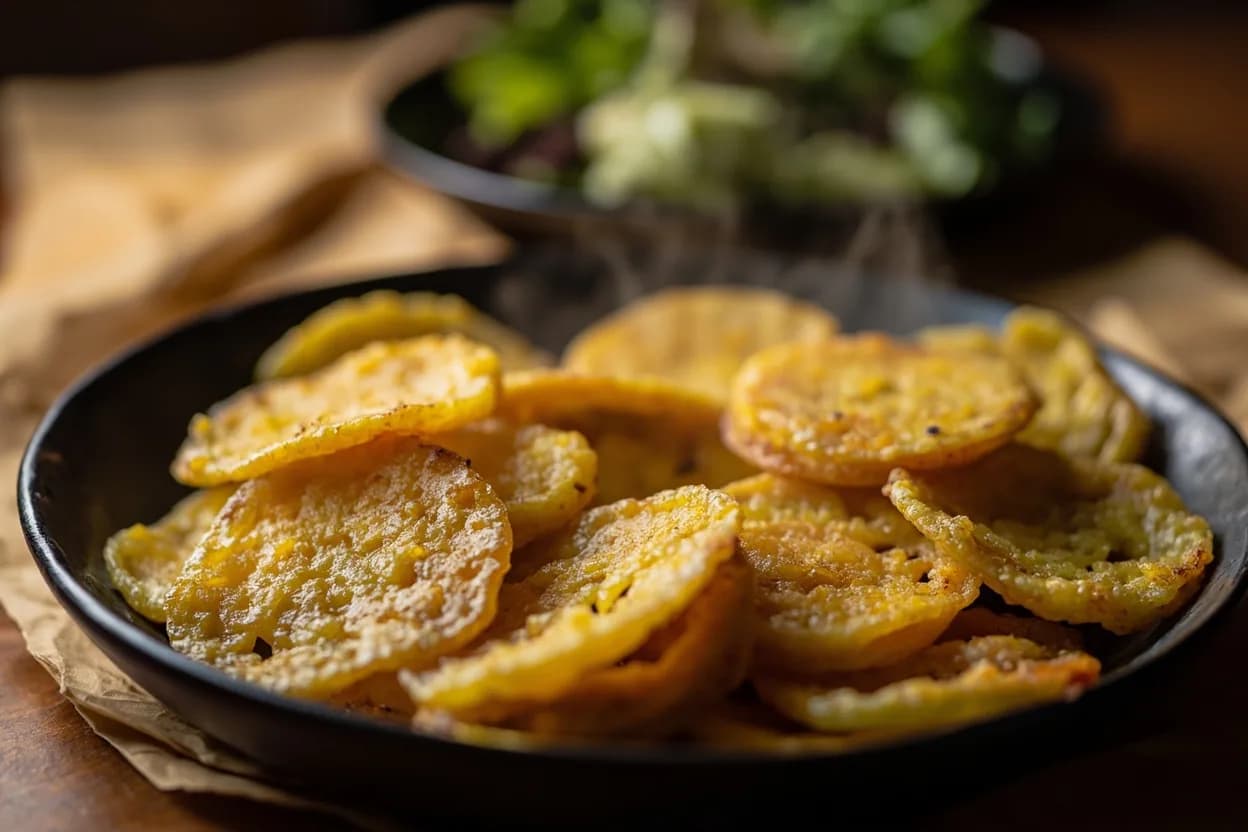
Twice-frying cooks food in oil at a lower temperature first to cook the interior, then a second time at higher heat to make the exterior shatteringly crisp. It is the defining method for tostones and patacones, where plantain rounds are fried, smashed flat, and fried again, and it underpins extra-crispy fried chicken and Korean wings. The first fry sets the structure while the second drives off surface moisture for lasting crunch.
Twice-frying is a deliberate two-stage deep-frying method in which food is cooked once at a moderate temperature, rested, and then returned to hotter oil just long enough to crisp and color the surface. The first pass drives interior moisture outward and sets the structure of the crust without browning it; the rest period lets that moisture redistribute and the surface dry; the second, hotter pass flash-evaporates the remaining surface water before the crust can absorb oil, producing a dry, glassy, shatter-crisp exterior. The result is a finish that holds up longer under sauce, steam, and holding than a single fry ever can.
The technique is centuries old in European fry cookery — it is the traditional method for Belgian frites — and was independently developed in Chinese, Japanese, and Korean kitchens, where it underpins dishes from sweet-and-sour pork to Korean fried chicken. It is forgiving of imperfect timing on the first fry (underdone is fine, even desirable) but unforgiving of oil that is too cool on the second pass, when the crust will absorb oil instead of repelling it. Twice-frying is also one of the few deep-frying techniques that genuinely benefits from being staged across time: kitchens can complete the first fry well before service and finish with a brief, hot second fry to order.
- Difficulty
- Medium
Types & varieties
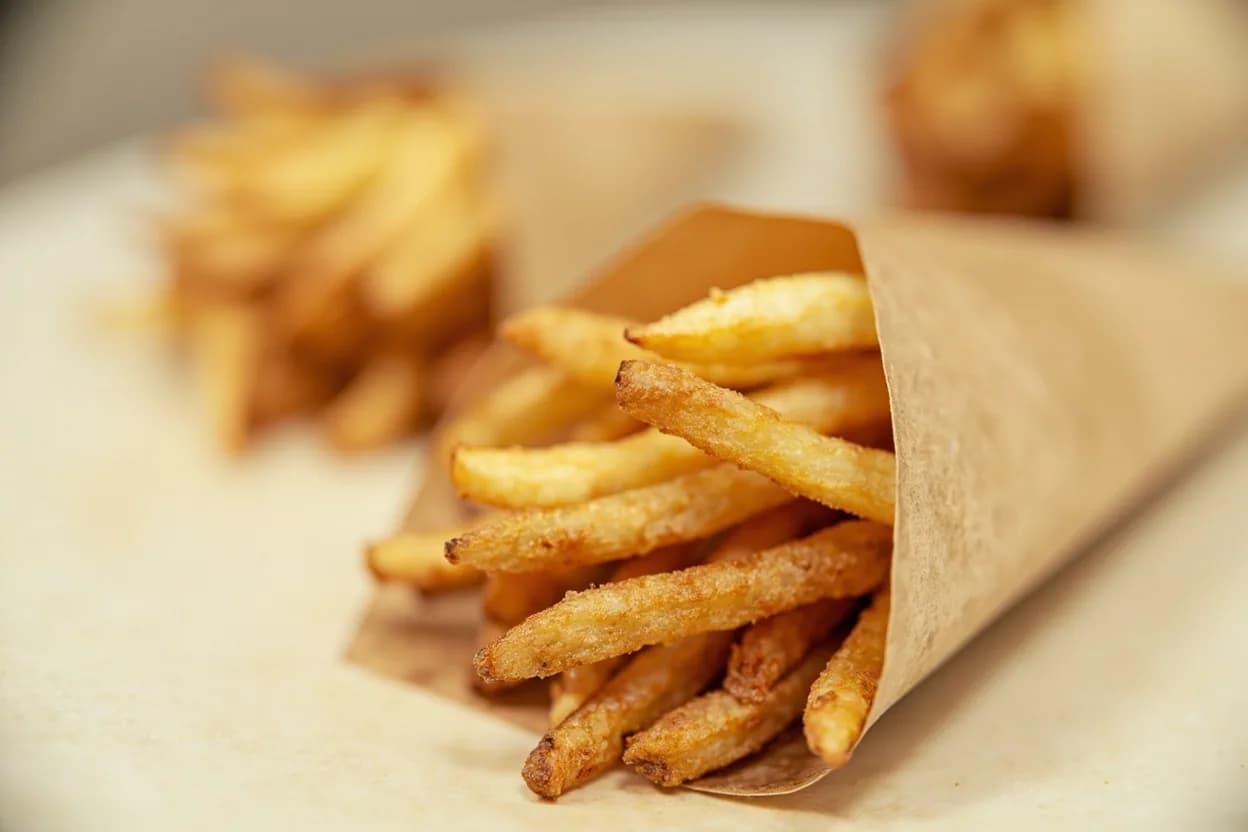
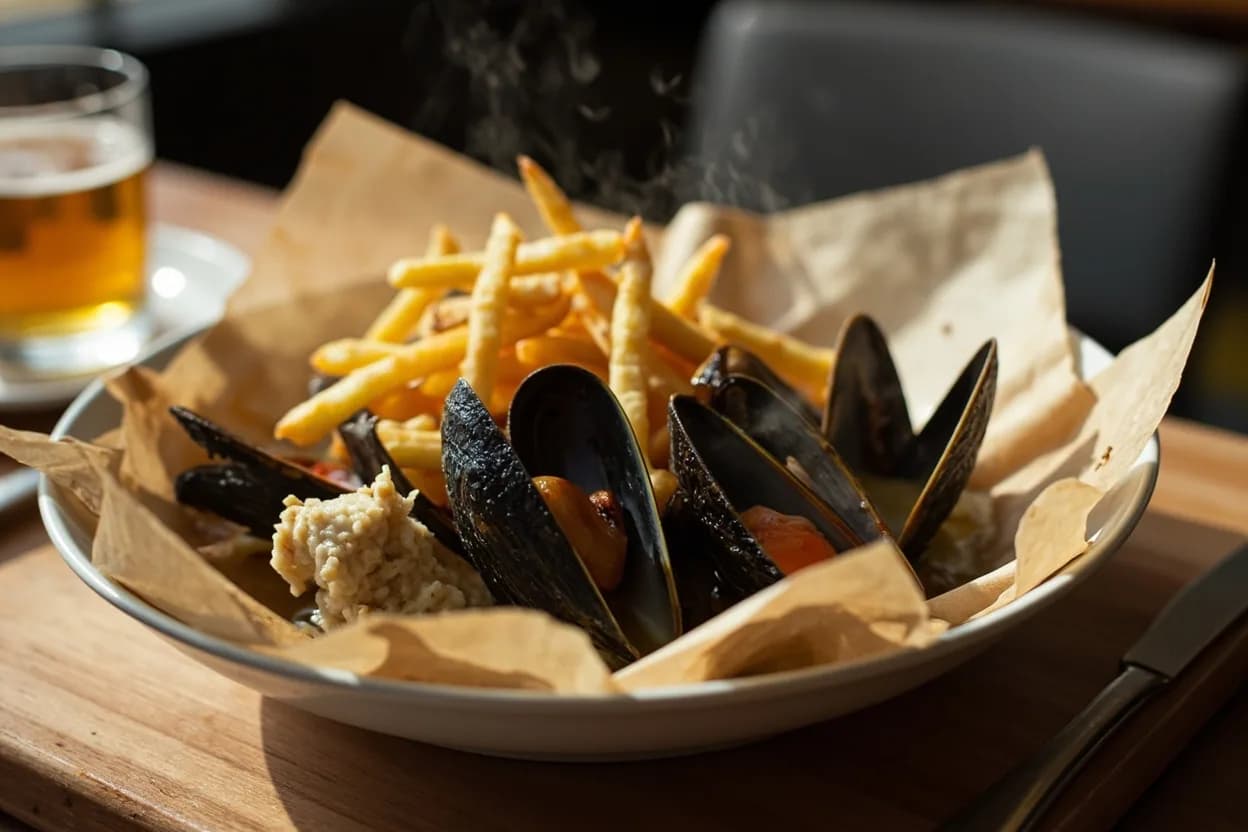
The canonical double-fry: raw or blanched potato batons cooked at ~150°C, rested, then finished at ~180°C for a pale, shatter-crisp exterior served with mayonnaise.
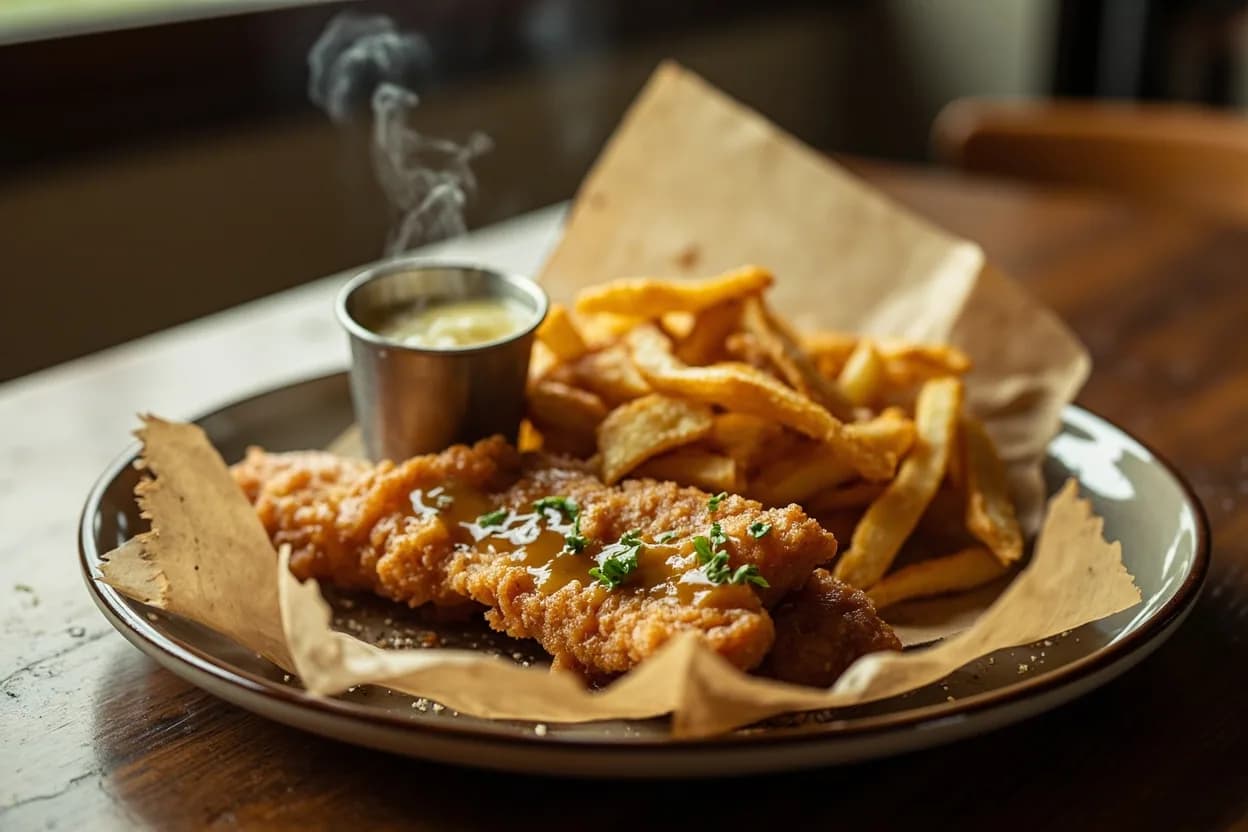
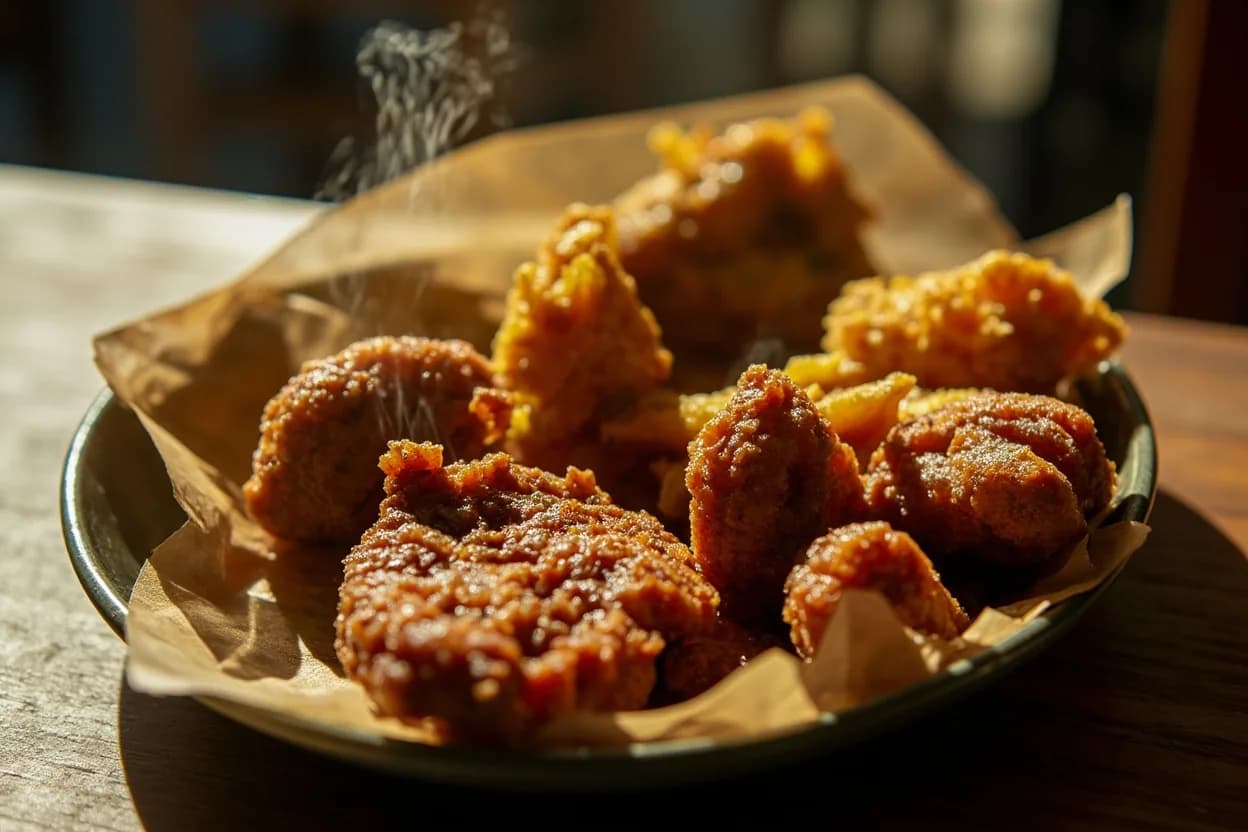
Bone-in or boneless chicken, dredged in a thin starch coating, fried at ~160°C then finished at ~180°C, then tossed in yangnyeom (sweet-spicy) or garlic-soy sauce.
Traditionally a single fry in potato starch; many cooks and shops give a brief second fry just before serving for extra crunch.
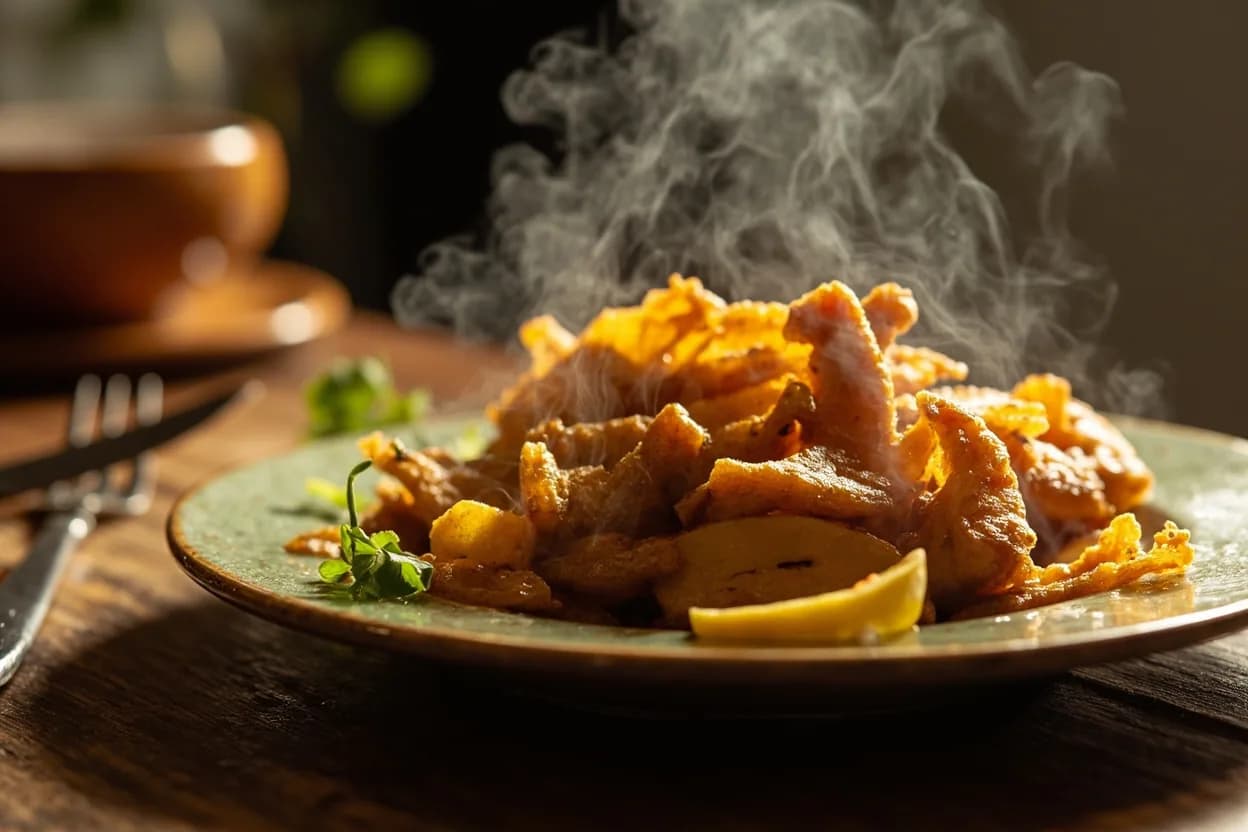
Standard in wok cookery for battered items like sweet-and-sour pork, where the first fry cooks the batter and the second crisps it after saucing or holding.
Some yakitori houses give chicken-skin or meatball skewers a quick second pass through the fryer after initial cooking to crisp the surface.
Not standard, but some chefs briefly re-immerse tempura in hotter oil just before serving to re-crisp the coating.
How to do it
- 1
Prepare the food
Cut, trim, and portion the food. Pat thoroughly dry with paper towels. If using a wet marinade or batter, drain or shake off excess so the surface is only lightly coated — too much batter absorbs oil and steams instead of crisping.
- 2
Heat oil to first-fry temperature
Fill a heavy pot or fryer one-third to one-half full with a high-smoke-point neutral oil. Heat to 150–165°C / 300–330°F and confirm with a thermometer.
- 3
First fry — cook, do not color
Add the food in small batches without crowding. Cook until the interior is done and the food is firm and pale, with no browning. Timing depends on size: small fries 3–5 minutes; chicken pieces 6–10 minutes; wings 8–12 minutes. The food should look underdone in color.
- 4
Drain and rest
Lift the food out with a spider or slotted spoon and transfer to a wire rack set over a tray. Rest at least 5 minutes at room temperature, or up to 30+ minutes in a low oven (~90–100°C). The rest lets internal moisture redistribute and the surface dry, which is essential for a crisp second fry.
- 5
Raise oil to second-fry temperature
Bring the oil to 175–190°C / 350–375°F. Skim any loose crumbs from the surface.
- 6
Second fry — crisp and color
Return the rested food to the hot oil in small batches. Fry just until deeply golden and crisp: typically 1–4 minutes for fries and 3–5 minutes for chicken. The exterior should sound immediately crisp when tapped.
- 7
Drain, season, and serve
Lift out and drain briefly on the wire rack. Season with fine salt or a finishing blend within 30 seconds, while the surface is still glossy with oil. Serve immediately for maximum crunch.
The science, in plain terms
A crisp crust is, at its heart, a dry crust. Deep-frying is the business of pushing water out of food faster than oil can move in, and a single fry must do two jobs at once: cook the interior and dry the surface. At a moderate first-fry temperature, the interior cooks through while the crust is set but not yet browned. Moisture migrates outward during the rest, and the surface — now no longer being heated — begins to dry. By the time the food returns to hotter oil, the surface is primed to flash-evaporate the last of its water almost instantly, hardening the starch into a glassy shell that resists oil absorption. The hotter the second fry, the thinner the time window in which the crust must do its work before the oil penetrates, which is why a 180°C finish outperforms a 160°C one.
- Maillard browning and starch dextrinization both require a hot, dry surface; the rest period is what makes that surface dry.
- A thin, starchy coating (cornstarch, potato starch, or a flour-starch mix) crisps best; thick wet batters tend to soften between the two fries.
- The technique is forgiving of an underdone first fry and unforgiving of a cool second fry — that asymmetry is the key to consistent results.
Twice-frying vs. par-frying vs. double-coating
The terms are often used interchangeably and they overlap, but they are not the same thing. Twice-frying describes a deliberate two-stage cook separated by a rest. Par-frying is the first stage of exactly that process, with the second stage deferred by storage — refrigeration, freezing, or holding — rather than minutes. Double-coating is something else entirely: dredging, dipping in batter or water, and dredging again before a single fry, used to build a craggy, crusted surface. Confusing the two is harmless; confusing par-frying with a single fry is not — it produces pale, oil-logged food.
Working ahead: the service-kitchen advantage
Few deep-frying techniques reward advance prep as generously as twice-frying. Many Korean fried chicken operations, and most fry-driven gastropubs, complete the first fry during prep and hold the food on wire racks in a low oven or holding cabinet. Orders are then turned around in a 2–4 minute finishing fry, which is faster, more consistent, and far easier to staff than cooking from raw during service. Holding times of 30 minutes to an hour are common; longer holds work but the finishing fry may need an extra minute.
Common uses
Tips & pitfalls
- Use a thermometer — eyeballing oil temperature is the single most common cause of greasy or pale results.
- Pat food dry before the first fry; surface water causes violent bubbling, oil splatter, and uneven cooking.
- Do not let the first fry brown the food. If it is golden after the first bath, the crust will burn in the second fry before the interior is right.
- Fry in small batches. Crowding drops the oil temperature and defeats the purpose of the two-stage method.
- Skim crumbs and stray bits from the oil between batches; burned debris darkens the oil and imparts off flavors.
- Rest the first-fry batch on a wire rack, not paper towels, so steam escapes from underneath.
- Salt or season within 30 seconds of the second fry so the seasoning sticks to the oily surface.
- For thick items (whole wings, large bone-in chicken), drop the first-fry temperature closer to 150°C to ensure the interior cooks before the crust sets too hard.
Good to know
- First-fry temperature
- 150–165°C / 300–330°F — hot enough to cook the interior, too cool to brown it.
- Second-fry temperature
- 175–190°C / 350–375°F — hot enough to rapidly crisp the surface via Maillard browning and starch dextrinization.
- Rest between fries
- At least 5 minutes at room temperature; many operations hold the first-fry batch in a low oven (~90–100°C) for 10–30 minutes, or longer.
- Why it works
- The first fry sets the crust and pushes moisture outward; resting redistributes that moisture and dries the surface; the hotter second fry flash-evaporates surface water before the crust can absorb oil.
- Common oils
- Neutral, high-smoke-point oils: peanut, rice bran, sunflower, canola, or beef tallow (traditional for Belgian frites and some Korean preparations).
- Draining
- Always on a wire rack set over a tray. Paper towels trap steam and soften the crust from below.
- Difficulty
- Low to moderate. Requires a thermometer and temperature discipline, but is forgiving of approximate timing on the first fry.
- Best-known modern association
- Korean fried chicken (chimaek), popularized from the 1970s onward by chains such as Kyochon and BBQ.
Also called
Double-Frying · Tostones · Patacones · Bannann Peze
Dishes that rely on it
Related

Sear
Blast the surface hot for a deep-browned, savory crust

Sauté
Cook quickly in a little fat over lively heat, tossing as you go

Stir-Fry
Toss bite-sized pieces over roaring heat for fast, smoky cooking

Pan-Fry
Crisp food in a shallow layer of hot fat, turning once or twice

Deep-Fry
Submerge in hot oil for an all-over crackling crust

Roast
Cook uncovered in dry oven heat for browned edges and tender centers

Bake
Cook with steady, surrounding oven heat — the soul of bread and pastry

Broil
Hit food from directly above with fierce overhead heat