Prep & Assembly
Egg-Flour Battering
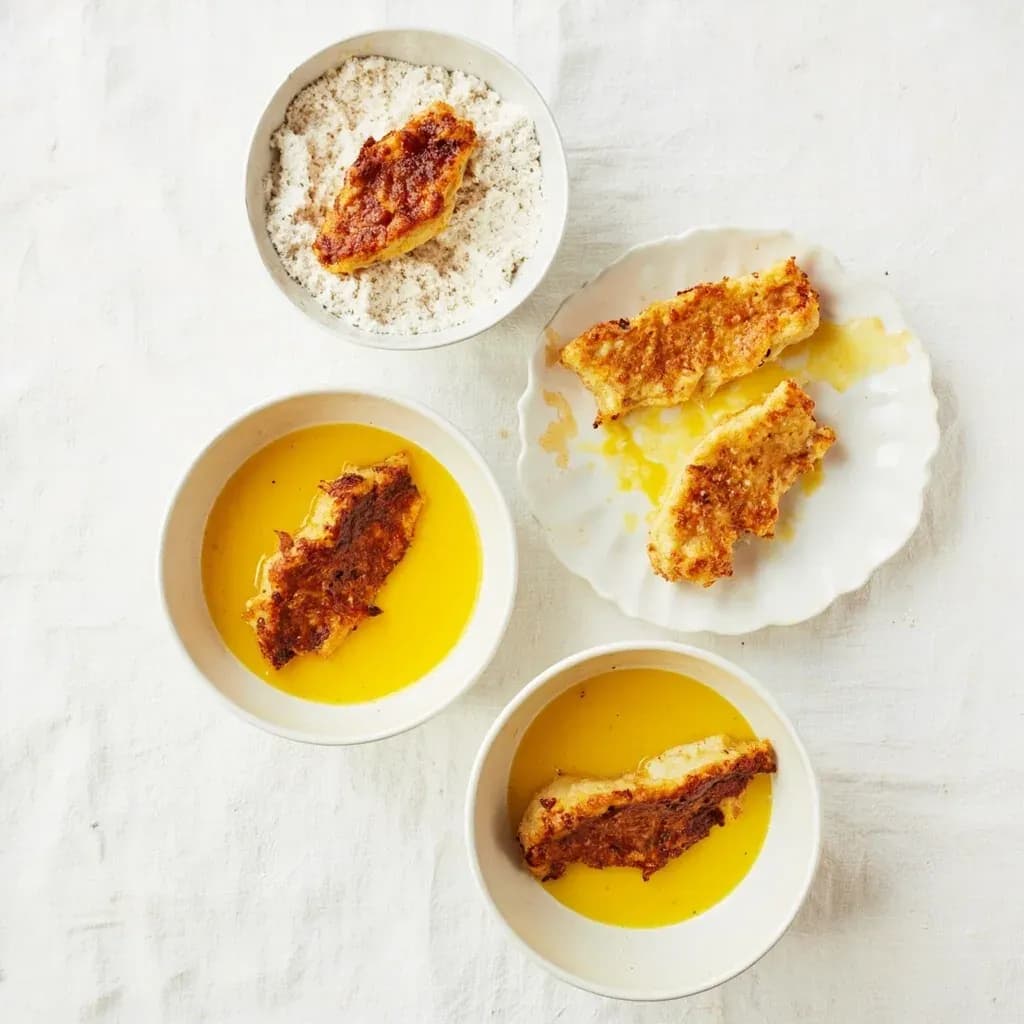
Coating food in flour and beaten egg before frying for a crisp, adhering crust.
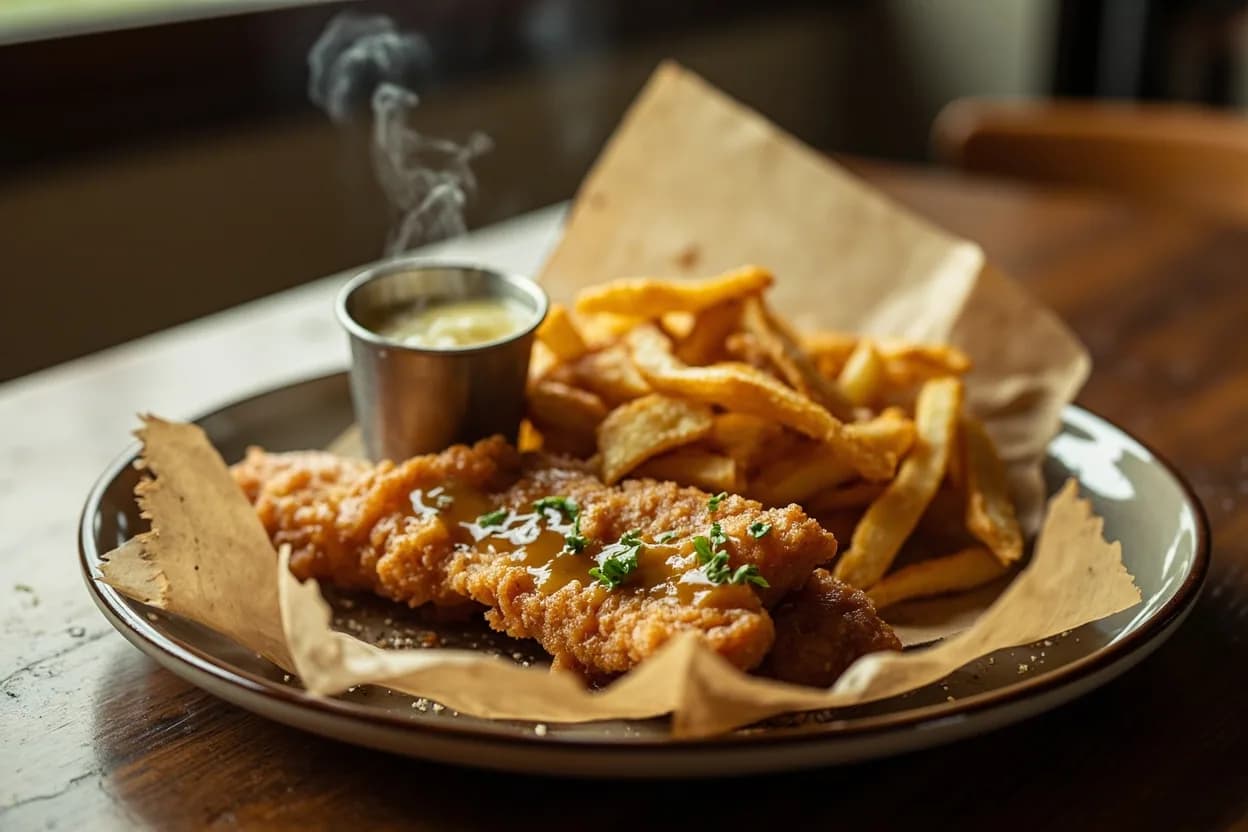
Egg-flour battering dips food in flour then beaten egg (often before breadcrumbs) so a cohesive coating clings during frying. The flour gives the egg something to grip, and the egg seals and browns into a golden crust. It is the classic setup for schnitzel, cutlets, and piccata-style preparations.
Egg-flour battering — the French call it pâte à frire — is the simplest wet coating in the Western repertoire: a loose, pourable mixture of flour, beaten egg, and a liquid (water, milk, or beer) that food is dipped into just before frying. It sits between two familiar neighbors: a plain flour dredge, which leaves only a thin, sandy film, and full breading à l'anglaise (flour, egg, then breadcrumbs), which produces a thicker, more structured crust. The wet batter falls in between, yielding a tender, slightly puffy shell that clings in an irregular, craggy layer and shatters with a clean bite.
The technique behaves predictably once you understand three rules. First, gluten is the enemy of crispness, so the batter should be mixed only until the dry streaks disappear — small lumps are a sign you've stopped in time. Second, the food must be bone-dry on the surface, since moisture lifts the batter off in sheets and splatters the oil. Third, oil temperature is non-negotiable: at 350–375°F (175–190°C) the crust sets almost instantly, sealing the food from grease absorption; below that range the crust soaks up oil and turns heavy, above it the coating browns before the interior cooks through. Get those three things right and the result is reliably light, golden, and crisp.
- Difficulty
- Easy
Types & varieties
Flour, whole eggs, water or milk, and salt; a smooth, medium-thick coating used for fritters, fish, and croquette shells.
Beer replaces the water or milk; carbonation and alcohol produce an exceptionally light, crisp crust, the standard for British fish and chips.
Ice-cold ingredients, minimal mixing with lumps left in, often using only egg yolk or no egg at all; the temperature shock against hot oil creates the airy, lacy crust.
Thicker than standard; may include sugar, baking powder, or mashed fruit or vegetables folded in; used for apple, corn, zucchini, and banana fritters.
Whites whipped to soft peaks and folded into the flour slurry for a lighter, more delicate coating.
Gluten-free and traditional in Provençal and South Asian frying (pakoras); nuttier flavor and a denser crust.
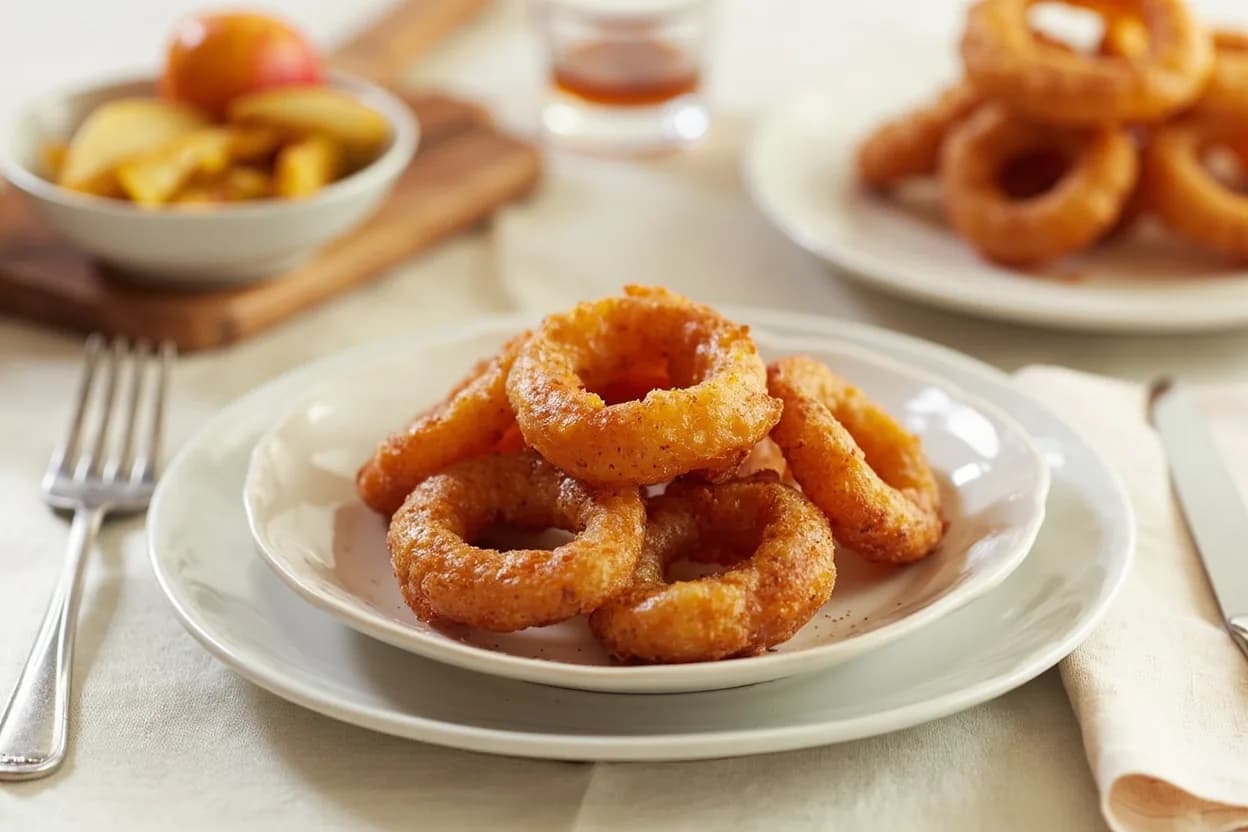
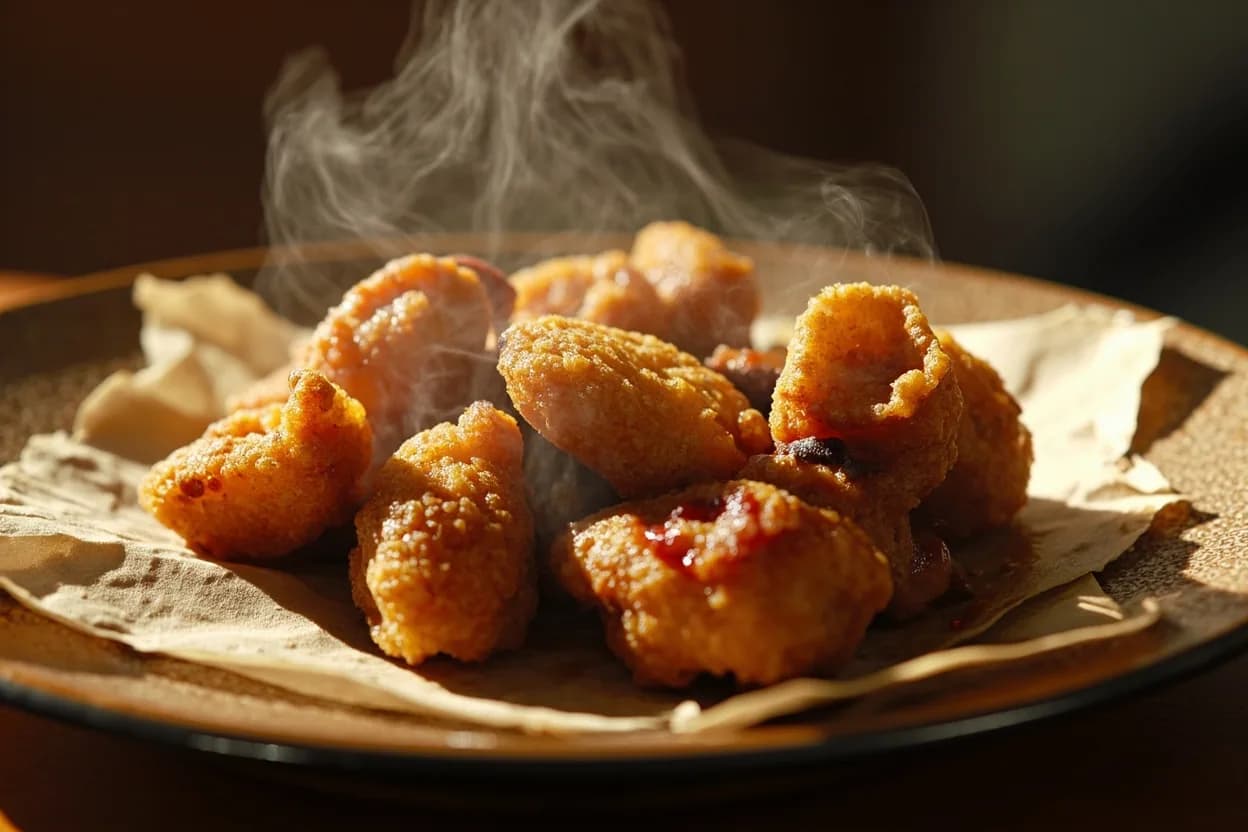
Buttermilk replaces water or milk for a tangier flavor and tender crust; common for fried chicken and onion rings in American Southern cooking.
How to do it
- 1
Combine the dry ingredients
Whisk the flour, salt, and any dry seasonings (pepper, paprika, cayenne, garlic powder) together in a medium bowl to distribute them evenly. Seasoning the flour at this stage ensures every bite carries flavor.
- 2
Mix the wet ingredients
In a separate bowl, beat the eggs lightly with a fork, then whisk in the liquid (water, milk, or beer) until smooth. For beer batter, add the beer last and gently so the carbonation survives into the oil.
- 3
Make the batter
Pour the wet mixture into the dry and stir gently with a whisk or wooden spoon just until no dry streaks of flour remain. The batter should be thick but pourable, roughly the consistency of heavy cream. A few small lumps are desirable; do not overmix or the crust will turn tough and bready.
- 4
Rest
Cover and let stand at room temperature for 15–30 minutes. This relaxes the gluten and gives a lighter, crisper crust. Skip this step only for tempura-style batters, which depend on the shock of cold batter hitting hot oil.
- 5
Prepare the food
Pat the food thoroughly dry with paper towels; surface moisture prevents adhesion and causes violent splattering. Season lightly with salt. Cut pieces to a uniform size so they cook at the same rate.
- 6
Heat the oil
Pour 1½–2 inches of neutral oil (peanut, canola, sunflower, or rice bran) into a heavy pot or deep-fryer and heat to 350–375°F (175–190°C). Use a thermometer; visual cues like shimmer or a wisp of smoke are imprecise.
- 7
Coat the food
Working one piece at a time, dip the food into the batter, turn to coat evenly, and let the excess drip off for a second or two. For a thicker, craggier crust, dredge the food first in plain seasoned flour, shake off the surplus, then dip in the batter.
- 8
Fry
Lower the coated piece gently into the hot oil away from you to avoid splashing. Do not crowd the pan; overcrowding drops the oil temperature and yields greasy food. Fry, turning once, until deep golden brown and cooked through — usually 2–4 minutes for thin fillets, 4–6 for chicken pieces or thick vegetables. Maintain 350–375°F throughout, adjusting heat between batches.
- 9
Drain and season
Lift out with a slotted spoon or spider and transfer to a wire rack set over a sheet pan (preferred) or a paper-towel-lined plate. A wire rack keeps the bottom crust from going soggy. Sprinkle immediately with fine salt while the surface is still glossy with oil so the crystals adhere. Serve at once.
Battering vs. dredging vs. breading
These three coatings are often confused but produce distinctly different results and suit different ingredients. Knowing which one to reach for saves a lot of frustration.
- Flour dredge: a thin, dry coating of seasoned flour that browns into a sandy, delicate crust. Best for pan-fried thin fillets (classic sole meunière) and for giving chicken the first stage of full breading. No egg, no liquid; food is simply tossed in flour and shaken off.
- Egg-flour batter: a wet, pourable mixture that clings in an irregular, slightly puffy layer. Best for fritters, beer-battered fish, vegetables where you want a thicker, craggier shell, and as a wet adhesive layer for binding breadcrumbs to food.
- Full breading (à l'anglaise): flour, then egg wash, then breadcrumbs — three distinct stages producing a thicker, crunchier, more uniform crust. Best for cutlets (schnitzel, milanesa), croquettes, and anything where a sturdy, golden shell is the point.
- The same food can be prepared with any of the three; the choice is about texture, not correctness. A sole fillet battered and deep-fried is a different dish from the same fillet dredged and pan-fried in butter, even though both start with flour.
Common uses
Tips & pitfalls
- Do not overmix — lumps are fine. Overworking develops gluten and produces a tough, bready crust that tastes more like a dumpling than a coating.
- Always pat the food completely dry before dipping. Surface moisture lifts the batter off in patches and causes the oil to splatter dangerously.
- Test oil temperature with a small drop of batter before frying. It should sizzle vigorously and float to the surface within a few seconds; if it sinks and sits still, the oil is too cold.
- Season the flour itself, not just the food. Dry spices (paprika, cayenne, garlic powder, herbes de Provence) distributed into the flour season every bite evenly and bloom in the oil.
- Stir 1–2 teaspoons of neutral oil or melted butter into the finished batter just before frying. The extra fat promotes even browning and a crisper crust without weighing it down.
- Fry in small batches. Adding too much at once drops the oil temperature 25°F or more and is the single most common cause of greasy fried food.
- Drain on a wire rack, not paper towels. Paper towels trap steam against the bottom crust and soften it; a rack lets air circulate and keeps the shell crisp.
- Never reuse batter that has had raw fish, poultry, or meat dipped into it. The bacteria introduced into the batter in the bowl will not be killed by the oil temperature and can multiply during standing. Batter used only for vegetables can be safely used for a second vegetable batch.
- For a thicker, craggier crust, dredge the food in plain seasoned flour before dipping in batter. The flour layer gives the wet batter something to grip and produces the irregular, lacy surface prized for fritters.
Good to know
- French term
- Pâte à frire
- Basic ratio
- Roughly 1 cup (125 g) all-purpose flour to 1–2 large eggs to ½ cup (120 ml) liquid (water, milk, or beer)
- Resting time
- 15–30 minutes at room temperature relaxes gluten and improves crispness
- Frying temperature
- 350–375°F / 175–190°C
- Yield
- About 1½ cups of batter coats roughly 1 lb (450 g) of food
- Texture target
- Light, crisp, golden shell that adheres without sliding off
- Active prep time
- 10–15 minutes, plus resting and frying
- Difficulty
- Easy
Dishes that rely on it
Related

Whisk
Beat ingredients smooth and aerated with a looping wire motion

Sift
Pass dry ingredients through mesh to aerate and remove lumps

Strain
Pour through mesh to separate solids from liquid for a smooth result

Filter
Pass liquid through fine material to clarify out the smallest particles

Rice
Press cooked potatoes through small holes for fluffy, lump-free texture

Mash
Crush soft cooked food into a rustic, creamy purée

Grind
Crush food into a coarse to fine texture, from spices to meat

Grate
Shred food into fine bits against a sharp-toothed surface