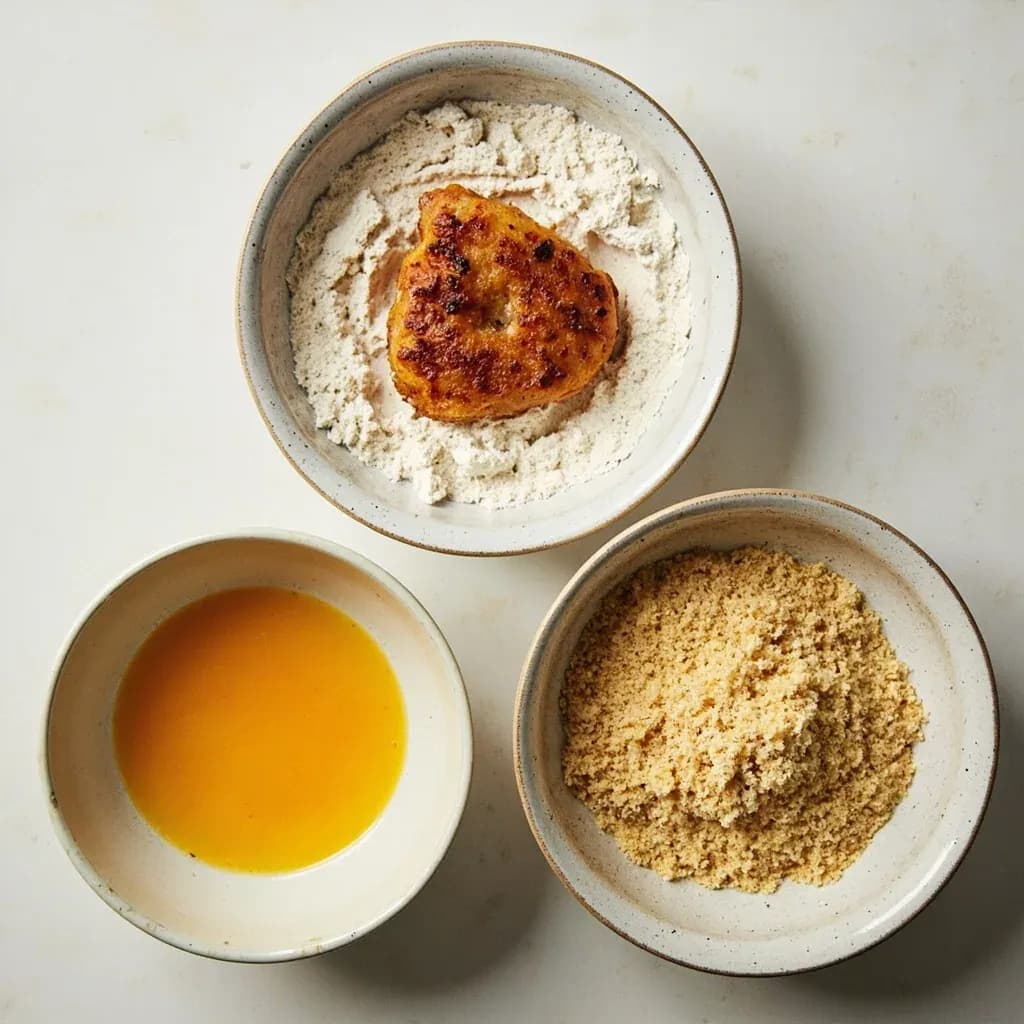
Prep & Assembly
Breading
Coating food in flour, egg, and crumbs so it forms a crisp crust when fried.
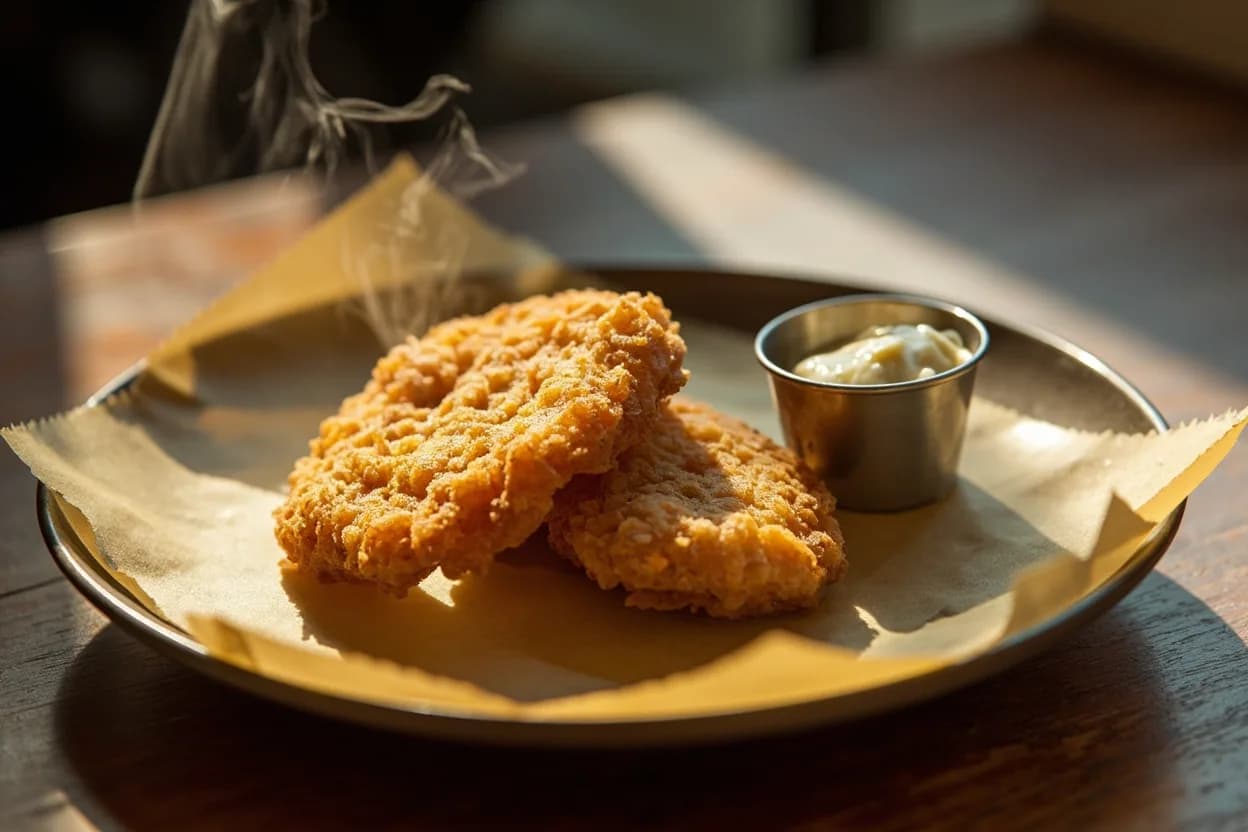
Breading applies a layered coating, classically flour, then beaten egg, then breadcrumbs, to meat, fish, or vegetables so they develop a crunchy golden shell when fried or baked. The flour helps the egg adhere, the egg glues on the crumbs, and the crumbs crisp up and seal in moisture. Variations span panko for katsu, semolina or rava in Indian cooking, and tempura batter, each giving a distinct texture.
Breading is the three-stage coating technique of dredging a food in seasoned flour, dipping it in beaten egg, and finishing it in breadcrumbs or another dry crumb. The French call it panure à l'anglaise, and it is the structural foundation of dishes as varied as Wiener schnitzel, cotoletta alla milanese, chicken katsu, fried green tomatoes, and mozzarella sticks. Mechanically, the flour absorbs surface moisture and gives the egg something to grip, the egg acts as a protein glue, and the crumbs form an insulating shell that browns and crisps before the food's interior overcooks.
What separates a sturdy breading from a fragile one is moisture management and patience. A dry surface, well-seasoned layers, and a 10–15 minute rest on a wire rack before frying let the coating hydrate into a single bonded skin rather than a loose jacket that sloughs off in the oil. Crumb choice — fine fresh, coarse panko, cornmeal, cracker meal, or nuts — is the cook's main lever over final texture, from a smooth polished crust to a jagged, audible crunch. Get the temperature right (325–375°F depending on size and density), do not crowd the pan, and breading becomes one of the most forgiving techniques in the kitchen.
- Difficulty
- Easy
Types & varieties
Flour, egg, fine fresh or dried breadcrumbs; the default for escalopes, fish fillets, and croquettes.
Coarse Japanese-style crumbs that yield a lighter, cracklier crust; the standard for tonkatsu and modern fish fries.
A second pass through egg and crumbs for a thicker, more protective shell; useful for frozen-fry prep or thick cutlets.
Replaces or partially substitutes breadcrumbs; classic in Southern U.S. fish fry and shrimp fry.
Crushed saltines or buttery crackers for a finer, more buttery crust on thin pork or fish.
Sweetened or unsweetened shredded coconut in the final station; standard for coconut shrimp and some tropical desserts.
Finely ground almonds, hazelnuts, or pistachios in place of or alongside breadcrumbs for a richer crust.
Rice flour or gluten-free all-purpose flour for the dredge; gluten-free panko, crushed rice cereal, or cornflake crumbs for the final coat.
Smoked paprika, cayenne, garlic powder, dried oregano, or grated Parmesan stirred into the flour and/or crumbs.
How to do it
- 1
Set up three stations
Arrange three shallow wide dishes (pie plates or rimmed sheet pans work well) in a line. First: about 1 cup all-purpose flour seasoned with salt, pepper, and any spices. Second: 2 to 3 large eggs beaten with about 2 tablespoons water, milk, or cream and a pinch of salt. Third: 2 to 3 cups of fine or coarse breadcrumbs — panko, fresh, cornmeal, or a mix. Place a wire rack over a sheet pan at the end of the line to receive finished pieces.
- 2
Prepare the food
Trim and portion the food into even pieces about ½ inch (1.25 cm) thick so it cooks through in the same time the crust browns. Pound cutlets to an even thickness between two sheets of plastic. Pat completely dry with paper towels, then season lightly with salt and pepper on both sides.
- 3
Dredge in seasoned flour
Coat the food in the flour on all sides, pressing lightly so it adheres. Lift the piece and shake firmly to knock off every trace of excess — a thick floury layer turns gummy in the oil. Return the piece to the rack.
- 4
Dip in egg wash
Transfer the floured piece to the egg and turn to coat, lifting and letting the excess drip back into the dish. A thin, even film is the goal; pooled egg will cause bare spots and sliding crumbs. Use your 'wet hand' for this station only.
- 5
Coat with crumbs
Move the egg-coated piece into the crumbs. Press crumbs onto the top, then turn and press on the other side and the edges. For cutlets, lift and scatter crumbs over the surface rather than dragging the piece through. Confirm no egg is visible and the coating feels even and dry to the touch.
- 6
Rest before frying
Place the breaded item on the wire rack. Repeat with remaining pieces. Let rest 10 to 15 minutes at room temperature, or up to 30 minutes refrigerated, so the coating hydrates and sets.
- 7
Fry
Heat ½ to 1 inch of neutral oil in a heavy skillet to 325–350°F (165–175°C) for cutlets and most vegetables, or 350–375°F (175–190°C) for small pieces like shrimp. Lay items in the oil away from you, do not crowd the pan, and fry, turning once, until deep golden and the food is cooked through. Plan 2 to 3 minutes per side for ½-inch chicken or veal cutlets, about 3 to 4 minutes total for fish fillets.
- 8
Drain and serve
Lift finished pieces to a clean wire rack, not paper towels, which trap steam and soften the crust. Season immediately with a pinch of fine salt and serve at once with a lemon wedge, pan sauce, or dipping sauce.
Why the three stages matter
Each station solves a specific problem, and skipping any of them shows up in the finished crust. The flour absorbs residual surface moisture and gives the egg a slightly roughened, dry surface to anchor to. Without it, egg slides off wet protein, especially on chicken and fish, and you get bare patches. The egg is a protein glue that sets as it cooks, binding crumb to food. The crumbs are the structure: they dry the surface, insulate the food from direct oil contact, and provide the carbohydrates that brown and crisp. A single flour dredge or a wet batter is a different technique with different results — breading is defined by this three-part sequence.
- Flour stage: removes moisture, gives egg something to grip.
- Egg stage: protein glue that bonds crumb to food.
- Crumb stage: structure, insulation, and the source of browning and crunch.
Choosing your crumb
Crumb choice is the cook's most powerful lever over final texture and flavor. Fine fresh breadcrumbs produce a smooth, uniform crust that reads as classic and tender. Panko — coarse, dry, and jagged — gives a lighter, more audible crunch and is the reason katsu and most modern fried chicken crusts look shaggy rather than neat. Cornmeal and cornflake crumbs add a sandy, slightly sweet bite that suits fish and shrimp. Nut- and cracker-based coatings trade some lightness for richer flavor. The crumbs you use should always be fresh or recently opened; stale crumbs taste stale, and oily crumbs from a previous batch will not adhere or fry cleanly.
Make-ahead and storage
Breading is one of the more forgiving make-ahead techniques, but only if the coated items are handled correctly. Hold finished pieces on a wire rack set over a sheet pan, never stacked, and refrigerate for up to 24 hours before frying. For longer storage, freeze the breaded items on the rack until solid, then transfer to a freezer bag and use within a month; fry directly from frozen, adding a minute or two to the cook time. Never re-bread using crumbs left in the workstation dish without sieving — clumps and burnt bits will cause uneven coating and off flavors. Used flour and egg wash should be discarded, not reused.
Common uses
Tips & pitfalls
- Pat the food completely dry with paper towels before the first dredge; surface moisture makes the flour clump and the egg slide off.
- Season every layer — flour, egg, and crumbs — with salt at minimum, plus pepper or aromatics. The coating is the only seasoning the exterior gets.
- Use shallow, wide dishes (pie plates, sheet pans) rather than deep bowls so the food lies flat and every surface contacts the coating.
- Adopt the dry-hand / wet-hand rule: one hand handles only flour and crumbs, the other only the egg wash, to keep fingers from clumping.
- Press crumbs gently but firmly onto the food, especially on rounded surfaces, so the coating does not lift off in the oil.
- Rest breaded items on a wire rack (not a flat surface) for 10–15 minutes before frying so the coating hydrates and adheres — the single biggest difference between a fragile and a sturdy crust.
- Replace the egg wash with buttermilk for tangier, more adherent coatings, or with egg white plus a tablespoon of water for leaner results.
- For extra-crisp crust, stir 1–2 tablespoons of cornstarch into the flour; it lowers the coating's moisture and increases crunch.
- Maintain oil at the right temperature — too cool and the crust absorbs oil and turns greasy; too hot and it browns before the food cooks through. Use a thermometer and adjust between batches.
- Do not crowd the pan; crowding drops oil temperature and steams the coating.
- Common mistakes: skipping the flour so crumbs have nothing to grip, skipping the rest so the coating falls off, dredging wet food, and using stale or oily crumbs from a previous batch.
Good to know
- Type
- Three-stage dry–wet–dry coating technique
- French culinary term
- Panure à l'anglaise (also 'anglaise' alone)
- Stations
- Three: seasoned flour, beaten egg, fine or coarse crumbs
- Origin
- Documented in Italian cooking by the 12th century (cotoletta alla milanese); parallel traditions across Austrian, German, and broader European cuisine
- Oil temperature range
- 325–375°F (165–190°C) depending on item size and density
- Rest before frying
- 10–15 minutes on a wire rack so the crust sets and reduces blow-off
- Set-up time
- 5–10 minutes for three shallow dishes
- Difficulty
- Beginner; main pitfalls are moisture on the food, wrong oil temperature, and skipping the rest
- Hand technique
- Dry-hand / wet-hand — one hand touches only dry stations, the other only the egg
- Weight gain
- Coating adds roughly 15–25% to a thin cutlet before frying
- Equipment
- Three shallow wide dishes (not deep bowls), wire rack over a sheet pan, tongs, thermometer
- Storage
- Uncooked, on a rack, refrigerated up to 24 hours; freeze on the rack then bag, up to 1 month
Also called
Crumbing · Dredging · Apanar · Empanar · Impanare · Panko Breading
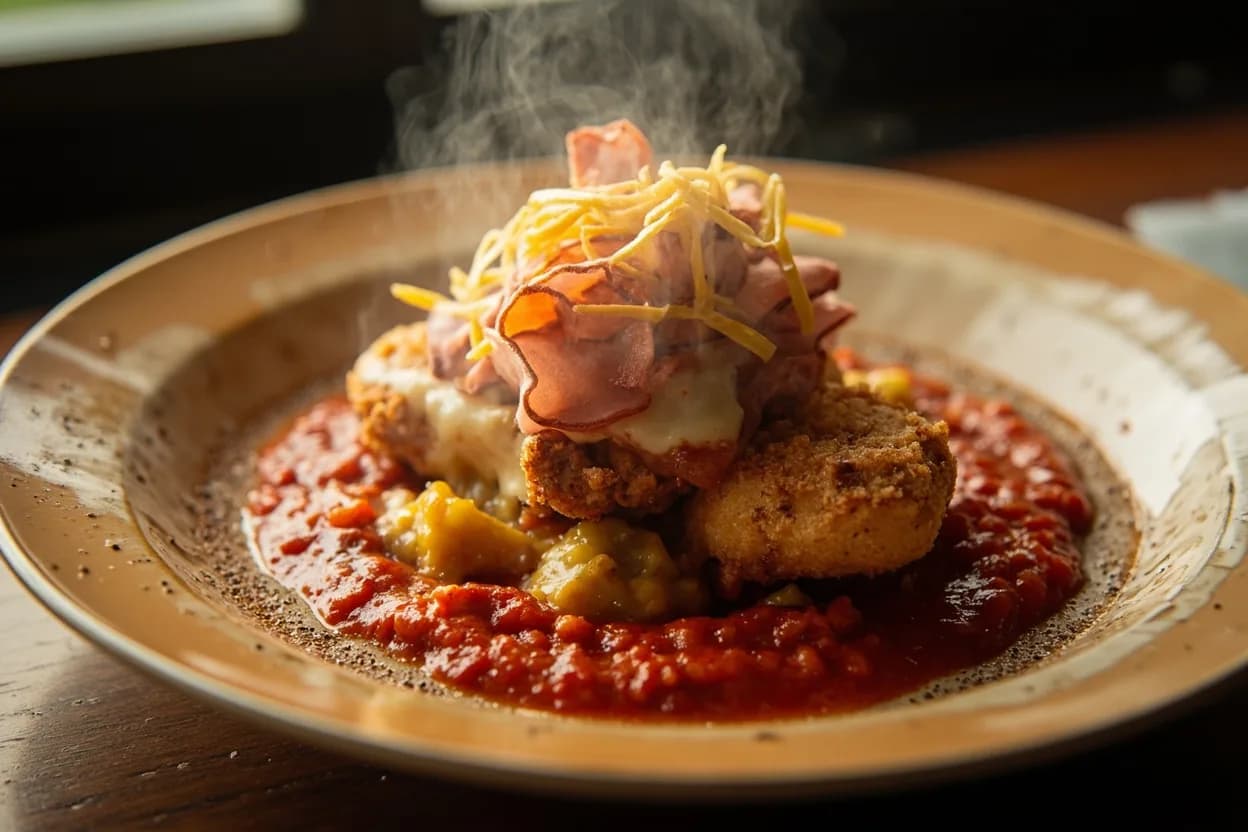
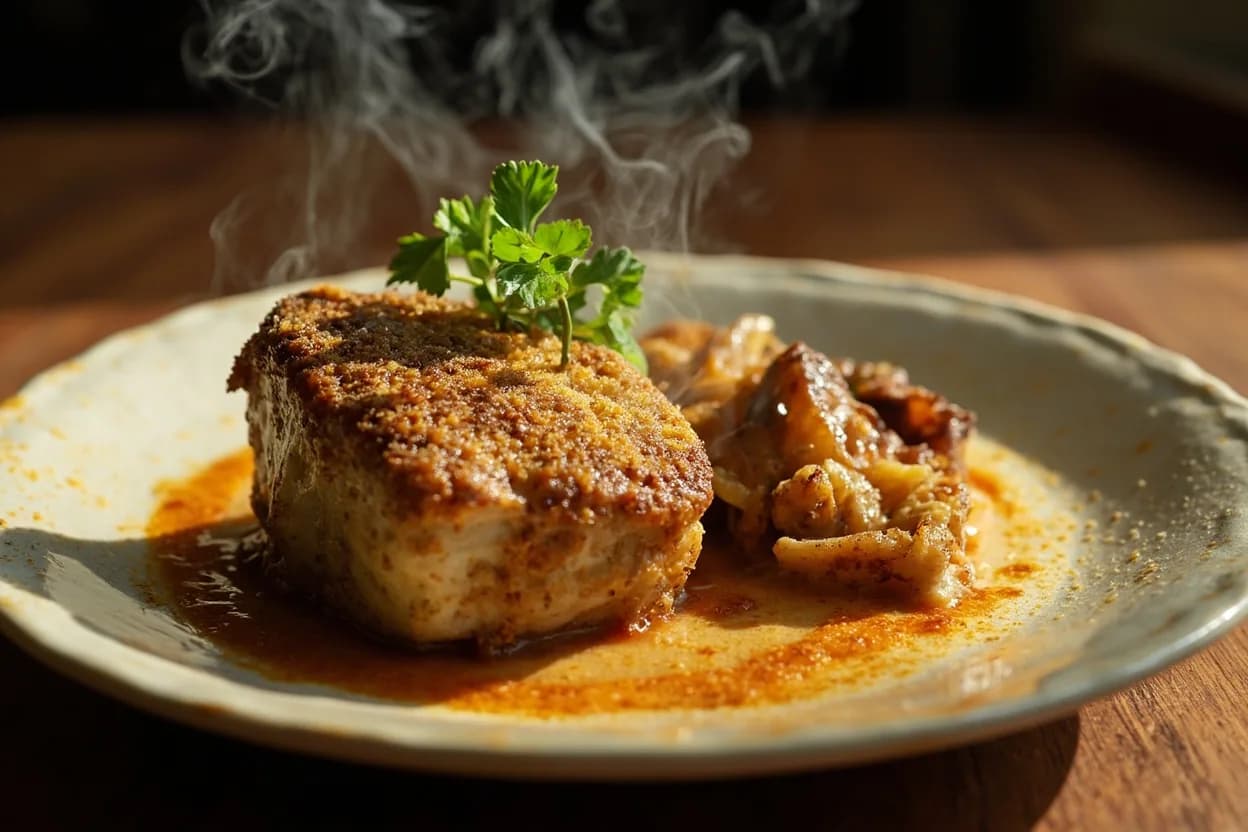
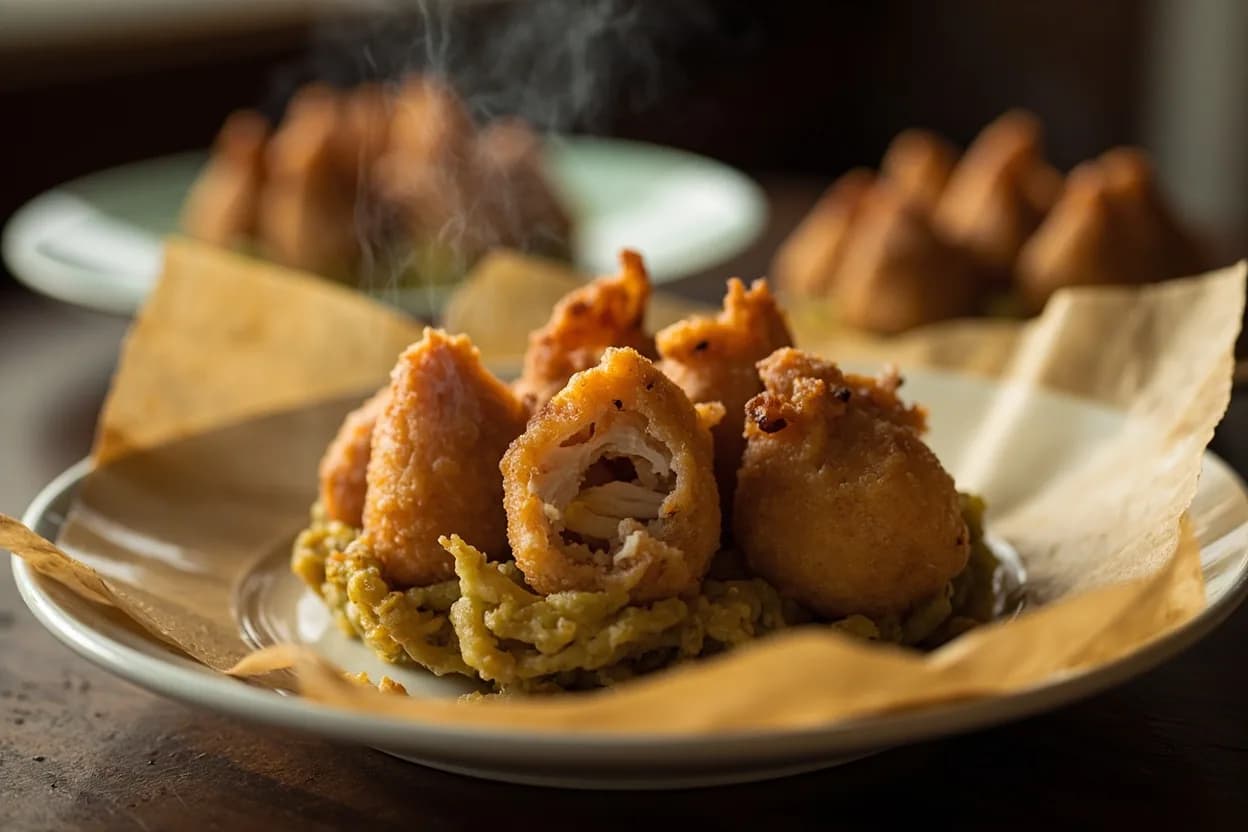
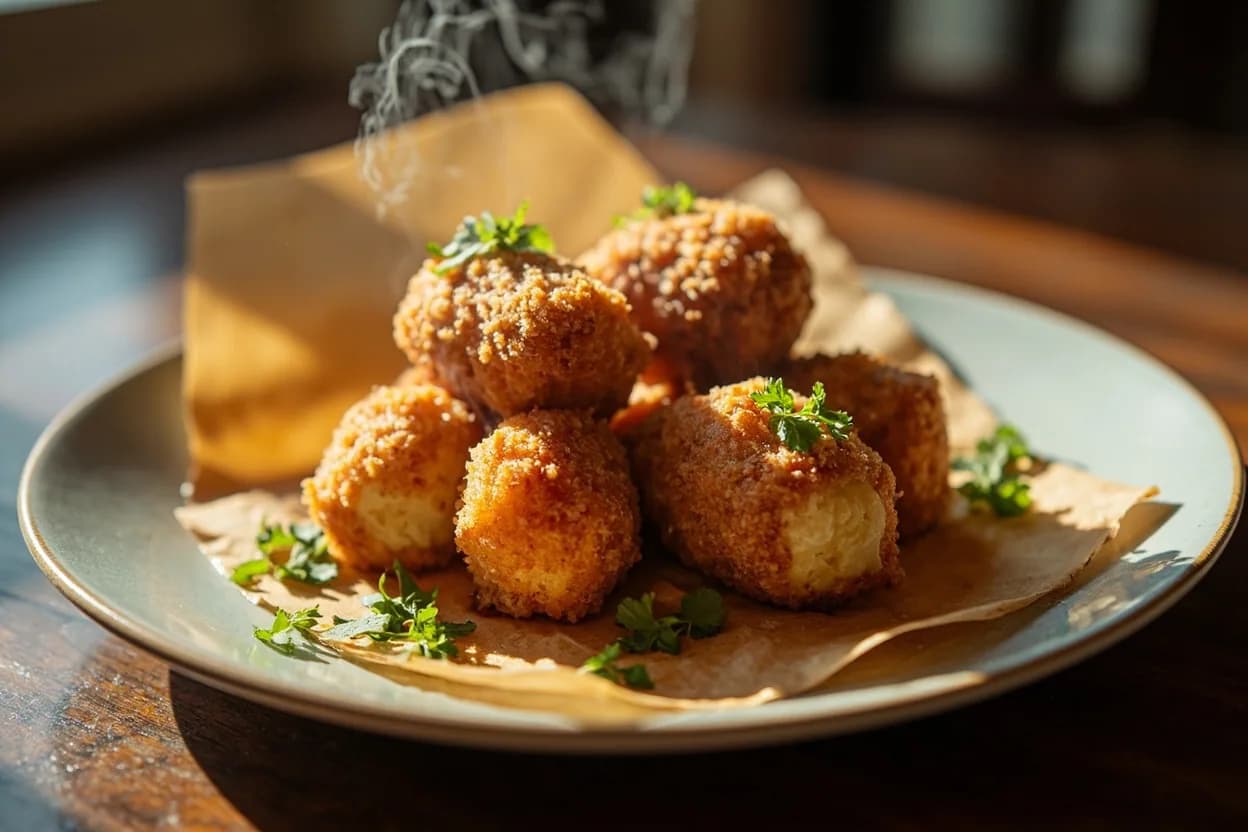
Dishes that rely on it
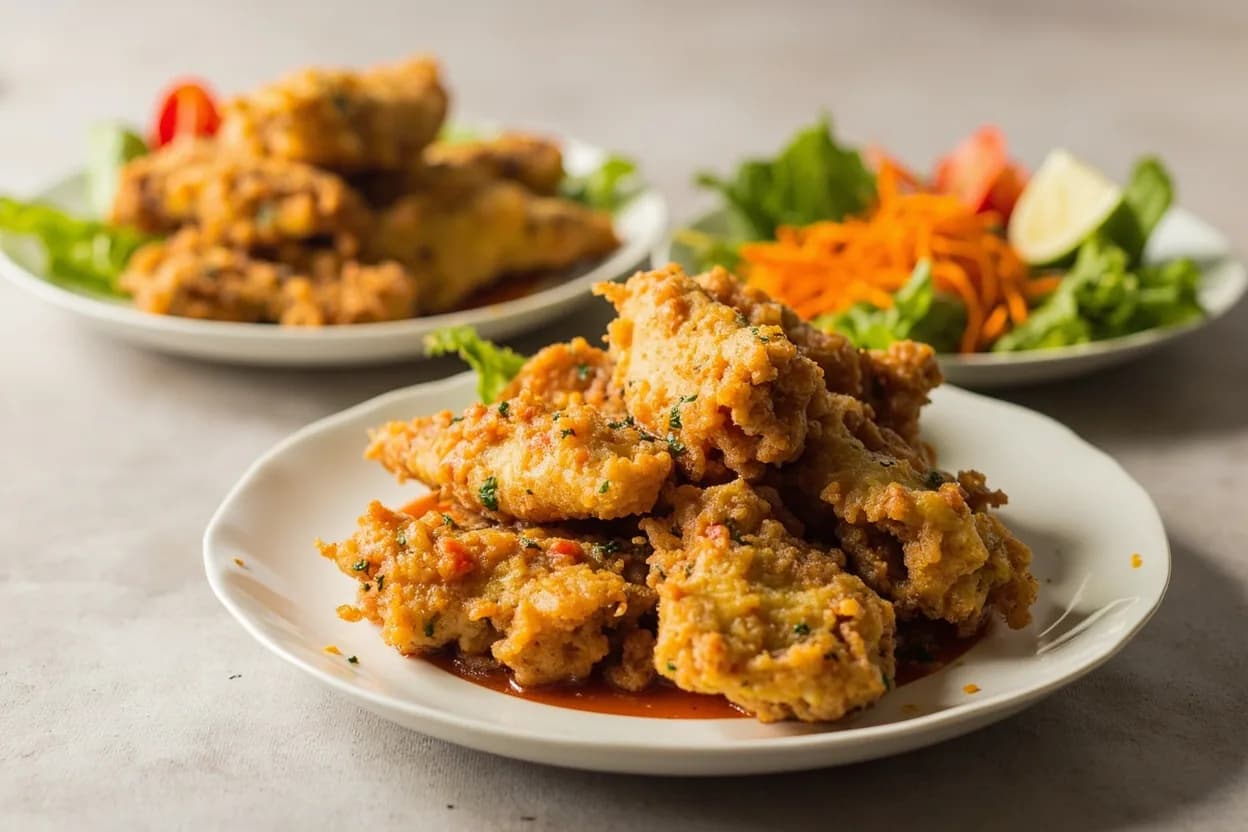
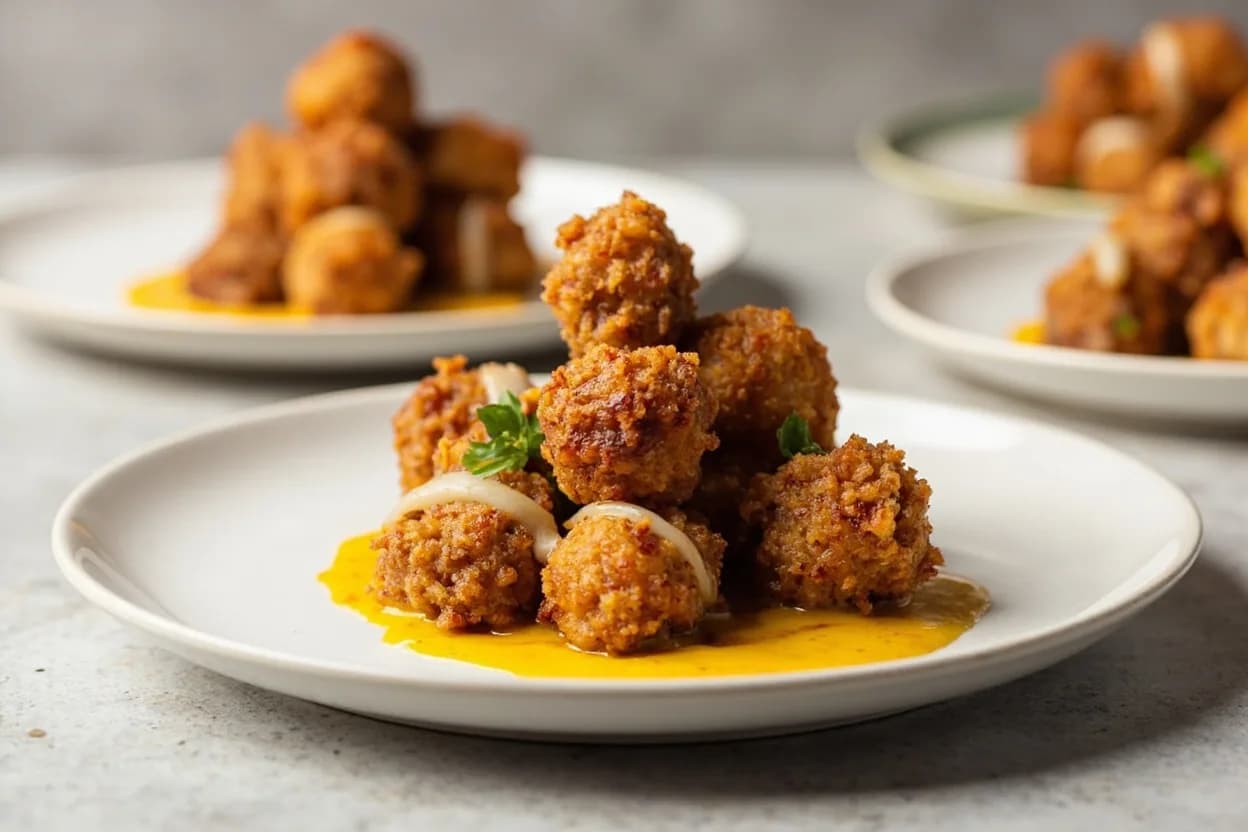
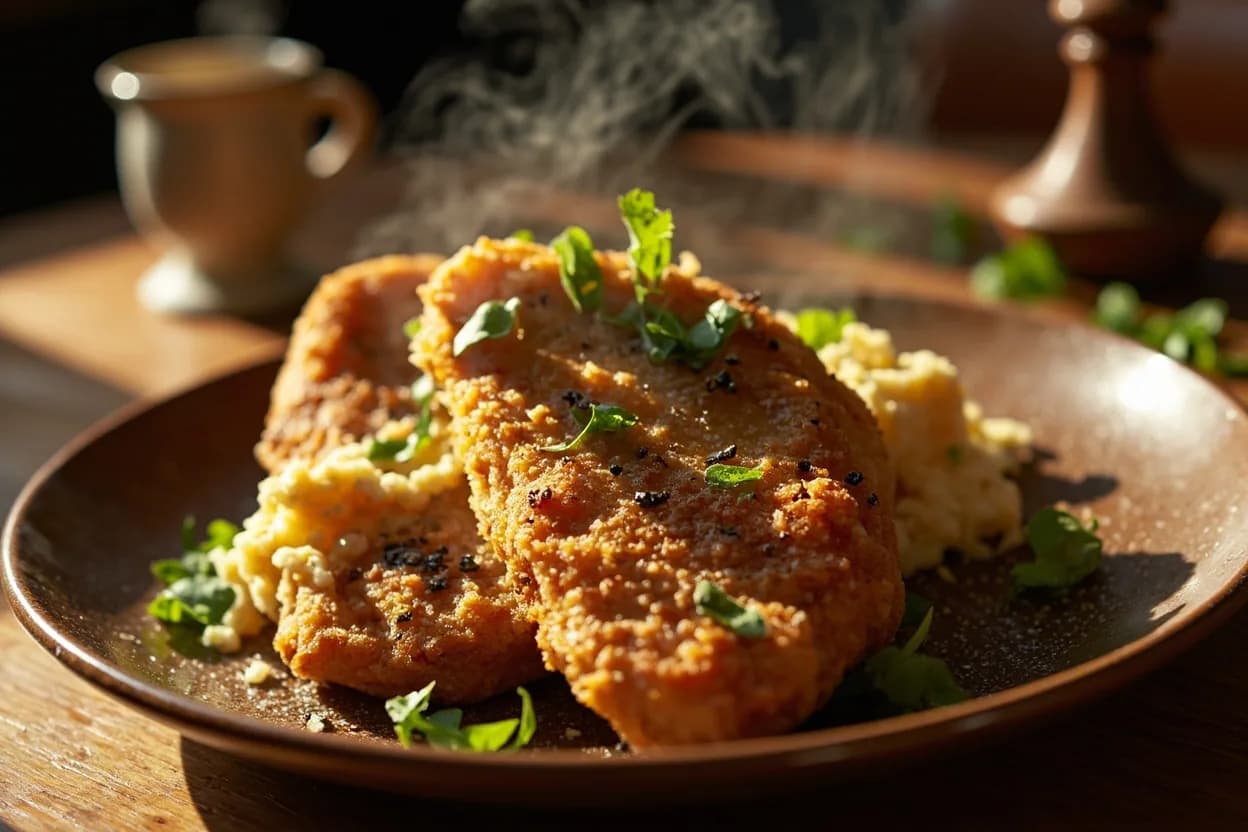
Related

Whisk
Beat ingredients smooth and aerated with a looping wire motion

Sift
Pass dry ingredients through mesh to aerate and remove lumps

Strain
Pour through mesh to separate solids from liquid for a smooth result

Filter
Pass liquid through fine material to clarify out the smallest particles

Rice
Press cooked potatoes through small holes for fluffy, lump-free texture

Mash
Crush soft cooked food into a rustic, creamy purée

Grind
Crush food into a coarse to fine texture, from spices to meat

Grate
Shred food into fine bits against a sharp-toothed surface