
Heat & Fire
Bhuno
Fry and stir a masala until oil separates and flavor deepens
Bhuno-ing (or bhunao) repeatedly stir-fries a masala base of onions, tomatoes, and spices over medium heat until the moisture cooks off and the oil separates out. That separation is the signal a curry's flavor has fully developed. It needs attention and a steady hand to keep it from sticking.
Bhuno (also bhunao or bhunna) is the foundational Indian technique of repeatedly frying and stirring a masala base — onions, ginger-garlic, tomatoes, and ground spices — over medium heat until the moisture cooks off and the oil separates and rises to the surface. That separation, when little pools of oil break free around the edges of the paste, is the unmistakable signal that a curry's base has fully developed: raw flavors have been driven off and replaced with deep, cooked, concentrated savor. It's the difference between a flat, raw-tasting curry and one with rich, rounded depth, and it can't be rushed.
- Difficulty
- Intermediate
Types & varieties
Frying onions to a deep brown base before the rest of the masala.
Cooking down the tomato-spice paste until the oil splits out.
Continually stir-frying meat in the masala with little liquid for an intense, dry, coated gravy.
How to do it
- 1
Start with enough fat
Use a generous amount of oil or ghee — too little and the masala won't release oil at the end, the whole point of the technique.
- 2
Brown the onions
Fry onions patiently to deep golden, then add ginger-garlic and cook off the raw smell.
- 3
Add tomatoes and spices
Stir in tomatoes and ground spices; the mixture will be wet and loose at first.
- 4
Fry and stir continually
Keep stir-frying over medium heat, scraping the base, as the moisture steadily cooks away and the paste thickens and darkens.
- 5
Cook until the oil separates
Continue until you see oil pooling and glistening at the edges of the masala — that's the doneness cue.
- 6
Build the dish
Add the meat, vegetables, or water now; the base is fully cooked and ready to carry the rest of the curry.
Why oil separation signals doneness
As the masala fries, its water content slowly evaporates. While water remains, the mixture can only simmer at the boiling point and the fat stays emulsified into the watery paste. Once the moisture is nearly gone, the emulsion breaks and the now-flavor-saturated oil splits out and rises — visible as glistening pools around the edges. That's both a physical signal (the water has cooked off) and a flavor milestone: with the moisture gone, the spices and aromatics have toasted and concentrated rather than just stewed, and the oil has absorbed their fat-soluble flavors. A curry built on a properly bhuno'd base tastes deep and rounded; skip the step and it tastes raw, thin, and harsh.
Common uses
Tips & pitfalls
- Don't stint on oil — the separation that signals doneness needs enough fat to break free.
- Keep the heat at medium and the spatula moving so the masala fries evenly without catching.
- If it starts to stick or scorch, splash in a little water, scrape the base, and keep frying it down.
- Look for the oil glistening at the edges, not just a thickened texture, before moving on.
Good to know
- Heat level
- Medium; steady frying, not scorching
- Best for
- Building the masala base of curries and gravies
- Equipment
- Heavy kadai or pan, with a little extra oil
- Fat needed
- Generous oil or ghee — needed for the separation
- Time
- 10–25 minutes of active stir-frying
Also called
bhunao · bhuna
Dishes that rely on it
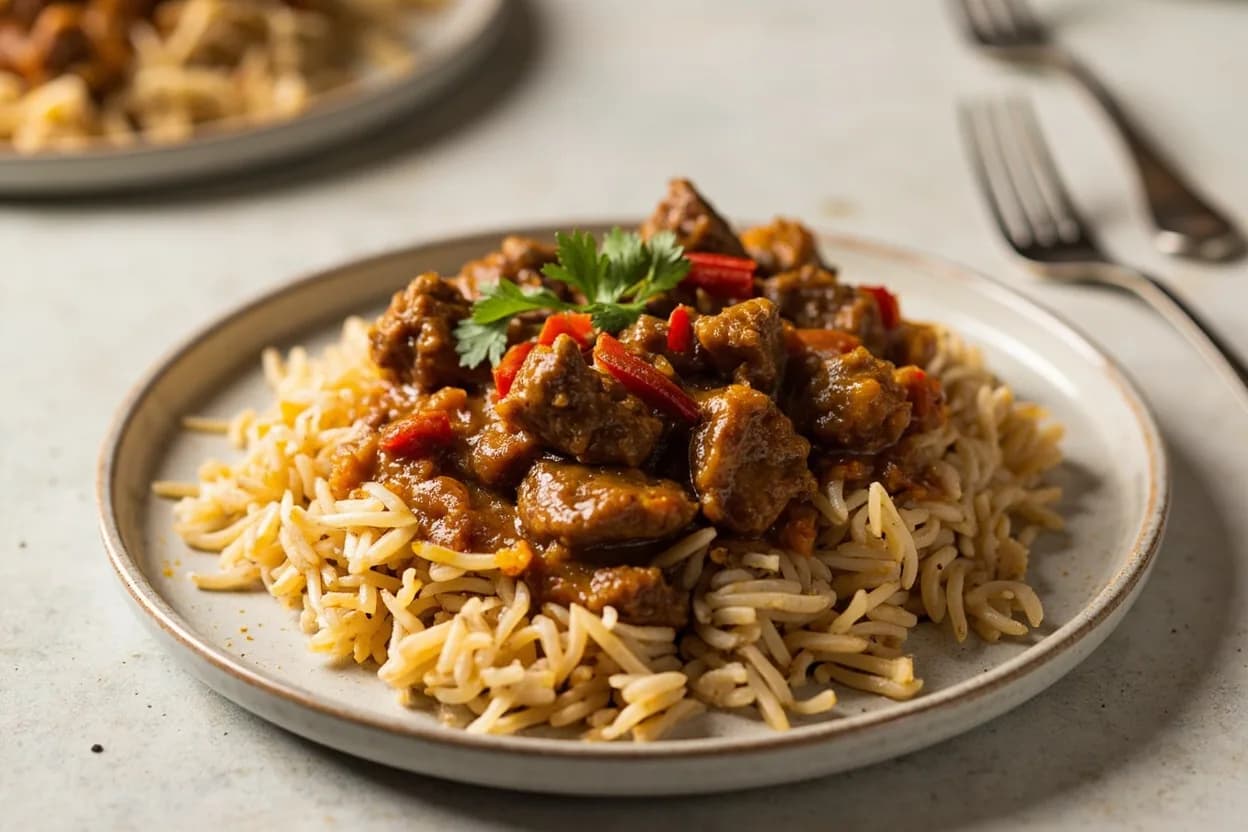
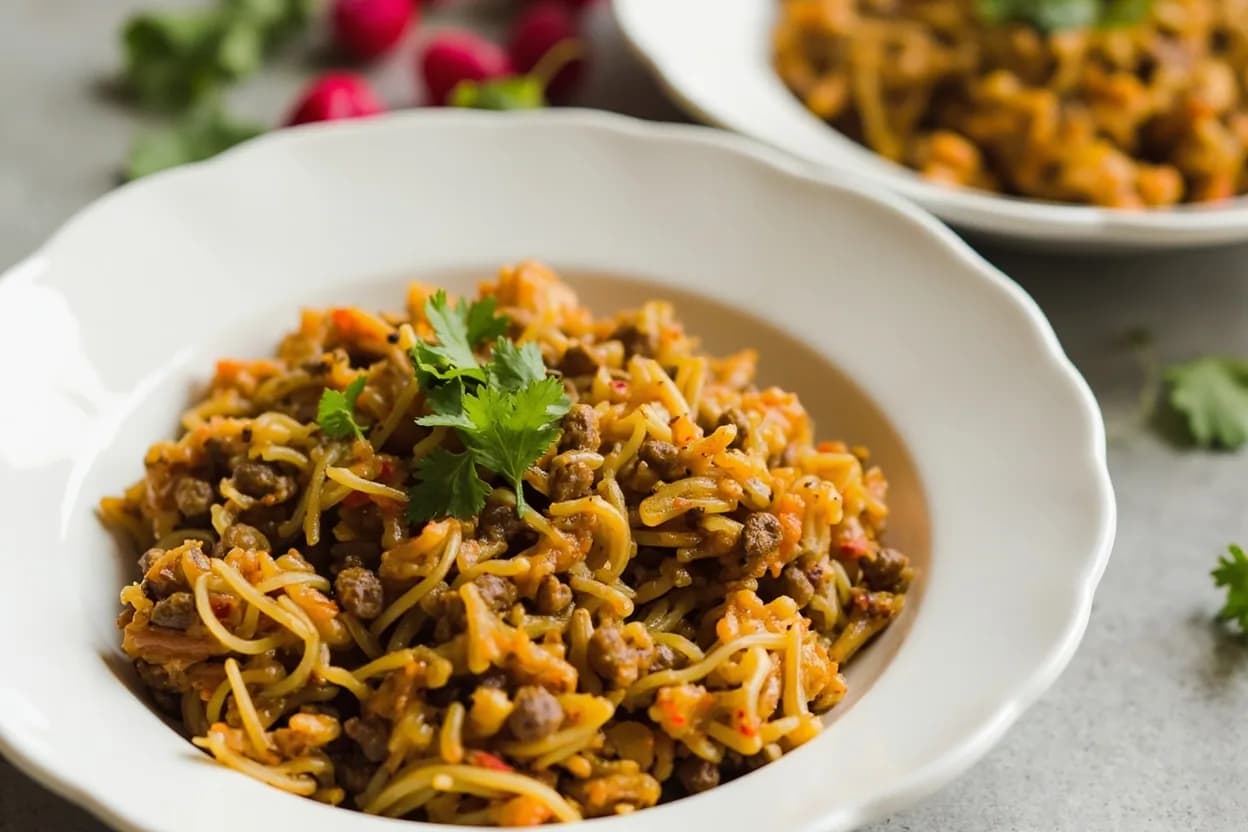
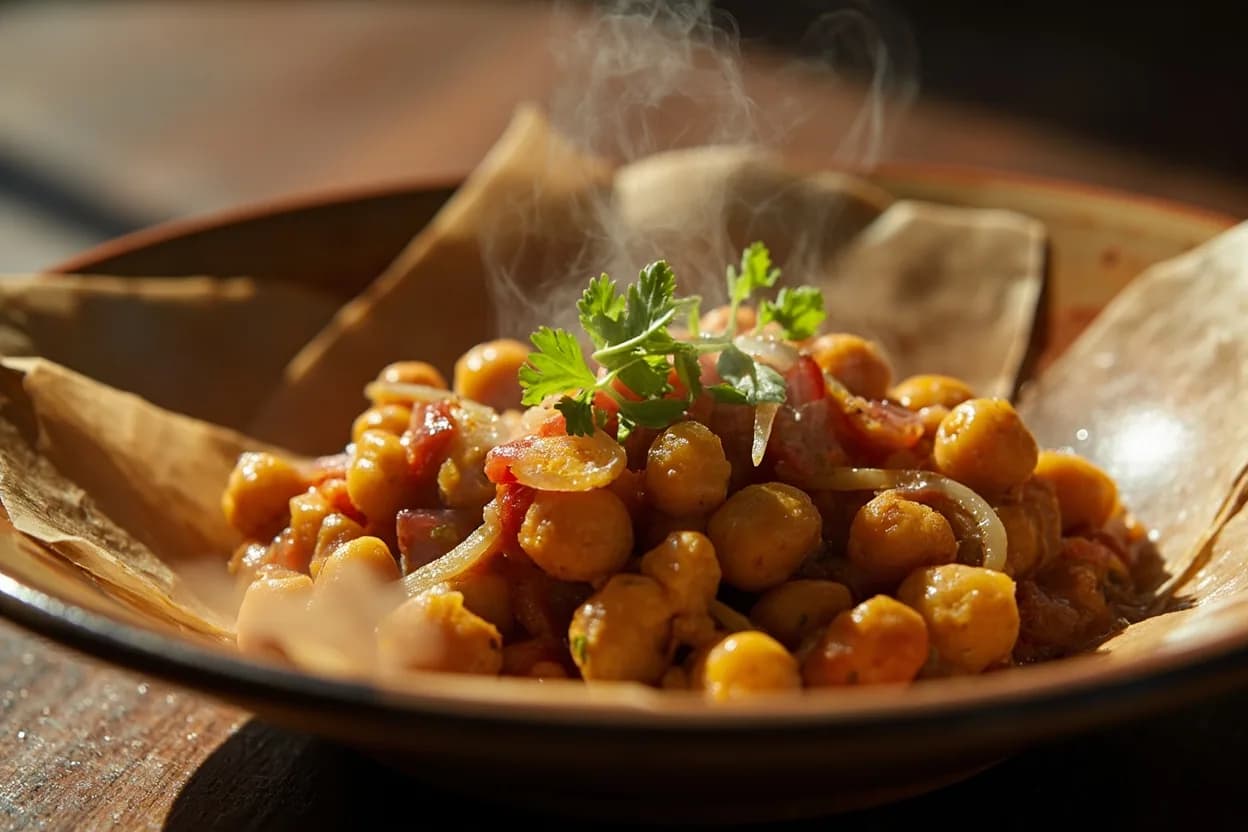
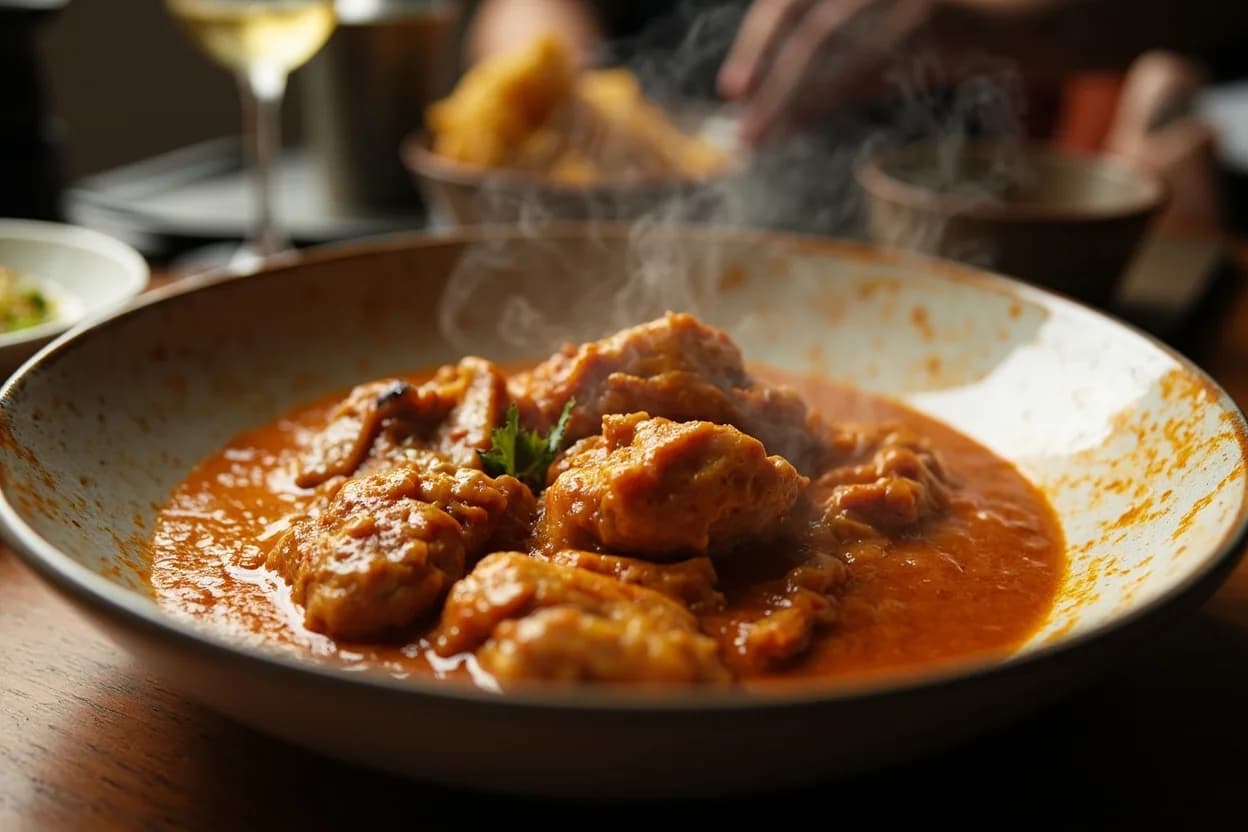
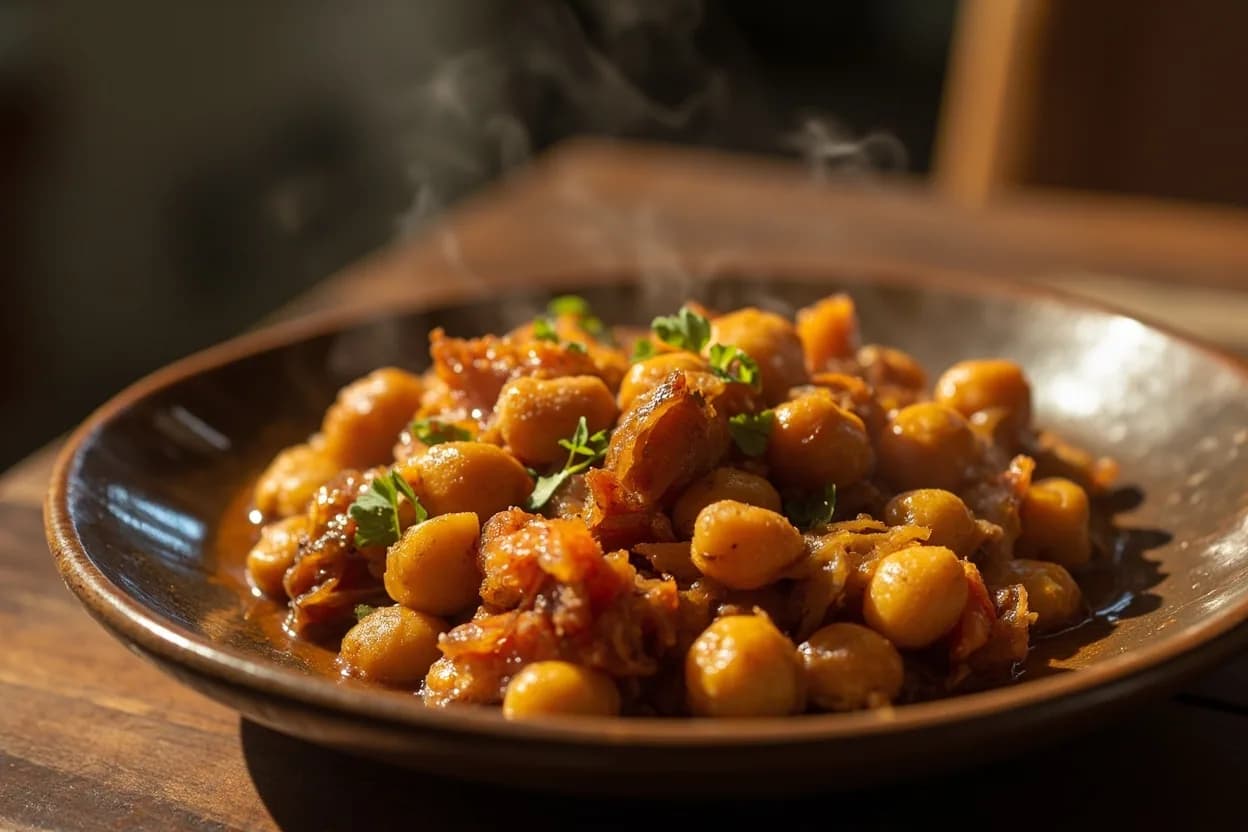
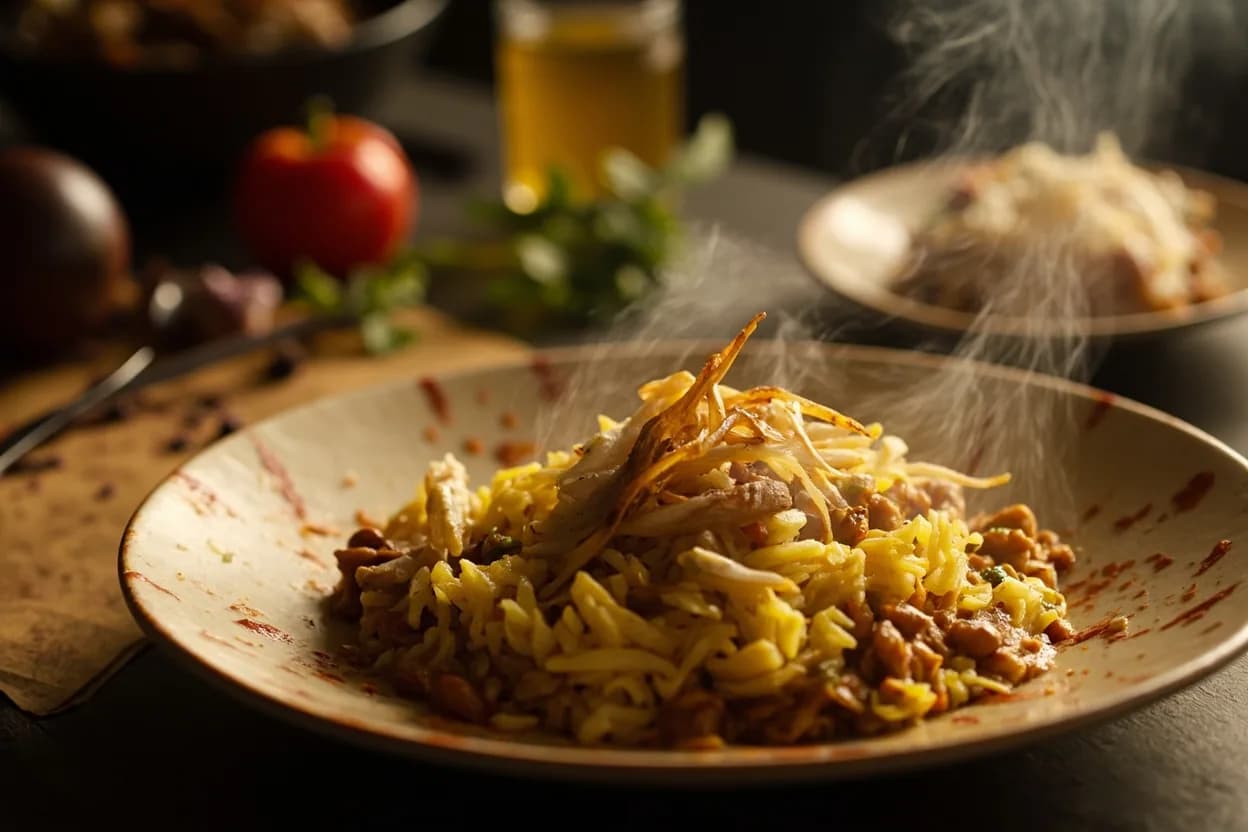
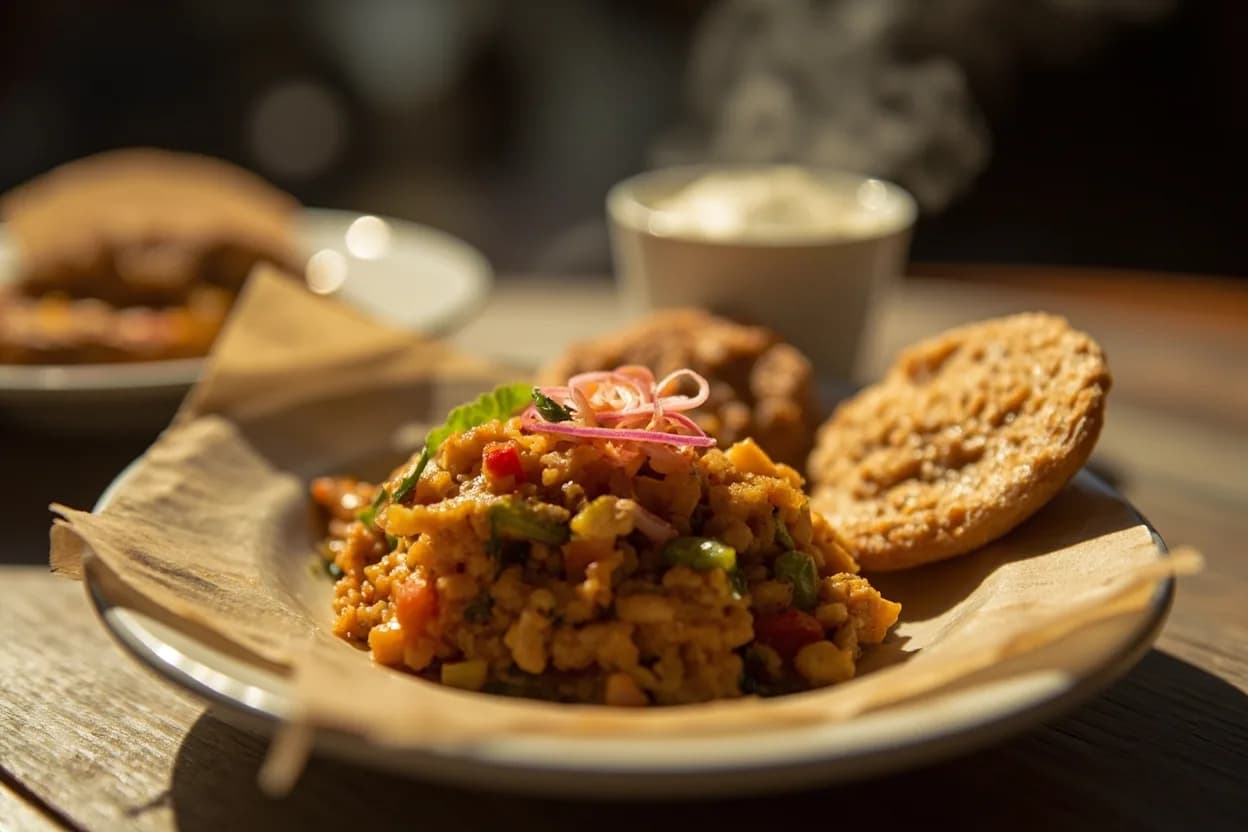
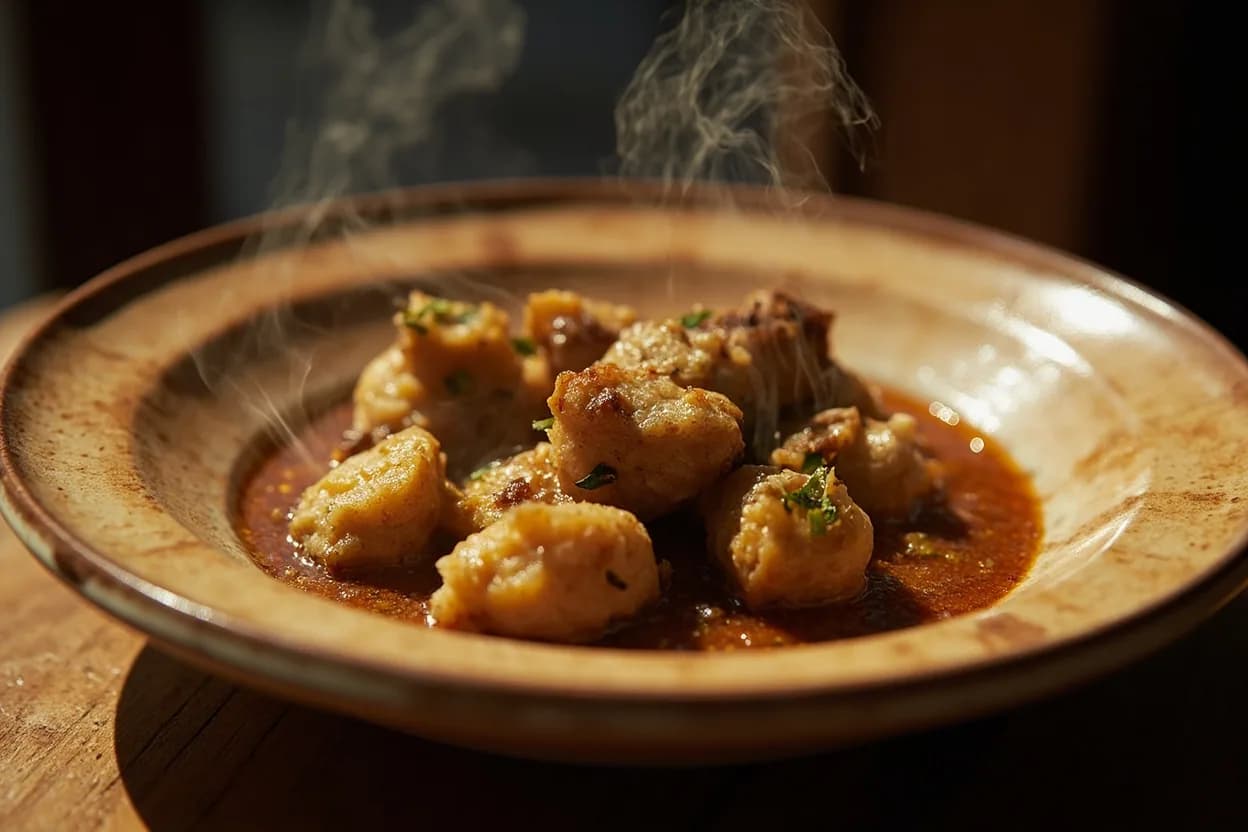
Related

Sear
Blast the surface hot for a deep-browned, savory crust

Sauté
Cook quickly in a little fat over lively heat, tossing as you go

Stir-Fry
Toss bite-sized pieces over roaring heat for fast, smoky cooking

Pan-Fry
Crisp food in a shallow layer of hot fat, turning once or twice

Deep-Fry
Submerge in hot oil for an all-over crackling crust

Roast
Cook uncovered in dry oven heat for browned edges and tender centers

Bake
Cook with steady, surrounding oven heat — the soul of bread and pastry

Broil
Hit food from directly above with fierce overhead heat