Heat & Fire
Frying Onions
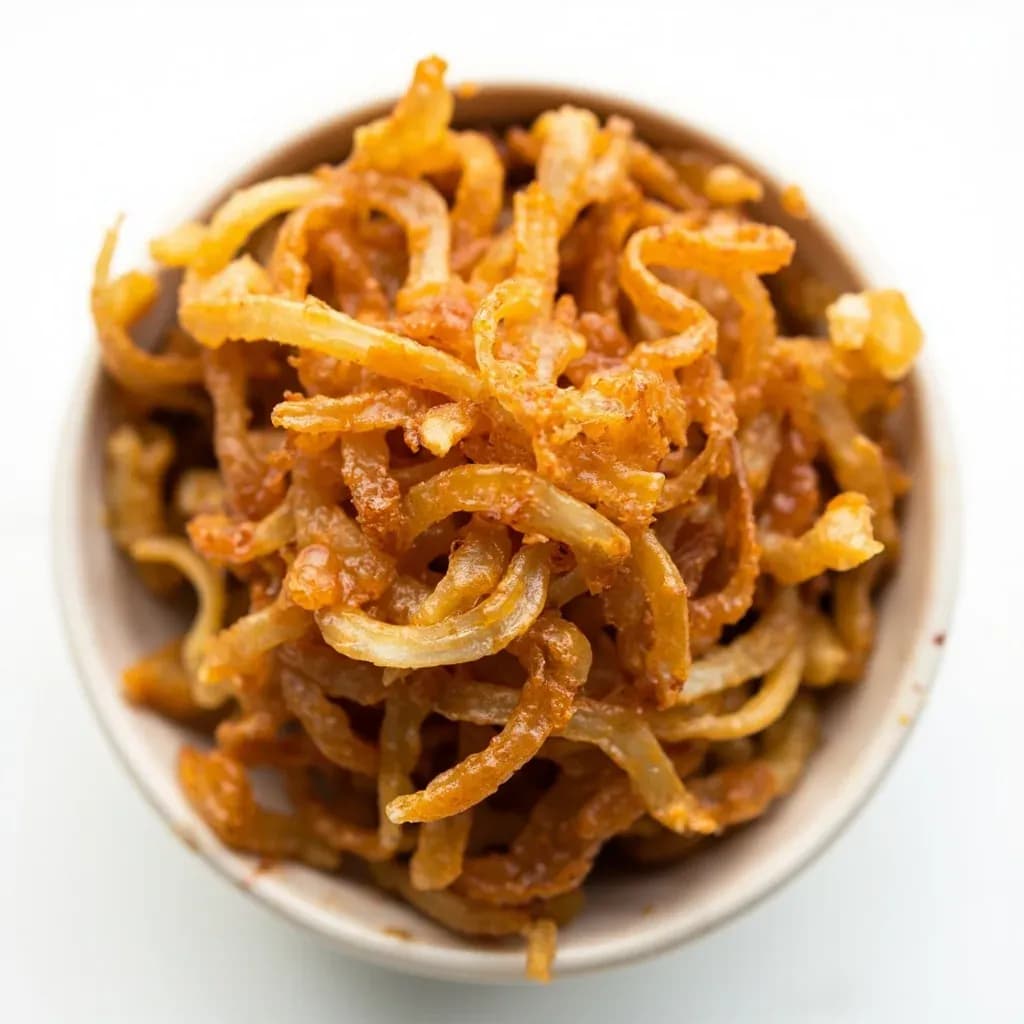
Cooking sliced onions in oil from soft and golden to deeply browned, crisp birista for flavor and garnish.
Frying onions slowly caramelizes their sugars and develops sweet, savory depth used as a base for curries, stews, and rice dishes. Thinly sliced onions fried until crisp and brown become birista or piaz dagh, scattered as a garnish across South and Central Asian cuisines. Low, patient heat and proper draining yield even color and lasting crunch without bitterness.
Frying onions is less a single technique than a continuum — from the gentle, barely-sizzling sweat that coaxes an onion into translucency, to a long, low caramelization that turns it mahogany and jammy, to a quick, hot deep-fry that dehydrates thin slices into brick-red, shatter-crisp birista. What ties them together is fat, heat, and the conversion of an onion's sharp sulfur compounds and water-laden cells into something sweeter, softer, and deeply savory. The same pan of yellow onions can travel from aromatic base to soffritto to French confit d'oignon with nothing more than patience and a downward nudge of the dial.
The cook's real job is to choose where on that continuum to stop. Yellow onions, with their high sugar and balanced pungency, are the workhorse; sweet varieties like Vidalia or Walla Walla caramelize faster and turn mellower. The chemistry is straightforward but worth understanding: as cells lose water, sugars (fructose, glucose, sucrose) concentrate and react with amino acids through Maillard browning, while the falling pH softens the sulfur compounds that make raw onions bite. Salt speeds the release of cell water, which is why adding it early produces softer, more evenly browned onions — but the same trick kills crispness in birista.
Birista is a different animal altogether: a true deep-fry where thin onion rings are dried, lowered into 150–165 °C oil in small batches, and pulled the moment they turn deep amber. Done well, the rings lose roughly 90% of their weight, absorb a moderate amount of oil, and stay crunchy for weeks in an airtight jar. Done poorly, they brown unevenly, soak up grease, or turn leathery. Across cuisines — Hyderabadi biryani, French onion soup, Italian soffritto, American onion rings, Vietnamese fried shallots — the same ingredient becomes a foundation, a finish, or a garnish depending on how it is fried.
- Difficulty
- Easy
Types & varieties
Very gentle fry in a little fat, lid askew, just to translucency and softness without browning. Used as a base for pilafs, braises, and rice dishes where the onion should not color.
Medium heat, regular stirring, until limp and pale gold; the everyday cooking onion for pasta sauces, sautés, and stuffings.
Slightly higher heat and more oil; the classic stage for biryani base masalas (tala hua pyaaz), French onion soup base, and sofrito-style foundations.
Long, slow fry (35–60 min) at low-medium heat, often with a pinch of sugar or splash of water to lift fond; deep mahogany, jammy, intensely sweet. The French confit d'oignon.
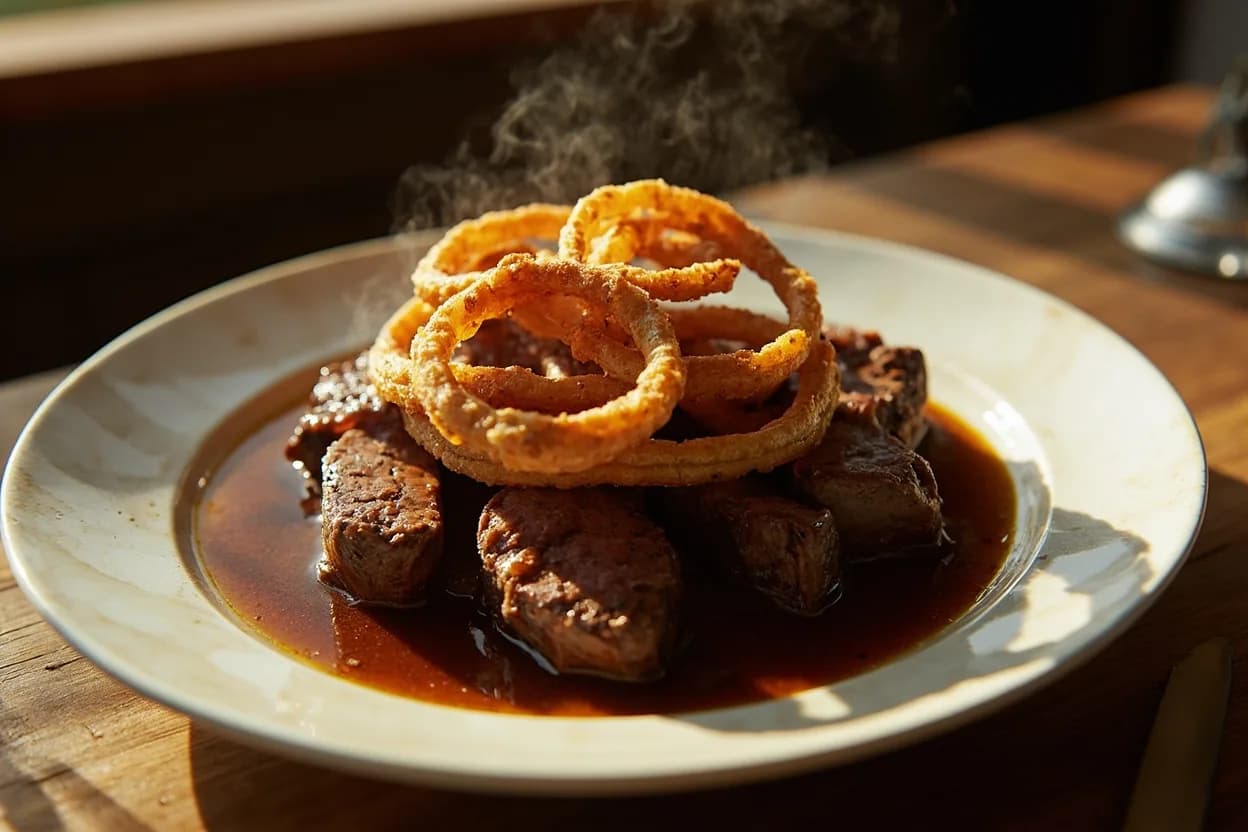
Thinly sliced onion rings or fine half-rings deep-fried in batches at 150–165 °C until brick-red to deep amber and crisp; used as a garnish and mix-in across South Asian cooking (Hyderabadi biryani, Lucknowi korma, haleem, chaat).
Finely chopped or grated onion briefly fried in hot fat with whole or ground spices to release aromatics; poured over a dish or used as a finishing step.
Coated or uncoated thick rings (or onion straws) fried crisp for burgers, hot dogs, sandwiches, and the classic green-bean casserole topping.
Shallots or pearl/baby onions fried whole until caramelized; common in Southeast Asian, French, and South Indian cooking.
How to do it
- 1
Choose and prep the onions
Peel the onions, halve them pole to pole, and slice or dice to the thickness your dish calls for. For birista, slice thin (about 1.5–2 mm) and, if desired, separate the rings. Pat dry with a clean kitchen towel. Uniform cuts are the single biggest factor in even frying.
- 2
Heat the fat to the right stage
For sautéing or caramelizing, set a wide heavy pan over medium heat and add enough oil or butter to coat the base by 2–3 mm. Let the fat shimmer but not smoke. For birista, fill a deep, heavy pan or kadai one-third full with oil and bring it to 150–165 °C (300–330 °F); a small test slice should sizzle gently and rise in about 2 seconds.
- 3
Add the onions and manage the heat
Tip the onions in, toss to coat, and spread them in an even layer. Start at medium heat for sautéing; lower to medium-low for caramelization. For birista, lower the heat slightly once the onions go in — they will cool the oil — and maintain a steady, gentle sizzle.
- 4
Season and stir with intent
Add salt early for soft, evenly browned onions; add it late (or after draining) for birista. Stir occasionally, scraping the fond, until the onions have released their water, the pan goes from wet to dry, and the slices begin to color.
- 5
Watch the color stages
Translucent and limp at 5–10 min. Pale gold and sweet at 15–20 min. Deep amber and jammy at 30–45 min. Brick-red and crisp for birista at 4–7 min per batch. Pull the pan off the heat a touch earlier than the target — carryover heat will finish the job.
- 6
Adjust and finish
For long caramelization, deglaze with a spoon of water, stock, or wine whenever fond threatens to scorch, and keep going. For birista, lift the rings out with a slotted spoon or spider the moment they turn deep amber, drain on a rack, and let them cool fully to crisp up.
- 7
Use or store
Fold soft-fried onions into the dish, top with caramelized onions, or scatter birista just before serving to keep it crisp. Store cooled birista in an airtight container; caramelized onions keep 4–5 days refrigerated in a sealed jar with a thin layer of oil on top.
Doneness: where to stop on the continuum
The same pan of onions becomes very different things depending on when you pull it. Use the stages below as a map, not a rule — ambient humidity, sugar content, and the size of the pan all nudge the times around. The key is to learn the visual cues, because a brown onion does not announce itself until you are ten seconds past the moment you wanted.
- 5–10 min, translucent and limp: aromatic base for pilafs, braises, stocks, dals; no color yet, the onion still tastes like onion.
- 15–25 min, pale gold: the everyday cooking onion; sweet, soft, with mild pungency — the soffritto, the mirepoix, the curry starting point.
- 25–40 min, deep amber and glossy: rich enough for French onion soup, biryani masala base, and slow ragùs; a small splash of water or wine at this stage lifts fond and deepens the color.
- 35–60 min, mahogany and jammy: caramelized onions; intensely sweet, melting, almost a condiment — fold into tarts, pizzas, crostini, steak sandwiches, or a simple onion confit.
- 4–7 min at 150–165 °C, brick-red and crisp: birista; garnish only, not a base — scatter at the table to preserve crunch.
Common uses
Tips & pitfalls
- Cut uniformly. Even slices or dice ensure even browning; aim for 3–5 mm for sautéing and 1.5–2 mm for birista.
- Match pan size to volume: a crowded pan steams rather than fries, producing pale, watery onions. Use a wide pan and fry in batches if needed.
- Salt early for soft, evenly browned onions; salt at the end of birista frying (or after draining) to keep them crisp.
- Choose fat by heat: ghee or a neutral oil (canola, sunflower, grapeseed) for high-heat birista; olive oil or butter for slower caramelization — and lower the flame if using butter, since its milk solids brown fast.
- Deglaze with a splash of water, stock, wine, or vinegar during long caramelization to lift fond and re-moisten the pan; this deepens color and flavor without scorching.
- Onions keep cooking from carryover heat. Pull them off the flame a shade lighter than your target color, especially for birista, which can race from amber to acrid in seconds.
- For birista, pat the slices dry on a cloth, fry in small batches, and let the oil return to 150–165 °C between batches; drain on a wire rack rather than paper towels if you want maximum crispness.
- Common mistake: turning the heat too high. Burnt onions taste acrid and bitter; if they darken faster than they soften, lower the flame and add a little more fat before they scorch.
Good to know
- Category
- Dry-heat and shallow-fat cooking technique applied to Allium cepa
- Heat range
- From a gentle sweat at ~95–110 °C (200–230 °F) in fat to deep-frying at 150–165 °C (300–330 °F) for crisp birista
- Core chemistry
- Onion cells lose water, then undergo Maillard browning and sugar caramelization (fructose, glucose, sucrose); sulfur compounds soften as pH drops, reducing pungency and increasing sweetness
- Typical time
- Soft and translucent: 5–10 min; golden sauté: 15–25 min; deep caramelized: 35–60 min; birista rings: 4–7 min per batch
- Yield loss
- Sliced onions lose roughly 50–70% of their raw weight by deep brown; birista is typically 8–12% of fresh weight
- Best onion types
- Yellow onions (high sugar, balanced pungency) for sautéing and caramelizing; sweet onions (Vidalia, Walla Walla) for fast caramelization; small red or pink onions for birista
- Salt's role
- Salt draws out cell water; adding it early slows browning and produces softer, more evenly cooked onions; adding it late (or after draining) keeps birista crisp
- Storage (birista)
- Cooled completely and stored airtight, birista keeps 2–4 weeks at room temperature and several months refrigerated
Also called
Frying Onions (Piaz Dagh) · Frying Onions (Birista/Bhuna Pyaz) · Garnishing with Fried Onion · Birista · Crispy Fried Onions
Dishes that rely on it
Related

Sear
Blast the surface hot for a deep-browned, savory crust

Sauté
Cook quickly in a little fat over lively heat, tossing as you go

Stir-Fry
Toss bite-sized pieces over roaring heat for fast, smoky cooking

Pan-Fry
Crisp food in a shallow layer of hot fat, turning once or twice

Deep-Fry
Submerge in hot oil for an all-over crackling crust

Roast
Cook uncovered in dry oven heat for browned edges and tender centers

Bake
Cook with steady, surrounding oven heat — the soul of bread and pastry

Broil
Hit food from directly above with fierce overhead heat