Heat & Fire
Soffritto / Sofrito (Aromatic Base)
Slow-cooking finely chopped aromatics in fat to build a deep flavor foundation for a dish.
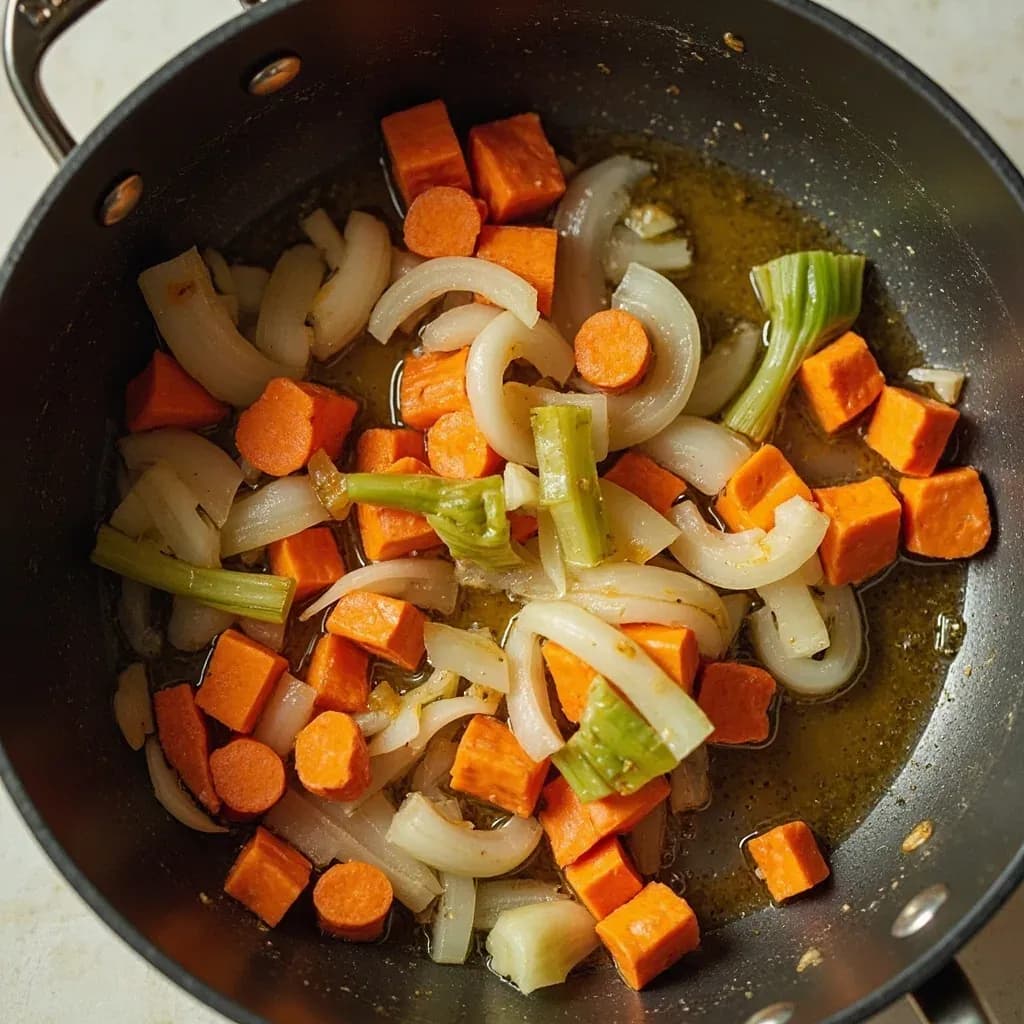
Soffritto (Italian) and sofrito (Spanish and Latin American) are aromatic bases of finely chopped onion, garlic, celery, carrot, or peppers gently cooked in oil until soft and sweet. This unhurried sautéing draws out and melds the flavors, creating the savory backbone for soups, stews, sauces, and rice dishes. The key is low, patient heat so the vegetables turn translucent and concentrated without browning harshly.
A soffritto (Italian) or sofrito (Spanish, Portuguese, and Latin American) is the slow, gentle sweat of finely chopped aromatics in fat — the first step in an enormous number of long-cooked dishes. The vegetables are never meant to brown or crisp; they are cooked at low to medium-low heat until they soften, lose their raw bite, release their sugars, and turn silky. What starts as crisp, sharp onion and carrot ends up as a sweet, glossy, almost jam-like base that quietly underpins everything that comes after it.
The technique matters because it solves a problem home cooks often overlook: raw aromatics tossed into a stew or sauce never quite finish cooking, leaving harsh, papery bits of onion or fibrous celery floating in the finished dish. A soffritto gives those aromatics a head start, so by the time liquid, grains, or meat join the pot, the foundation is already sweet, cohesive, and ready to dissolve into the dish. It is the patient groundwork that makes a final sauce taste as though it cooked for hours.
Despite the shared name and method, the technique splits into two broad schools. The Italian soffritto stays pale — onion, carrot, and celery cooked just to translucency in olive oil or butter — and is meant to disappear into the background. The Spanish sofrito pushes further, adding garlic and bell pepper and then reducing tomato into the mix until the whole thing becomes a deep, rusty, concentrated paste that can carry a dish on its own. Both rely on the same low-heat patience, but they finish in very different places on the color and intensity spectrum.
- Difficulty
- Easy
Types & varieties
Onion, carrot, and celery sweated in olive oil (sometimes butter); pale in color, often with parsley and a single garlic clove. The base for ragù, risotto, soups, and braises.
Onion, garlic, and often red bell pepper cooked soft in olive oil, then tomato is added and reduced to a thick, glossy paste; pimentón or saffron sometimes stirred in at the end.
Onion, garlic, tomato, and sometimes ñora pepper or a pinch of sugar; cooked down until jammy as the foundation for sauces and rice dishes like arròs.
Onion and garlic in olive oil, often with a bay leaf; the starting point for bacalhau dishes and bean stews.
Onion, garlic, bell pepper, tomato, culantro (recaito), and oregano, often cooked in annatto-stained lard; base for beans, rice, and stews.
Heavy on culantro and cilantro with ají dulce, garlic, onion, and bell pepper; typically blended to a paste and frozen for use across many dishes.
Onion, carrot, and celery in the same trio as Italian soffritto; often added raw to stocks but can also be sweated in butter as a base.
Onion, celery, and green bell pepper in roughly equal parts (no carrot); the foundation of gumbo, étouffée, and jambalaya.
Leek, carrot, and celeriac (sometimes parsley root); usually simmered whole in broths rather than finely diced in fat.
Garlic, onion, and tomato in oil, often with fish sauce added; the opening move for many braises and stews.
How to do it
- 1
Select and prep the aromatics
Choose the combination your cuisine calls for: onion, carrot, and celery for Italian; onion, garlic, bell pepper, and tomato for Spanish. Peel and trim, then cut into a uniform dice — brunoise (3 mm / ⅛ in) for refined sauces and risotto, medium dice (1 cm / ½ in) for rustic soups, braises, and beans. Keep each vegetable in its own pile so the firmer ones can enter the pan first.
- 2
Heat the fat
Set a wide, heavy-bottomed sauté pan over low to medium-low heat. Add enough fat to coat the bottom by about 1–2 mm — roughly 3–4 tablespoons of olive oil per 500 g (about 1 lb) of vegetables, or 30 g (2 tablespoons) of butter. For olive oil, the vegetables can go in when the oil is warm; for butter, wait until the foam subsides so the milk solids don't scorch.
- 3
Add the firmer vegetables first
Add the carrot and celery (or whichever vegetables hold the most structure) first. Stir to coat in fat, then spread into an even layer. Cook 3–5 minutes, stirring occasionally, until they begin to soften and turn translucent at the edges.
- 4
Add the onion
Add the onion and a small pinch of salt — the salt draws out moisture and helps everything soften evenly. Cook 4–8 minutes, stirring every 30–60 seconds, until the onion is soft, translucent, and just turning pale gold. The mixture should look glossy and a little wet, never browned or dried out.
- 5
Add garlic and any quick aromatics
Stir in minced garlic, herbs, or other quick-cooking aromatics and cook 30–60 seconds until fragrant. For Spanish sofrito, add the bell pepper with the onion, then stir in grated or finely chopped tomato and continue cooking 10–15 minutes until the mixture becomes thick, glossy, and a deep rusty red.
- 6
Proceed with the recipe
The soffritto is ready when the vegetables are completely soft and sweet and have released then reabsorbed their moisture. At this point, add stock, wine, canned tomatoes, grains, beans, or seared meat according to the dish. If the pan looks dry before the next step, deglaze with a small splash of liquid to lift any fond from the bottom.
Pale Italian vs. Deep Spanish: Two Endings for One Method
Both versions begin the same way — aromatics in fat over low heat — but they part company once the tomato goes in (or doesn't). Understanding which version a recipe wants is the difference between a translucent French-style sauce and a brick-red braise.
- Italian soffritto is a stealth ingredient: it should melt into the dish and leave no visible trace, only a quiet, sweet backbone.
- Spanish sofrito is a finishing ingredient in its own right; the tomato reduction concentrates flavor so much that a few spoonfuls can season an entire pot of rice or beans.
- If a recipe calls for soffritto and you are cooking Italian, hold the color at pale gold. If it calls for sofrito and you are cooking Spanish or Latin, push past gold into deep brick.
- Same dice, same fat, same patience — the difference is whether tomato is invited to the party.
Why a Wide Pan and Uniform Dice Matter
A soffritto is fundamentally a moisture-management problem. The vegetables are mostly water, and you need that water to leave the pan as vapor rather than steam the vegetables back toward rawness. Two practical levers control this: the surface area of the pan and the size of the cut.
- A wide, heavy sauté pan gives moisture somewhere to go; a tall, narrow pot traps steam and stalls the cooking.
- Uniform dice means every piece finishes at the same moment. Mixed sizes leave you with some bits mushy and others still crunchy.
- A 3 mm brunoise cooks in roughly half the time of a 1 cm dice and gives a smoother, more refined texture in the final sauce.
- If you double a recipe, double the pan size too — crowding kills the evaporation that drives the technique.
Common uses
Tips & pitfalls
- Cut the vegetables as uniformly as possible so they cook at the same rate; aim for a precise brunoise when making refined sauces.
- Use a wide, heavy pan — excess moisture needs surface area to evaporate, or the vegetables steam instead of sweat.
- Add the hardest, driest vegetables first (carrot, celery) and softer, higher-sugar ones later (onion, then garlic).
- Garlic should almost always go in after the onions have turned translucent — it burns in 30 seconds over the heat a soffritto needs.
- Season with a small pinch of salt early; it draws out moisture and helps the vegetables soften evenly.
- Resist constant stirring; let the vegetables sit 20–30 seconds between stirs so they actually contact the fat and cook rather than steam.
- For Italian soffritto, stop at pale gold — never brown. For Spanish sofrito, push past gold into a deep, jammy brick red after the tomato goes in.
- If the pan dries out before the vegetables are done, add a splash of water or stock rather than more oil.
- Pre-make big batches: soffritto freezes very well (ice-cube trays or flat freezer bags) and saves 15–20 minutes on weeknight cooking.
- Never crowd the pan; if doubling a recipe, split it into two batches or use a wider vessel. Crowding stalls evaporation and ruins the texture.
Good to know
- Origin
- Italy (soffritto, from soffriggere, 'to under-fry') and the Iberian Peninsula (sofrito); the technique spread through Mediterranean and Latin American cuisines
- Core ingredients
- Italian: onion, carrot, celery. Spanish/Latin: onion, garlic, bell pepper, tomato. Cajun: onion, celery, green pepper (no carrot)
- Typical fat
- Olive oil in Mediterranean and Latin versions; butter or olive oil in northern Italy; lard or annatto-stained oil in some Caribbean variants
- Dice size
- Brunoise (3 mm / ⅛ in) for refined sauces and risotto; medium dice (1 cm / ½ in) for rustic soups and braises
- Heat level
- Low to medium-low — gentle bubbling or sweating, never a hard sizzle
- Cooking time
- 8–20 minutes for a basic Italian soffritto; longer (roughly 25–40 minutes total) when tomato is reduced in for a Spanish sofrito
- Visual cue
- Translucent and softened (Italian) or deep, glossy, jam-like red (Spanish with tomato)
- Yield
- Roughly halves in volume as vegetables release water and condense
- Difficulty
- Beginner — requires patience more than skill
- Make-ahead
- Pre-chopped aromatics keep 2–3 days refrigerated; cooked soffritto freezes well in ice-cube trays or flat bags for several months
Also called
Soffritto · Sofrito · Rehogar · Aromatic Base · Sazón Base
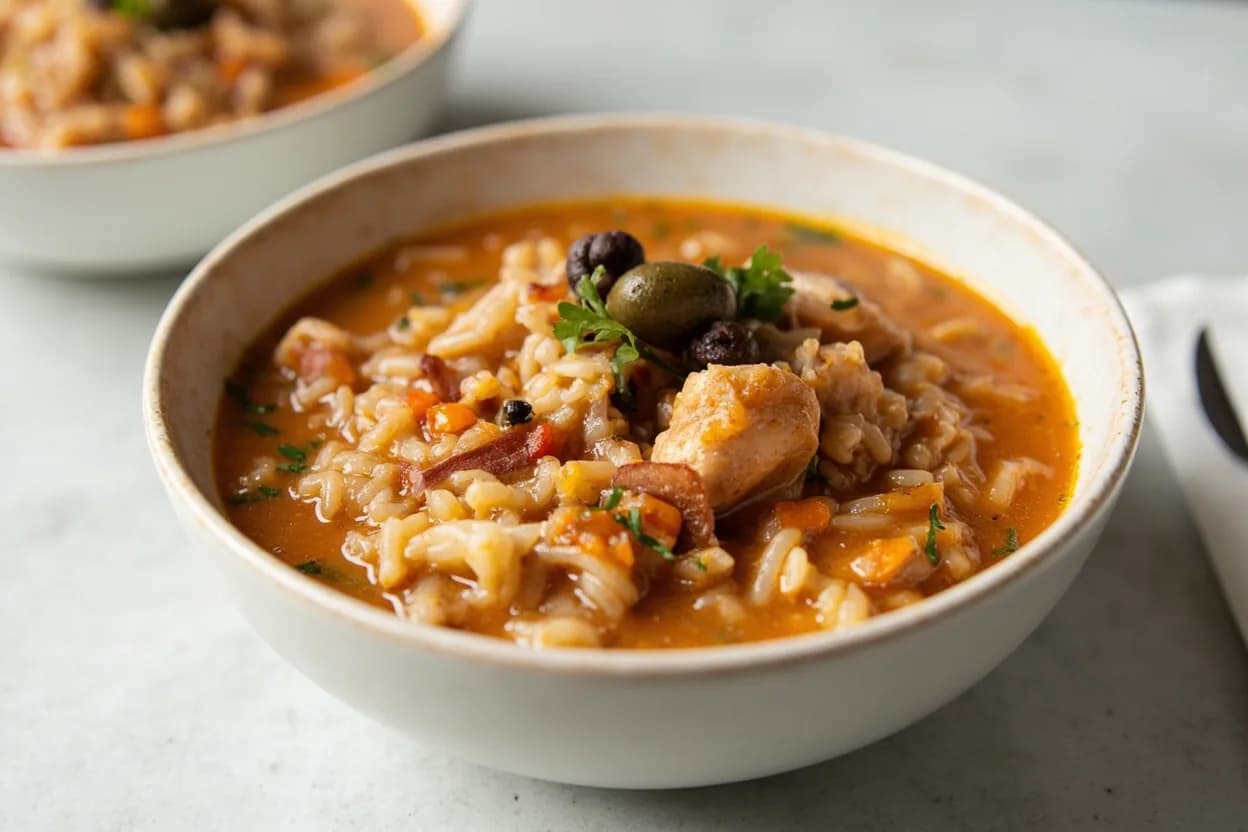
Dishes that rely on it
Related

Sear
Blast the surface hot for a deep-browned, savory crust

Sauté
Cook quickly in a little fat over lively heat, tossing as you go

Stir-Fry
Toss bite-sized pieces over roaring heat for fast, smoky cooking

Pan-Fry
Crisp food in a shallow layer of hot fat, turning once or twice

Deep-Fry
Submerge in hot oil for an all-over crackling crust

Roast
Cook uncovered in dry oven heat for browned edges and tender centers

Bake
Cook with steady, surrounding oven heat — the soul of bread and pastry

Broil
Hit food from directly above with fierce overhead heat