Water & Steam
Slow Cooking
Cooking food for hours at low heat so flavors meld and tough cuts turn tender.
Slow cooking holds food at a low, steady temperature for an extended time, letting flavors deepen and connective tissue dissolve into tenderness. It suits stews, casseroles, and braises that reward unhurried cooking, often in a covered pot or low oven. The long, gentle heat means the dish needs little attention while it develops rich, melded flavor.
Slow cooking is the family of techniques that coax tough, collagen-rich ingredients into tenderness over hours rather than minutes, using gentle heat held between roughly 170°F and 300°F. The principle is older than any appliance: a covered pot on the back of the stove, a clay vessel buried in embers, or a Dutch oven in a low oven all rely on the same physics — sustained, even heat that melts connective tissue into gelatin long before the muscle fibers dry out. This is why the method is almost always paired with the cheapest, hardest-working cuts of meat: chuck, brisket, shank, oxtail, and shoulder, where collagen is abundant and flavor is deep.
Beyond tenderness, slow cooking transforms a dish's flavor. Long, covered cooking concentrates savory notes, marries aromatics into a unified base, and extracts everything bones, dried beans, and tough vegetables have to give. The trade-off is texture: anything delicate — fresh herbs, leafy greens, dairy, quick-cooking vegetables — collapses if added at the start, which is why timing of add-ins is the cook's most important decision.
Slow cooking is also a practical technique. A covered vessel loses very little moisture, so a slow cooker or lidded Dutch oven needs far less liquid than a soup, and the cook's attention can wander. The low temperatures hold food safely above the danger zone while extracting flavor from bones, dried beans, and grains over many hours — which is why the same method is the standard for stocks, porridges, and beans that would scorch or break apart on a high burner.
- Difficulty
- Easy
Types & varieties
Long, covered cooking in a Dutch oven or roaster at 275–325°F; searing and braising happen in the same pot.
Same principle at the gentlest possible simmer; requires more attention to maintain a steady temperature.
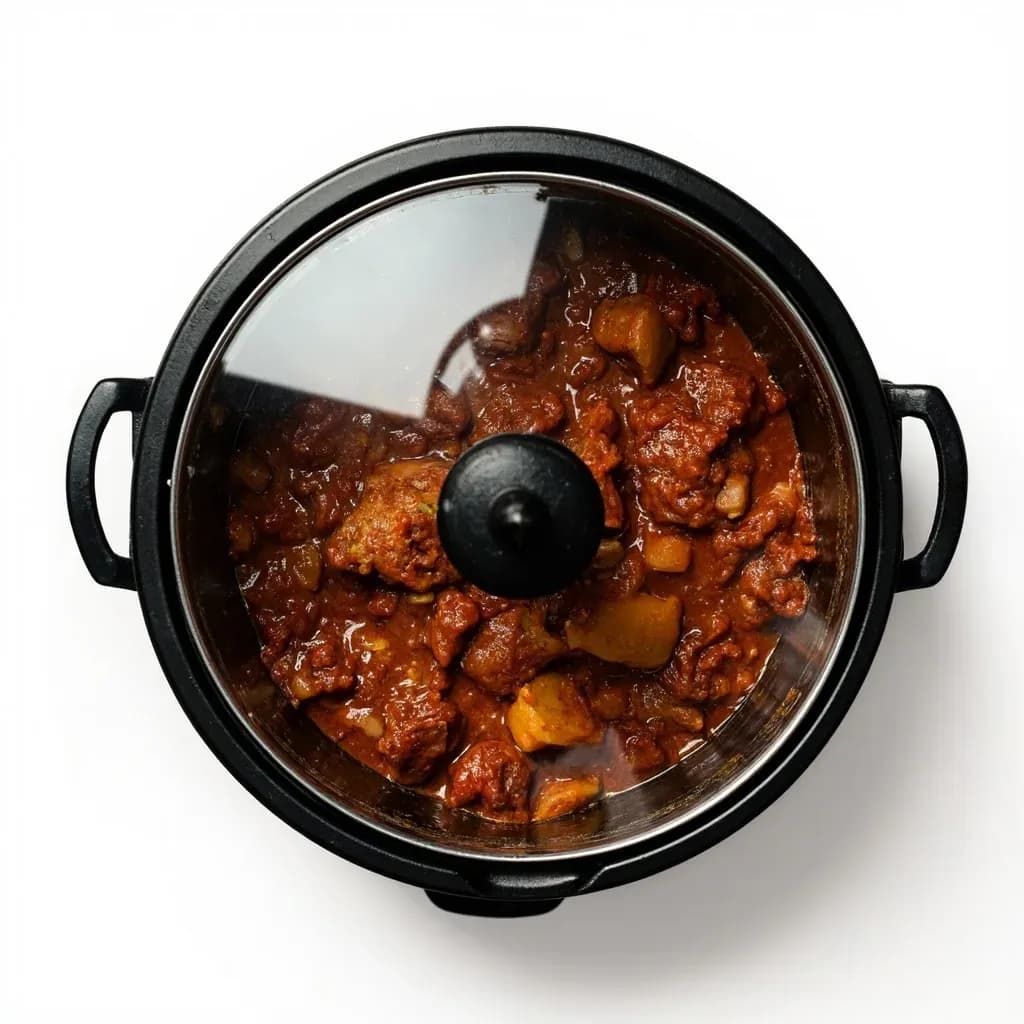
Countertop appliance with LOW (~200°F) and HIGH (~300°F) settings; a WARM setting holds food above the food-safety danger zone without further cooking.
North African conical clay pot that recirculates steam; the cone condenses moisture and returns it to the food, allowing very little added liquid.
Unglazed or sandware vessels — Chinese sha guo, Japanese donabe — that absorb and slowly release heat for even, gentle cooking.
Hangi (Maori), kalua (Hawaiian), barbacoa, and other traditions using heated stones and buried coals to slow-roast wrapped meats for hours.
Uncovered 'low-and-slow' oven roasting for large joints and barbecue-style meats at 225–275°F.
Low, indirect heat with wood smoke; a Southern US tradition that shares the time and temperature of slow cooking but adds smoke as a flavor variable.
How to do it
- 1
Choose the right cut and method
Pick a tough, well-marbled cut such as chuck, brisket, shank, oxtail, or pork shoulder. Decide on a vessel: Dutch oven for oven braising, slow cooker for set-and-forget, or tagine/clay pot for traditional flavor.
- 2
Prep and season
Pat the meat dry, season generously with salt and pepper, and let it rest at room temperature for 20–30 minutes. Trim surface silver skin and excess hard fat, leaving interior marbling.
- 3
Sear the meat
Heat a thin film of oil in a heavy pan over high heat. Brown the meat in batches without crowding, 2–3 minutes per side, until a deep crust forms. Transfer to the cooking vessel.
- 4
Build the flavor base
In the same pan, lower the heat and sauté onion, carrots, celery, and garlic until softened and lightly caramelized. Deglaze with wine, stock, beer, or water, scraping up the fond.
- 5
Add aromatics and liquid
Add herbs (bay, thyme, rosemary), spices, tomatoes if using, and enough liquid to come about halfway up the meat — typically 1–2 cups for a 3–4 lb cut. Bring just to a simmer.
- 6
Cook low and slow
Cover and cook at 275–325°F in the oven, LOW on a slow cooker (about 8 hours for a 3 lb chuck roast), or at the barest simmer on the stovetop. Maintain the temperature; do not boil.
- 7
Add delicate ingredients late
Stir in quick-cooking vegetables, fresh herbs, acid (vinegar, lemon), and dairy 15–30 minutes before the end of cooking so they keep their texture and brightness.
- 8
Test for doneness
The meat is ready when it yields easily to a fork or an instant-read thermometer reads 203–205°F in the thickest part. Bones should wiggle loose in shanks and oxtail.
- 9
Rest and finish the sauce
Lift the meat out and rest it loosely tented for 15–20 minutes. Skim fat from the cooking liquid, then reduce on the stovetop until it coats the back of a spoon; adjust salt, acid, and body.
- 10
Serve
Slice or shred the meat across the grain, spoon the reduced sauce over, and serve with starches (mashed potatoes, polenta, crusty bread, rice, or buttered noodles) that can soak up the juices.
The science of tenderizing tough cuts
Slow cooking works because of collagen. Connective tissue is built from collagen strands that, above about 160°F, begin to shrink and squeeze moisture out of the meat — which is why a tough cut seared hot and served fast turns leathery. Held at 170°F and above for hours, those same collagen strands break down and dissolve into gelatin, the same substance that gives a good braise its silky, lip-coating body. The conversion is roughly complete by 203–205°F internal, which is the doneness target for braised meats. Muscle fibers also loosen with time, so a fork slides through meat that would have been impossible to chew after a quick sear. The catch is that anything delicate — fresh herbs, dairy, leafy greens — breaks down just as thoroughly, so timing is everything.
- Collagen converts to gelatin between roughly 160°F and 205°F internal; longer holds at lower temperatures give the same conversion with more moisture retention.
- Fat renders gradually during a long cook, basting the meat from within and carrying fat-soluble flavor compounds into the sauce.
- Bones release marrow and minerals over hours, which is why a long simmer is the standard method for stocks and broths.
Converting between methods
Recipes do not translate one-for-one between slow cooker, Dutch oven, and stovetop. A sealed slow cooker loses almost no moisture, so liquid called for in an oven braise should be reduced by about a third when moving to a slow cooker; the opposite conversion needs more liquid and a check every 45–60 minutes as the pot reduces. Stovetop braising demands the most attention: the burner must be set so the liquid barely trembles, never simmers vigorously, or the meat toughens and the sauce turns murky.
- Slow cooker → oven braise: increase liquid by roughly one-third and expect the sauce to reduce; check every 45–60 minutes.
- Oven braise → slow cooker: cut liquid by about one-third because evaporation is minimal in a covered slow cooker.
- Any method → stovetop: use the lowest possible burner setting with a diffuser, and plan to babysit the pot.
Common uses
Tips & pitfalls
- Sear the meat in a hot pan before braising — the Maillard browning adds savory depth that the slow cook cannot create on its own.
- Resist lifting the lid: each peek on a slow cooker drops the temperature and can add 20–30 minutes to total cook time.
- Add quick-cooking vegetables (peas, zucchini, leafy greens) and dairy (cream, milk, yogurt, coconut milk) in the last 15–30 minutes, or they overcook and curdle.
- Trim excess exterior fat but leave internal marbling — fat renders during the long cook and bastes the meat.
- For food safety, do not start frozen meat in a slow cooker; thaw first or preheat the pot with liquid before adding the meat.
- Reduce and adjust seasoning (salt, acid, sweetener) only at the end — long cooking concentrates flavor and can mute acidity.
- Tough cuts are done when a fork slips in with almost no resistance, or when a probe thermometer reads 203–205°F in the thickest part (collagen has converted to gelatin).
- Rest braised meats at least 15–20 minutes so the juices redistribute; skim and reduce the braising liquid separately for the best sauce texture.
Good to know
- Temperature range
- Typically 170–300°F (75–150°C); classic oven braises sit at 275–325°F, slow-cooker LOW runs near 200°F, HIGH near 300°F.
- Cooking time
- Generally 2–10 hours depending on cut and method.
- Origin of electric slow cooker
- Patented 1936 by Irving Naxon as the 'Naxon Beanery'; Rival Company acquired the design and rebranded it the Crock-Pot in 1971.
- Best cuts
- Tough, collagen-rich cuts: chuck, brisket, shank, oxtail, pork shoulder, lamb shoulder, short ribs.
- Liquid-to-meat ratio
- Typically 1:2 to 1:1 (liquid:meat) in covered cooking; much less than a soup.
- Fill limit
- Slow cookers should be filled no more than two-thirds to three-quarters full to prevent boil-overs and uneven cooking.
- Moisture loss
- Covered slow cookers lose very little moisture; uncovered braises reduce by roughly 25–50%.
- Doneness signal
- Meat is done when a fork slips in with no resistance, or when a probe reads 203–205°F internally — the temperature at which collagen has converted to gelatin.
Also called
Slow Stewing · Slow Baking · Guisar
Dishes that rely on it
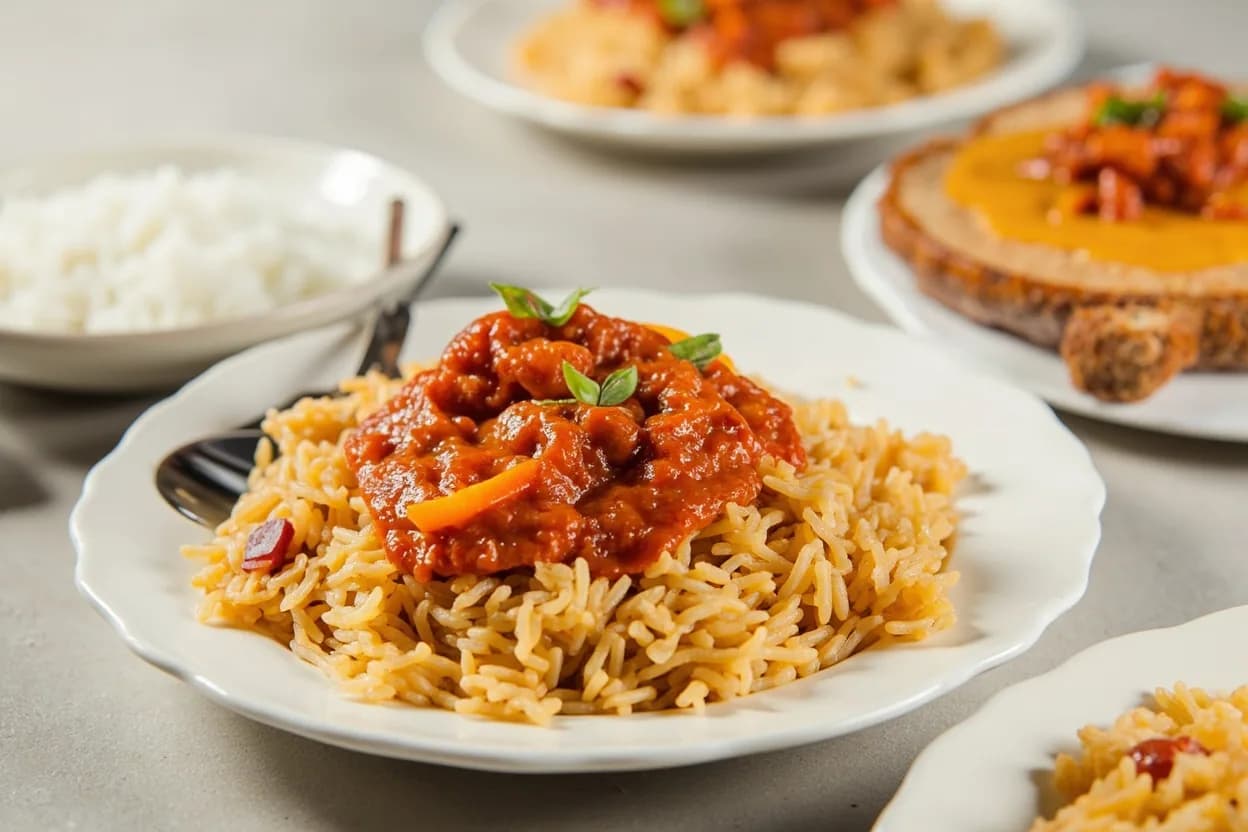
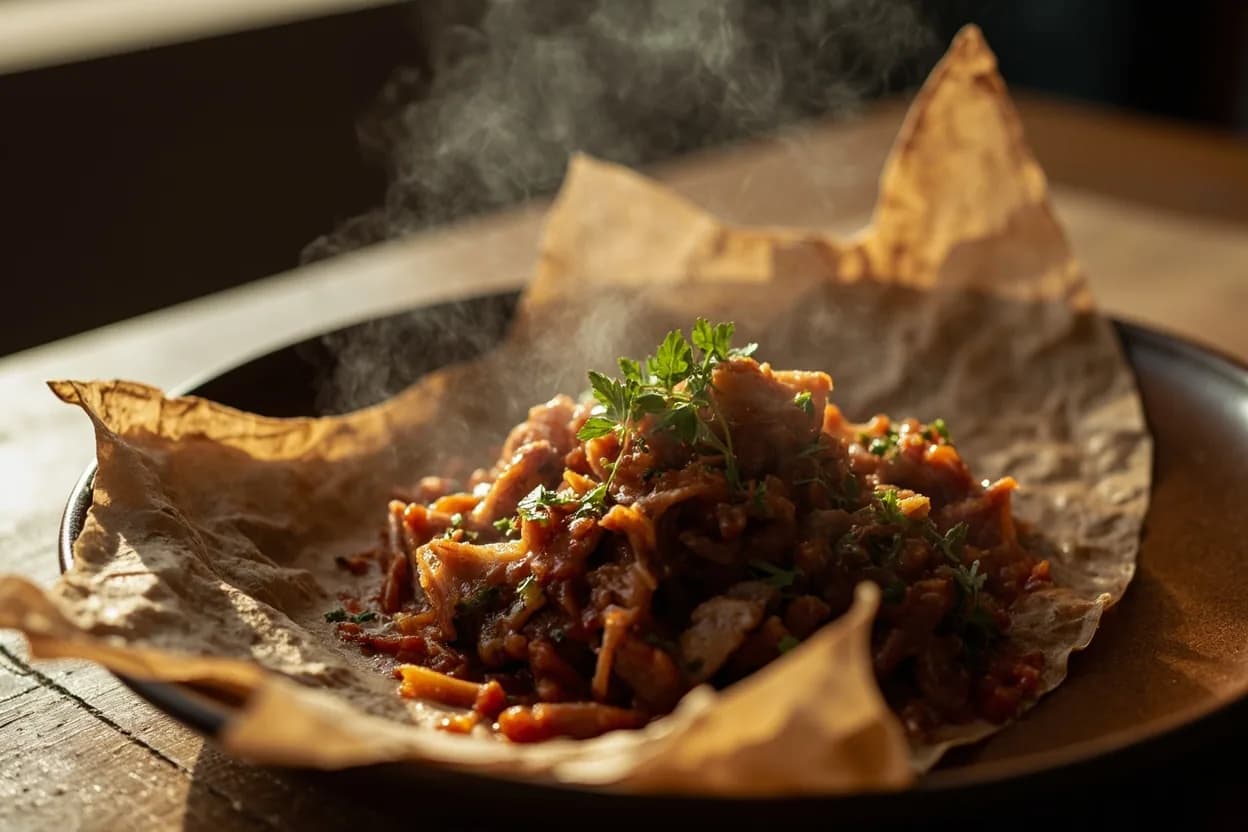
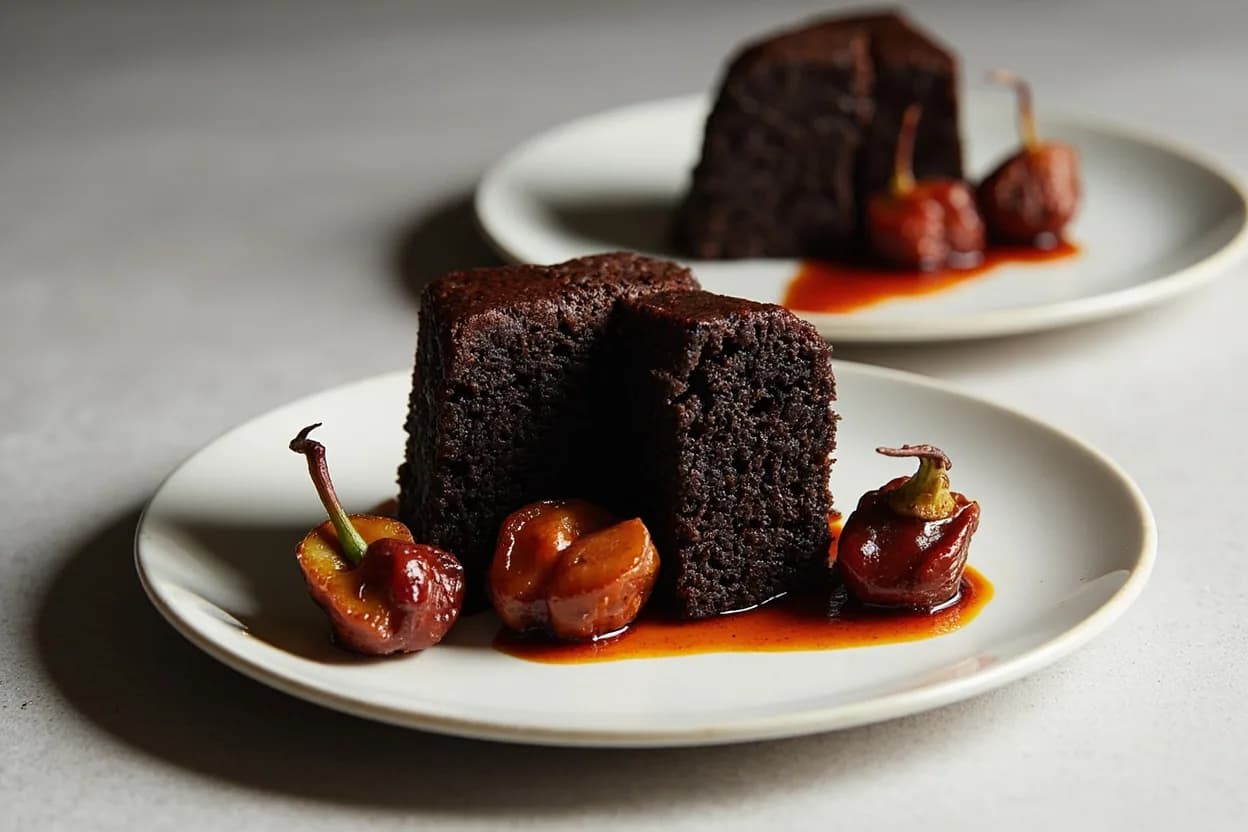
Related

Boil
Cook in vigorously bubbling liquid at full rolling heat

Simmer
Hold liquid at a gentle shimmer for tender, unhurried cooking

Poach
Cook gently in barely-trembling liquid for silky, tender results

Steam
Cook in rising vapor to keep color, nutrients, and shape intact

Blanch
Plunge briefly in boiling water, then shock cold to lock color

Braise
Sear, then cook slow in a little liquid until fall-apart tender

Stew
Simmer bite-sized pieces fully submerged into a rich, unified pot

Sous-Vide
Seal and cook in precise warm water for edge-to-edge doneness