Heat & Fire
Oven Roasting
Cooking food in the dry, all-around heat of an oven to brown the outside and cook through.
Oven roasting surrounds food with dry radiant and convected heat, browning the exterior while cooking the interior evenly. It suits whole birds, roasts, root vegetables, and sheet-pan meals, where higher temperatures crisp the surface and lower ones cook gently. Resting roasted meat after it comes out lets the juices redistribute for a moister result.
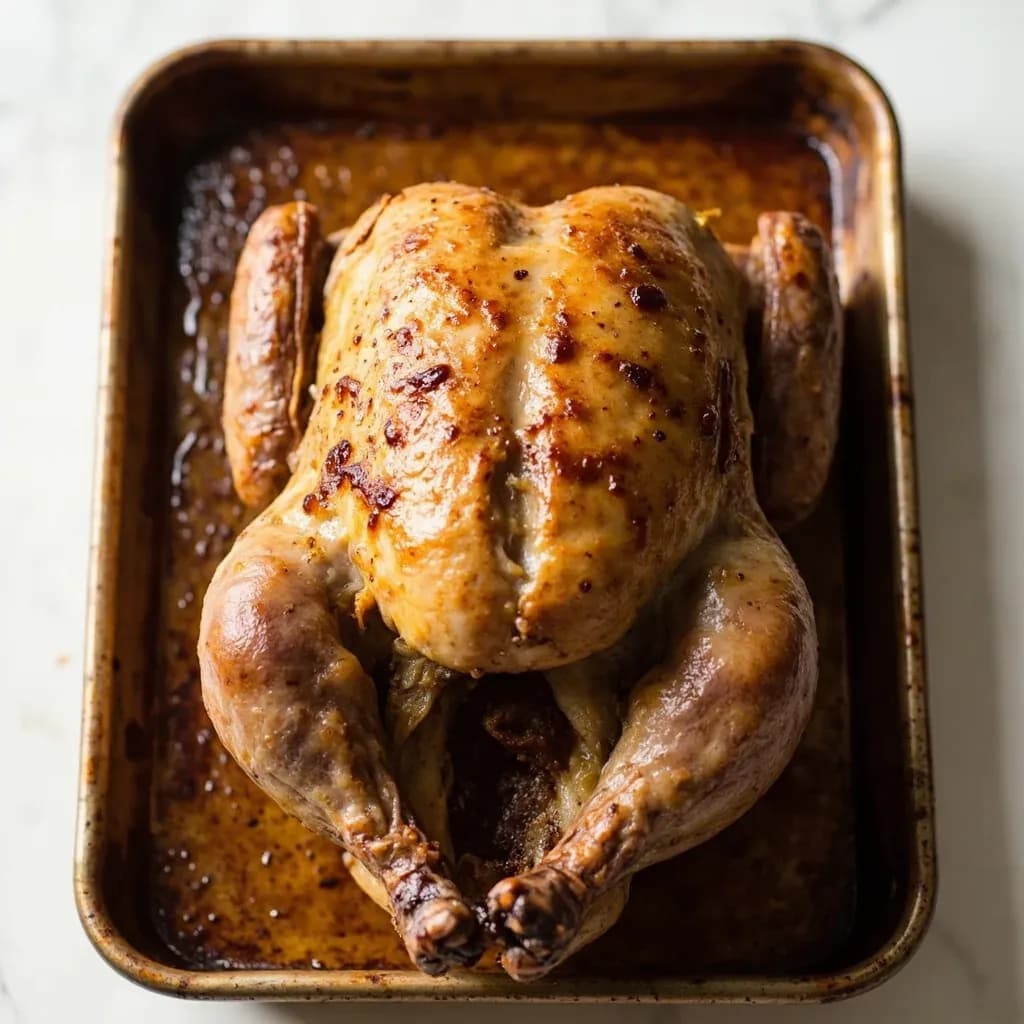
Oven roasting cooks food in dry, circulating heat inside an enclosed chamber, with no added liquid in the pan. Heat reaches the food by radiation from the hot walls and convection through the air, while the pan conducts heat directly into whatever touches it. Because the air is dry, surfaces brown quickly through the Maillard reaction and caramelization rather than steaming — which is why a roast chicken has crisp skin and roasted carrots have crisp edges, while poached chicken and boiled carrots do not.
The method's range is wide. A 500°F oven gives vegetables charred tips in twenty minutes; a 275°F oven turns a tough beef chuck tender over four hours. Both are roasting, but they ask different things of the food. The cook's job is to match temperature to the cut: small and lean wants speed and high heat, large and tough wants time and gentle heat, and a moderate 350–375°F handles most everyday poultry and roasts.
A handful of habits separate reliable roasting from guesswork. Surface moisture inhibits browning, so the food goes in dry and well salted. Home ovens drift, so an oven thermometer is worth more than a memorized dial. And because meat keeps cooking after leaving the oven, the target internal temperature is hit 5–10°F below the goal before resting. With those in place, roasting becomes one of the most forgiving techniques in any kitchen.
- Difficulty
- Easy
Types & varieties
400–500°F (200–260°C); best for small cuts, vegetables, and any food that benefits from fast browning.
250–325°F (120–160°C); used for large, fatty, or collagen-rich cuts like pork shoulder and beef chuck that need hours to tenderize.
A fan circulates hot air for faster, more even browning; reduce temperature about 25°F or shorten time accordingly.
Cook low (225–275°F) to a target internal temperature, then finish with a hard sear in a hot pan or under the broiler.
Food turns on a spit in front of or above the heat source, self-basting as it rotates and browning evenly on all sides.
Technically a braise — added liquid in a covered pot — though commonly called 'roast' (pot roast, pot-roasted chicken).
Food is buried in a salt crust or salt bed; the crust insulates, seasons, and is cracked open at the table.
How to do it
- 1
Choose temperature and cut
Match temperature to the food: high (425–475°F) for vegetables, small cuts, and poultry skin; moderate (350–375°F) for most whole birds and standard roasts; low (250–300°F) for large, fatty, or tough cuts that need hours to tenderize. Pull the food from the fridge 30–60 minutes ahead so it isn't ice-cold at the center.
- 2
Prepare the food
Trim excess fat, leaving a thin layer for flavor and basting. Pat completely dry with towels and season generously. Salt meats at least 40–60 minutes ahead, or dry-brine uncovered in the refrigerator for up to 48 hours; salt poultry under and over the skin. Tie uneven roasts with butcher's twine so they cook evenly.
- 3
Set up the pan and rack
Place a rack inside a heavy roasting pan or rimmed sheet pan. The rack lifts the food so hot air circulates underneath and drippings fall clear of the meat. For vegetables, a bare rimmed sheet pan lined with parchment works best; toss them with oil and salt directly on the pan.
- 4
Preheat thoroughly
Set the oven 20–30 minutes ahead so the walls, racks, and air are all at target temperature. Verify with an oven thermometer — home dials are routinely off by 25°F or more.
- 5
Position in the oven
Place the food on the middle rack for the most even heat from all sides. Lower the rack slightly for very large roasts, or move up at the end if you want broiler browning on top.
- 6
Monitor with a thermometer
Track doneness with an instant-read or leave-in probe thermometer, not the clock. For whole birds, check the thickest part of the thigh without touching bone. Begin checking well before the recipe's lower time bound.
- 7
Manage browning
If the surface darkens too quickly, tent loosely with foil or drop the oven temperature by 25°F. To deepen color at the end, raise the heat briefly, switch to convection, or run the broiler for 1–3 minutes — watched closely.
- 8
Rest before carving
Transfer to a board or warm platter, tent loosely, and rest at least 10 minutes for small roasts and up to 30 minutes for a whole turkey or large rib roast. Resting lets juices reabsorb into the muscle and lets carryover heat finish the center.
- 9
Build a pan sauce (optional)
Pour off all but 1–2 tablespoons of fat from the roasting pan. Set over a burner, add aromatics, deglaze with wine, stock, or water, and scrape the fond. Reduce, then whisk in butter or a starch slurry to finish. Add any juices released by the rested meat.
Searing, resting, and carryover cooking
Three ideas recur in roasting and are worth pinning down before the oven is on. None of them are folklore, but each is often misapplied.
- Searing does not 'seal in' juices. It builds Maillard browning and flavor on the surface. Juices are lost based on internal temperature and how the meat is rested, not whether it was seared first.
- Meat continues to cook after it leaves the oven. Most roasts rise 5–15°F (3–8°C) internally during resting. Pull at 5–10°F below the target temperature and let carryover finish the job.
- Resting matters. Juices need time to redistribute through the muscle. Cut too soon and they spill onto the board; rest 10 minutes for small roasts and up to 30 minutes for a whole turkey or large rib roast, tented loosely with foil.
Choosing the right temperature
Temperature is the main dial a roaster turns. Use it to match the food's structure and desired result.
- 425–475°F (220–245°C): vegetables, thin fish fillets, small cuts, and skin-on poultry parts that need fast browning.
- 350–375°F (175–190°C): most whole chickens, ducks, turkeys, and standard beef, pork, and lamb roasts.
- 250–325°F (120–160°C): large, tough, or fatty cuts (pork shoulder, beef chuck, leg of lamb) that require hours for collagen to break down into gelatin.
Common uses
Tips & pitfalls
- Pat the food completely dry before it goes in; surface moisture steams the surface and prevents browning.
- Salt large roasts well in advance — at least 40–60 minutes, or dry-brine up to 48 hours uncovered in the fridge — for seasoned meat and crisp skin.
- Use an oven thermometer; home dials are routinely 25°F or more off target.
- Pull meat at 5–10°F below the target temperature to account for carryover; the center will coast up while it rests.
- Rest roasts on a board or warm platter, loosely tented, for at least 10 minutes before carving.
- Give vegetables space on the pan; a crowded pan traps steam and prevents caramelization. Use two sheet pans if needed.
- Don't baste with cold liquid repeatedly — each opening drops the oven temperature and prolongs cooking.
- Avoid opening the oven door in the first two-thirds of cooking; heat loss is significant and throws off timing.
Good to know
- Method type
- Dry-heat oven cooking with no added liquid
- Heat transfer
- Radiation from oven walls, convection through air, conduction from pan
- Typical temperature range
- 250–500°F (120–260°C); low-and-slow at 250–300°F, standard at 325–375°F, high-heat at 400–500°F
- Convection adjustment
- Reduce temperature about 25°F (15°C) or shorten cook time by roughly 25%
- Roast vs. bake
- 'Roast' implies uncovered dry heat with browning; 'bake' implies gentler, even heat for breads and custards
- Carryover cooking
- Most roasts rise 5–15°F (3–8°C) internally after being pulled from the oven
- Safe internal temperatures
- Poultry 165°F (74°C); pork 145°F (63°C) with a 3-minute rest; beef, lamb, and veal 145°F (63°C) for medium-rare, though chefs often pull at 130–135°F
- Key equipment
- Heavy roasting pan with rack, rimmed sheet pan, cast-iron skillet, oven thermometer, and instant-read or leave-in probe thermometer
Also called
Roasting · Dry-Roasting
Dishes that rely on it
Related

Sear
Blast the surface hot for a deep-browned, savory crust

Sauté
Cook quickly in a little fat over lively heat, tossing as you go

Stir-Fry
Toss bite-sized pieces over roaring heat for fast, smoky cooking

Pan-Fry
Crisp food in a shallow layer of hot fat, turning once or twice

Deep-Fry
Submerge in hot oil for an all-over crackling crust

Roast
Cook uncovered in dry oven heat for browned edges and tender centers

Bake
Cook with steady, surrounding oven heat — the soul of bread and pastry

Broil
Hit food from directly above with fierce overhead heat