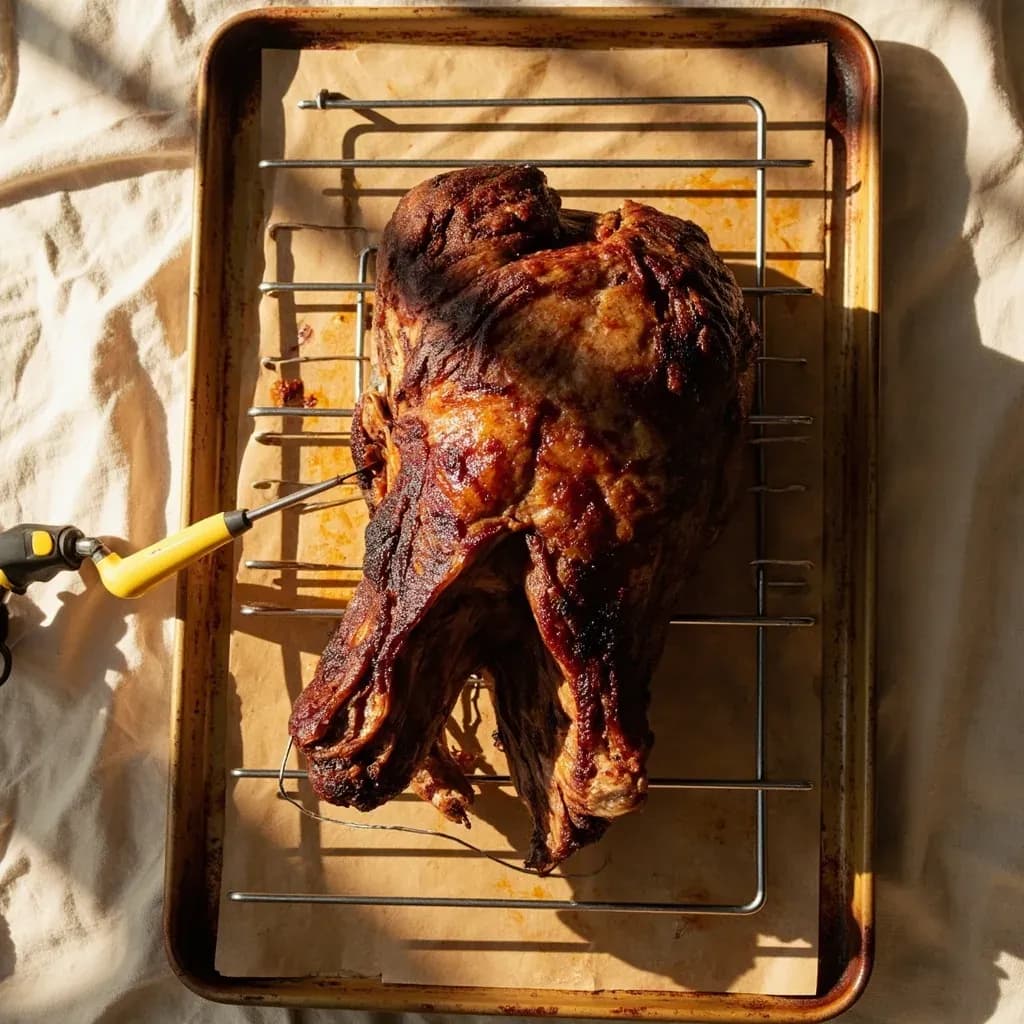
Heat & Fire
Slow / Low-Temperature Roasting
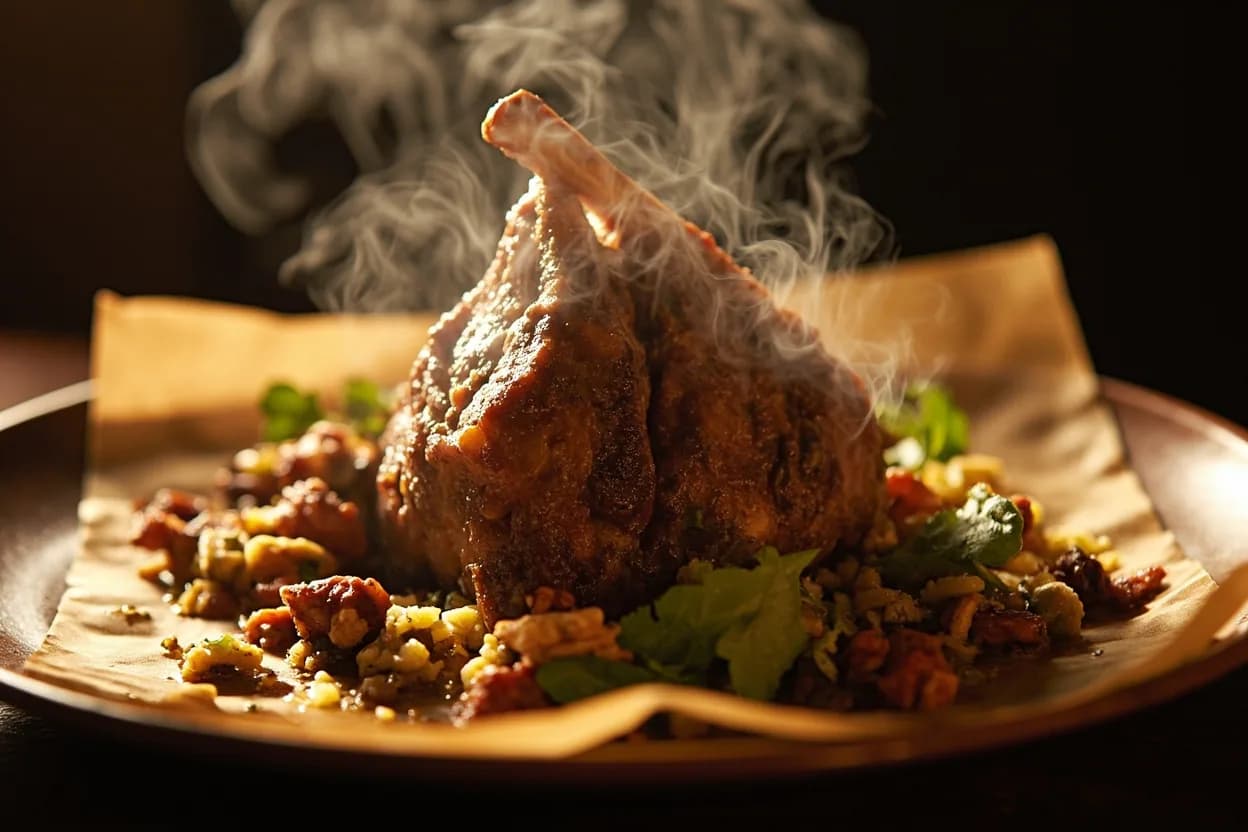
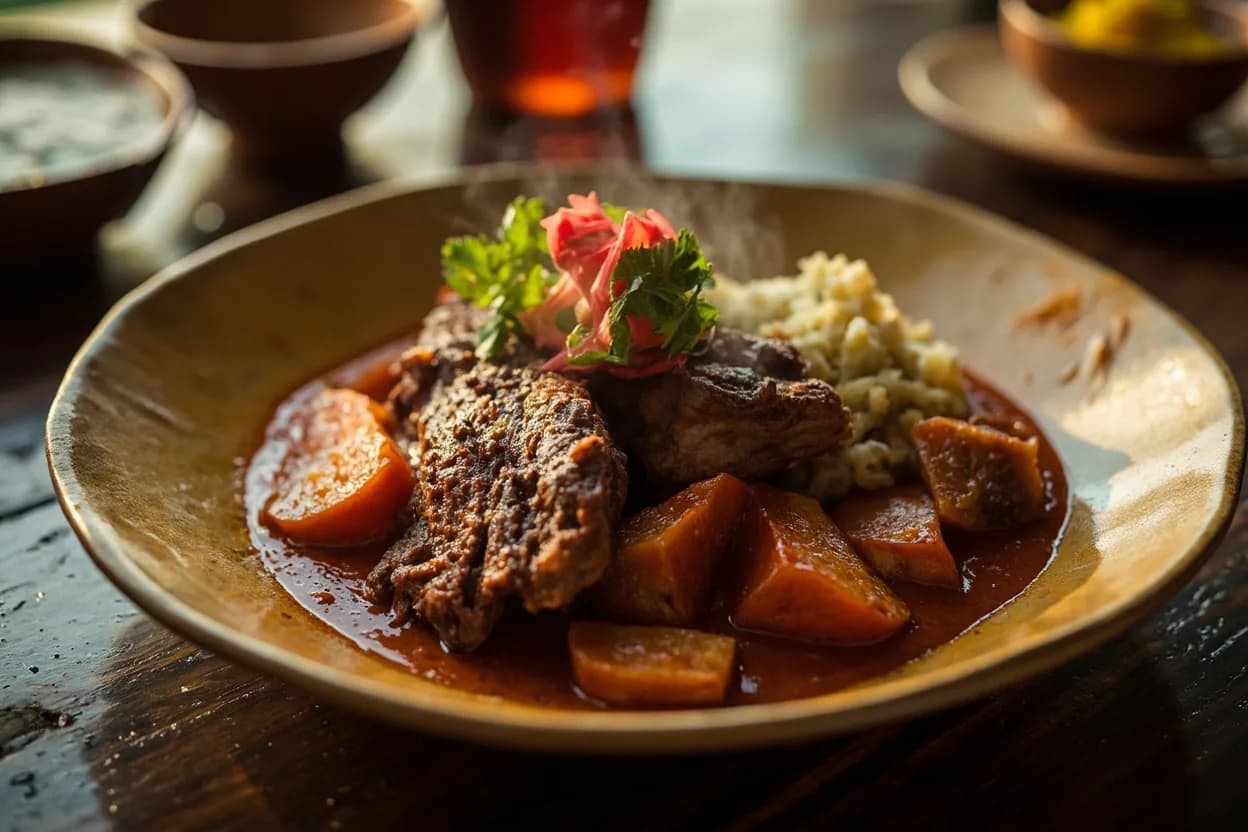
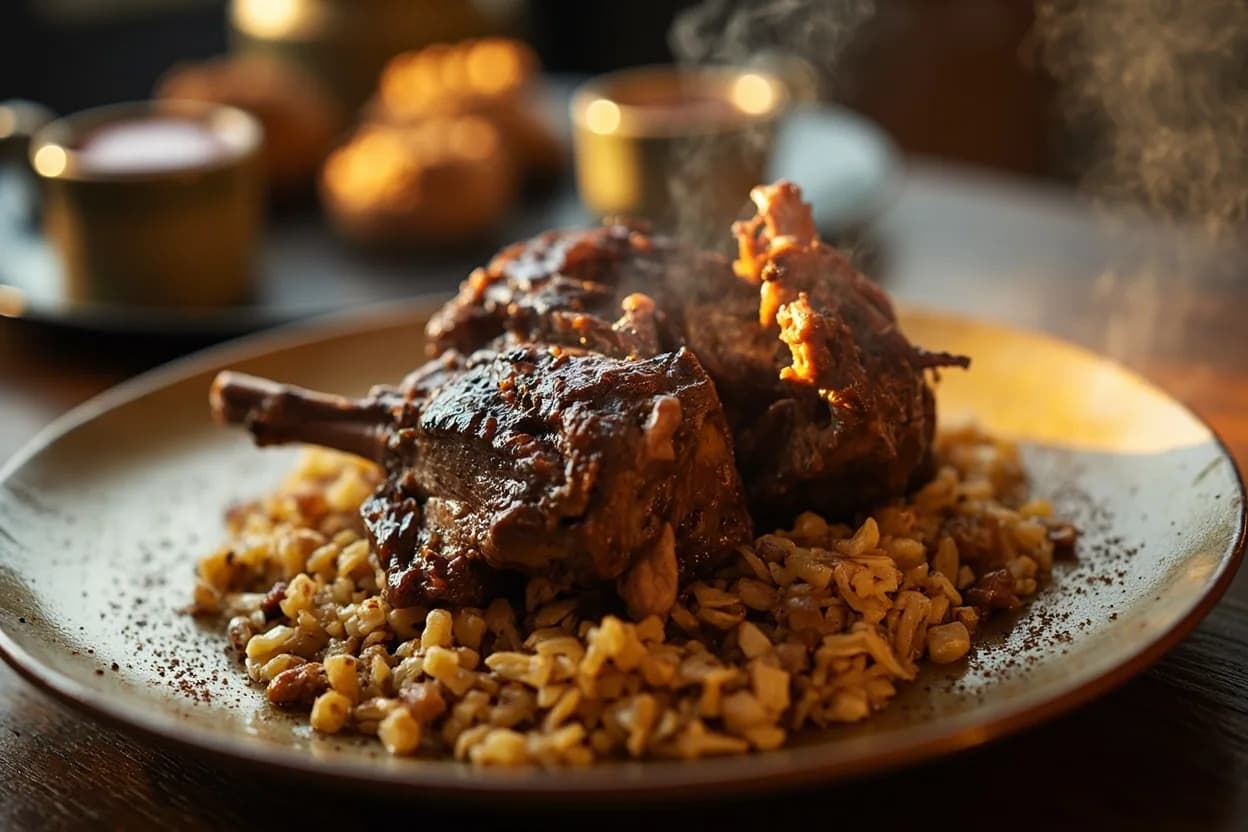
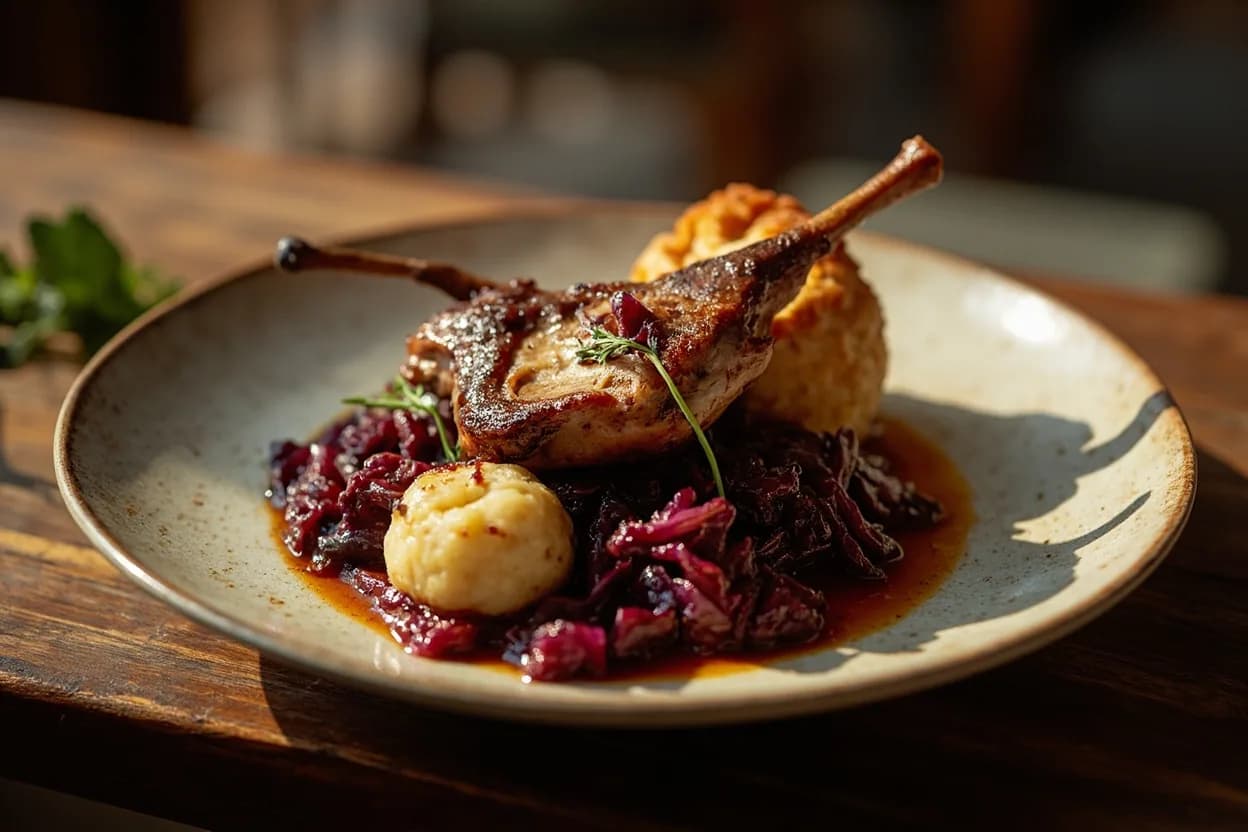
Roasting at a low oven temperature over a long time so the interior cooks evenly to a uniform doneness, then searing briefly for color.
Slow roasting is a temperature-and-time strategy, not a recipe. By holding the oven at 200–275 °F (95–135 °C) — well below the 325–450 °F of conventional roasting — heat penetrates the food slowly and gently, so the interior and exterior finish within a few degrees of each other. The price is that Maillard browning barely happens in the oven, so color and crust must be supplied afterward with a hot pan, broiler, or torch.
This matters most for thick, tender cuts — prime rib, beef tenderloin, whole poultry, leg of lamb, thick steaks — where conventional high-heat roasting inevitably produces a gray, overcooked band beneath a dark crust. The low phase cooks the meat evenly; the finishing sear adds the flavor and texture the gentle oven couldn't. The technique is forgiving in time but unforgiving in temperature: a probe thermometer is not optional, because oven thermostats drift and at these low settings small errors compound.
The approach shares its low-and-slow logic with sous vide and confit, but it stays in dry, convective air, which means slightly more edge variation and no water bath to buffer mistakes. It is sometimes confused with barbecue low-and-slow, but oven roasting is a dry, smoke-free environment, and the cuts that benefit are usually tender rather than tough. Barbara Kafka's "Roasting: A Simple Art" (1995) is the most thorough written case for the method; Harold McGee's "On Food and Cooking" gives the underlying protein-and-water science that explains why it works.
- Difficulty
- Easy
Types & varieties
Low oven first, then a hard, fast sear in a pan or under the broiler; the modern restaurant standard for thick steaks and tenderloin.
Traditional approach: sear for crust, then drop the oven to 200–250 °F to coast to target; better when you want deep fond in the pan for a jus.
Held at 170–200 °F for 8–12 hr, the classic pot-roast and brisket method carried into an oven; reserved for tough, collagen-rich cuts.
Submerged in fat or oil and cooked at 200–225 °F; yields melting texture and a built-in cooking medium.
Cooked to 5–10 °F under target, then held wrapped or vented at oven temperature for 15–45 min to equalize the core before the final sear.
How to do it
- 1
Set up and preheat
Position a rack in the lower third of the oven and preheat to 225 °F (107 °C). Set a wire rack inside a rimmed sheet pan and have a leave-in probe ready.
- 2
Season and dry the surface
Season the meat 12–24 hours in advance with salt (plus pepper, herbs, or a dry rub if using). Keep it uncovered on the rack in the refrigerator so the surface dries — that dry surface is what takes color in the final sear.
- 3
Load the meat
Bring the meat to room temperature for 20–30 minutes so the oven isn't fighting a cold mass. Place it on the rack, insert the probe into the thickest part away from bone or fat cap, and put the pan in the oven.
- 4
Roast low and slow
Cook until the probe reads 10–15 °F below your final target for roasts, or 5–8 °F below for steaks. A 4 lb prime rib runs 2.5–3.5 hr; a 1.5-inch steak takes 25–40 min.
- 5
Optional equalizing hold
For very large or uneven roasts, leave the meat in the turned-off or 150 °F oven for 15–30 minutes so the core temperature catches up to the surface. Skip this for steaks and small birds.
- 6
Dry and sear
Remove the meat, pat the surface completely dry, and rest 5–10 minutes. Heat a cast-iron or carbon-steel pan with a tablespoon of high-smoke-point fat until just smoking, or preheat a broiler. Sear 30–60 seconds per side for steaks; roll a roast in the hot pan until all sides are deeply browned. A kitchen torch is the cleanest option for tenderloin.
- 7
Rest and serve
Rest steaks 5 minutes and roasts 15–25 minutes on a warm board, tented loosely. Slice across the grain and serve; carryover will be only a few degrees, so the slice you cut is the doneness you'll eat.
Pull temperatures and carryover
Because the oven runs so cool, residual heat has very little work to do after the food comes out. That is the technique's quiet superpower: what you set on the plate is within a couple of degrees of what the thermometer read at pull. Plan accordingly, and resist the urge to cook to the final number on the dial.
- Steaks (1.5–2 in thick): pull 5–8 °F below target; expect 2–5 °F carryover during the sear and rest.
- Large roasts (4 lb+): pull 10–15 °F below target; the cool mass and longer rest add another few degrees.
- Whole chickens and small turkeys: pull breast at 155–158 °F; the bird will coast to 160–163 °F, and legs benefit from an extra 10–15 min in the turned-off oven.
- Pork loin and tenderloin: pull at 140–143 °F for a clean, even pink from edge to center, coasting to roughly 145 °F.
Common uses
Tips & pitfalls
- Use a leave-in probe; oven thermostats drift, and at low temperatures a 25 °F error is the difference between rare and medium.
- Salt the roast 12–24 hours ahead and leave it uncovered on the rack in the fridge — the dry surface is what makes the final sear crisp, not the sear itself.
- Set the rack over a sheet pan so air circulates on all sides; a roasting pan traps steam and slows the dry-heat effect you want.
- Pull 10–15 °F below your target for thick roasts, only 5–8 °F for steaks — carryover shrinks dramatically at these oven temperatures.
- Pat the surface bone-dry and use a screaming-hot cast iron or carbon-steel pan with a high-smoke-point fat for the finishing sear; a torch works for steaks, less so for large roasts.
- Spatchcock or pound the breast flat for whole birds so the legs and breast reach temperature together — geometry matters more than time.
- Do not baste with cold liquid during the low phase; it drops surface temperature and ruins crust development. Baste only after the final sear if at all.
- Thin cuts under about 1.5 inches thick don't benefit — by the time the oven recovers, the meat is overdone. Use conventional high heat for them.
- Rest on a warm board, tented loosely with foil, for at least as long as the sear took; tenting tightly traps steam and softens the crust you just built.
Good to know
- Typical oven temperature
- 200–275 °F (95–135 °C); 225 °F (107 °C) is the common default. Holds for tougher cuts can drop to 150–170 °F (65–77 °C).
- Time range
- Roughly 30 min to 8 hr depending on cut and weight: thick steaks 30–90 min, whole chickens 2–4 hr, prime rib or pork shoulder 4–8 hr.
- Carryover cooking
- Only 2–5 °F rise during rest, versus 10–25 °F after a hot conventional roast — targets are far more predictable.
- Beef pull temperatures
- Pull steaks at 115 °F (rare), 125 °F (medium-rare), 130 °F (medium); carryover is minimal (2–5 °F). Roasts pull 10–15 °F below these to account for larger thermal mass and longer rest.
- Best cuts
- Thick, tender, even-thickness pieces: prime rib, beef tenderloin, pork loin, leg of lamb, whole poultry, thick ribeyes and strip steaks.
- Food safety (poultry)
- USDA calls for 165 °F, but the meat holds above 140 °F long enough for equivalent lethality — a calibrated probe is essential to confirm.
- Key equipment
- Reliable oven, leave-in probe thermometer, wire rack over a sheet pan, and a screaming-hot pan, broiler, or torch for the finishing sear.
- Notable advocate
- Barbara Kafka, in "Roasting: A Simple Art" (1995), championed very-low oven roasts and helped popularize the method for home cooks.
Also called
low-temperature roasting · low-and-slow roast · slow roast