Heat & Fire
Caramelization
Browning sugars in food under heat to develop nutty, complex sweet-savory flavor.
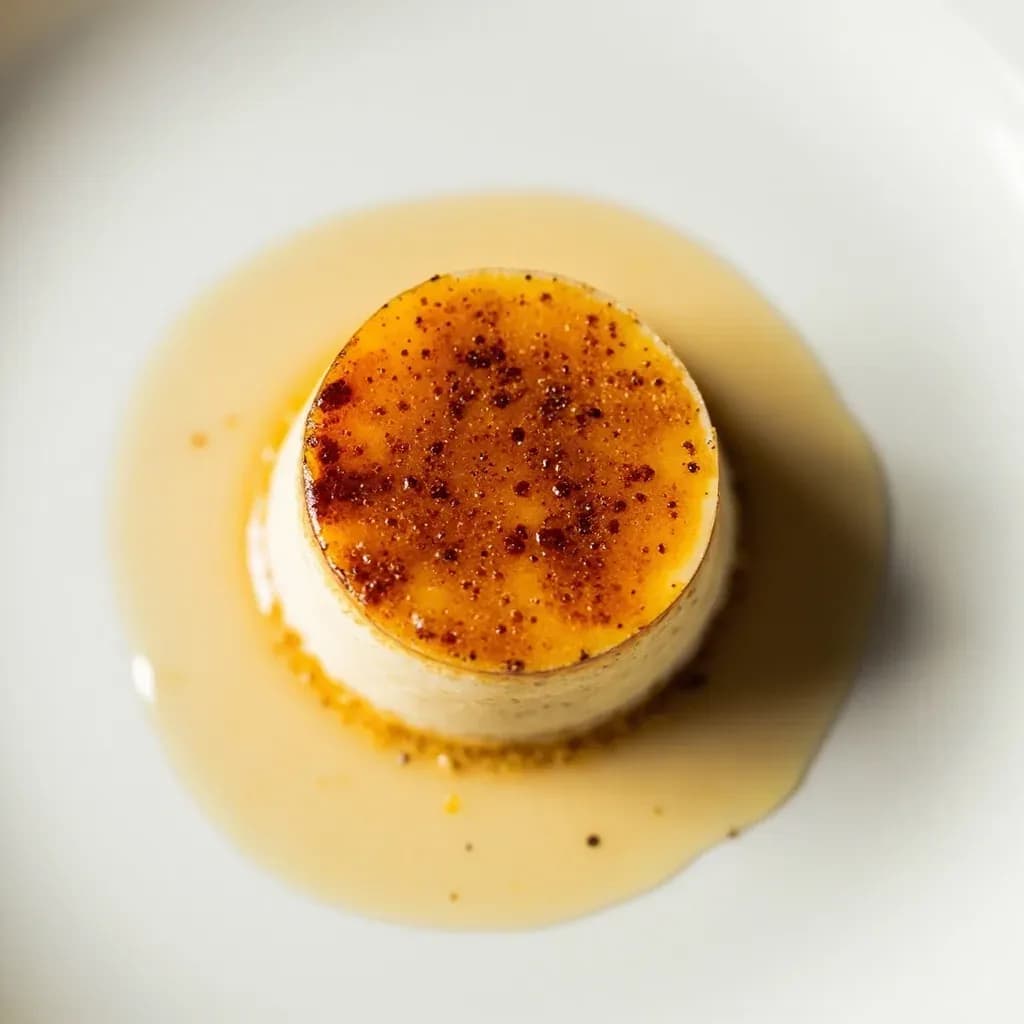
Caramelization is the heat-driven breakdown of sugars that turns them golden-brown and develops hundreds of rich, nutty, slightly bitter flavor compounds. It browns roasted vegetables, the tops of crema catalana and crème brûlée, and onions cooked down for hours. Unlike the Maillard reaction, which involves proteins, caramelization is purely the browning of sugar and generally needs higher temperatures.
Caramelization is the non-enzymatic browning that occurs when sugars are heated past their melting point and break down into a complex mixture of aromatic compounds and brown polymeric pigments. It is fundamentally different from the Maillard reaction: caramelization involves only sugars — no amino acids required — and so it dominates in sugar-rich foods like caramel sauce, toffee, crème brûlée, and tarte Tatin, while Maillard dominates in seared meat, toast, and roasted coffee. The chemistry unfolds fast. Sucrose must first hydrolyze into glucose and fructose, which then dehydrate and polymerize into successively larger brown molecules (caramelan, caramelen, caramelin) while liberating volatile aromatics such as diacetyl (buttery), maltol (toasty, bready), and a family of furans. Cooks care about this because the same pan of sugar can travel from delicate and sweet to nutty and complex to acrid and inedible in a matter of seconds, and most of the skill is knowing exactly where on that arc to stop.
In practice, the behavior of caramel is governed by the type of sugar, the moisture present, and the geometry of your pan. Different sugars begin to brown at very different temperatures: fructose as low as 110°C/230°F, sucrose and glucose around 160–170°C, and maltose not until roughly 180°C. This is why honey and high-fructose syrups scorch quickly — the entire browning window arrives earlier and the line between caramel and burnt is compressed. The molten sugar and the hot pan also keep cooking for 10 to 20 seconds after the heat is cut, so the technique rewards anticipation and a quick stop (a splash of cream, a knob of butter, a pour of warm liquid) rather than constant fiddling.
Beyond sweetness, caramelization contributes bitter, roasted, and savory notes that are invaluable in vegetable and meat cookery. A dark caramel deglazed with stock and wine is a classical-leaning base for savory glazes; caramelized onion owes much of its depth to Maillard alongside sugar breakdown; and the bittersweet edge of a properly browned crème brûlée top is caramelization working almost entirely on its own. Understanding it as a controllable chemical event, not an accident of heat, is what separates a cook from a candlemaker.
- Difficulty
- Medium
Types & varieties
Sugar heated alone in a heavy pan; faster but more prone to hot spots and scorching.
Sugar dissolved in a little water first; slower, more even heat transfer, and easier to control.
Pale gold, delicate sweetness; used for crème caramel, pale glazes, and light syrups.
Deep amber, rounded nutty aroma; the standard for caramel sauces and most candy work.
Reddish-brown with slight bitterness and pronounced roasted notes; base for tarte Tatin, demi-glace glazes, and certain puddings.
Caramel finished with flaky sea salt to balance bitterness against sweetness.
Alcohol such as rum, brandy, or bourbon ignited in the hot caramel to burn off harsh notes and lift aroma.
Caramelized sugar combined with toasted nuts, poured thin, and broken into shards; decorative and textural.
How to do it
- 1
Prep before any heat goes on
Measure out the sugar and any finishing ingredients — butter, cream, salt, vanilla, citrus. Have a candy thermometer, a heatproof spatula, a damp pastry brush, and a heavy light-colored pan ready. Once caramel reaches color, you have seconds, not minutes.
- 2
Choose wet or dry method
For dry caramelization, pour sugar straight into the cold pan over medium heat. For wet, combine sugar with just enough water to resemble wet sand (roughly 1 part water to 4–5 parts sugar), stir only until the sugar dissolves, then leave it alone.
- 3
Heat evenly without stirring
Bring the sugar up steadily over medium to medium-high heat. Swirl the pan gently if you see hot spots, but do not stir. Wipe stray crystals from the pan walls with the damp brush so they do not seed recrystallization.
- 4
Watch color and smell
After the syrup clarifies it will pass from pale gold to amber to deep mahogany. The aroma tracks the same arc — sweet to butterscotch to toasted nuts to burnt. For most sauces, stop at a deep amber; for savory glazes and tarte Tatin, push toward a dark reddish-brown just before acrid.
- 5
Stop the cooking
Pull the pan from the heat the instant you reach your target color — residual heat keeps browning for several seconds. Immediately whisk in butter, then warm cream or other liquids to halt the reaction and build the sauce. Stand back: the liquid will steam and bubble violently.
- 6
Finish and use
Off the heat, stir in salt, vanilla, citrus zest, or spirits to taste. Pour into molds while still fluid for flan and crème caramel, or transfer to a heatproof jar. Use caramel glazes on fruit or vegetables while the pan is still hot for the best adhesion.
Caramelization vs. the Maillard reaction
These two browning processes are routinely confused, even in professional kitchens, because they often occur side by side and produce visually similar results. The distinction matters for control: each responds to different variables and will dominate in different foods. Caramelization is purely thermal sugar breakdown; Maillard is a chemical reaction between amino acids and reducing sugars that begins at lower temperatures (around 140°C/285°F) but requires protein. In an onion, both run simultaneously as the cell walls break down and release sugars while proteins denature. In a caramel sauce, almost everything you smell and taste is caramelization; in a seared steak, almost everything is Maillard.
Reading the arc: color, smell, and viscosity
Candy thermometers are useful, but the truer cues for caramel are visual and aromatic. The progression below is a reliable guide for sucrose-based caramel:
- Pale straw, thin syrup, faintly sweet aroma — useful only as a base for further browning or poaching syrup.
- Light gold, still fluid, butterscotch beginning to emerge — good for delicate glazes and some pastry work.
- Deep amber, noticeably thicker, toasted-nut aroma — the standard for sauces and most candy.
- Reddish-brown, thick and smoky, bittersweet edge — correct for tarte Tatin, dark pralines, and savory glazes.
- Black, acrid, bitter — past the point of use; discard and start over.
Why sucrose needs help to behave
Sucrose is not a reducing sugar, so it cannot enter the browning reactions on its own. It must first hydrolyze — split into glucose and fructose — which is what generates the reactive fragments that polymerize into caramel's brown pigments. In the dry method, this hydrolysis happens slowly and unevenly in the melt, which is one reason the dry method scorches easily. In the wet method, a small amount of acid (lemon juice, cream of tartar) or an interfering sugar (corn syrup, glucose) accelerates inversion and discourages recrystallization, giving a smoother, more controllable caramel.
Choosing a sugar
Granulated white sugar gives a clean, neutral sweetness and the most predictable color. Demerara and turbinado add a touch of molasses flavor and a slightly lower burn threshold. Brown sugars caramelize faster and darker because their residual molasses adds invert sugars, amino acids, and color, which together accelerate browning. Honey, maple syrup, and other invert-sugar syrups scorch quickly and develop floral or sour notes; palm sugar and jaggery bring their own terroir into the final flavor. Coconut sugar, with its sucrose base and trace minerals, behaves much like white sugar but contributes a faintly caramel-like background even before browning.
Common uses
Tips & pitfalls
- Use a heavy-bottomed, light-colored pan — dark pans hide color cues and thin pans scorch unevenly.
- Do not stir once the sugar is heating; let the heat work. Agitation and stray crystals on the pan wall seed recrystallization and a grainy texture.
- Keep a damp pastry brush or wet cloth nearby and wipe sugar crystals down the inside of the pan into the melt.
- Add a small amount of acid (lemon juice, cream of tartar) or a splash of corn syrup to the wet method to keep sucrose in solution.
- Pull the pan off the heat before the color you want — residual heat keeps cooking for 10 to 20 seconds.
- Stop the reaction by whisking in butter, cream, or warm liquid; the steam will erupt, so stand back.
- Never pour cold water into hot caramel; add the caramel to the liquid, or use a warm vessel.
- If crystallization sets in, add water, cover, and re-dissolve the sugar before restarting rather than fighting a grainy pan.
- A candy thermometer helps, but color, viscosity, and aroma (sweet → butterscotch → toasted nuts → acrid) are the truer cues.
- Past roughly 190°C the sugar turns acrid and inedible; discard and start fresh rather than trying to mask the bitterness.
Good to know
- Definition
- Non-enzymatic browning caused by the thermal decomposition (pyrolysis) of sugars, producing aromatic volatiles and brown polymeric pigments.
- Distinct from
- The Maillard reaction — caramelization involves only sugars, while Maillard requires amino acids reacting with reducing sugars.
- Sucrose onset
- Approximately 160–170°C / 320–340°F
- Fructose onset
- Approximately 110°C / 230°F, the lowest of common sugars; honey and high-fructose syrups scorch quickly.
- Glucose/galactose onset
- Approximately 160°C / 320°F
- Maltose onset
- Approximately 180°C / 356°F, the highest of common sugars.
- Burn point
- Sucrose turns acrid and inedible above roughly 190°C / 375°F; discard and start over.
- Key flavor compounds
- Diacetyl (buttery), maltol (toasty, bready), furans, hydroxymethylfurfural, and the brown polymers caramelan, caramelen, and caramelin.
- Acid effect
- A small amount of lemon juice, cream of tartar, or corn syrup helps invert sucrose and prevent recrystallization in the wet method.
- Common sugars used
- Granulated white (sucrose), demerara, light and dark brown, palm, coconut, jaggery, and fructose-rich syrups.
- Required equipment
- Heavy-bottomed light-colored saucepan, candy thermometer, heatproof spatula, damp pastry brush or wet cloth.
- Approximate time
- Dry method 5–8 minutes; wet method 8–15 minutes depending on volume and target stage.
Also called
Caramelizing Crema · Caramelizing
Dishes that rely on it
Related

Sear
Blast the surface hot for a deep-browned, savory crust

Sauté
Cook quickly in a little fat over lively heat, tossing as you go

Stir-Fry
Toss bite-sized pieces over roaring heat for fast, smoky cooking

Pan-Fry
Crisp food in a shallow layer of hot fat, turning once or twice

Deep-Fry
Submerge in hot oil for an all-over crackling crust

Roast
Cook uncovered in dry oven heat for browned edges and tender centers

Bake
Cook with steady, surrounding oven heat — the soul of bread and pastry

Broil
Hit food from directly above with fierce overhead heat