Prep & Assembly
Draining
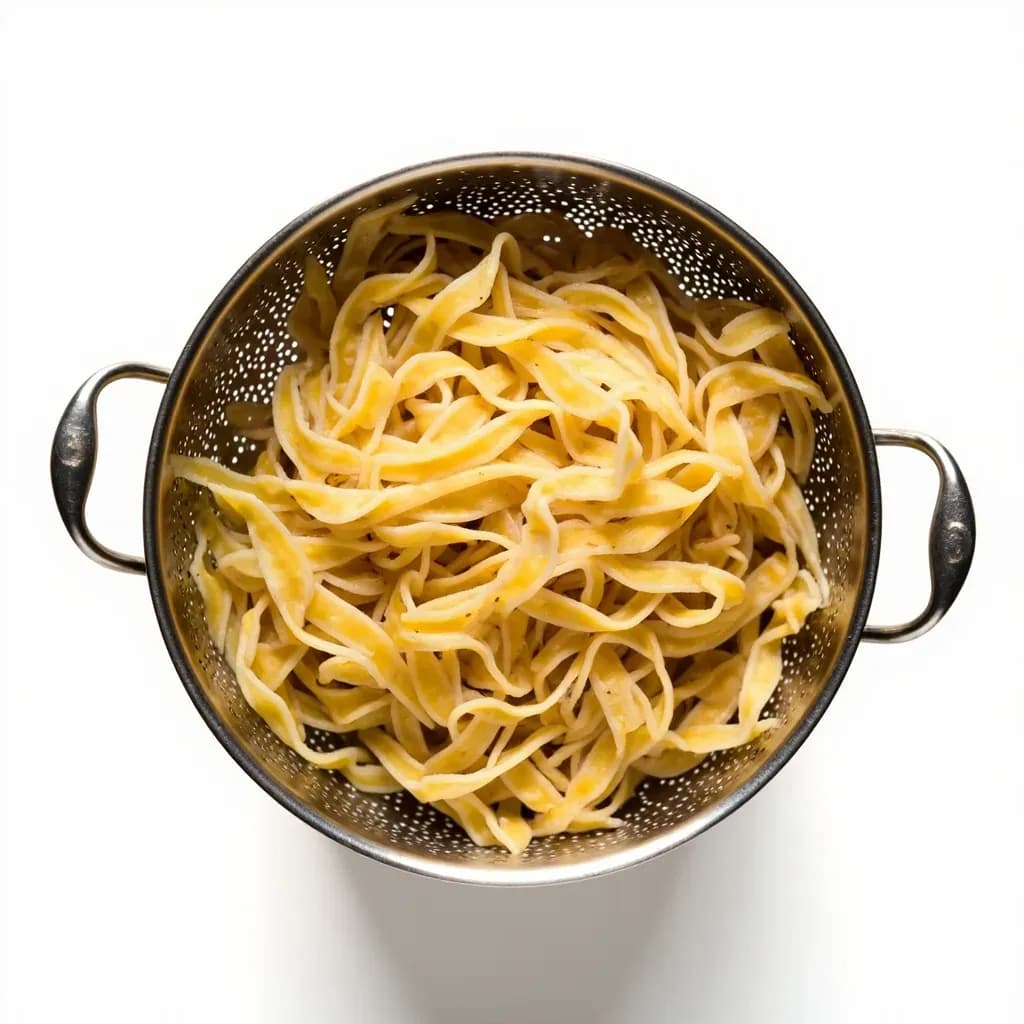
Separating solids from liquid using a colander or strainer to remove excess water, oil, or brine.
Draining lets unwanted liquid run off ingredients through a colander, sieve, or strainer. It is essential after boiling pasta, rinsing canned beans, or removing frying oil from fried foods so seasoning and texture hold. Draining well prevents watered-down sauces and soggy results. A brief rest over the sink or a rack lets the last of the liquid escape.
Draining is one of those quiet, foundational moves that decides whether a finished dish is crisp or soggy, seasoned or bland, silky or grainy. At its core, draining separates solids from a liquid the cook no longer wants in contact with them: cooking water off pasta, oil off fried food, whey off yogurt, brine off tofu, packing liquid off canned beans. It looks trivial, but the choice of tool, the timing, and what you do with the drained liquid all shape the final plate.
The technique spans a surprisingly wide range of actions — pouring through a colander, lifting with a spider, hanging curds in cheesecloth, spinning salad greens, tipping a can into a sieve. What unites them is a deliberate separation rather than an accidental one, with the cook deciding when the liquid has finished its job. The liquid you discard, or capture and use, is as much a part of the recipe as the solids.
Many kitchen disappointments blamed on a recipe are really failures of drainage: pasta water not reserved before the pour-off, fried chicken steaming on paper towels, dressed salad leaves sliding off because they were still wet, beans gumming up a chili because their canning liquid went in along with them. Treating draining as a deliberate step — with the right tool, in the right place, at the right moment — is what separates competent home cooking from food that tastes like it was thought through.
- Difficulty
- Easy
Types & varieties
Large perforated bowl; the workhorse for pasta, blanched vegetables, rinsed grains, and canned goods. Large holes let liquid pass quickly but are too coarse for rice or small grains. Models with feet are more stable in the sink or over a pot.
Small-mesh sieve used for stocks, pan sauces, rinsing rice, sifting dry goods, and catching small curds. A nested set covers most home needs.
Conical fine-mesh strainer from classical kitchens. Its deep cone lets you press purées and stocks through with a pestle, extracting every bit of flavor while leaving fibers and solids behind.
Wide, flat wire-mesh basket on a long handle; the right tool for deep-frying and blanching, where you scoop individual pieces out of hot oil or water rather than dumping the whole pot.
For removing a few solids (poached eggs, boiled potatoes, dumplings) from liquid when draining the whole batch is impractical.
Used for very fine clarification of stocks and consommé, or for hanging yogurt and soft cheese to drip out whey overnight.
Centrifugal drying for washed greens and herbs. The basket spins water off far more effectively than tossing with a towel.
Curds, yogurt, or labneh suspended in cloth over a bowl, often in the refrigerator overnight, to thicken as whey slowly drips out.
Tipping a can of beans, corn, tomatoes, or tuna into a strainer to remove packing liquid, brine, syrup, or oil before the food goes into the dish.
Not the draining itself, but the resting step that follows: a wire rack over a sheet pan lets steam escape so fried or blanched food stays crisp instead of steaming on a flat surface.
How to do it
- 1
Choose the right tool
Match the strainer to the job: a colander for pasta, blanched vegetables, and canned goods; a fine-mesh sieve for rice, stocks, and sauces; a spider or slotted spoon for lifting items out of hot oil or water; cheesecloth for very fine clarification or hanging curds. The wrong tool either lets solids escape, holds liquid back, or wastes time.
- 2
Set up the station
Position the strainer in the sink, over a large bowl (to catch and reserve the liquid), or over another pot. Decide in advance whether you want to keep the cooking liquid; rearranging mid-pour is messy and dangerous with hot pots.
- 3
Pour or lift the food
Tip the pot carefully toward the colander so liquid drains steadily rather than splashing. For deep-frying or blanching individual pieces, use a spider or slotted spoon and work in small batches so the oil or water temperature stays stable.
- 4
Let the liquid fall through
Shake the colander gently or tap its side to dislodge the last of the liquid. Do not press, mash, or stir the food — you want to preserve its shape and texture. For rice and small grains, a brief shake is plenty; over-shaking will bruise them.
- 5
Rest briefly in the strainer or on a rack
Leave the food in the strainer for 30–60 seconds, or transfer fried and blanched items to a wire rack set over a sheet pan. The rack allows air to circulate so the surface stays crisp; flat paper towels trap steam and turn a crunchy crust soggy.
- 6
Use the food — and the liquid
Return the drained solids to the pan, dress them, or proceed to the next step. If you reserved cooking water, braising liquid, or whey, use it within a day refrigerated, or freeze it in labeled portions for soups, sauces, and bread baking.
What NOT to drain (or when to skip it)
Draining has a few high-profile exceptions that catch even experienced cooks. Knowing when to leave the liquid alone is as important as knowing how to pour it off.
- Cooked pasta should not be rinsed unless you are making a cold pasta salad — the starchy surface water is exactly what helps sauce cling.
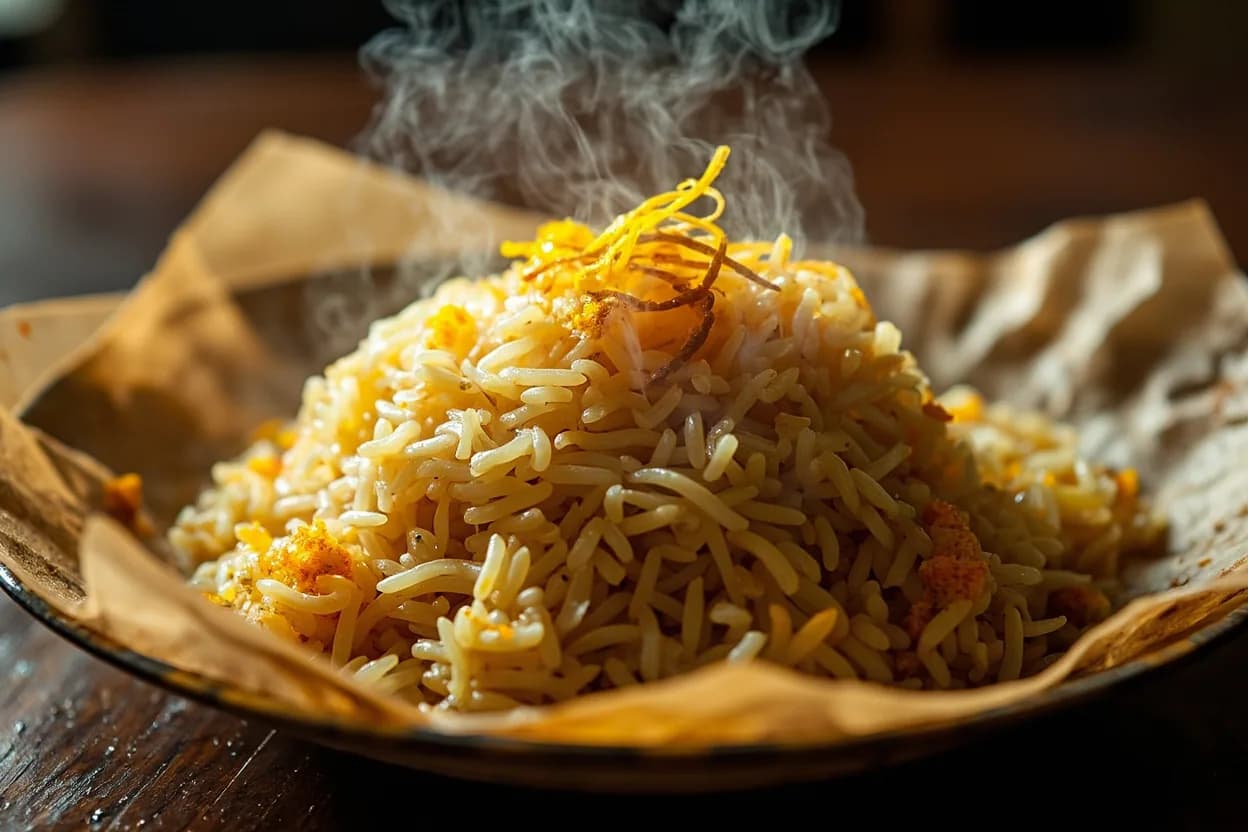
- Rice and other grains should not be rinsed after cooking; you would wash away flavor and the surface starch that contributes to the dish's body and texture.
- Braising liquids and pan sauces are often intentionally not drained — the meat or vegetables go back into the liquid to finish cooking.
- Canned tomatoes (especially crushed or puréed) usually go into the pot with their liquid; only drain whole or diced tomatoes if you want a thicker result.
- Marinades on meat that you plan to cook in the marinade (slow-braised dishes, stews) should not be drained; only discard or reserve marinade if you plan to use it as a sauce that has not touched raw meat.
The liquid you drain is often the second ingredient
Many recipes read as one dish but actually rely on the drained-off liquid for a second purpose. Capturing it is part of the technique.
- Pasta water — its starch and salt are the secret to emulsifying a pan sauce. Reserve a cup or two before draining.
- Vegetable blanching water — often lightly seasoned and full of flavor, useful for thinning purées or starting a soup.
- Canning liquid from beans — contains sodium and starch; rinse if you want clean flavor, keep it if you are building a bean-cooking liquid.
- Whey drained from yogurt or curds — high in protein and tang; stir into soups, bread dough, or smoothies.
- Mushroom or tomato packing liquid — use it in stocks, sauces, or rice rather than pouring it down the drain.
Common uses
Tips & pitfalls
- Always reserve a cup or two of starchy pasta water before draining — it is one of the best tools for emulsifying and loosening a sauce.
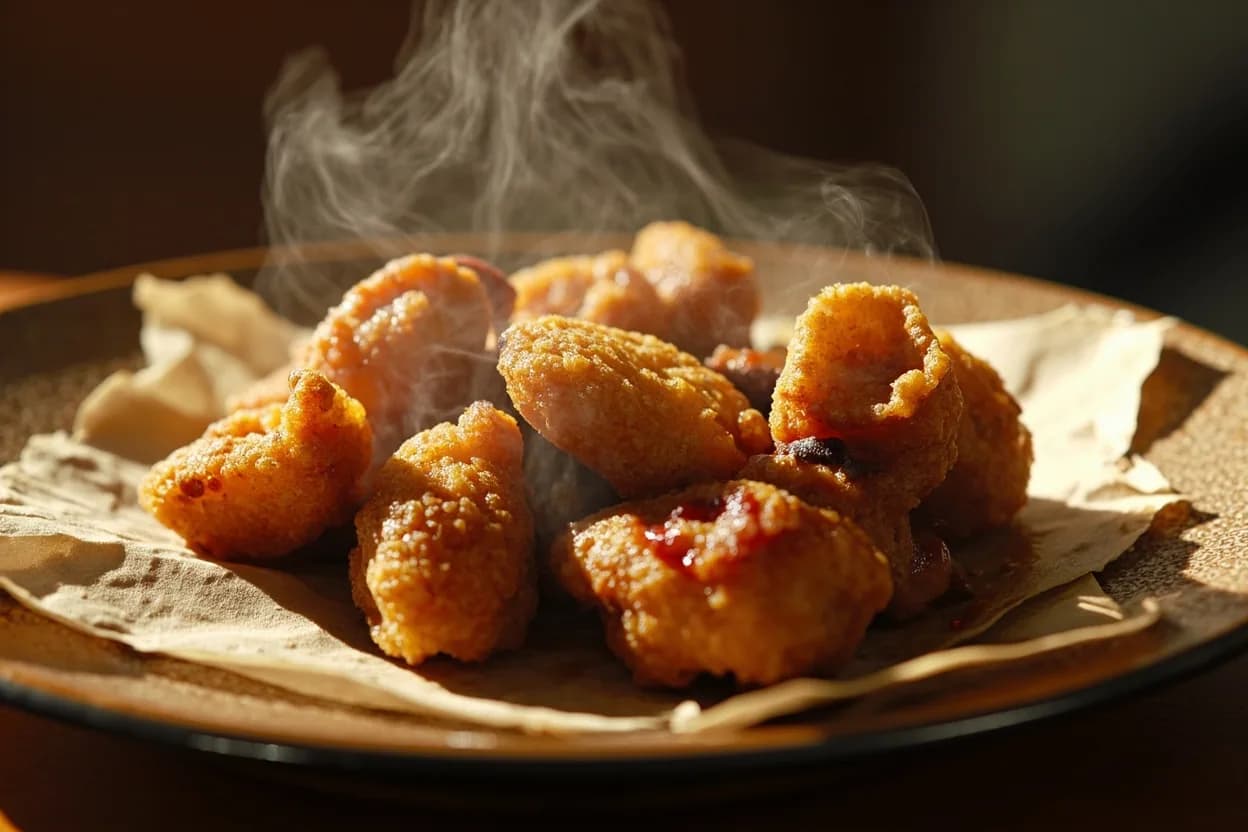
- Drain fried foods on a wire rack over a sheet pan, never on flat paper towels; trapped steam on a flat surface ruins a crisp crust.
- Salt pasta water generously (it should taste like the sea) before draining; once the pasta is drained, seasoning it directly is largely futile.
- Match the strainer to the job: colander for pasta, fine-mesh sieve for rice and stocks, chinois for the silkiest purées and consommé.
- Rinse canned beans briefly after draining to wash away the starchy packing liquid and reduce sodium; skip the rinse only if the recipe specifically calls for that viscosity.
- For salad greens, spin them in a salad spinner and then lay them on a clean kitchen towel — dry leaves hold dressing evenly and stay crisp.
- When draining hot liquids through a metal strainer, hold the handle with a folded towel or heatproof glove; metal handles conduct heat quickly.
- After draining tofu, eggplant, or cucumbers, follow up with pressing or salting to draw out even more moisture — draining alone rarely gets them dry enough to brown or hold their shape.
Good to know
- Category
- Prep & Assembly
- Primary tools
- Colander, fine-mesh strainer, slotted spoon, spider/skimmer, chinois, cheesecloth, salad spinner
- Difficulty
- Beginner
- Done hot or cold
- Both, depending on the dish
- Related techniques
- Straining, rinsing, pressing, salting (to draw out moisture), sifting
- Equipment cost
- Low — a basic colander is inexpensive; chinois and china cap cost more
- Common in
- Virtually every cuisine; a foundational prep step
- Works with
- Pasta, vegetables, beans, grains, fried foods, stocks, sauces, dairy, tofu, canned goods
Also called
Strain
Dishes that rely on it


Related

Whisk
Beat ingredients smooth and aerated with a looping wire motion

Sift
Pass dry ingredients through mesh to aerate and remove lumps

Strain
Pour through mesh to separate solids from liquid for a smooth result

Filter
Pass liquid through fine material to clarify out the smallest particles

Rice
Press cooked potatoes through small holes for fluffy, lump-free texture

Mash
Crush soft cooked food into a rustic, creamy purée

Grind
Crush food into a coarse to fine texture, from spices to meat

Grate
Shred food into fine bits against a sharp-toothed surface