Heat & Fire
Stir-Frying
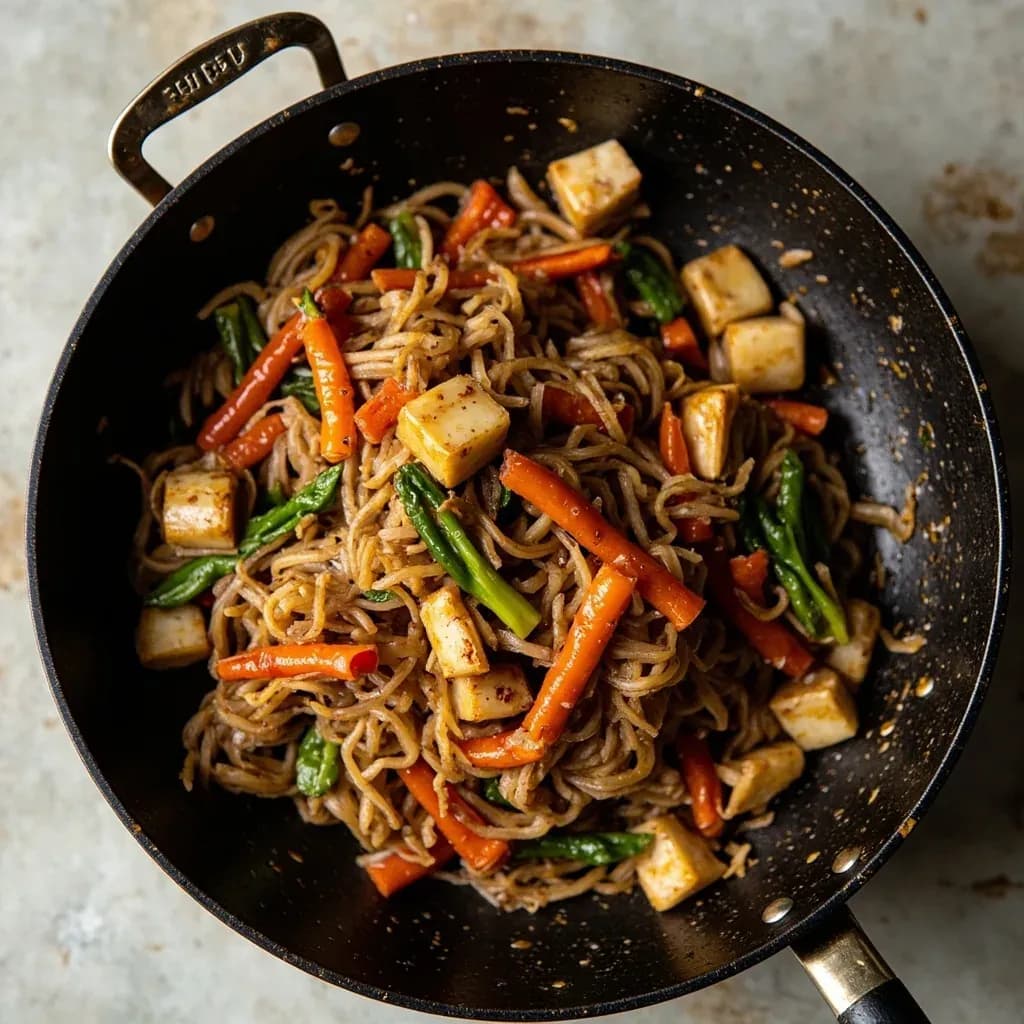
Tossing small pieces in a very hot wok with little oil for fast, fresh results.
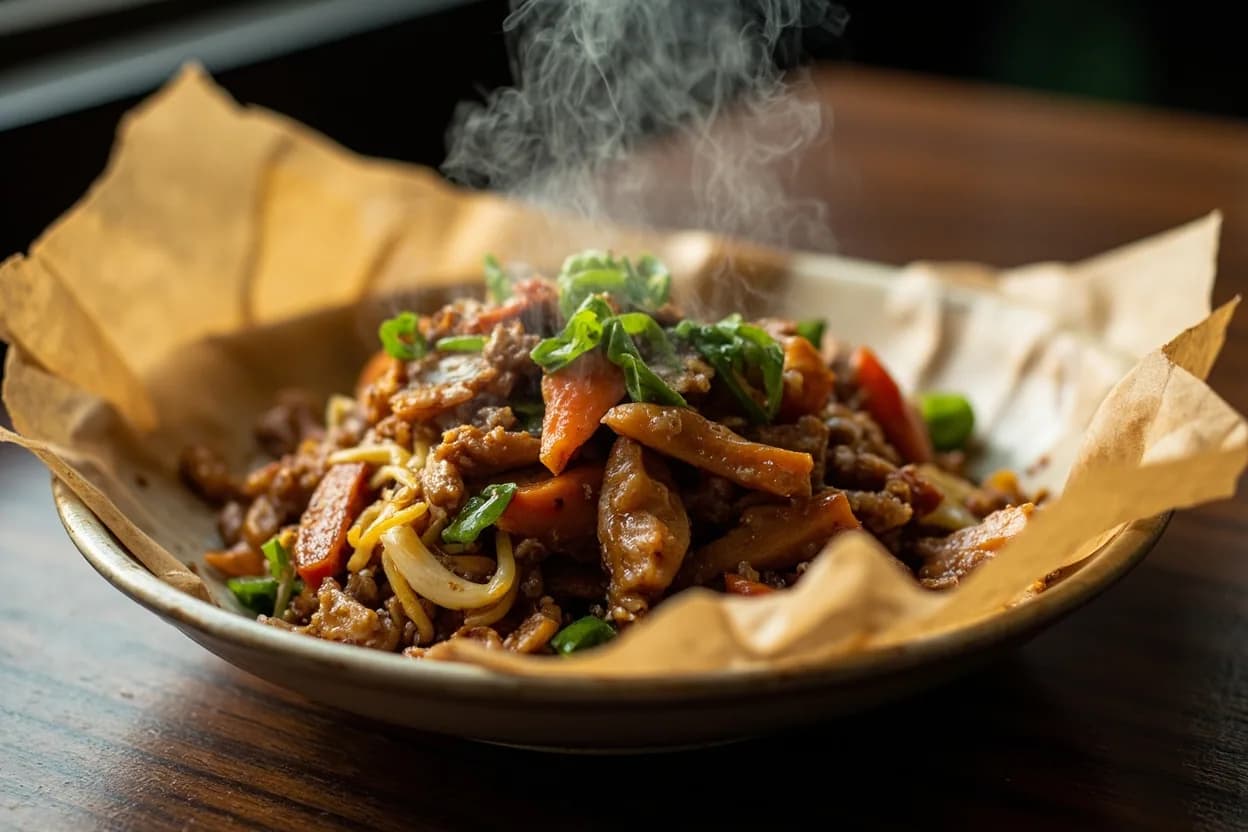
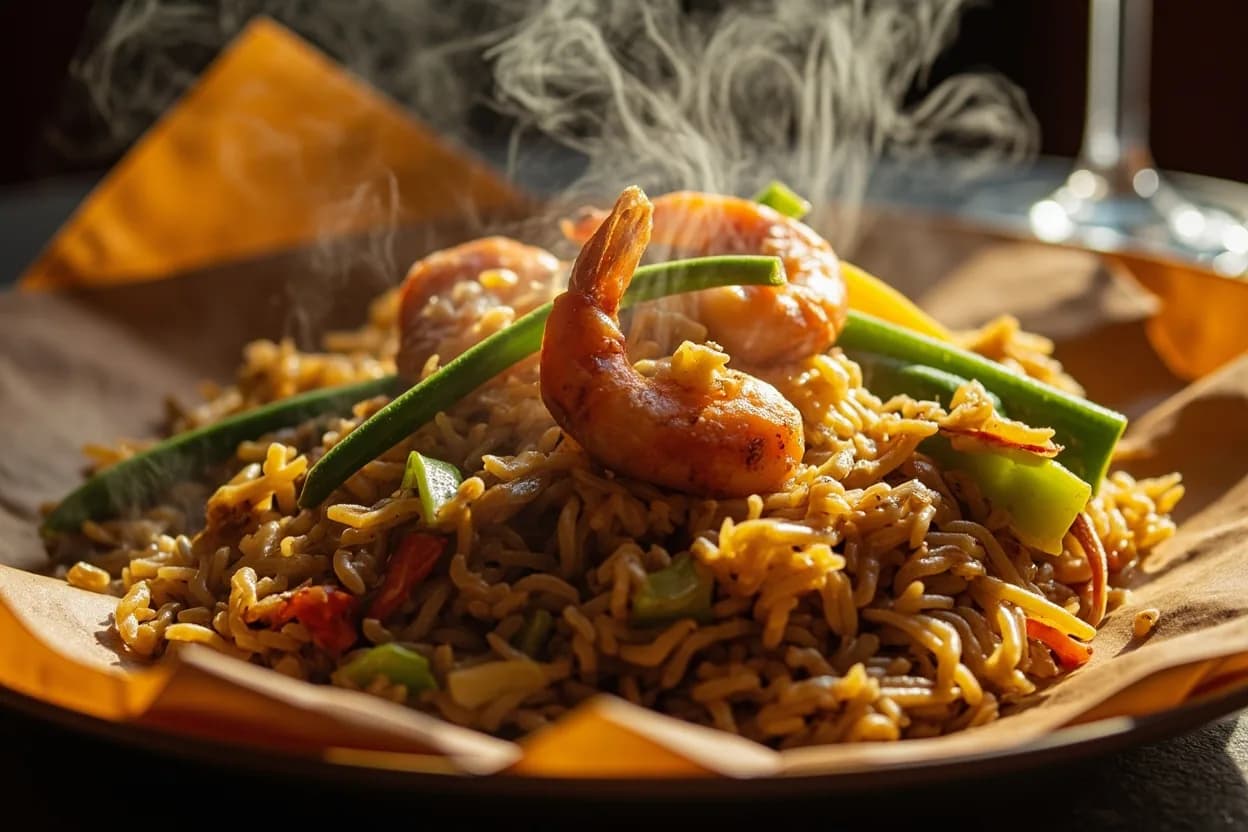
Stir-frying cooks bite-sized ingredients quickly in a screaming-hot wok with minimal oil, tossing constantly so everything sears without stewing. The high heat and motion give vegetables crisp freshness and meats a fast browning, as in itame or pancit noodle dishes. Prepping all ingredients in advance is essential because the cooking happens in minutes.
Stir-frying is a high-heat, fast-motion cooking method defined less by a specific cuisine than by a specific relationship between food, fat, and metal. Small, uniformly cut pieces are tossed continuously in a thin film of very hot oil so they sear on the surface and cook through almost simultaneously, finishing in minutes rather than the longer, gentler simmer of a braise or stew. The canonical tool is a round-bottomed carbon steel wok over a high-output gas flame, but the underlying mechanics — small pieces, very hot pan, little oil, constant motion, sauce at the end — apply anywhere those conditions can be reproduced.
The technique matters because it preserves what slow cooking loses: the snap of an asparagus spear, the bright green of broccoli, the sweet juice inside a shrimp. At temperatures above 200 °C, the food's surface browns rapidly through Maillard reactions while the interior barely warms, and the vaporized oil and aromatics combine with that browning to produce a complex, slightly smoky aroma known as wok hei — literally 'breath of the wok' — that no other method reliably produces. A well-built stir-fry is therefore more than convenience food: it is a textural and aromatic signature that defines a large share of East and Southeast Asian cooking.
The trade-off is that stir-frying is unforgiving. Once the burner is on, there is no time to chop a scallion or measure soy sauce; everything must be cut, mixed, and arranged in order before the wok heats. The method is the easiest thing in the world once the prep is done and the hardest thing in the world if it isn't.
- Difficulty
- Medium
Types & varieties
General term covering most everyday stir-fries; medium-high heat, ingredients added in stages.
Highest-heat, shortest-cook sub-style; thin-sliced protein and a small amount of sauce, finished in well under a minute. Classic in Sichuan and Shandong cooking.
Long, oil-free stir-frying that drives moisture out of an ingredient (e.g. gān biān sì jì dòu, dry-fried green beans) before aromatics and seasonings are added back.
Thin-sliced protein is pre-mixed with egg white, cornstarch, a pinch of salt, and sometimes a splash of Shaoxing wine, then passed through hot oil or briefly blanched before a final light stir-fry with vegetables. Result is unusually tender and pale.
Ingredients are first seared in the wok, then a stock and seasonings (often soy, sugar, wine) are added and the dish is reduced to a glossy coating. Bridges stir-fry and braise.
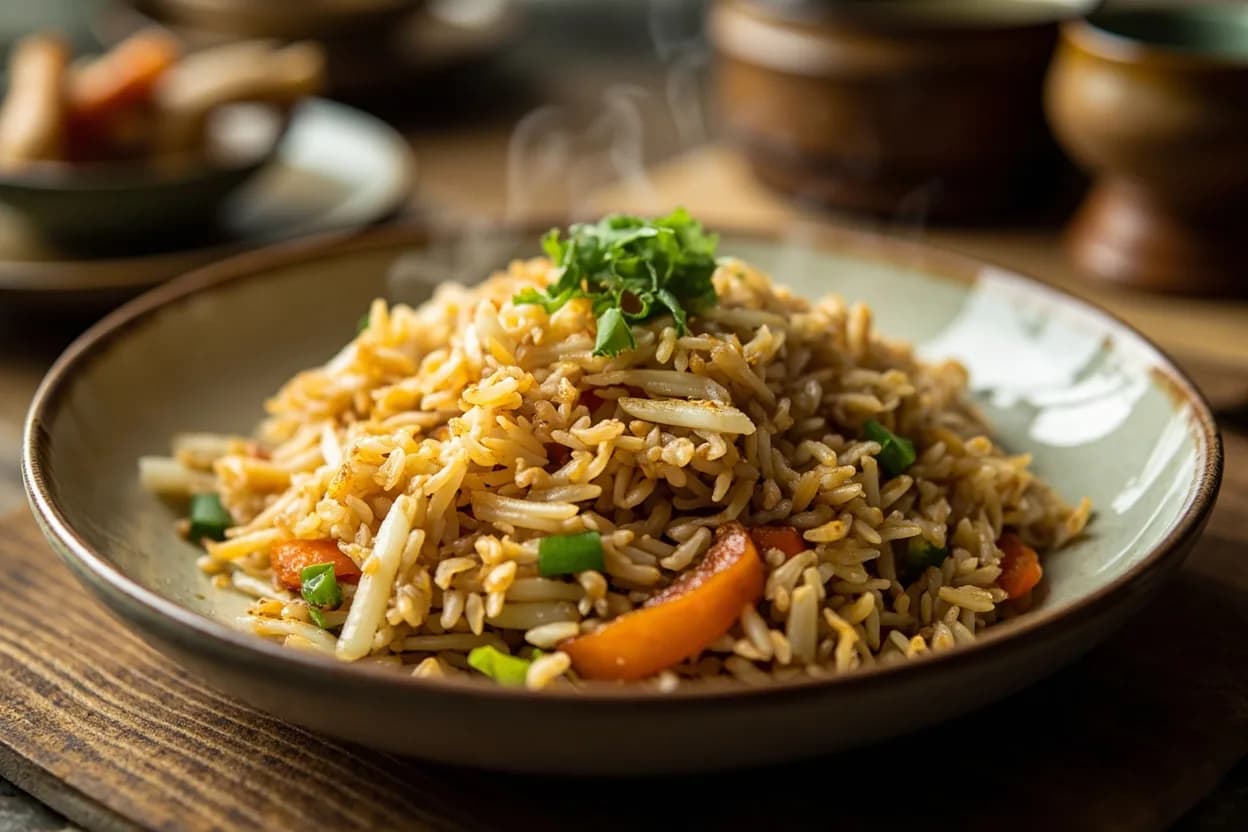
Use cold, day-old cooked rice so grains stay separate; sauce and oil are kept to a minimum so each grain fries rather than steams.
How to do it
- 1
1. Mise en place
Cut every ingredient to a uniform, bite-sized thickness (roughly 3–5 mm). Mix any sauce components, marinades, and cornstarch slurry in separate small bowls. Line everything up in the order it will enter the wok. Have your serving plates and finished rice on the counter before the burner goes on.
- 2
2. Heat the wok
Place the dry wok over the highest possible burner flame. Let it heat for 2–4 minutes until a bead of water flicked onto the wall evaporates in under a second and the metal just begins to smoke.
- 3
3. Add oil and aromatics
Pour 1–2 tablespoons of high-smoke-point oil down the side of the wok and swirl to coat. Add smashed garlic, sliced ginger, and scallion whites (and dried chilies or Sichuan peppercorns, if using) and stir for 10–15 seconds — they should sizzle and smell fragrant, not brown heavily.
- 4
4. Sear the protein
Add protein in a single layer, leaving space around each piece. Let it sit undisturbed for 10–20 seconds to develop a crust, then toss and continue cooking until just done. For bào-style dishes, the protein goes in last, sears briefly, and comes out within a minute. Remove and reserve if you will be cooking vegetables separately.
- 5
5. Add vegetables in order of density
Begin with the firmest items (carrots, broccoli stems, daikon), toss for 30–60 seconds, then add medium items (peppers, mushrooms, snap peas), then quick-cookers (leafy greens, bean sprouts, scallion greens). Each addition should sizzle loudly on contact — if it does not, the wok has cooled too much and the batch is too large.
- 6
6. Return protein; pour in sauce
Return the cooked protein (and any juices) to the wok. Pour the pre-mixed sauce down the inside wall of the wok rather than directly onto the food so it reduces and caramelizes on the hot metal before coating the ingredients.
- 7
7. Thicken and finish
Stir or swirl in cornstarch slurry a splash at a time, tossing constantly, until the sauce turns glossy and lightly clings to the food. Taste and adjust with a pinch of sugar, salt, or a few drops of sesame oil. Total time in the wok should be 2–5 minutes from first ingredient to plate.
- 8
8. Serve immediately
Slide the food onto a warmed plate and serve at once. Stir-fried dishes do not hold; the residual heat will overcook the vegetables and dull the sauce within minutes.
Wok hei: the flavor you are chasing
Wok hei is the aroma of a stir-fry that has actually been cooked at high heat: a layered, slightly charred, almost incense-like note that combines Maillard browning on the food, vaporized oil hitting aromatics, and the smell of metal itself. It cannot be reliably produced at low heat, and there is no commercial product that truly captures it. A few conditions produce it reliably: a wok thin enough to recover temperature instantly when food is added, a burner capable of pushing it past 250 °C, food added in small enough batches that the pan never cools, and enough motion that no single piece sits long enough to burn before it browns. At home on a standard domestic burner, wok hei is muted rather than absent — accept that and compensate by using smaller batches and pre-heating the wok longer than you think necessary.
Stir-frying outside China
The mechanics of stir-frying — small pieces, very hot metal, little oil, constant motion, sauce at the end — appear across East and Southeast Asia under different names, with different sauces and aromatics. The technique is the same; the flavor profile is local.
- Thailand: pad (pad see ew, pad Thai) — typically built on fish sauce, palm sugar, and tamarind, finished with a scramble of egg and a squeeze of lime.
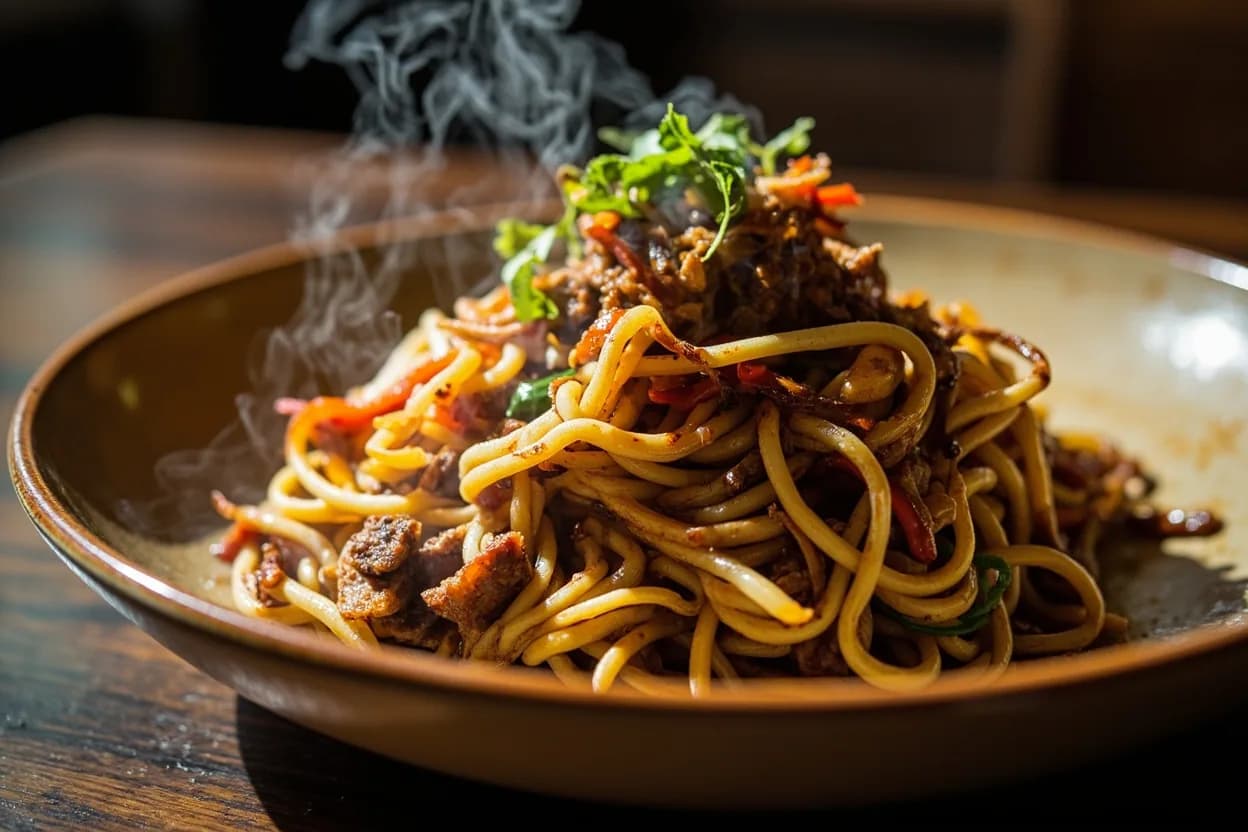
- Malaysia and Singapore: char kway teow — flat rice noodles seared in pork fat with shrimp, Chinese sausage, and bean sprouts; the dark caramelization from intense wok heat is the prized signature.
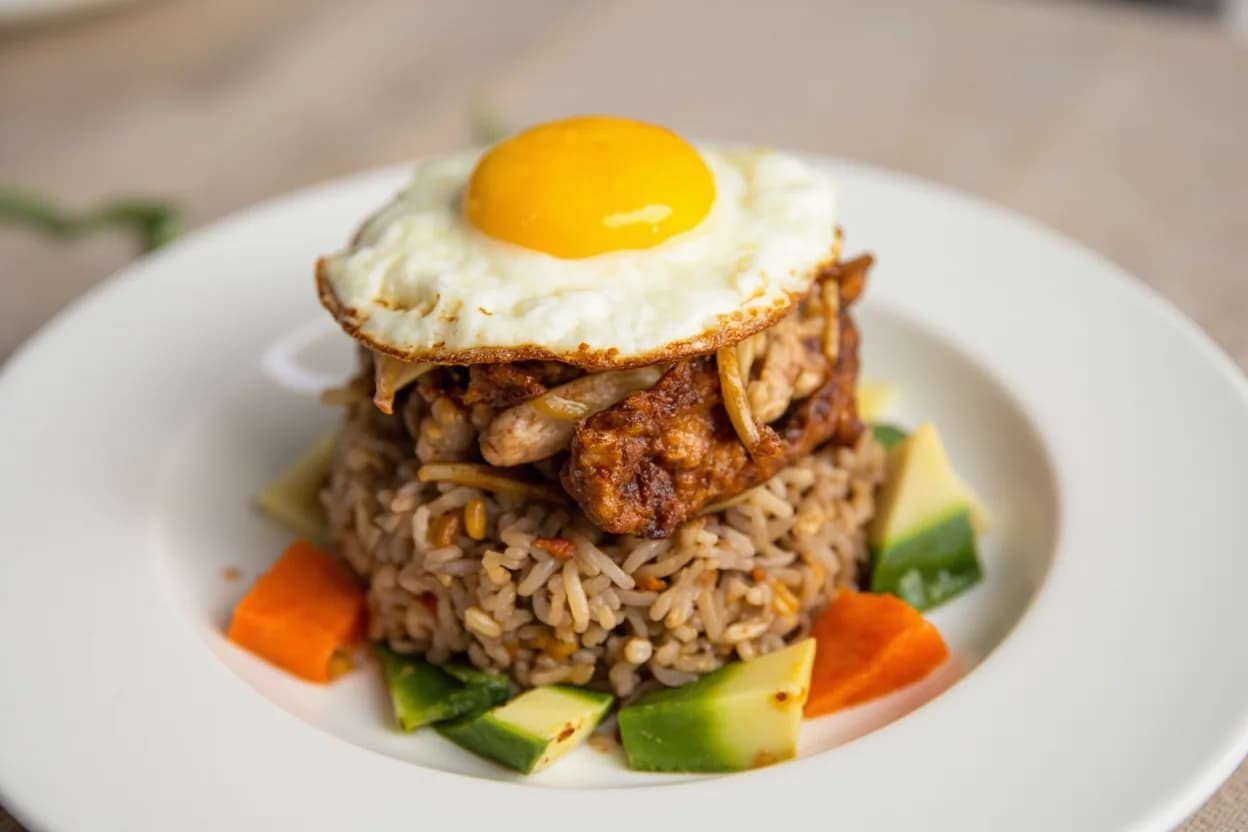
- Indonesia: mie goreng and nasi goreng — noodles or rice stir-fried with kecap manis (sweet soy) and sambal for a sweet-savory-spicy balance.
- Japan: yaki udon and yakisoba — softer in heat and more sauce-heavy than Chinese stir-fries, reflecting the gentler Japanese home burner.
- Korea: bokkeum (볶음) — dishes like kimchi bokkeum-bap (kimchi fried rice) use similar high-heat motion, often finished with gochujang.
Common uses
Tips & pitfalls
- Mise en place is non-negotiable: have every ingredient cut, measured, and within arm's reach before the burner goes on. Once you start, there is no time to chop.
- Heat the wok until it just starts to smoke before adding oil, then swirl to coat and let the oil shimmer and ripple before the first ingredient goes in. A cool wok steams; a hot wok sears.
- Use an oil with a smoke point above 200 °C — refined peanut, avocado, rice bran, or canola. Butter, extra-virgin olive oil, and unrefined nut oils burn and taste acrid at stir-fry temperatures.
- Cut to a uniform size and thickness. Pieces of different sizes finish at different times, and the smaller ones turn to mush while the larger ones stay raw.
- Add ingredients in stages based on how long they need: aromatics first (10–15 seconds), then the protein (sear hard and remove if needed), then the densest vegetables (carrots, broccoli stems), then quick-cookers (leafy greens, scallion greens), and finally sauce and slurry.
- Do not crowd the wok. Cook in batches if needed; piling food in lowers the temperature and the result is pale, wet, and sad.
- For velvet-soft protein, marinate sliced meat in a pinch of salt, a splash of Shaoxing wine, an egg white, and a teaspoon of cornstarch for 20–30 minutes, then 'pass through oil' (yóu huá) by sliding it into 160–180 °C oil for 30–60 seconds and lifting it out before the final stir-fry.
- Common mistake: turning a stir-fry into a sauté by leaving food sitting. The pan and the spatula should be in constant motion; food should not rest in contact with the metal for more than a second or two.
Good to know
- Origin
- China; the technique developed alongside the wok, with stir-frying terms appearing in Chinese culinary texts for at least a thousand years and the curved pan in use since at least the Han dynasty.
- Chinese name
- Chǎo (炒) is the general term; specific sub-styles have their own names (bào, gān biān, huá chǎo, shāo).
- Pan temperature
- Home ranges 180–230 °C (350–450 °F); professional wok burners push 300 °C+ (570 °F+).
- Cook time per batch
- Typically 2–5 minutes total; bào-style dishes can be finished in 30–60 seconds.
- Cut size
- Aim for pieces roughly 3–5 mm thick and bite-sized so they sear on the surface and cook through almost simultaneously.
- Load
- Food should cover no more than roughly one-third of the wok surface per batch; overcrowding drops pan temperature and steams the food.
- Wok material
- Carbon steel is the standard — thin, conducts fast, seasons to a natural patina; cast iron works but is heavier and slower to respond; bare non-stick is unsuited to authentic stir-frying because it caps usable heat.
- Flavor signature
- Wok hei (镬气, 'breath of the wok') — a complex, slightly smoky, seared aroma from Maillard browning combined with vaporized oil and aromatics; only achieved at very high heat.
Also called
Stir-Fry · Goreng · Itame
Dishes that rely on it
Related

Sear
Blast the surface hot for a deep-browned, savory crust

Sauté
Cook quickly in a little fat over lively heat, tossing as you go

Stir-Fry
Toss bite-sized pieces over roaring heat for fast, smoky cooking

Pan-Fry
Crisp food in a shallow layer of hot fat, turning once or twice

Deep-Fry
Submerge in hot oil for an all-over crackling crust

Roast
Cook uncovered in dry oven heat for browned edges and tender centers

Bake
Cook with steady, surrounding oven heat — the soul of bread and pastry

Broil
Hit food from directly above with fierce overhead heat