Water & Steam
Multiple Infusions
Steeping the same tea leaves several times in succession to draw out evolving flavors.
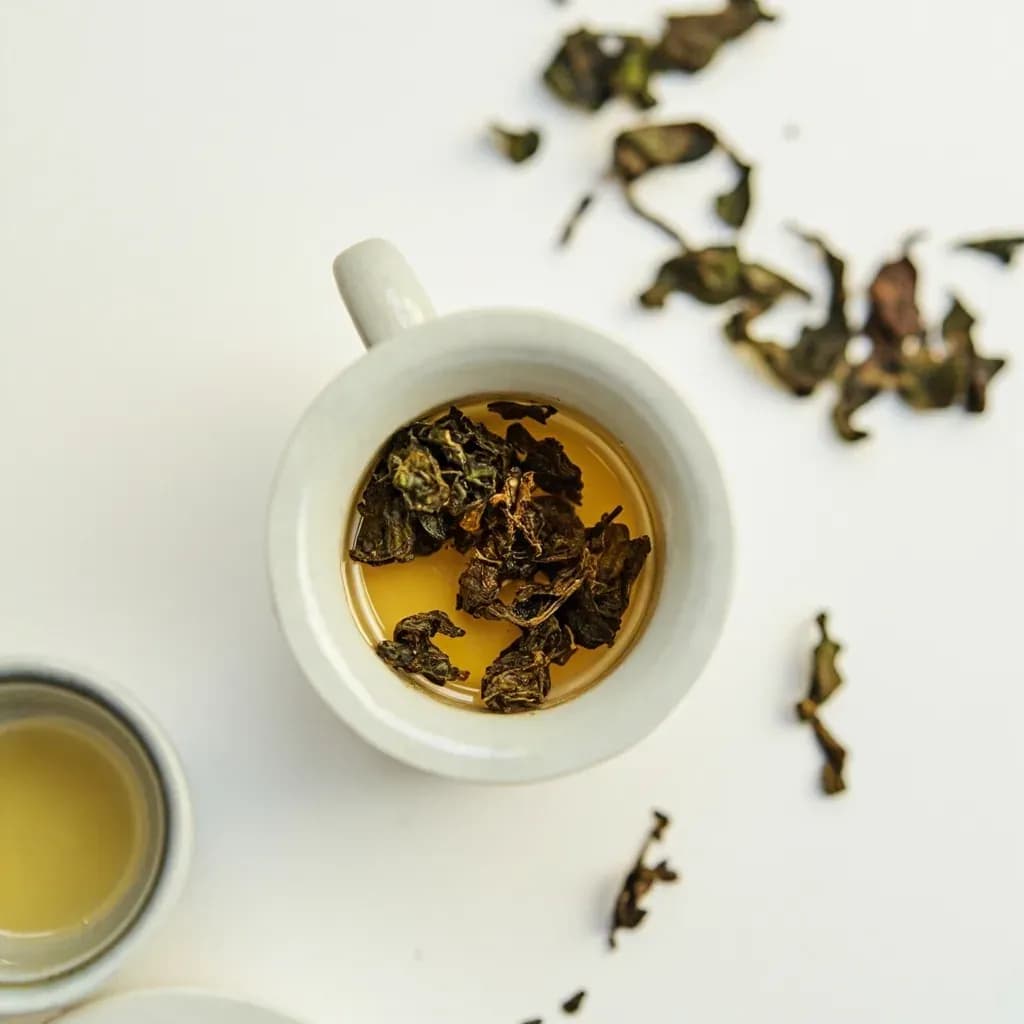
Multiple infusions is the gongfu-style practice of brewing the same high-quality tea leaves repeatedly with short steeps, so each pour reveals a different facet of the leaf. Early infusions are brisk and aromatic while later ones turn mellow and sweet, letting one batch of leaves yield many cups. The leaf-to-water ratio is high and steep times are kept short and adjusted upward as the leaves tire.
Multiple infusions is the practice of pouring hot water over the same tea leaves again and again across a single sitting, rather than discarding them after one steep. It is a tasting protocol in the guise of a brewing method: the first pour is rarely the best, and the point of the technique is to follow a tea as it changes — from the lifted, often astringent aromatics of the opening cup to the deeper sweetness and mineral or woody notes that emerge in the third, fourth, and later infusions. It works because a tea leaf is a reservoir of soluble compounds that release at different rates; the most water-soluble fractions — caffeine, amino acids (especially L-theanine), and astringent catechins — pour out quickly, while the slower-unfolding polyphenols, glycosides, and heavier aromatic oils that give a tea its body, sweetness, and finish emerge gradually as the leaf opens across successive waters.
The method reaches its most demanding form in Chinese gongfu cha, where a small gaiwan or clay pot is dosed heavily with whole leaves and flashed for ten or fifteen seconds at a time, yielding ten, fifteen, or even twenty cups from a single charge. The same principle, dialed back to gentler parameters, also works in a Western mug or a Japanese kyusu, and even in the refrigerator as a cold successive infusion. What all the styles share is respect for whole leaf, attention to water temperature, and a willingness to pour quickly and often.
The leaf matters more than the gear. Broken leaves and fannings exhaust themselves in a single steep, which is why bagged tea is a poor match for the technique. Oolong — particularly Wuyi rock oolong — is the classic training ground because its mineral finish and long arc are exactly what the method reveals. Sheng (raw) pu'er is the most demanding subject; a few seconds of mis-timing on the first pour can flatten the rest of the session. White teas, some black teas, and well-rolled greens such as Long Jing and Bi Luo Chun are gentler, and a good place to start.
- Difficulty
- Easy
Types & varieties
Small vessel, high leaf ratio, very short steeps of 5–15 seconds, many infusions; the canonical method for oolong and pu'er.
Same principles with larger vessels (200–300 ml) and slightly lower ratios; common at the table when serving several guests.
Larger mugs or pots, lower leaf ratio, longer steeps of 1–3 minutes, fewer total infusions; suits everyday black and oolong.
One leaf, one pot, multiple short steeps; typical for sencha and gyokuro, using cooled water of 50–70 °C and shorter times.
Traditional multiple steeping of nokcha (green tea) in a ttukbaegi earthenware pot, with successive pours into many small cups.
Same leaves re-steeped in cold water in the refrigerator for 4–12 hours per cycle, 2–4 cycles total; produces a softer, less astringent cup.
How to do it
- 1
Choose a whole-leaf tea suited to multiple infusions
Select oolong, pu'er, white, or rolled black tea. Avoid broken leaves, fannings, and tea bags — they exhaust in a single steep and have nothing left to give.
- 2
Weigh the leaf and set the water temperature
For gongfu, use 4–8 g per 100 ml. Heat water to match the tea: about 95–100 °C for oolong, pu'er, and black; 80–90 °C for white; 70–80 °C for green.
- 3
Preheat the vessels
Fill the gaiwan or teapot, the fairness pitcher, and the cups with hot water, swirl, and discard. Cold porcelain will drop the first infusion by 10–15 °C and mute it badly.
- 4
Add the leaves and give them a wake-up rinse if appropriate
Place the dry leaves in the warmed vessel, cover with water, and decant after 3–5 seconds; discard this rinse. Recommended for sheng and shou pu'er and tightly rolled oolong; usually skipped for green and white.
- 5
Brew the first infusion: short and aromatic
Refill with water at the target temperature and steep 5–15 seconds. Pour fully into the fairness pitcher, then into cups. This pour is typically the most lifted and fragrant of the session.
- 6
Build a steep-time schedule
Add 5–10 seconds per infusion for gongfu, or 30–60 seconds for Western style. A typical Wuyi oolong arc runs 10 s → 15 s → 20 s → 25 s → 30 s → 40 s → 50 s → 1 min.
- 7
Decant completely between infusions
Never let the leaves sit in the spent liquor. A clean decant keeps each infusion true and prevents the next from tasting harsh or stewed.
- 8
Track the arc of flavor
Note where the aroma peaks, where the body is fullest, when the sweetness arrives (often infusions 3–5), and when the brew finally thins — that is the leaf's last useful cup.
- 9
Rest the leaf or stop
If you want a break, the leaves can sit in the empty vessel for 15–30 minutes and resume. Do not save rehydrated leaves for the next day; the flavor goes flat and vegetal.
- 10
Use the same leaves only within one session
Across one sitting, the same charge can yield 5–20 infusions depending on type and quality. Refresh with new leaves for the next session.
The arc of flavor
A whole-leaf tea is not a single flavor, and multiple infusions is the technique that proves it. Across a session, most well-made teas trace a recognizable curve that is worth learning to read.
- Infusions 1–2: aroma and lift. The most volatile oils and amino acids (L-theanine) come out first, so the cup is fragrant, sometimes piercing, and often the most astringent of the session.
- Infusions 3–5: balance and body. Catechins and mid-weight polyphenols build the structure; sweetness often appears here for the first time, especially in oolong and white.
- Infusions 6–10: depth and finish. Slower-extracting polyphenols, glycosides, and any roast or aging character come forward; the mouthfeel turns rounder and the aftertaste lengthens.
- Final infusions: the leaf's last story. The liquor thins and may go woody, leafy, or simply watery — when the cup stops giving, that is the leaf's limit, not a brewing error.
Why whole leaf is non-negotiable
The technique depends on the leaf opening slowly, parceling its contents across many waters. Anything that gives up its goods in one go defeats the method.
- Broken leaves and fannings have so much exposed surface area that they extract almost completely in 30 seconds — the result is one strong cup and a flat rest.
- Tea bags, even premium sachets, behave the same way and should be treated as single-steep.
- Tightly rolled oolongs (ball-shaped, partly fermented) and tightly compressed pu'er cakes open by degrees and reward ten or more steeps; this is the form the technique was built for.
- Loose, large-leaf white teas (shou mei, bai mu dan) are the gentlest entry point — forgiving on timing and producing a clean, sweet arc.
Common uses
Tips & pitfalls
- Weigh the leaves — eyeballing is the single biggest mistake. Oolong and pu'er need far more leaf than a Western brew, and a low dose will leave you with thin, sour cups no matter how long you steep.
- Preheat the gaiwan or teapot with the brewing water. Cold porcelain drops the temperature 10–15 °C and mutes the first infusion, the very one people use to judge a tea.
- Pour through a fairness pitcher (gong dao bei) so the strength is uniform across cups, not just from infusion to infusion. The last cup poured from a lidded bowl is always the strongest.
- Use a timer for the first five steeps; once you learn a tea, you can pour by feel. A few seconds too long on sheng pu'er will set the tone for the rest of the session.
- For sheng pu'er and tightly rolled oolong, do a 3–5 second rinse and discard it. It wakes the leaf, washes off storage dust, and gives you a cleaner first infusion.
- Don't extend steep times linearly forever. Once the liquor thins, bump the time by 30–60 seconds and accept that you've reached the leaf's limit rather than over-extracting in a futile attempt to get one more cup.
- Empty the vessel fully after each infusion. Leaves sitting in cooling water extract harshly and skew the next pour with bitterness and stewed notes.
- Aroma peaks in the second or third infusion for most oolongs. If you only have one cup, the first pour is the wrong moment to judge a tea — give it at least two.
Good to know
- Origin
- Chinese gongfu cha (功夫茶) tradition, codified in the Ming and Qing dynasties, with roots in Chaozhou (Guangdong) and Wuyi (Fujian) tea cultures.
- Also called
- Multiple steepings, successive infusions, 多次冲泡 (duō cì chōngpào), gongfu brewing.
- Best with
- Whole-leaf teas — oolong, sheng and shou pu'er, white (shou mei, bai mu dan), black (dian hong, qi men), and some greens (long jing, bi luo chun).
- Typical ratio (gongfu)
- 1:15 to 1:25 leaf-to-water by weight — roughly 4–8 g per 100 ml vessel.
- Typical ratio (Western)
- 1:50 to 1:80 — about 2–3 g per 100 ml, with fewer but longer infusions.
- Water temperature
- 70–80 °C (158–176 °F) for green; 85–95 °C (185–203 °F) for white and light oolong; 95–100 °C (203–212 °F) for dark oolong, black, and pu'er.
- Steep time progression
- Starts at 5–15 seconds for the first infusion in gongfu (1–3 minutes in Western style); each subsequent infusion adds roughly 5–15 seconds in gongfu, 30–60 seconds in Western style.
- Number of infusions
- 5–15 for most oolongs; 8–20+ for good pu'er; 3–6 for most black teas; 4–8 for white teas.
- Primary vessel
- Gaiwan (lidded bowl, 100–150 ml) or small Yixing/zisha clay teapot, with a fairness pitcher (gong dao bei) for an even pour.
Also called
re-steeping · gongfu infusions · successive infusions
Related

Boil
Cook in vigorously bubbling liquid at full rolling heat

Simmer
Hold liquid at a gentle shimmer for tender, unhurried cooking

Poach
Cook gently in barely-trembling liquid for silky, tender results

Steam
Cook in rising vapor to keep color, nutrients, and shape intact

Blanch
Plunge briefly in boiling water, then shock cold to lock color

Braise
Sear, then cook slow in a little liquid until fall-apart tender

Stew
Simmer bite-sized pieces fully submerged into a rich, unified pot

Sous-Vide
Seal and cook in precise warm water for edge-to-edge doneness