Transform & Preserve
Nitrogen Blanketing
Flushing a container's headspace with inert nitrogen gas to displace oxygen and slow spoilage.
Nitrogen blanketing replaces the air above a food or beverage with inert nitrogen gas to push out oxygen, the main driver of oxidation, staling, and microbial growth. It is widely used to preserve coffee, wine, oils, and packaged foods, keeping flavors and colors fresh far longer. Because nitrogen is flavorless and unreactive, it protects the product without altering taste, and is the same principle behind nitro coffee and bag-in-box wine systems.
Nitrogen blanketing is the practice of flushing a container's headspace with food-grade gaseous nitrogen (N₂) to push out the oxygen that would otherwise react with, fade, or feed microbes on the food inside. Oxygen is the driver of fat rancidity in oils and nuts, browning in cut produce and wine, staling in roasted coffee, and the aerobic moulds and bacteria that shorten the life of almost every pantry product. Nitrogen is the workhorse gas for this job because it is already 78% of the atmosphere, chemically non-reactive, tasteless, and approved as a direct food additive (E941 in the EU, GRAS in the US). It is the gas-flushing cousin of vacuum sealing: a vacuum pulls air out by suction, while a nitrogen blanket pushes it out by displacement.
It is worth understanding what blanketing does and does not do. It slows spoilage rather than halting it: nitrogen is inert toward aerobic spoilage organisms, so they cannot grow on its surface, but it does nothing to anaerobic spore-formers such as Clostridium botulinum. It will not, on its own, remove oxygen that is already dissolved in a liquid — for oils, sauces, and wine, that dissolved O₂ must be driven out by sparging (bubbling N₂ through) or vacuum-deaeration before the blanket is meaningful. The protection is also only as good as the closure: a breathing lid lets ambient air back in within hours, and a fat headspace wastes gas while leaving more oxygen behind.
In practice, the technique scales from a catering cylinder and a screw-lid jar in a home pantry to a wall N₂ line tied into a winery tank or a Modified Atmosphere Packaging line at a snack factory. The liquefied form — liquid nitrogen at −196 °C (−321 °F) — is a separate tool used for flash-freezing and theatrical kitchen effects, and is not what is meant by "blanketing."
- Difficulty
- Medium
Types & varieties
A one-time N₂ purge of the empty container, then filled and sealed; the simplest kitchen method.
A slow feed of N₂ into a tank's headspace (wine, sauce, oil bulk storage) maintained at low positive pressure.
Modified Atmosphere Packaging on a production line; product is packed under a tailored N₂/CO₂ blend, sometimes with a small O₂ fraction for red meat.
Container is first vacuumed, then back-filled with N₂; gives lower residual O₂ than straight flushing.
Bubbling N₂ through a liquid to strip dissolved oxygen; often used before bottling juice, oil, or sauce.
Adding CO₂ to the blend gives extra antimicrobial effect against moulds and aerobic bacteria; common in snack and bakery packaging.
Injecting a precise droplet of LN₂ into a sealed package; displaces O₂ as it vaporises and slightly chills the product. Distinct from gaseous blanketing.
How to do it
- 1
Choose the right gas and hardware
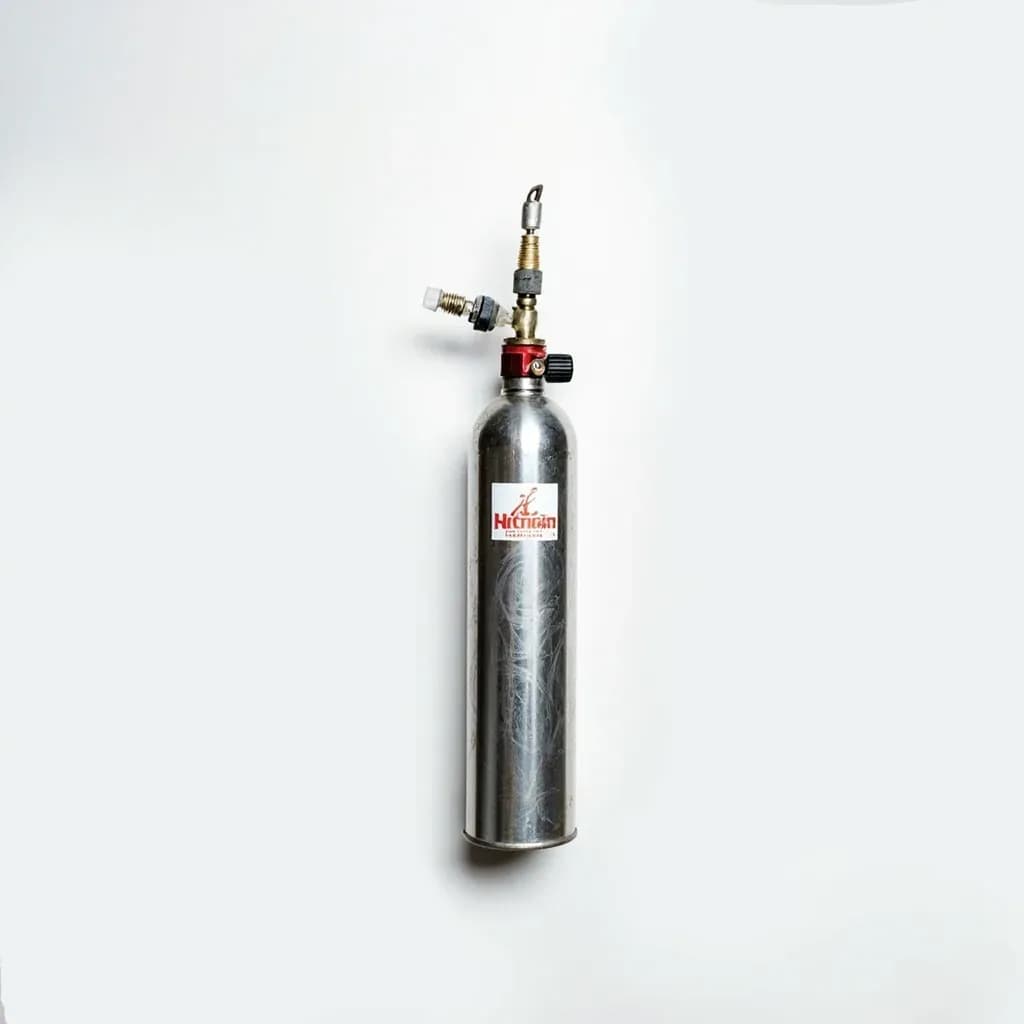
Source food-grade gaseous nitrogen (E941) in a cylinder appropriate to your batch size. Fit a clean, food-grade two-stage regulator and tubing dedicated to the gas. Never use welding-grade, medical-mixed, or shared hoses that have previously carried other gases — oil aerosols and moisture will end up in the product.
- 2
Prepare an airtight, clean container
Use glass, stainless steel, or food-grade plastic with a tight-sealing lid or closure. Wash and fully dry; residual moisture encourages mould. Choose the smallest container that fits the batch to keep headspace minimal.
- 3
Pre-purge the empty container (preferred)
With the lid off, flow a gentle stream of N₂ into the vessel for 10–30 seconds (longer for large containers). Tilt and rotate so the gas displaces air from all corners. This step dramatically reduces residual O₂ compared to flushing after filling.
- 4
Fill and leave a small headspace
Pour, scoop, or ladle the product in promptly. Leave only the headspace the closure requires (1–2 cm in a jar is usually enough); the less air left, the less oxygen to displace in the next step.
- 5
Blanket the headspace
Insert the gas line just above the product surface and flow N₂ for 5–15 seconds to sweep out the remaining air. Keep the flow gentle to avoid splashing liquids or blowing powders around. For oils and wines, a slow, steady flow is more effective than a hard blast.
- 6
Seal immediately
Cap, lid, or valve the container the moment you stop the gas flow. Any delay lets ambient air back in. Tighten jar lids while gas is still flowing slightly, then close the regulator.
- 7
Verify and store
For commercial work, an oxygen analyser on the headspace (target <1–2% O₂ for sensitive products) confirms success. For home use, weigh the sealed container and re-weigh after 24 hours — a stable weight is a useful proxy for a sound seal. Store away from heat and light.
- 8
Maintain the blanket on open systems
If the vessel is repeatedly opened (a wine tank, a sauce kettle, a bag-in-box), keep a low continuous flow of N₂ through a loose-fitting lid or a dedicated gas port. The blanket is renewed each time air is displaced, so the technique only works while gas is flowing.
Vacuum, blanket, or sparge?
The three techniques are often confused because they all fight oxidation, but they tackle different parts of the problem. Vacuum sealing removes the air that surrounds the food; it is the right tool for dry, solid products (nuts, cheese, jerky, coffee) and works best in barrier bags or rigid containers. It is a poor choice for liquids because trapped gas expands under vacuum and dissolved O₂ in the liquid itself is barely affected. Nitrogen blanketing displaces the headspace gas with an inert one, which is gentler on liquids and lets you top up a partially used container. Sparging pushes N₂ through the liquid itself, physically scrubbing out dissolved oxygen, and is the necessary first step before bottling wine, oil, or sauce if you want true oxidative stability. In a serious kitchen or cellar you typically combine them: sparge the liquid, fill into a vessel, then blanket the headspace and seal.
- Vacuum — best for dry, solid foods in barrier packaging; limited use for liquids.
- Blanket — best for bulk liquids and repeatedly opened containers; depends on a good seal.
- Sparge — required when dissolved O₂ matters (wine, oil, juice, sauce); not a substitute for a headspace blanket.
When nitrogen is the wrong tool
Nitrogen blanketing is a storage and packaging adjunct, not a preservative in its own right. It will not stop an actively fermenting product, will not pasteurise food, and will not pull rancidity out of an oil that has already oxidised. It is also the wrong choice for products that need a small amount of oxygen to behave correctly — fresh red meat packaged under 100% N₂ will turn purple-brown and develop an off-metallic aroma from the lack of oxygen, which is why MAP lines for red meat leave a measured O₂ fraction. Treat the blanket as a way to slow down what would otherwise happen faster, and pair it with the appropriate cold chain, pasteurisation, or water-activity control for the food in question.
Common uses
Tips & pitfalls
- Always specify food-grade nitrogen; industrial welding nitrogen can carry oil, moisture, and other contaminants that wreck flavour.
- A tight seal is non-negotiable: if the lid breathes, the blanket escapes and oxygen seeps back in within hours. Do a pressure-decay test on unfamiliar lids.
- Minimise headspace — fill the container as full as practical; less air means less oxygen to displace and less N₂ wasted.
- Nitrogen only protects what it touches. Oxygen already dissolved in the oil, sauce, or wine will still cause oxidation; sparge or vacuum-deaerate first for sensitive liquids.
- Don't substitute compressed air or 'inert' argon/nitrogen mixes intended for welding — moisture and oil aerosols can ruin flavour.
- For oils and nut butters, combine N₂ blanketing with refrigeration; the technique slows rancidity but does not stop it, and warmth undoes the work.
- On a wine tank, a continuous low-pressure N₂ feed is more reliable than a one-off spray under a cork or bung; the blanket must be renewed each time the barrel is drawn from.
- Regulate cylinder pressure carefully: kitchen vessels and iSi-style chargers run at low pressure, and a two-stage regulator with a 0–10 bar gauge avoids over-pressurising glass jars or growlers.
- Store the cylinder upright, chained, in a ventilated area; even an inert gas can asphyxiate in a closed room if a valve is left open.
- For nitro coffee, chill the keg and lines thoroughly (≈1–2 °C) and use stout-style restrictor plates or diffusers for the cascade effect — temperature and hardware matter as much as the gas.
Good to know
- Gas used
- Food-grade gaseous nitrogen (N₂), typically 99.0–99.9% purity
- Food-additive status
- E941 in the EU; GRAS in the US
- Principle
- Displaces headspace oxygen; nitrogen is non-reactive and will not support aerobic spoilage organisms
- Effect on anaerobes
- Inert toward spoilage but does not kill anaerobic bacteria such as Clostridium botulinum
- Typical snack-bag flush
- Often ~99% N₂ with a small CO₂ fraction; some products use N₂/CO₂ blends around 70/30
- Atmospheric abundance
- Nitrogen makes up about 78% of Earth's atmosphere
- Alternative gas
- Argon is denser and is preferred by some wine preservation systems (e.g., Coravin uses argon, not nitrogen)
- Skill level
- Beginner–intermediate for kitchen use; requires care with cylinder handling and pressure regulation
Also called
Inert Gas Flushing · Nitrogen Flushing
Related

Confit
Cook slowly submerged in fat for silky tenderness and keeping

Cure
Draw out moisture with salt and time to preserve and concentrate

Pickle
Steep in acidic brine for bright, tangy, crunchy preservation

Ferment
Let friendly microbes transform food into tangy, complex flavor

Marinate
Soak in a seasoned mix to flavor and tenderize before cooking

Brine
Soak in salt water so meat stays juicy and seasoned throughout

Dehydrate
Slowly dry out moisture to concentrate flavor and extend shelf life

Cold-Smoke
Perfume cured food with smoke without cooking it through