Water & Steam
Rice Noodle Roll Steaming (Cheung Fun)
Steaming a thin rice-flour batter into a delicate sheet, then rolling it into silky noodle rolls.
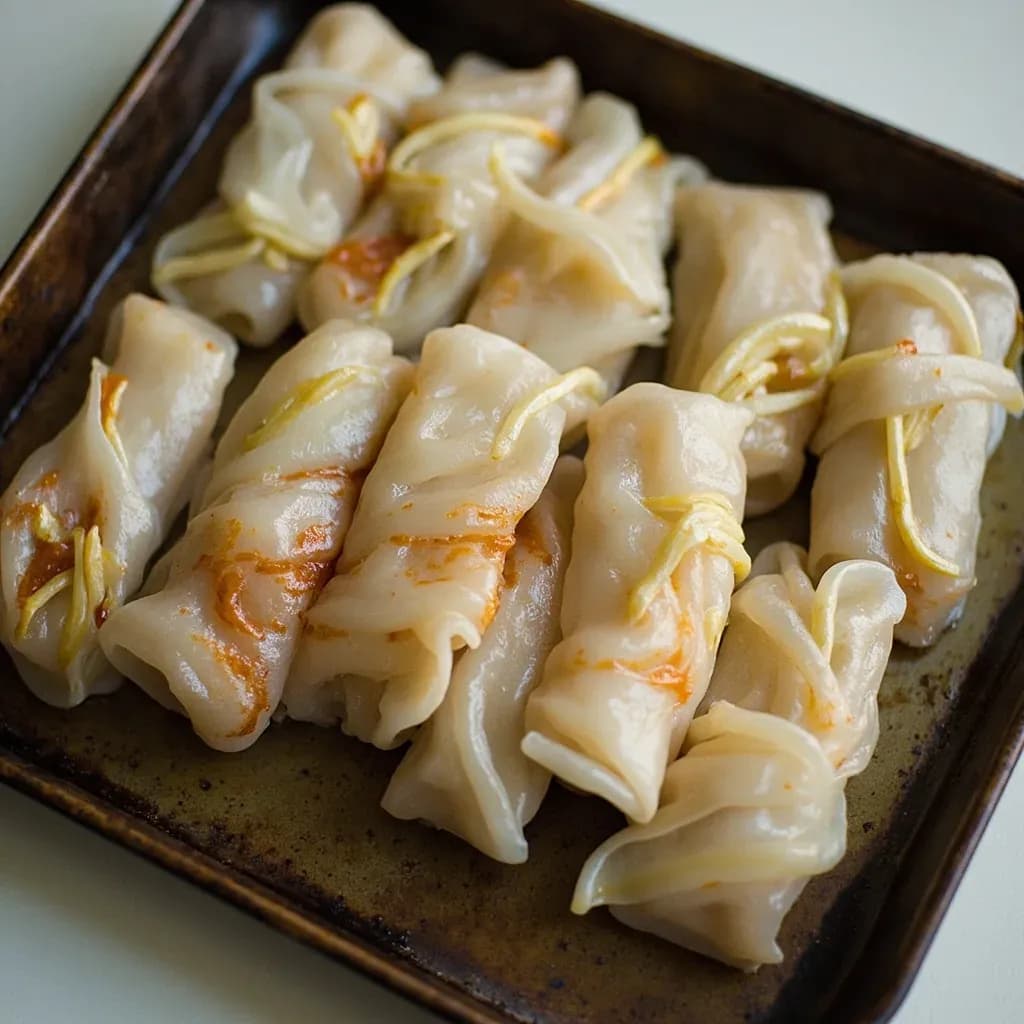
A loose rice-flour and starch batter is poured thin onto an oiled tray and steamed hard for under a minute until it sets into a translucent, tender sheet. The sheet is then scraped up and rolled, sometimes around shrimp, beef, or dough sticks, to make cheung fun. The technique is a dim sum staple, and the silky slippery texture depends on a high-heat steam and the right balance of rice flour to starches.
Cheung fun is the Cantonese technique of ladling a thin rice-flour batter onto a hot cloth or shallow pan, steaming it for barely a minute into a silken sheet, and rolling it up with or without a filling. The result is the soft, faintly translucent noodle roll that anchors the dim sum cart and shows up at breakfast counters across Guangdong and Hong Kong. What looks like a simple noodle is in fact a precision operation: the right flour blend, a fully hydrated batter, a taut oiled surface, and a hard, uninterrupted boil all have to line up in the span of seconds.
The cooking behavior of the sheet is what defines the technique. A properly made sheet is matte-white with a slight sheen, peels cleanly, and has a tender snap from the wheat starch and a soft chew from the rice. Over-steam it and the sheet goes rubbery and dry; under-steam it and it tears or sticks. The batter settles fast, so it must be stirred every time you ladle, and the cloth — the traditional surface — has to be just damp, not wet, and lightly oiled or every sheet will cling.
The sweet soy sauce drizzled over the finished roll is not a garnish but the second half of the dish: warm, slightly viscous, and balanced between salty, sweet, and a whisper of caramel from the dark soy, it is what most diners taste more of than the noodle itself. Master the cloth, learn to read a sheet by eye, and the rest of dim sum opens up — char siu, shrimp, beef, or a stick of youtiao tucked inside all rely on the same base technique.
- Difficulty
- Hard
Types & varieties
Filled with Cantonese BBQ pork; the dim sum classic
Whole or chopped shrimp scattered on the batter before steaming
Marinated sliced beef, often with bean sprouts or scallions
Wrapped around a stick of crispy youtiao for contrasting crunch
Plain, no filling — all about the sauce and the noodle itself
Hong Kong–style 'live' rolls: no filling, just a thin naked sheet
Thicker, slightly heavier rolls, sometimes with a soy-milk enriched batter and savory filling
Same base technique, served with ho-see sweet sauce, chili sauce, or curry gravy
Cousin technique with fermented rice batter, pork-and-wood-ear filling, nước chấm dip
How to do it
- 1
Mix the batter
Combine rice flour with a smaller portion of wheat starch and/or tapioca starch (a typical ratio is roughly 4 parts rice flour to 1 part wheat starch plus 1 part tapioca). Whisk with cold water, a teaspoon or two of neutral oil, and a small pinch of salt to a thin, lump-free cream — about the consistency of single cream. Strain through a fine mesh and rest at least 30 minutes, or refrigerate overnight so the flours fully hydrate.
- 2
Prepare the steamer
Set a wide, flat pan or shallow wok over rapidly boiling water. If using a cloth, drape a tightly woven, well-washed muslin or cotton cloth so it sags slightly into the pan and secure it taut. Brush the cloth lightly with oil. For a no-cloth method, use a shallow oiled non-stick pan or silicone mat that fits the steamer.
- 3
Ladle and spread
Stir the rested batter, then ladle a thin, even layer (roughly 60–90 ml for a 25–30 cm pan) onto the hot cloth or pan. Quickly tilt or use the back of the ladle to spread to a uniform thinness — it should look like a film of cream, not a pool.
- 4
Add filling (optional)
Scatter the filling across the wet surface: chopped char siu pork, peeled and deveined raw shrimp, marinated beef strips, or a length of youtiao. Press lightly so it embeds into the batter.
- 5
Steam
Cover and steam over a hard rolling boil for 60–90 seconds, until the sheet is set, matte-white with a slight sheen, and there are no wet patches. The sheet should lift cleanly with a scraper.
- 6
Scrape and roll
Run a flat bench scraper or wide spatula under one edge to release the sheet, then lift and roll it up tightly into a cylinder. Slide the roll off the cloth onto a cutting board.
- 7
Cut and serve
Cut each roll into 5–8 cm lengths, plate seam-side down, and drizzle generously with warm sweet soy sauce. Finish with a few drops of sesame oil and chopped scallions or cilantro. Serve immediately.
The sweet soy sauce (cheung fun sauce)
A bowl of plain cheung fun without its sauce is a dish waiting to be finished. The classic Cantonese sauce is a quick reduction of light soy, dark soy (for color and a rounded sweetness), sugar, and a splash of water, simmered briefly until it coats the back of a spoon and finished with a few drops of toasted sesame oil. Some cooks add a spoon of oyster sauce for depth. The sauce should be warm when it meets the noodle — cold sauce beads on the silky surface and slides off.
- A typical ratio: 3 parts light soy, 1 part dark soy, 1–2 parts sugar, 4–5 parts water, simmer 3–5 minutes.
- Add the sesame oil off the heat so it stays aromatic rather than greasy.
- For Malaysian-style ho-see, lean heavier on dark soy and a touch of molasses or palm sugar.
- A cornstarch slurry (1 tsp in 1 tbsp water) thickens the sauce to a glossy, clingy consistency.
Cloth versus pan: choosing your surface
The traditional method drapes a tightly woven, well-washed cotton or muslin cloth over a wide steaming tray. The cloth gives the thinnest, most delicate sheet because the batter seeps into the weave just enough to grip without sticking — but it demands attention: it must be taut, just damp (not wet), and lightly oiled between every pour. A slack cloth wrinkles the sheet; a bone-dry cloth grips too hard and tears it.
- Wring the cloth out thoroughly after washing, then brush with a thin film of neutral oil before each pour.
- Replace the cloth every few dozen sheets as it builds up a starchy film that catches and tears the noodle.
- A shallow oiled non-stick pan or a silicone mat is far more forgiving for beginners and works in a standard round steamer.
- Pan-steamed sheets are marginally thicker and less translucent but still excellent, and the cleanup is dramatically easier.
Reading a finished sheet
You learn more from the first sheet of every batch than from any recipe. Pull it at 60 seconds, then 75, then 90, and look: a properly steamed sheet is matte white with a faint sheen, lifts cleanly in one motion, and drapes softly over the scraper. Wet patches mean it needs another 15–20 seconds. A sheet that is fully translucent and pulling away from the cloth is overdone. Edge the timing to the lower end for filled rolls so the filling cooks through in the same pass.
Common uses
Tips & pitfalls
- Whisk the batter until completely lump-free — a fine-mesh strainer pass is worth the extra minute.
- Rest the batter at least 30 minutes, ideally overnight in the fridge, so the flours fully hydrate and the raw-flour taste mellows.
- Stir the batter each time before ladling; starch settles fast and the last sheets will be thicker than the first.
- The steamer must be at a hard rolling boil before the batter goes in; cold or weak steam tears the sheet and leaves it gummy.
- Spread the batter in a single quick motion; don't go back over wet spots or the sheet will be uneven.
- Steam only until set and slightly translucent — over-steaming makes the sheet rubbery and dry.
- Loosen the sheet from one edge with a bench scraper, then roll immediately while it is still pliable; it stiffens within a minute.
- If sheets tear, the batter is too thin or the cloth is too dry; if they are gummy, the batter is too thick or the steam is too weak.
- Add 1–2 tsp of neutral oil to the batter for a silkier, less sticky sheet and easier release.
- Cut with a clean, dry knife or scissors and wipe between cuts to keep edges neat; a sticky blade drags the filling out of place.
Good to know
- Origin
- Cantonese (Guangdong, southern China); a foundational dim sum item
- Cantonese name
- Cheung fun (腸粉), literally 'intestine noodle/roll' for the rolled shape
- Course
- Dim sum; also breakfast or snack
- Steam time per sheet
- Roughly 60–120 seconds over a hard rolling boil
- Total active time
- About 30–60 minutes for batter, plus 2–3 minutes per sheet steamed
- Batter base
- Rice flour blended with wheat starch and/or tapioca starch for translucency and chew
- Batter ratio
- Thin, pourable cream, about 1:2.5 flour-to-water by weight
- Yield
- One 25–30 cm sheet per ladle; 6–10 rolls per batch of batter
- Key accompaniment
- Sweet soy sauce (light soy, dark soy, sugar, water, finished with sesame oil)
- Best when
- Served within 30–60 minutes of steaming
Also called
steamed-rice-roll-making · cheung fun · rice roll
Related

Boil
Cook in vigorously bubbling liquid at full rolling heat

Simmer
Hold liquid at a gentle shimmer for tender, unhurried cooking

Poach
Cook gently in barely-trembling liquid for silky, tender results

Steam
Cook in rising vapor to keep color, nutrients, and shape intact

Blanch
Plunge briefly in boiling water, then shock cold to lock color

Braise
Sear, then cook slow in a little liquid until fall-apart tender

Stew
Simmer bite-sized pieces fully submerged into a rich, unified pot

Sous-Vide
Seal and cook in precise warm water for edge-to-edge doneness