Prep & Assembly
Ice Shaving
Shaving a block of ice into fine, fluffy flakes for shaved-ice desserts.
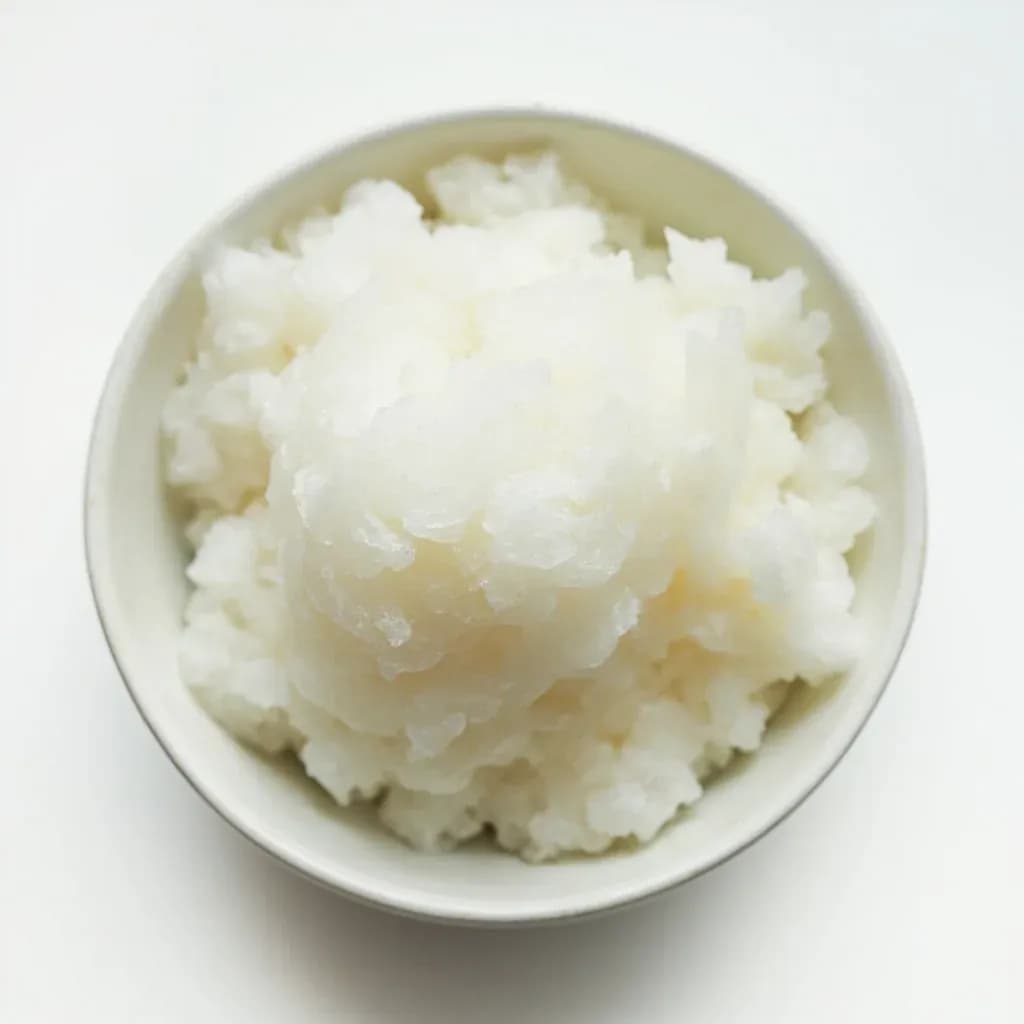
Ice shaving runs a block of ice against a sharp blade to produce light, snow-like flakes rather than the hard granules of crushed ice. The fine texture absorbs syrups and toppings to make desserts like kakigori, bingsu, and halo-halo. Blade angle and ice temperature control whether the result is powdery or icy.
Shaving ice is the practice of drawing a dense block of frozen water across a plane-style blade to produce a fine, dry, almost powdery mound of flakes — fundamentally different from crushed, blended, or scraped ice in both texture and behavior. The goal is a snow-like pile that absorbs syrup, condensed milk, or fruit juice without collapsing into slush, so it carries flavor and toppings from the first spoonful to the last. Done well, the flakes float briefly on a spoon of condensed milk and melt on the tongue rather than in the hand.
The technique depends on three things working together: a slow-frozen, clear block; a sharp, properly adjusted plane blade; and steady, unhurried hand pressure. Cubes from a home freezer tray are too small and too cloudy to shave cleanly; they fracture into chips. A dedicated block-ice shaver — Hatsuyuki, NEMOX, SnoWizard, and similar — uses an adjustable blade that peels a continuous ribbon of ice off the block. This is what separates shaved ice from crushed ice (brittle, wet shards), blended snow cones (wet, granular), and Italian granita (coarser crystals scraped from a partially frozen pan).
Shaved-ice traditions run deep and largely independent. Japan's kakigōri dates to the Heian period, while the same blade-meets-block idea surfaced across East Asia and the Pacific: Hawaiian shave ice, born from Japanese plantation workers in the late 1800s; Taiwanese baobing; Korean bingsu; Mexican raspados; Puerto Rican piragua. Each developed its own syrup vocabulary and topping grammar rather than descending in a single line.
- Difficulty
- Easy
Types & varieties
Block ice shaved into near-powder flakes, served in a glass with flavored syrup (matcha, strawberry, mizu yōkan) and condensed milk.
Finely shaved ice piled over a paper cone or cup and drenched in fruit syrups; 'rainbow' stacks two or three syrups for layered color.
Shaved ice mound with separately cooked toppings — red bean, mung bean, taro, tapioca pearls, condensed milk.
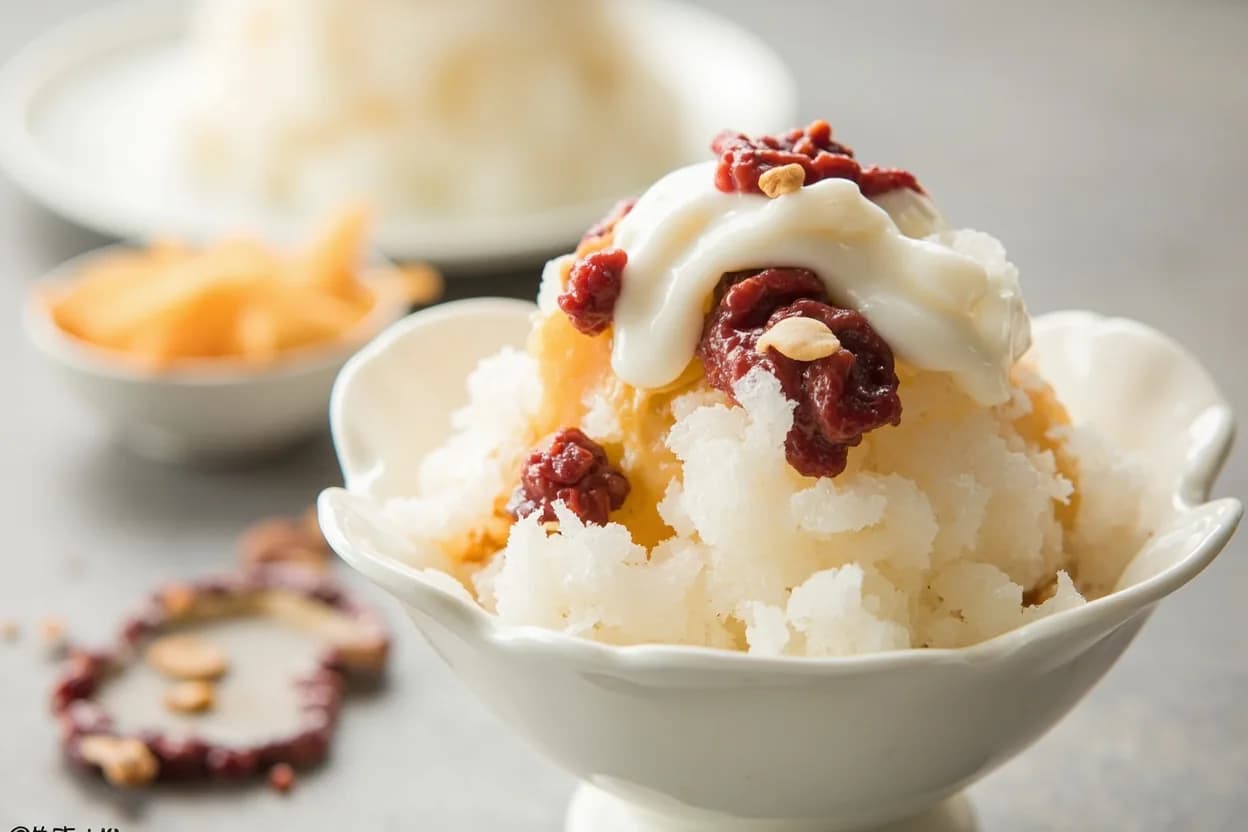
Often uses shaved milk ice or a frozen sweetened-milk base, topped with fruit, red bean, injeolmi rice cake, or Oreo crumbs.
Regional street dessert with simple syrups plus fruit, red bean, or grass jelly.
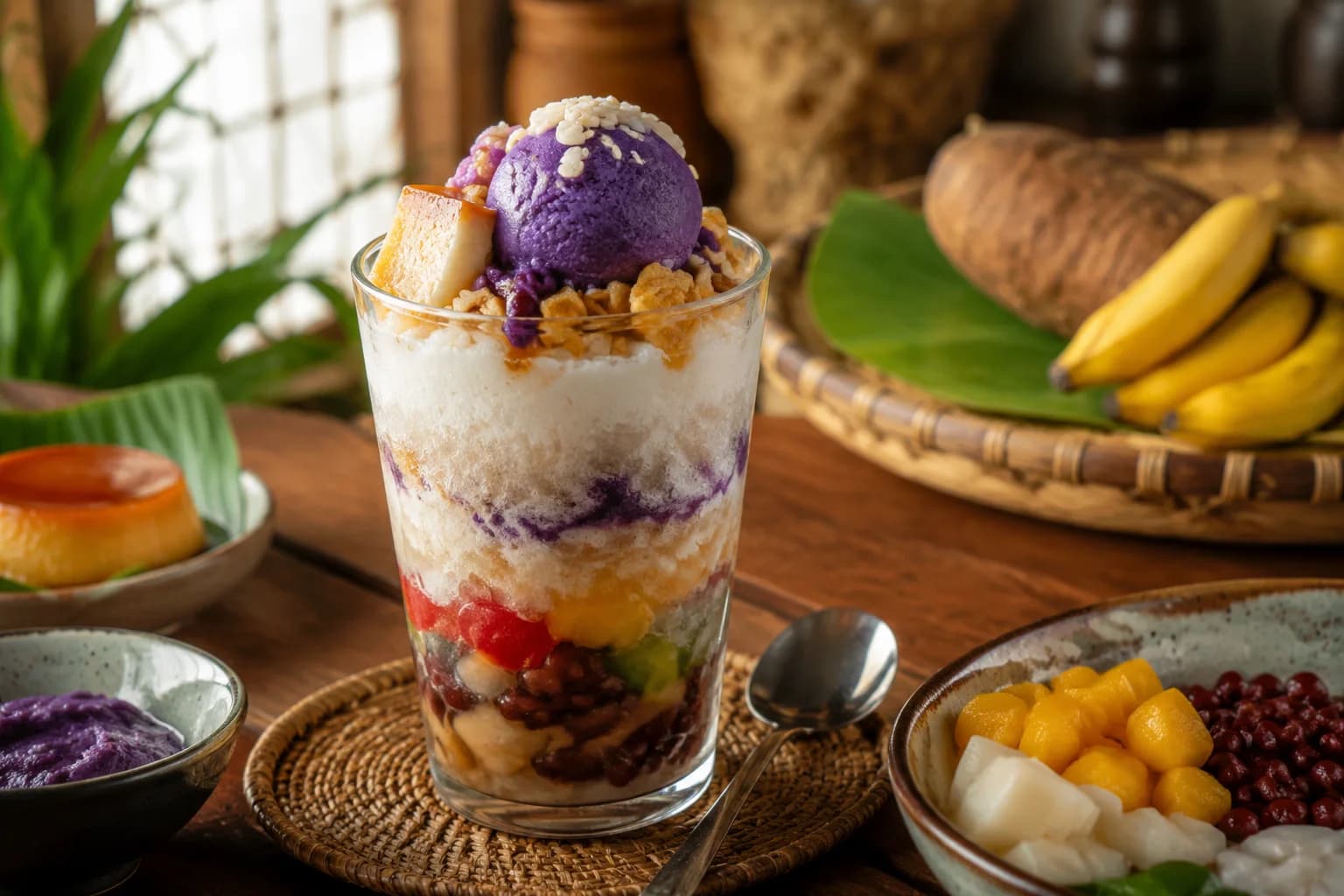
More assembly than shave: shaved ice layered with ube, beans, jellies, leche flan, then crowned with evaporated milk and ube ice cream.
Shaved or machine-blended ice dressed with chamoy, tamarind, chili, and fresh fruit.
Tall cone of shaved ice with tropical fruit syrups — tamarind, coconut, mango.
A block of sweetened, often full-fat milk is pre-frozen and shaved at the table, giving richer, creamier flakes than water-ice bingsu.
How to do it
- 1
Prepare clear block ice
Freeze water slowly in an insulated cooler or insulated mold for 18–24 hours so air and impurities migrate away from the working surface. Demold and temper 2–3 minutes at room temperature; the surface should feel firm but not glass-hard.
- 2
Set up the shaver
Mount the dedicated shaver (Hatsuyuki, NEMOX, SnoWizard, or similar) on a stable surface with a catch bowl or wide container positioned to collect flakes. Adjust blade angle per the manufacturer — fine for kakigōri, coarser for Hawaiian-style shave ice.
- 3
Chill the serving vessel
Place the bowl, glass, or cone in the freezer, or fill it with ice water while you shave. Cold glassware buys you 30–60 seconds before melting accelerates.
- 4
Shave the block
Hold the block firmly and draw it across the blade in even strokes, rotating the block to expose fresh surface. Do not press — let the blade geometry do the work. Collect flakes in a loose, mounded pile rather than tamping them down.
- 5
Mound and shape
Scoop the shaved ice into the chilled vessel with a wide spoon or your hands, building a tall, airy dome. Avoid tamping; the air pockets between flakes are what absorb syrup without collapsing.
- 6
Dress immediately
Pour pre-chilled syrups slowly over the side of the mound so they run down through the layers instead of pooling at the top. Add condensed milk, fruit, red bean, mochi, or other toppings, then serve within 1–2 minutes.
- 7
Clean the blade between blocks
Wipe the blade with a dry cloth between blocks; residual melt refreezes on the cutting edge and pulls flakes rather than shaving them, producing wet clumps on the next pass.
Making clear block ice
Most home freezers freeze water fast and from the sides in, trapping air and impurities in the center as a white cloud. That cloudy core shaves wet, brittle, and grey-tinted, and it dulls the blade quickly. The fix is to slow the freeze so air has time to migrate away from the working surface of the block. Clear ice shaves drier, brighter, and closer to true kakigōri texture.
- Fill a small insulated cooler (a 'playmate'-style camping cooler works) with water, snap the lid shut, and freeze for 18–24 hours. Ice forms from the top down; the upper portion of the block is the clearest.
- Alternatively, wrap a plastic or metal mold in two or three layers of newspaper or a towel, insulate all sides, and freeze the same way.
- Demold and inspect: cut the cloudy bottom inch off the block and reserve it for drinks or crushed-ice use where clarity does not matter.
- Temper the working block at room temperature for 2–3 minutes before shaving; ice straight from a deep freeze fractures like glass rather than peeling cleanly.
Shaved, crushed, or scraped?
These three textures get conflated constantly, but they behave very differently in the mouth and under a pour of syrup. Knowing which is which is the difference between a dessert that holds and one that floods.
- Shaved ice: continuous ribbons off a plane blade; dry, powder-fine, holds shape under syrup. The benchmark for kakigōri and Hawaiian shave ice.
- Crushed ice: hammered or blended cubes; wet, sharp shards that melt fast and let syrup pool at the base of a glass. Right for juleps and cobblers, wrong for a syrup-soaked mound.
- Granita: a semi-frozen liquid scraped with a fork every 30 minutes during freezing; coarser, wetter, syrupy throughout. A separate dessert, not a substitute.
- Snow cone ice: machine-blended cubes; granular and wet. Syrup clings to the surface and runs off the top, pooling at the bottom of the cup.
Common uses
Tips & pitfalls
- Temper the block 2–3 minutes at room temperature before shaving — straight-from-the-freezer ice fractures, over-tempered ice gums the blade.
- Pre-chill the serving bowl or cone; a warm vessel melts the first flakes on contact and you lose the airy dome before any syrup goes on.
- Shave only what you will serve in the next two minutes — shaved ice compacts and loses its snow texture fast, and refrozen shaved ice fuses into a solid block.
- Push the block into the blade with a steady, even pace; forcing it produces coarse chips and stresses the blade.
- Adjust the blade fine for powder-soft kakigōri, coarser for Hawaiian-style flakes that need to hold more syrup without collapsing.
- Pour syrups and condensed milk down the side of the mound rather than onto the peak — that way they soak through the layers and the top stays snowy instead of pooled.
- Always pre-chill syrups; room-temperature syrup melts shaved ice on contact and turns the bottom of the bowl into slush.
- Keep a spare block in the freezer at all times during service; a warm block shaves unevenly, and a working block warms fast under hand contact.
Good to know
- Origin
- Independent traditions across East Asia (Japan's kakigōri, Heian period, c. 10th–11th c.) and the Pacific (Hawaiian shave ice, c. late 1800s, from Japanese plantation workers).
- Ideal ice
- Dense, clear block ice frozen slowly in an insulated cooler or wrapped mold to drive trapped air and impurities away from the working surface.
- Ice temperature
- Roughly −10 to −15 °C (14 to 5 °F) shaves best; colder than −18 °C makes the block fracture, warmer makes it gum the blade.
- Blade type
- Plane-style adjustable blade on a dedicated shaver; not a grater, rasp, or fork. Fine for powder flakes, coarse for syrup-holding flakes.
- Texture benchmark
- True shaved ice should float briefly on a spoon of condensed milk and melt on the tongue rather than in the hand.
- Yield
- One 1.5–2 L block typically yields 6–10 servings (about 150–250 g shaved ice each).
- Equipment cost
- From under US$20 manual rotary shavers to US$300–1,500+ for commercial electric machines (Hatsuyuki, NEMOX, SnoWizard).
- Shelf life
- Served immediately — shaved ice compacts and begins melting within 2–3 minutes at room temperature; it cannot be stored.
- Difficulty
- Low with a dedicated shaver; medium without one (a very sharp plane or fine grater can approximate, never duplicate, the texture).
Also called
Shaved Ice · Kakigori Shaving
Dishes that rely on it
Related

Whisk
Beat ingredients smooth and aerated with a looping wire motion

Sift
Pass dry ingredients through mesh to aerate and remove lumps

Strain
Pour through mesh to separate solids from liquid for a smooth result

Filter
Pass liquid through fine material to clarify out the smallest particles

Rice
Press cooked potatoes through small holes for fluffy, lump-free texture

Mash
Crush soft cooked food into a rustic, creamy purée

Grind
Crush food into a coarse to fine texture, from spices to meat

Grate
Shred food into fine bits against a sharp-toothed surface