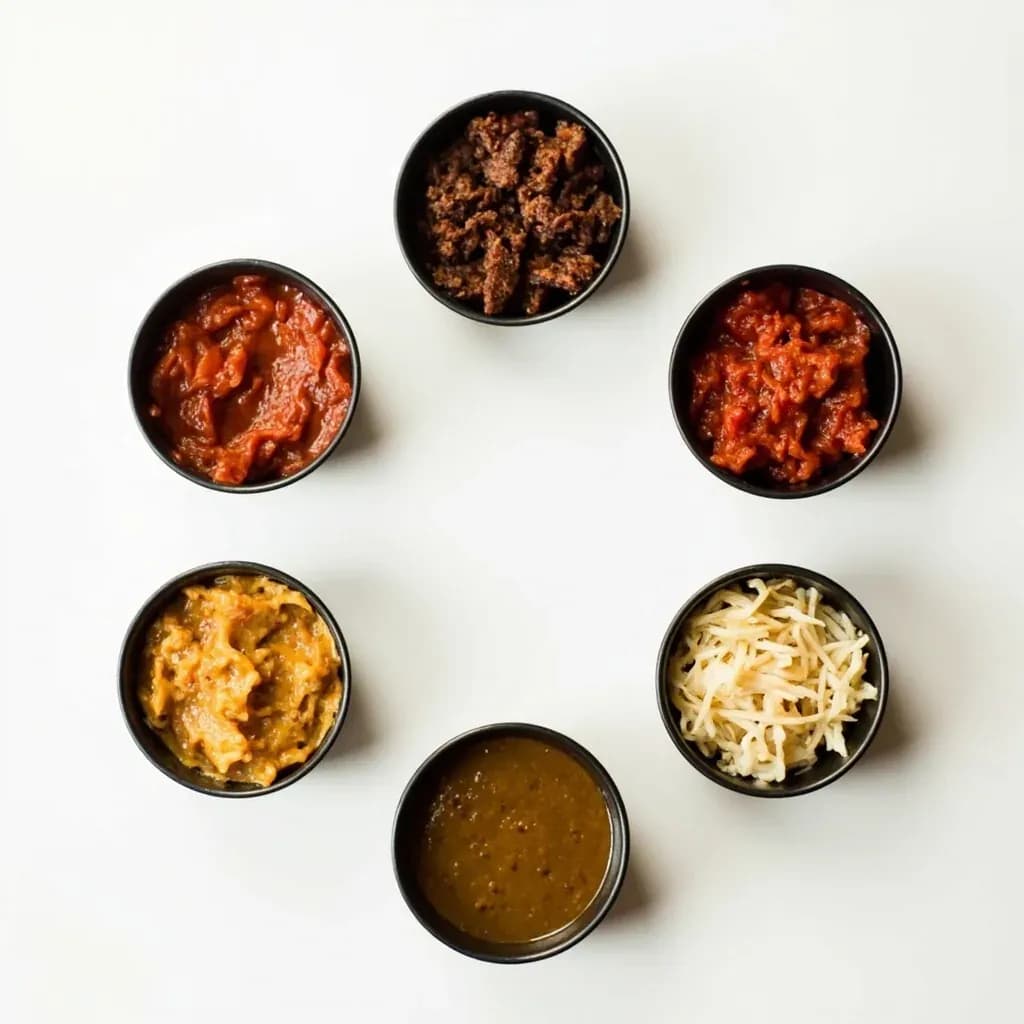
Prep & Assembly
Six-Taste Balancing (Shad Rasa)
Composing a dish to balance the six Ayurvedic tastes: sweet, sour, salty, pungent, bitter, astringent.
Six-taste balancing, or shad rasa, is the Ayurvedic principle of building a meal that includes all six tastes, sweet, sour, salty, pungent, bitter, and astringent, so it satisfies the palate and the body's constitution. Cooks adjust ingredients and seasonings to bring each taste into harmony rather than letting one dominate. It guides Indian thali composition and seasoning decisions toward a complete, well-rounded plate.
Shad Rasa, the classical Ayurvedic framework of six tastes, is less a recipe rule than a working theory of how a meal should feel in the mouth. The six rasas — madhura (sweet), amla (sour), lavana (salty), katu (pungent), tikta (bitter), and kashaya (astringent) — are meant to register across a single meal, with each taste doing different work on the palate and, in the traditional view, in digestion. A cook who treats the six as a checklist tends to over-acidify and over-spice; a cook who treats them as a diagnostic tends to produce dishes that feel complete without being loud.
The framework's deepest influence is architectural. It is the reason the Indian thali and the South Indian banana-leaf meal are designed the way they are: a small dal, a sabzi, a raita, a chutney, a pickle, a papad, a salt, a sweet — each one carrying a different rasa, with the diner composing the balance per bite. In modern cooking the same logic travels easily to a grain bowl, a composed salad, or a tasting menu: identify what is already on the plate, find the gap, and close it with the lightest tool available.
In practice, shad rasa is most useful as a way of reading finished food. A dish that feels heavy is usually missing bitter and astringent. A dish that feels flat is usually missing salt. A dish that feels hot is usually missing sweet and astringent. The framework gives a cook a vocabulary for these gaps and a short list of ingredients that close them — and that vocabulary holds up well outside Indian kitchens.
- Difficulty
- Medium
Types & varieties
The classical application: a single plate carries several small dishes and condiments so the eater balances the rasas per bite — dal, sabzi, raita, chutney, pickle, rice, roti, salt.
Adjusting the six-taste ratio to pacify a specific dosha of the individual eater — for example, leaning on bitter, astringent, and sweet for a Pitta-dominant diner, or on pungent, bitter, and astringent for a Kapha-dominant diner.
Shifting the dominant rasas with the season — heavier sweet, sour, and salty in cool months; lighter pungent, bitter, and astringent in warm months.
Composing one preparation (a khichdi, a grain bowl, a composed salad) so all six rasas are present in a single serving — more common in modern Ayurvedic cooking than in classical practice.
A regional form where rasam, sambar, kootu, thoran, pachadi, and buttermilk are arranged on a leaf to cover the rasas, typically with a final sweet slot.
How to do it
- 1
Identify the core components
List the primary ingredients and the cooking method. Note the dominant elements — protein, starch, vegetable, fat — and the spice base, because the dish already carries rasas embedded in it before any adjustment.
- 2
Map the existing rasas
For each component, name the rasas it contributes. Cooked onion reads as sweet and lightly pungent; tomato as sour and sweet; ginger as pungent; fenugreek seeds as bitter; tamarind as sour and astringent; salt as salty. Most finished dishes already cover two to four rasas.
- 3
Identify the missing rasas
Mark which of sweet, sour, salty, pungent, bitter, and astringent are weak or absent. A creamy, rich, mild dish almost always lacks bitter and astringent; a hot, spicy dish usually lacks sweet and astringent.
- 4
Choose balancing agents
Pick one or two ingredients that add the missing rasas without fighting the dish. Sour is usually a finishing element — lime, tamarind, yogurt. Salty is finishing too. Astringent is often structural — a legume, raw greens, or pomegranate seeds. Bitter is usually a small amount of a strong bittering agent — fenugreek, bitter gourd, dark greens, nigella.
- 5
Decide whether to balance the dish or the meal
If adding the missing rasa would break the dish, balance the meal instead — a raita, a chutney, a salad, or a finish on the side. Thali-style composition is the more historically grounded approach.
- 6
Build in layers
Add foundational rasas during cooking: sweet from slow-cooked aromatics, pungent from whole spices bloomed in fat, bitter from seeds bloomed briefly in oil. Add corrective rasas at the end: sour, salt, fresh pungent, and often a raw bitter or astringent garnish.
- 7
Taste and adjust
Taste the dish plain, then with each proposed addition. A balanced composition should register every rasa within a few bites without any one shouting. If pungent dominates, add sweet or acid. If the dish feels flat, salt is the usual first move. If it feels heavy, reach for bitter or astringent.
- 8
Plate with balancing condiments
Serve with explicit, small portions of the underrepresented rasas — a spoon of yogurt, a wedge of lime, a few toasted seeds, a small bowl of chutney, a pinch of chaat masala. The diner then composes the balance per bite, which is the classical way.
What each rasa tastes like in real food
The classical Sanskrit names are precise but unfamiliar; the practical version is a short list of pantry cues. Once a cook can place an ingredient on the rasa map, balancing a plate becomes fast.
- Madhura (sweet): cooked onion, ripe tomato, coconut milk, rice, wheat, slow-cooked carrots, milk, ghee, jaggery, sugar, ripe mango. Rounded, mouth-filling, calming.
- Amla (sour): lemon and lime juice, tamarind, amchoor (dried mango powder), kokum, yogurt, buttermilk, vinegar, wine, fermented batter. Bright, sharp, salivation-inducing.
- Lavana (salty): any salt — sea salt, kosher, rock salt, chaat masala, soy sauce, miso, fish sauce, brined pickles. Flavor amplifier; a pinch near the end of a balanced dish makes every other rasa register.
- Katu (pungent): fresh chili, black pepper, fresh ginger, garlic, mustard, wasabi, horseradish, raw radish. Hot, nasal-clearing, stimulating.
- Tikta (bitter): fenugreek seeds and leaves, bitter gourd, dark leafy greens, nigella, turmeric in excess, coffee, dark cocoa, citrus peel. Dry, sharp, palate-clearing.
- Kashaya (astringent): legumes (chana, toor, urad, rajma), raw banana, pomegranate, cranberry, green tea and black tea tannins, unripe mango, the dry grip of raw greens and spinach. Puckering, drying, mouth-tightening.
Reading a finished dish
The quickest use of the framework is diagnosing a dish that almost works. A few patterns cover most cases.
- Feels heavy or stuck in the chest — usually low on bitter and astringent; reach for greens, legumes, pomegranate, or a black-tea finish.
- Feels flat or one-note — almost always missing salt, and often missing acid; correct salt first, then acid.
- Feels hot or sharp — usually needs sweet and astringent to ground it; a splash of coconut milk, a handful of greens, or a cooked-down onion can do it.
- Feels thin or unfinished — usually needs sweet and salty; a glaze, a finishing salt, or a slow-cooked base ingredient often fixes it.
- Feels muddled despite many ingredients — usually all six are present but no single ingredient is anchoring; rebuild with a clear dominant ingredient and let the others sit below it.
Common uses
Tips & pitfalls
- Audit before you add — taste what's already in the dish first; most preparations already cover two to four rasas through spices, fat, and acid, and double-dosing creates a muddled plate.
- Astringent is the easiest rasa to overlook — look for it in legumes, raw banana, pomegranate, cranberry, tannins in tea, and the dry grip of raw greens and spinach.
- Bitter and astringent intensify as a dish rests and don't cook out, so add them late and in small amounts; a quarter-teaspoon of fenugreek seeds is often plenty for a pot that serves four.
- Salt is a unifier — a small pinch near the end of an otherwise balanced dish makes every other rasa register more clearly, which is why chaat masala is a near-universal Indian finishing tool.
- Sweet in this framework is not the same as sugary — cooked onion, ripe tomato, coconut milk, rice, and even salt read as sweet to the palate, and leaning on those is more useful than reaching for sugar.
- Aim for all six across the meal, not in one bite — chasing all six per mouthful usually produces a flat, busy flavor; thali-style composition gives the diner the control to balance per bite.
- Use the strongest taste as your ceiling and let the other rasas sit below it — in a fiery dish the ceiling is pungent, in a dessert it is sweet, in a leafy stir-fry it is bitter; the other rasas should support, not rival.
- Avoid building astringency on top of bitterness — the two reinforce each other and a dish can turn dusty and dry very fast; if both are present, drop one or balance both with sweet and sour.
- Garnishes and condiments are the cleanest balancing tools — a chutney, a squeeze of lime, a few nigella or mustard seeds, or a pinch of chaat masala can shift the entire dish without altering its structure.
- Cook to the eater, not the doctrine — the same balanced plate reads very differently to a Pitta-leaning person, a Kapha-leaning person, and a Vata-leaning person, and the framework works best as a starting point for that conversation, not as a prescription.
Good to know
- Sanskrit name
- Shad Rasa (षड् रस) — literally "six tastes" or "six juices"
- Origin
- Classical Ayurveda, Indian subcontinent
- Foundational texts
- Charaka Samhita and Sushruta Samhita, compiled roughly in the 1st millennium BCE, drawing on earlier Vedic material
- The six rasas
- Madhura (sweet), Amla (sour), Lavana (salty), Katu (pungent), Tikta (bitter), Kashaya (astringent)
- Element pairings
- Sweet = Earth+Water; Sour = Earth+Fire; Salty = Water+Fire; Pungent = Fire+Air; Bitter = Air+Ether; Astringent = Air+Earth
- Classical dosha effect
- Sweet, sour, and salty generally pacify Vata and aggravate Kapha; pungent, bitter, and astringent generally pacify Kapha and aggravate Vata; sour, salty, and pungent aggravate Pitta; sweet, bitter, and astringent pacify Pitta
- Most visible cultural form
- The Indian thali and the South Indian banana-leaf meal, where multiple small dishes are arrayed so the diner composes the balance per bite
- Scope of use
- A frame for an entire meal, a single thali, or one composed dish; not all six need appear in every bite
Also called
Shad Rasa · Six Tastes
Related

Whisk
Beat ingredients smooth and aerated with a looping wire motion

Sift
Pass dry ingredients through mesh to aerate and remove lumps

Strain
Pour through mesh to separate solids from liquid for a smooth result

Filter
Pass liquid through fine material to clarify out the smallest particles

Rice
Press cooked potatoes through small holes for fluffy, lump-free texture

Mash
Crush soft cooked food into a rustic, creamy purée

Grind
Crush food into a coarse to fine texture, from spices to meat

Grate
Shred food into fine bits against a sharp-toothed surface