Transform & Preserve
Snow Tempering (Tire sur la Neige)
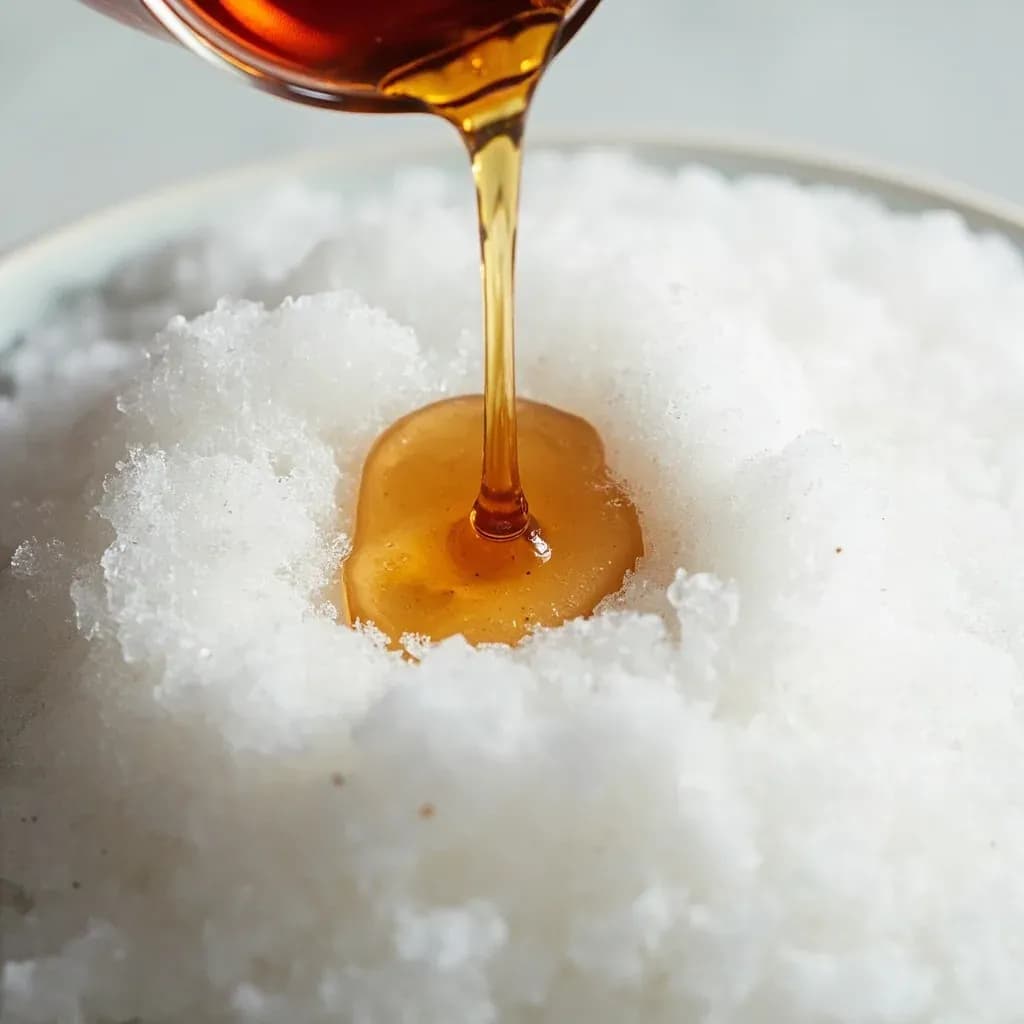
Drizzling hot boiled maple syrup onto packed snow so it sets into a chewy taffy.
Tire sur la neige is a Quebec tradition where maple syrup is boiled to the soft-ball stage and poured in ribbons over clean packed snow. The cold snow shocks the hot syrup, crystallizing it just enough to set into a soft, chewy taffy that is rolled onto a stick. It is a sugar-shack ritual, and the syrup must be cooked to the right temperature, around 112 to 115 degrees Celsius, for the taffy to set properly.
Tire sur la neige — literally "pulled on the snow" — is a Quebec sugar-shack ritual in which maple syrup, boiled down to the soft-ball stage, is drizzled in thin ribbons onto a bed of fresh snow, where it shocks into a glossy, chewy taffy that is lifted off with a small wooden stick and eaten on the spot. The technique is one of the oldest forms of instant candy in North America, born from the same harvest that fills the sap buckets: when the evaporator syrup reaches the right concentration, a cook wheels a tray of packed snow to the door and diners build their own sweets in real time. It matters as much for its theatre as for its flavour, because the brief window between ladle and lift is what turns a pour of hot sugar into something pliable rather than brittle — or, worse, a syrupy soak that never sets.
The behaviour of the candy comes down to two opposing forces: the concentration of sugar in the boiled syrup, and the brutal cold of the snow acting as a heat sink. At roughly 112–115 °C / 234–240 °F the syrup has lost enough water to hold a shape once it is shocked, but not so much that it has crossed into hard-crack territory and become glass. The snow cools the underside of each ribbon almost instantly while the top stays glossy and warm for a few seconds longer, which is why a properly timed ribbon can be lifted cleanly and wound around a stick. Get the syrup too thin and it melts into the snow; get it too thick or wait too long and it snaps. When the balance is right, the result is pure maple in its most concentrated, least adulterated form — no butter, no cream, no beating, just sap reduced to its essence and tempered by winter.
- Difficulty
- Medium
Types & varieties
The full French name of the classic snow-tempered maple taffy served on a stick — the version most people picture when they hear the technique
Sister tradition in which reduced maple syrup is poured onto snow and judged by feel rather than thermometer; the name simply means "hot taffy"
A November 25 folk tradition of pulling hot reduced syrup into long sticky threads, historically made before the new season's syrup arrived and often performed over snow
A modern sugar-shack finish in which the freshly poured snow ribbon is topped with a dab of butter or a small dollop of whipped cream before it is lifted off
How to do it
- 1
Reduce the maple syrup
Pour pure maple syrup into a heavy saucepan over medium-high heat. Bring it to a steady boil and skim any foam that rises. Clip a candy thermometer to the side and cook until the syrup reaches 112–115 °C / 234–240 °F, the soft-ball stage. This concentrates the sugars so the syrup will set instead of soaking into the snow.
- 2
Prepare the snow bed
While the syrup boils, fill a clean sheet pan, wooden tray, or long platter with fresh, dry snow several centimetres deep. Pack it lightly so the surface is flat and even. Set out your wooden sticks beside the tray so they are ready to grab quickly.
- 3
Drizzle ribbons onto the snow
Working fast, use a ladle to pour the hot syrup in long, thin, parallel ribbons across the snow, about 2–3 cm wide. Pour in a single steady motion rather than in blobs, so each ribbon sets as its own piece rather than merging with its neighbour.
- 4
Cool briefly
Let the ribbons rest on the snow for 20–40 seconds. They should look glossy and set on top but still be pliable underneath. If you wait too long they will become brittle; if you move too soon they will collapse and soak in.
- 5
Lift and eat
Slide a wooden stick under one end of a ribbon, lift it off the snow, and either wind it around the stick or eat it directly from the stick. Repeat with the remaining ribbons, ladling fresh hot syrup onto the snow bed as needed.
The science of the soft-ball stage
Maple syrup is roughly two-thirds sugar and one-third water when it comes off the evaporator, and most of what a cook does during tire sur la neige is drive off enough of that water to change the syrup's physical state. At soft-ball stage the sugar concentration is high enough that, when a drop is plunged into cold water, it forms a ball that flattens under its own weight between the fingers. Spread in a thin ribbon onto snow, that same syrup crosses two transitions almost at once: it cools below its working temperature from underneath while the surface remains fluid, then sets into a glassy strip with a pliable core. The ribbon stays liftable for about 20–40 seconds — long enough to wind onto a stick, short enough that a kitchen can keep ladling without stopping.
- Below 112 °C / 234 °F the syrup is too thin and soaks into the snow instead of setting
- Above 115 °C / 240 °F the syrup is past soft-ball and will snap rather than bend
- The snow is not just decorative; it conducts heat out of the ribbon fast enough that a 2–3 mm layer sets in under a minute
- Maple sugar concentration in finished syrup gives tire sur la neige a chewier, more melt-in-mouth texture than cane-sugar taffies at similar temperatures
Choosing and packing the snow
Snow is the only ingredient in tire sur la neige that a cook cannot buy, and its quality decides the dish. The ideal is fresh, dry, powdery snow that fell within the last day or two and has never been walked on, driven over, or melted and refrozen. Pack it firmly into a clean sheet pan, wooden tray, or long platter so the surface is flat and at least a few centimetres deep; loose snow insulates too well, while a thin layer warms up under the first few ladles and stops doing its job.
- Avoid icy or crusty snow — it makes the syrup skid and crack instead of forming an even ribbon
- Avoid slushy snow — the water content stops the syrup from setting cleanly
- A metal sheet pan conducts cold better than a wooden board and keeps the surface steady longer
- City snow near salted roads is not safe to eat; use snow collected from a clean deck or yard away from traffic
Common uses
Tips & pitfalls
- Use fresh, dry, packed snow at least a few centimetres deep; icy or refrozen snow makes the syrup snap and crystallize instead of forming a ribbon
- Pull the syrup off the snow within 20–40 seconds, before it stiffens too much to lift cleanly
- Keep the syrup at temperature and ladle in steady ribbons rather than pools, so each strip sets into its own piece
- If you do not have a thermometer, drop a small bead into cold water: it should form a soft, pliable ball that flattens between your fingers
- Lay the sticks beside the ribbons ahead of time and keep them within reach, because the window between set and over-firm is short
- Use golden or amber syrup for a more pronounced maple flavour; very dark syrup gives a deeper, almost molasses-like chew
- Eat the candy shortly after pouring; it loses its signature chew as it fully cools and dries
- A common mistake is boiling the syrup past soft-ball — once it reaches firm- or hard-ball the ribbon will not bend at all and the batch is essentially wasted
- Another common mistake is using syrup that has already been heavily reduced for storage; start from fresh syrup, not leftovers, for the right water content
Good to know
- Origin
- Quebec and broader French-Canadian tradition, tied to the cabane à sucre (sugar shack) ritual
- Season
- Late winter to early spring during the maple harvest, typically March–April in Quebec
- French name
- Tire sur la neige (also written tire d'érable sur la neige)
- Etymology
- "Tire" derives from the French verb "tirer," meaning to pull or draw, referring to the way the candy is lifted off the snow
- Target syrup stage
- Soft-ball stage, roughly 112–115 °C / 234–240 °F on a candy thermometer
- Yield
- Roughly 1 L of maple syrup yields enough taffy ribbons to serve about 6–8 people
- Snow requirement
- Fresh, clean, dry, packable snow at about −5 °C or colder; not icy, not slushy, not refrozen
- Total time
- 20–40 minutes including boiling the syrup, with about 5 minutes of active pouring
Also called
tire sur la neige · maple taffy · snow taffy
Related

Confit
Cook slowly submerged in fat for silky tenderness and keeping

Cure
Draw out moisture with salt and time to preserve and concentrate

Pickle
Steep in acidic brine for bright, tangy, crunchy preservation

Ferment
Let friendly microbes transform food into tangy, complex flavor

Marinate
Soak in a seasoned mix to flavor and tenderize before cooking

Brine
Soak in salt water so meat stays juicy and seasoned throughout

Dehydrate
Slowly dry out moisture to concentrate flavor and extend shelf life

Cold-Smoke
Perfume cured food with smoke without cooking it through