Water & Steam
Steeping Kompot
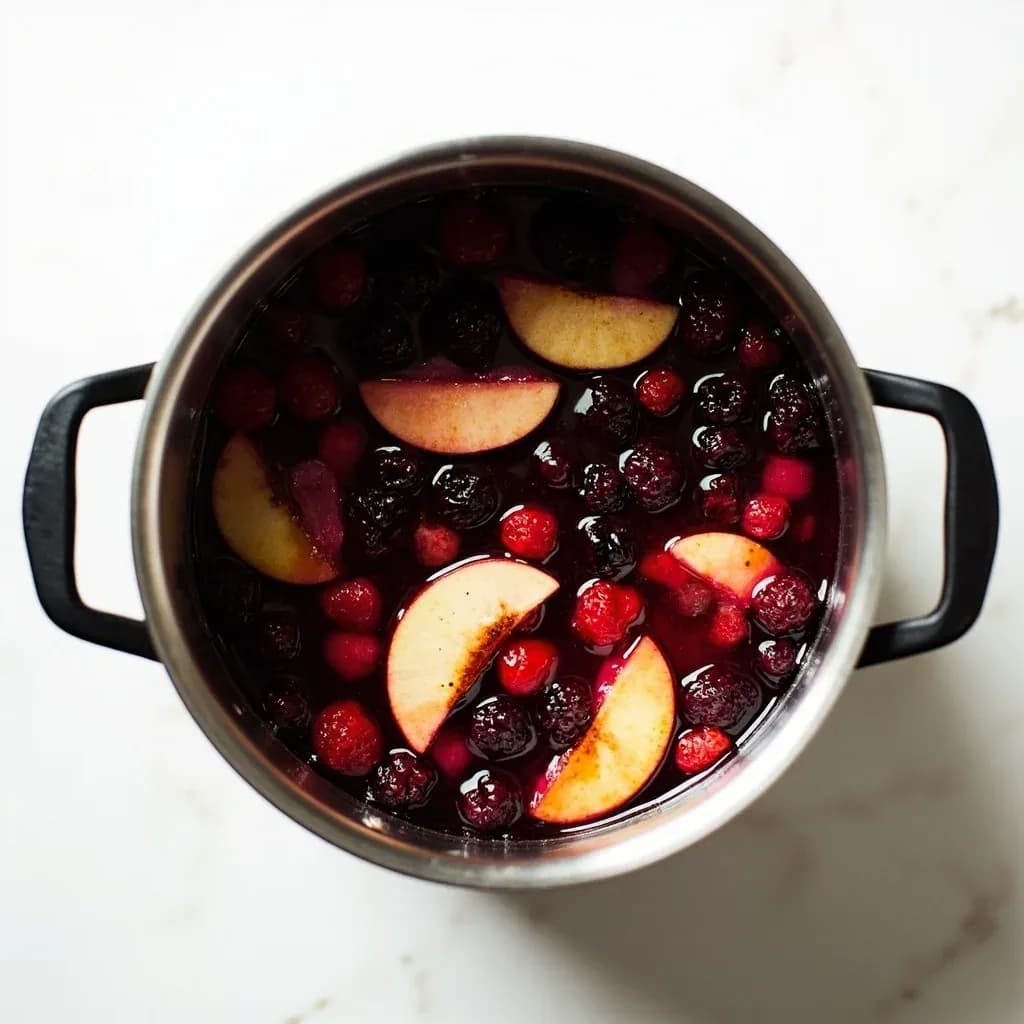
Gently simmering then resting fruit in sweetened water to make the Eastern European drink kompot.
Kompot is made by briefly simmering fresh or dried fruit in sweetened water, then letting it steep off the heat so the liquid draws out color, sweetness, and aroma. The resting step is key: the fruit continues to release flavor as the pot cools, producing a clear, lightly sweet beverage served chilled or warm. It is a common way to use seasonal or surplus fruit across Eastern Europe.
Steeping kompot is the Eastern European technique for coaxing vivid fruit flavor into a lightly sweetened liquid by giving it a brief simmer and then leaving it to rest, covered, for hours. Unlike a Western compote — which is cooked down to a soft, spoonable fruit — kompot is brewed like a tisane or a delicate punch: the fruit is barely softened, the liquid is drunk, and the poached fruit is often eaten alongside as a light dessert or stirred into porridge. The defining move is the covered steep after the heat goes off, which lets the fruit surrender its juice and color slowly without breaking down into jam.
The technique matters because it produces a clean, intensely aromatic drink that captures the fruit's freshness, even when the fruit itself is past its prime. A short simmer extracts the deep, cooked-fruit notes; the long, covered steep extracts the bright, raw-fruit aromatics that would otherwise evaporate. The result is a ruby or amber liquid that tastes of the fruit at two different points in its life. It is the default non-alcoholic table drink across Russia, Ukraine, Belarus, the Caucasus, and the Balkans, and in Ukrainian tradition the dried-fruit version (uzvar) is the ceremonial drink of the Sviata Vechera, the twelve-dish Christmas Eve supper.
Practically, kompot is one of the most forgiving things a cook can make: no special equipment, no precise timing, and a built-in use for slightly underripe or surplus fruit. A heavy lidded pot, fruit, water, and sugar are all that stand between you and a pitcher of something genuinely worth drinking.
- Difficulty
- Easy
Types & varieties
Made in season with ripe fresh fruit — cherries, apricots, strawberries, peaches, plums.
Ukrainian and Russian holiday version using dried apples, pears, prunes, raisins, and dried apricots; steeped longer, often sweetened with honey, and served warm.
Cherries, sour cherries, raspberries, or currants; quick simmer, deep ruby color.
Apricots, plums, peaches; pitted and simmered just a few minutes so they hold their shape.
Classic autumn version; the standard everyday kompot in many households.
Perhaps the most iconic single-fruit variety; tart, vivid red, balanced with a heavier hand of sugar.
Strong, syrupy brew made for winter bottling; diluted 1:1 or 1:2 with cold water or soda when serving.
Older or sweetened kompot left at room temperature ferments mildly into a lightly fizzy, slightly tangy drink.
How to do it
- 1
Prepare the fruit
Wash 300–500 g of fruit per liter of water. Pit cherries, apricots, and plums; halve or quarter apples and pears; leave small berries and sour cherries whole. For dried fruit, rinse briefly, pick over, and discard any with off smells.
- 2
Make the syrup
Bring 1 L of water to a boil in a heavy, non-reactive pot. Add 80–150 g sugar — more for tart fruit, less for ripe berries and pears — and stir until fully dissolved. Drop in a strip of lemon zest, a cinnamon stick, or a few cloves now, if using.
- 3
Add the fruit
Lower the fruit into the syrup and return the pot to a bare simmer. Do not let it boil hard; a vigorous boil clouds the liquid and shreds soft fruit.
- 4
Simmer briefly
Cook 3–5 minutes for berries, 5–8 minutes for stone fruit, and 8–15 minutes for apples, pears, or quince. The fruit should just yield at the edges — it will finish cooking in the steep.
- 5
Steep covered
Remove the pot from the heat, fit the lid on tightly, and leave it undisturbed. Steep 1–2 hours for fresh fruit, 4–6 hours (or overnight, transferred to the fridge) for dried fruit, until the liquid is deeply colored and flavorful.
- 6
Strain and cool
Strain through a fine sieve for a clear, jewel-like drink, or leave the fruit in for a more rustic, dessert-like presentation. Cool to room temperature, then chill thoroughly in the refrigerator.
- 7
Adjust and serve
Taste the chilled kompot and cut with cold still or sparkling water if it has concentrated too much. Serve in tumblers, optionally over ice, with or without the poached fruit alongside.
The simmer-then-steep principle
The technique works because each phase of heat does a different job, and combining them produces a more layered drink than either could alone. A short simmer in sweetened water drives flavor deep into the fruit's flesh and coaxes out the cooked, jammy notes that give kompot its base. Then the covered steep — typically one to six hours, often overnight in the fridge for dried fruit — lets the residual heat (and later, cool maceration) pull the fruit's brighter, more volatile aromatics into the liquid without losing them to evaporation. Boiling hard for a long time would do the first job and destroy the second: the liquid ends up cloudy, the fruit collapses, and the result reads as a thin sauce rather than a drink. The covered steep is what keeps the aromatics in the pot and the fruit intact.
- The lid is not optional — it is the second extraction vessel.
- Soft berries need only a 3–5 minute simmer and a 1–2 hour steep; dense apples or dried fruit need longer on both ends.
- Stirring during the steep is unnecessary and risks breaking the fruit.
Seasonal and holiday kompot
Two kompots are worth knowing by name because each has its own season and purpose. Summer kompot is made from fresh garden fruit at its peak, chilled, and drunk within a day or two — it is the everyday table drink, served in tumblers alongside lunch and dinner. Winter uzvar is brewed from dried apples, pears, prunes, raisins, and dried apricots, steeped for hours (often overnight), and served warm, sometimes sweetened with honey instead of sugar. At the Ukrainian Sviata Vechera, a spoonful of kutia (cooked wheat with poppy seeds and honey) is placed in the glass and uzvar is poured over it as one of the twelve ritual dishes. A third form, the zakrutka or concentrate, is brewed strong and bottled in late summer so the family has fruit drink through the cold months; it is diluted with cold water or sparkling water at the table.
- Use dried fruit that is still pliable and fragrant — bone-dry, leathery fruit will need a longer simmer before the steep.
- Honey should be added after the steep, never boiled, to preserve its aromatics.
- Concentrate is bottled hot into sterilized jars or bottles and keeps for several months in a cool pantry.
Common uses
Tips & pitfalls
- Use a heavy, lidded pot — the trapped steam during the steep is part of the extraction, and a tight lid keeps the aromatics in the pot.
- Add sugar to the water before the fruit goes in, never after, so the syrup is fully dissolved and the fruit is poached evenly rather than shocked.
- Pull the pot off the heat the moment the fruit softens at the edges; the covered steep finishes the work and prevents the fruit from collapsing into mush.
- For a clear, jewel-like drink, strain through a fine sieve or a layer of cheesecloth and chill thoroughly before serving.
- Taste the fruit before you sweeten — sour cherries, quince, and underripe plums want noticeably more sugar than ripe strawberries or sweet pears.
- Do not boil hard for long; a bare simmer (or even a long off-heat infusion of dried fruit) keeps the liquid clear and the fruit intact.
- Add a strip of lemon peel, a cinnamon stick, or a few whole cloves during the steep for a warmer profile, especially in autumn and winter versions.
- Use enamel, stainless steel, or glass — uncoated aluminum or iron will darken the fruit and discolor the liquid.
- Re-stew the same fruit a second time with fresh water and a little sugar for a lighter second brew rather than discarding it.
- Common mistake: simmering fresh berries for 20 minutes or more — they collapse into a cloudy, jammy liquid instead of a clean, fragrant drink.
Good to know
- Origin
- Eastern Europe; the word derives from Latin 'composita' (composed/mixture) via French 'compote' and was adopted into Russian and other Slavic languages.
- Traditional regions
- Russia, Ukraine, Belarus, Poland, Bulgaria, Romania, Moldova, the Caucasus, and Central Asia.
- Form
- A sweetened fruit infusion — a beverage (and sometimes a light dessert) rather than a thick compote.
- Typical fruit-to-water ratio
- Roughly 300–500 g fruit per 1 L water; sugar 80–150 g per L, adjusted to fruit sweetness.
- Cook time
- 3–5 minutes for soft berries, 5–8 minutes for stone fruit, 8–15 minutes for apples, pears, or quince; total active time under 20 minutes.
- Steep time
- 1–2 hours for fresh fruit, 4–6 hours for dried fruit (often overnight in the fridge), until the liquid is deeply colored and flavorful.
- Storage
- Refrigerated 3–5 days in a covered pitcher; concentrated stock can be bottled and pasteurized for months.
- Serving temperature
- Traditionally chilled in summer, room temperature or warm in winter; uzvar is served warm at the Ukrainian Sviata Vechera (Christmas Eve supper).
Also called
Steeping Kompot · Kompot · Compote Drink
Related

Boil
Cook in vigorously bubbling liquid at full rolling heat

Simmer
Hold liquid at a gentle shimmer for tender, unhurried cooking

Poach
Cook gently in barely-trembling liquid for silky, tender results

Steam
Cook in rising vapor to keep color, nutrients, and shape intact

Blanch
Plunge briefly in boiling water, then shock cold to lock color

Braise
Sear, then cook slow in a little liquid until fall-apart tender

Stew
Simmer bite-sized pieces fully submerged into a rich, unified pot

Sous-Vide
Seal and cook in precise warm water for edge-to-edge doneness