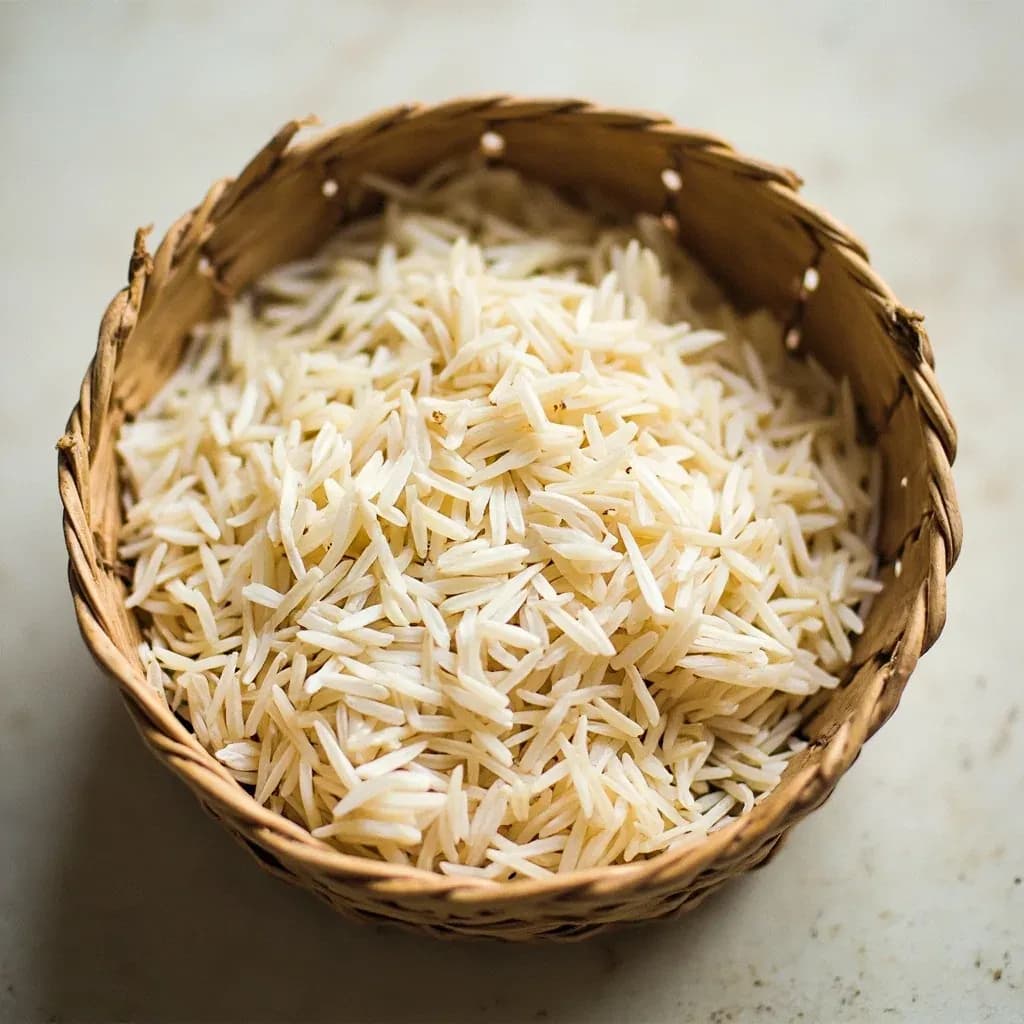
Prep & Assembly
Winnowing
Tossing grain or beans in the air so the breeze carries off chaff and husks.
Winnowing separates edible grain, rice, or pulses from their lighter chaff and husks by tossing them on a flat tray or basket so a breeze blows the debris away while the heavier kernels fall back. It is an ancient threshing-floor technique still used in many home and village kitchens to clean staples before cooking. The skill lies in the rhythmic toss and catch that keeps the grain airborne just long enough for the wind to do its work.
Winnowing is a density-based separation technique built on a simple physical truth: chaff, husks, and other lightweight debris will sail away on a moving air current, while sound grain — being heavier — falls back to a catching surface. It is one of the oldest food-preparation techniques known, depicted in Egyptian tomb paintings and still practiced in traditional form across East and Southeast Asia, the Mediterranean, and smallholder farming communities worldwide. In the modern industrial grain chain, winnowing happens invisibly inside combines, fanning mills, and seed cleaners, so most home cooks never touch it directly — until they work with home-threshed grain, freshly roasted coffee, dehulled buckwheat, or any whole seed that still carries its papery skins.
The technique depends on a density differential between what you want to keep and what you want to lose. Two conditions are non-negotiable: the grain and chaff must be thoroughly dry (moisture makes chaff cling), and the airflow must be steady rather than gusty. Get either wrong and you will either fail to lift the chaff or scatter good grain into the breeze. Winnowing is also a poor general cleaner — it removes only what is lighter than the grain, so stones, similar-weight weed seeds, and fine dust ride right back down with the crop and still need screens, sieves, or a gravity table to finish the job.
In the grain-processing workflow, winnowing sits squarely between threshing (loosening the grain from the husk) and any subsequent sifting, screening, or milling. Treat it as a finishing pass rather than a wholesale cleaning step, and pair it with hand-picking or screening when the lot is dirty or destined for storage.
- Difficulty
- Medium
Types & varieties
Traditional method using a shallow flat woven basket (Thai nid, Chinese winnowing tray, French van, and similar regional forms); grain is tossed upward and caught while a natural breeze carries the chaff away.
Multi-tined wooden fork used to scoop and flick threshed grain into the air; common in European and Levantine traditions.
Flat hand-held fan used to direct a stream of air across a pour rather than relying on natural wind; common in East and Southeast Asia.
Mechanical device with an internal fan that winnows continuously; standard on small grain farms and in seed-cleaning operations.
Practical home setup: a box fan on its lowest setting, pointed sideways across a sheet or tray, while grain is poured in a thin ribbon from waist height.
How to do it
- 1
Thresh first
Winnowing comes after threshing. Rub, beat, flail, or otherwise loosen the grain from its husks so the chaff is fully detached and free to float away.
- 2
Dry the grain
If the grain or chaff is even slightly damp, sun-dry it for an hour or until bone-dry. Moisture makes chaff cling to the kernel and defeats the separation.
- 3
Set up a catching surface
Spread a clean tarp, sheet, or wide shallow basket below the airstream so any overshoot can be recovered and re-poured rather than lost on the floor.
- 4
Establish steady airflow
Work outdoors in a light, steady breeze, or set a box fan on its lowest setting blowing horizontally across the work area. Steady airflow beats a gusty one every time.
- 5
Pour in a thin ribbon
From waist height, pour the grain slowly and continuously from a flat basket or bowl across the airstream in a shallow arc. A thin stream separates cleanly; a thick glug does not.
- 6
Let the air carry the chaff
Heavier grain falls onto the catching surface while lighter chaff, husks, and dust are blown sideways out of the stream and away from the pile.
- 7
Repeat
Re-pour the recovered grain two or three times. Between passes, swirl the pile gently to bring fresh chaff to the surface.
- 8
Finish by hand or with a screen
Pick out any remaining debris by hand, or follow up with a sieve or screen to catch fine dust that winnowing alone will not remove.
When home cooks actually need to winnow
Industrial milling, rice polishing, and seed-cleaning have made winnowing invisible to most modern kitchens — bags of flour, polished rice, and bagged dried beans arrive pre-cleaned. The technique returns to relevance whenever you handle an unprocessed or partially processed whole food:
- Home-roasted coffee: a fresh roast sheds a surprising volume of silvery chaff that should be winnowed away before the beans rest and degas.
- Home-milled heritage or homegrown wheat, spelt, rye, or einkorn after threshing by flail, club, or foot-stomping.
- Dehulled buckwheat groats that still carry fragments of black hull.
- Homegrown dried beans, peas, or lentils destined for storage — winnowing lifts dust, pod fragments, and broken seed coats before they attract weevils.
- Hand-threshed rice or small grains like amaranth and teff, where the chaff is fine and benefits from a fan-assisted pour.
What winnowing cannot do
A common misconception is that winnowing is a complete cleaning step. It is not. It separates only by density relative to a moving air column, so anything that weighs about the same as the grain will fall right back into the cleaned pile.
- Stones and small pebbles — same density as grain, often heavier, will not lift off.
- Weed seeds of similar weight (wild oats, vetch, cockle) — require screens or a gravity table.
- Fine dust and soil — too heavy to sail far; follow up with a fine mesh screen.
- Light, immature, or hollow kernels — these are lighter than sound grain and will be lost with the chaff rather than retained, which is sometimes desired and sometimes not.
Common uses
Tips & pitfalls
- A steady, moderate breeze beats a gusty wind — gusts scatter grain and chaff alike and undo the separation.
- Bone-dry grain winnows cleanly; even slight dampness makes chaff cling stubbornly to the kernels.
- Always work over a sheet or tarp so missed grain can be swept up and re-poured rather than lost on the ground.
- Aim a box fan sideways across the pour, not down — a sideways stream separates grain more cleanly.
- Pour in a thin, continuous ribbon; thick glugs do not separate and just push chaff deeper into the pile.
- Expect two or three passes to clear most chaff — a single pour is rarely enough.
- Do this outdoors, in a barn, or in a garage; chaff travels and will coat every indoor surface within range.
- Wear a dust mask for large batches; fine chaff and grain dust are irritating to lungs and sinuses.
- Winnowing removes only what is lighter than the grain — stones, similar-weight weed seeds, and fine dirt still need screens, gravity tables, or hand-sorting.
Good to know
- Principle
- Density-based separation: lighter chaff is carried off by moving air while heavier grain falls to a catching surface.
- Origin
- One of the oldest food-preparation techniques, depicted in Egyptian tomb paintings including the Tomb of Menna (~1400 BCE, 18th Dynasty) and known in nearly every traditional grain-growing culture.
- Etymology
- From Old English "windwian," "to expose to the wind"; cognate with Old Norse "vinda" and German "wannen."
- Workflow position
- Follows threshing and precedes sifting, screening, or milling.
- Traditional tools
- Flat woven winnowing basket or tray, multi-tined wooden winnowing fork, flat hand-held winnowing fan.
- Modern tools
- Fanning mill (mechanical aspirator), box fan for home-scale work, gravity table for fine separation.
- Conditions
- Requires steady, moderate airflow; works best outdoors in a light breeze or indoors with a box fan on low, pointed across the work area.
- Cultural note
- The "winnowing fork" appears as a metaphor in Matthew 3:12 and Luke 3:17, reflecting how central the tool was to ancient food production.
Also called
Winnowing · Chaff Separation
Related

Whisk
Beat ingredients smooth and aerated with a looping wire motion

Sift
Pass dry ingredients through mesh to aerate and remove lumps

Strain
Pour through mesh to separate solids from liquid for a smooth result

Filter
Pass liquid through fine material to clarify out the smallest particles

Rice
Press cooked potatoes through small holes for fluffy, lump-free texture

Mash
Crush soft cooked food into a rustic, creamy purée

Grind
Crush food into a coarse to fine texture, from spices to meat

Grate
Shred food into fine bits against a sharp-toothed surface