Transform & Preserve
Roller / Reduction Milling
Grinding grain through paired rollers to separate bran and refine flour.
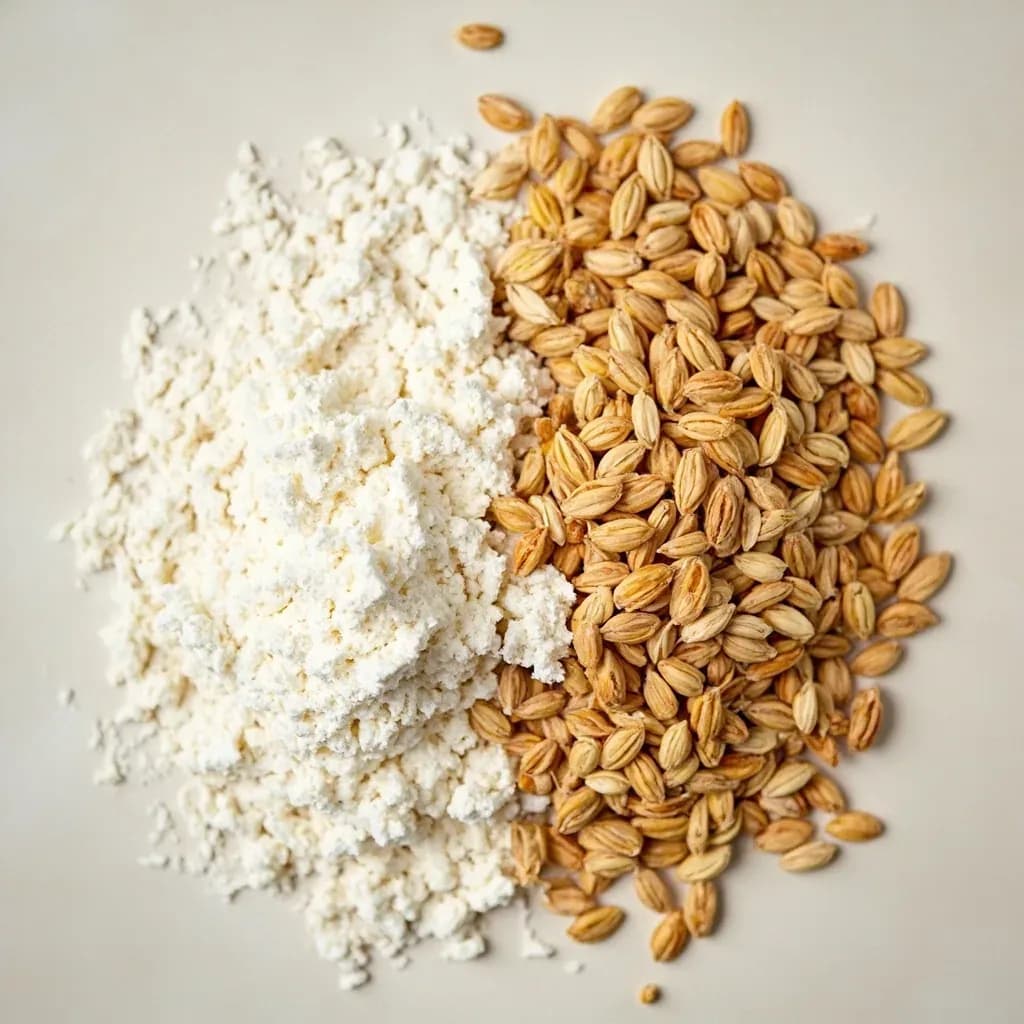
Roller milling crushes grain between successive pairs of metal rollers, using break rolls to crack the kernel and reduction rolls to grind the inner endosperm into fine flour while sifting out bran and germ. This staged system gives consistent, refined flour at scale and lets millers blend streams to a target grade. It largely replaced stone milling in modern flour production.
Roller milling is the industrial process that defines nearly every bag of flour a baker buys. Developed in Hungary in the 1830s and refined through the late 19th century, it replaced stone milling because paired steel rollers, rotating at different speeds, can be tuned to separate the wheat kernel into its parts with a precision stones cannot match. The first rolls open the kernel and scrape pure endosperm away from the bran; later, smooth reduction rolls pulverize that endosperm into the fine, uniform powder we recognize as white flour. For a cook, the importance of the technique is not operating the equipment but understanding what the mill has done to the flour in your pantry, and why a long-patent cake flour and a short-patent bread flour can come from the same wheat yet behave so differently.
The genius of the system is that it produces many different flour streams from a single run, which the miller then recombines to hit a target protein, ash, and color. The cleanest streams come from the first break and the earliest reductions, yielding bright, low-ash flour ideal for cakes and pastry; later streams carry more bran color and stronger flavor, and are usually blended into bread flours. Because the rollers and the sifting that follows pull the germ out of the flour stream, commercial white flours are low in fat and keep for many months on the shelf, but they have lost the toasty, oily richness of the whole kernel.
For a home baker, the practical consequence is that the texture and behavior of any flour, especially whole wheat, is a direct result of how the mill treated the bran. Roller-milled bran is cut into very fine, sharp particles that can pierce gluten strands and oxidize quickly, producing tighter, sometimes bitter loaves unless hydrated generously. A stone mill, by contrast, fractures bran into coarser flakes, which is why many artisan whole-wheat breads read as sweeter and more open-crumbed.
- Difficulty
- Hard
Types & varieties
First stage using sharply corrugated rolls to open the kernel and scrape endosperm away from bran in successive passes (1st break, 2nd break, 3rd break, and so on).
Smooth-roll stages that progressively pulverize purified middlings into finished flour of progressively lower grade (1st midds, 2nd midds, low grade).
Extensive break and reduction sequence (sometimes 20+ roll stands) that maximizes pure white flour yield; produces very white, low-ash flour at roughly 0.40–0.50% ash.
Fewer passes; coarser granulation, higher ash, and stronger baking flavor because more of the inner endosperm is retained.
All the mill streams (breaks and reductions) recombined into a single flour; a standard supermarket all-purpose or bread flour is typically a straight-grade blend.
Coarser roller-milled product used for pasta, couscous, and some breads, made by widening the roll gap and using coarser corrugation in the break system.
Some specialty mills pair roller breaks with pin or hammer mills for the final reduction stage; common in whole-grain lines.
How to do it
- 1
Clean and temper the wheat
Screen and aspirate the grain to remove chaff, dust, stones, and broken kernels, then add water and rest in tempering bins for 8–24 hours so the bran toughens and the endosperm reaches a uniform ~15% moisture. Hard wheats need longer tempering and higher moisture than soft wheats.
- 2
First break
Pass the tempered wheat through a pair of corrugated rolls set relatively wide apart. The flutes shear the kernel open and scrape out coarse endosperm (1st break semolina) while leaving large bran flakes. Differential roll speed is set around 2.5:1.
- 3
Sift and classify
Run the stock over a sequence of plansifters and purifiers. Purifiers use air to lift lighter endosperm particles (middlings) away from bran and germ, splitting the break stock into clean middlings, bran, and finished break flour for separate streams.
- 4
Subsequent breaks
Send the bran onward through 2nd, 3rd, and 4th (sometimes 5th) break roll stands, each set progressively closer with rolls corrugated more finely. Each break yields a specific grade of flour and middlings; the bran emerges at the tail as feed.
- 5
Reduction rolls
Feed the purified middlings through a series of smooth, polished roller stands at close gap. Smooth rolls press and shear endosperm into fine flour in stages labeled 1st reduction, 2nd reduction, and so on, with each pass producing slightly darker, higher-ash flour.
- 6
Recombine into flour grades
Re-blend selected streams at the flour blender to hit a target protein, ash, and color. Long-patent flours draw from the cleanest early streams; short-patent and straight flours include more of the later reduction streams.
- 7
Bag and store
Sift or pin-mill the finished blend for a final uniform granulation, then bag. Cool, dry storage (below ~24 °C and 60% RH) keeps roller-milled white flour stable for 6–12 months; whole-grain roller-milled flour is best used within 2–3 months because of the still-present germ oils.
Reading a flour bag through the streams
Every mill stream has a personality, and most of what a flour label tells you, or fails to, is downstream of how that stream was produced. The earliest break and reduction streams are the palest, lowest in ash, and gentlest in flavor; they form the basis of cake and pastry flours, where tenderness and a clean white crumb matter more than strength. Middle streams carry slightly more bran color and protein; they are the backbone of all-purpose and standard bread flours. The final reduction streams, often called low grade or fourth clear, are darker, higher in ash, and packed with flavor; they are usually diverted to specialty flours or feed but are prized in some artisan blends for their depth.
A long-patent flour draws from the cleanest early streams and is the brightest, weakest in gluten, and most shelf-stable. A short-patent flour is drawn from later streams, is slightly darker, and develops stronger gluten networks, which is why many high-gluten bread flours in the U.S. are drawn from later, stronger streams or are clear grades. A straight-grade flour, the everyday supermarket workhorse, is the entire mill run recombined, with most of the germ removed; its protein and ash sit squarely between the two patents. Knowing this lets a baker decode vague claims: a flour marketed as high-extraction is, in practice, closer to a straight-grade or even above it, retaining more of the bran and germ than a long-patent, while first clear is a specific, stronger late stream traditionally used for rye-bread blending and Jewish rye formulas.
- First break and early reduction: palest, lowest ash, weakest gluten, ideal for cakes and pastry.
- Middle streams: balanced protein and color, the basis of all-purpose and most bread flours.
- Late reduction / low grade: darker, stronger flavor, higher ash, often diverted to specialty or feed.
- Long-patent: early streams only, very white, low-ash, mild.
- Short-patent: later streams, more color, more strength.
- Straight-grade: the full mill run recombined, the supermarket default.
Roller vs. stone: what it means for your bread
Stone milling fractures the kernel with a single shearing pass between abrasive millstones, leaving bran as coarse, ragged flakes and the germ largely intact. Roller milling runs the kernel through a dozen or more precisely tuned passes, shearing bran into very fine, sharp particles and pulling the germ out as a separate stream. The result is the fine, bright, shelf-stable white flour that built the modern baking industry, but it is also the reason roller-milled whole wheat behaves the way it does: those tiny, sharp bran shards cut into developing gluten strands and oxidize phenols quickly, producing a tighter crumb and a more bitter, sometimes metallic flavor unless the dough is given extra hydration and a longer autolyse.
Stone-ground whole wheat, by contrast, carries coarser bran that punctures dough less aggressively, plus the germ's oils and enzymes, which add nutty depth and a softer feel in the mouth. It also goes rancid faster and is typically sold in smaller bags. None of this makes one technique better; the right choice depends on whether you want predictable, neutral cake and bread flour (roller) or the deeper, more variable flavor of the whole kernel (stone). The practical tip is to treat the two flours as different ingredients: roller-milled whole wheat benefits from a 20–30 minute soak, a higher hydration (often +5–8% over white flour formulas), and the addition of vital wheat gluten or a percentage of bread flour to compensate for the damaged network.
- Stone: coarse bran, intact germ, deeper flavor, shorter shelf life, gentler on gluten.
- Roller: fine bran shards, germ removed, neutral flavor, long shelf life, harder on gluten in whole-grain form.
- Compensate roller-milled whole wheat with higher hydration and a longer autolyse.
- If switching between the two, expect a 5–8% rise in hydration and a denser crumb if you do not.
- Vital wheat gluten at 1–2% helps roller whole wheat develop a more open crumb.
Common uses
Tips & pitfalls
- Temper the grain properly: too dry and the bran shatters into the flour (high ash); too wet and the endosperm smears and clogs the rolls.
- Match roll corrugation and differential to the wheat class: hard wheats want sharp, deep flutes; soft wheats want dull, fine flutes.
- Differential speed is what does the work: a 2.5:1 ratio scrapes rather than crushes, which keeps bran in large flakes for easy sifting.
- Milling creates heat — long or hard grinding without air cooling can denature gluten proteins and gelatinize starch, weakening doughs.
- Do not expect a roller mill to deliver a whole wheat identical to stone-milled flour: the roller process pulverizes bran into very fine particles that pierce gluten strands and produce denser, more bitter loaves unless hydrated generously.
- True home roller mills (Marga, Schnitzer-style) are slower and quieter than stone or impact mills but less common and harder to set precisely; they shine for crack-and-granulate work, less so for fine pastry flour.
- If a home baker wants roller-mill-style uniformity, blend multiple low- and high-protein flours and sift — you will not replicate the streams, but you can mimic the protein spec.
- Watch the sifter: granulation that drifts finer over a long run signals roll wear or drift, not better flour.
Good to know
- Origin
- Developed in Hungary in the 1830s–1840s; commercial roller milling spread through Europe in the second half of the 19th century and largely replaced stone milling by the early 1900s.
- Mechanism
- Pairs of horizontal steel rollers rotate against each other at differential speeds (typically about 2.5:1 fast-to-slow), which shears and scrapes rather than crushes the grain.
- Roller types
- Break rolls are corrugated (fluted) and become smoother with each successive pass; reduction rolls are smooth, polished steel.
- Tempering
- Wheat is conditioned with water to roughly 14.5–16.5% moisture (hard wheat higher, soft wheat lower) for 8–24 hours before milling to toughen the bran and mellow the endosperm.
- Number of passes
- Modern flour mills route grain through roughly 4–5 break stages and 8–12 reduction stages, with sifting and purification between each.
- Extraction
- A standard long-patent roller-milled white flour yields about 70–78% of the wheat kernel; the rest is bran, germ, and low-grade feeds.
- Particle fineness
- Roller-milled white flour is very fine and uniform, typically 80–100% through a 100-mesh sieve, with most starch granules intact.
- Germ handling
- The germ is usually removed in roller milling because its oil shortens shelf life; this is why most commercial white flours lack the germ's flavor and nutrients.
- Heat control
- Roll friction generates modest heat; industrial mills cool the stock with air to keep flour below roughly 30 °C (86 °F) to protect gluten and starch.
- Equipment scale
- Industrial roller mills use rolls 250–1,000 mm long and 150–250 mm in diameter; small laboratory and farm roller mills exist at 100–200 mm length.
Also called
Roller Milling · Break-System Milling · Reduction Milling
Dishes that rely on it
Related

Confit
Cook slowly submerged in fat for silky tenderness and keeping

Cure
Draw out moisture with salt and time to preserve and concentrate

Pickle
Steep in acidic brine for bright, tangy, crunchy preservation

Ferment
Let friendly microbes transform food into tangy, complex flavor

Marinate
Soak in a seasoned mix to flavor and tenderize before cooking

Brine
Soak in salt water so meat stays juicy and seasoned throughout

Dehydrate
Slowly dry out moisture to concentrate flavor and extend shelf life

Cold-Smoke
Perfume cured food with smoke without cooking it through