East Asia
Edomae Sushi
Also: Edo-mae zushi, Tokyo-style sushi, Tsukiji sushi
Tokyo's hand-pressed nigiri tradition, born on the bay and refined over two centuries into one of the world's most exacting culinary art forms.
Edomae sushi is the style of nigiri-zushi that emerged in early 19th-century Edo (present-day Tokyo), originally sold from street stalls (yatai) along Tokyo Bay. Its defining character is the marriage of vinegared short-grain rice (shari) pressed by hand with cured, aged, or otherwise treated seafood caught from Edo-mae ('in front of Edo') waters. Unlike later styles, Edomae sushi relies on the itamae's skill in preserving and conditioning fish — through kombu curing, soy marination (zuke), simmering in sweet soy (tsume), or drying — rather than serving every fish raw. In its contemporary omakase form, the chef curates a progression of seasonal seafood, shaping each piece to order and handing it directly to the diner.
The flavour base
Shari (seasoned rice) seasoned with red vinegar (akazu) derived from sake lees, which imparts a richer, more umami-forward base than white rice vinegar; fish conditioned via curing, aging, or glazing rather than served uniformly raw.
Pantry staples
Key ingredients
Signature techniques
Signature dishes
Edomae Sushi on the table
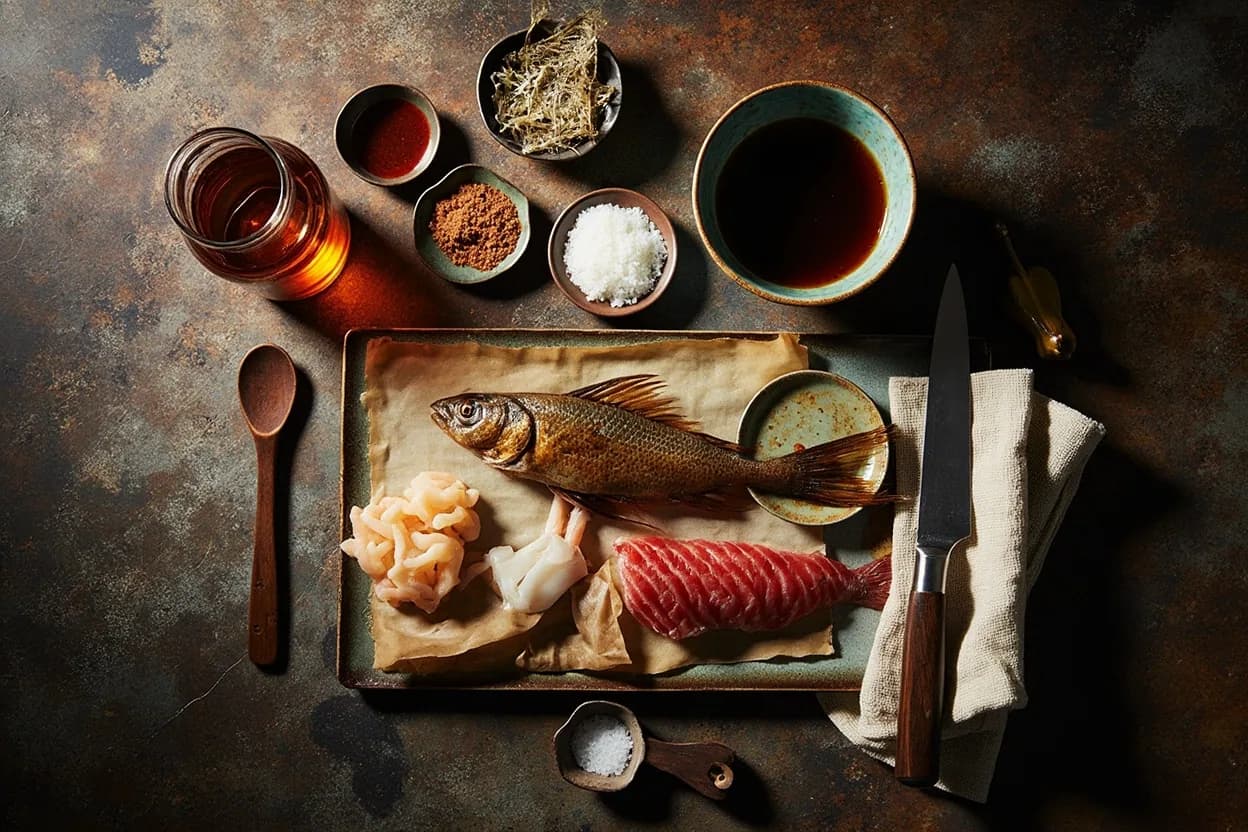


At the table
Omakase service proceeds as a sequence of 10–20 individual nigiri pieces chosen by the chef, traditionally served one by one directly to the diner. The progression moves from lighter white-fleshed fish (shiromi) through fatty fish (akami, toro), shellfish, and egg, closing with maki or a hand roll. Soup (usually hamaguri or miso) appears mid-meal or at the end. Sake or cold beer accompanies; green tea is served throughout. In older, casual settings (kaiten or neighborhood counters), diners may order à la carte from a seasonal list.
History & context
The style crystallized in Edo around the 1820s when vendors like Yohei Hanaya began selling pressed fish-on-rice at street stalls beside the Sumida River. The proximity of Edo Bay supplied an abundance of seasonal shellfish, shrimp, and fin fish. Because refrigeration did not exist, itamae developed curing, soy-marinating, simmering, and vinegaring techniques to make fish safe and delicious. After the Great Kanto Earthquake of 1923 scattered Tokyo sushiya apprentices across Japan, their methods spread nationally. Post-WWII prosperity elevated sushi from street food to restaurant art, and by the late 20th century, Tokyo's Ginza and Kagurazaka counters had codified the omakase progression. International recognition (UNESCO Washoku inscription, 2013) and global restaurant exports have made Edomae nigiri the world's reference point for sushi.
Regional variations
- Ginza/Kagurazaka high-end
Extremely austere omakase rooms — 8–12 seats, no printed menu, akazu shari mandatory, fish aged precisely in temperature-controlled cases.
- Tsukiji neighborhood style
More casual counter sushi evolved around the old central fish market; greater à la carte freedom, lighter rice seasoning, more affordable cuts.
- Toyosu market annexe counters
Post-2018 relocation of the central market brought a cluster of early-morning sushiya serving market workers, maintaining traditional cuts and tsume-heavy older preparations.
Related cuisines
Osaka's counter-dining tradition shares the chef-diner intimacy and dashi precision but is a full multi-course cooked meal rather than a rice-and-fish format.
- Kyoto Kaiseki
The formal Japanese tasting meal shares Edomae's seasonal progression and aesthetic restraint but is built on cooked dishes, not raw fish.
- Osaka Sushi (Hako-zushi)
Box-pressed sushi of Kansai — visually and technically distinct from Edomae hand-pressing; reflects a different regional preference for sweeter, more elaborate preparations.
Canonical recipes
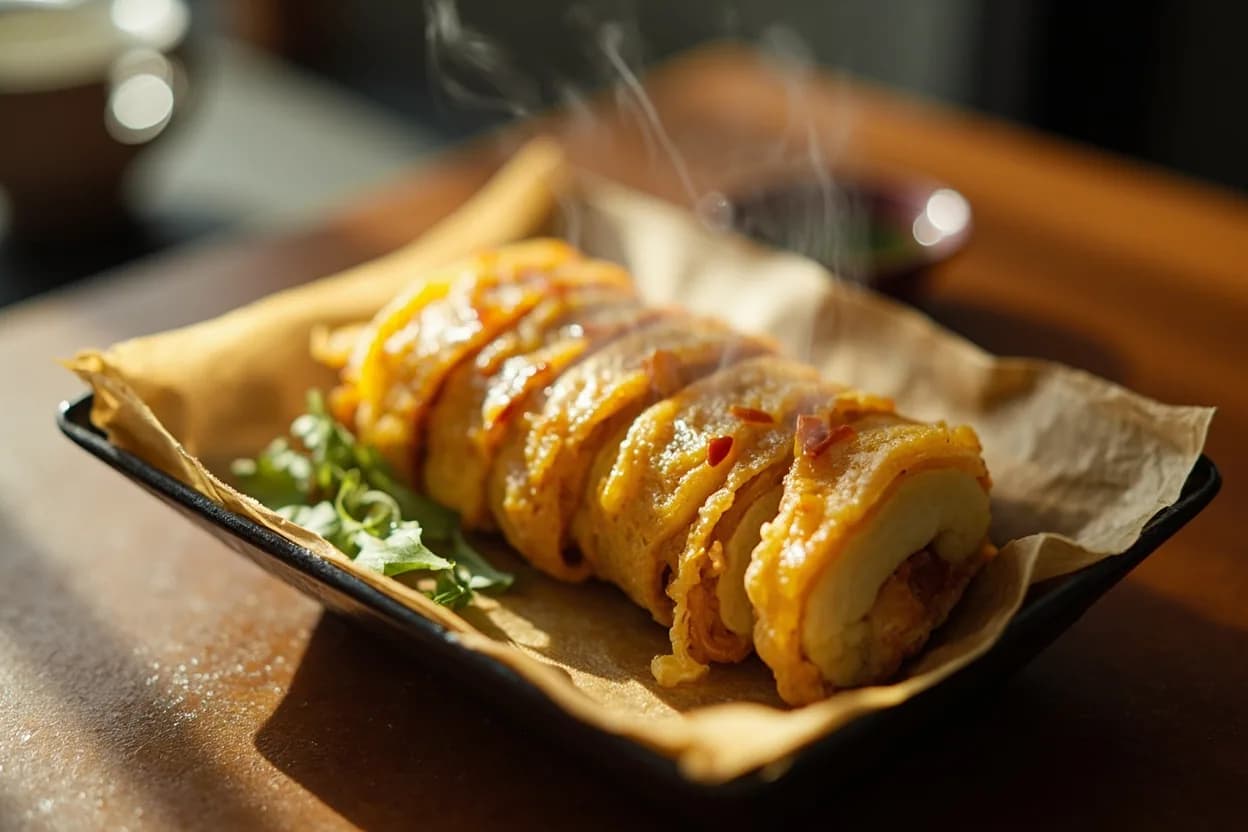
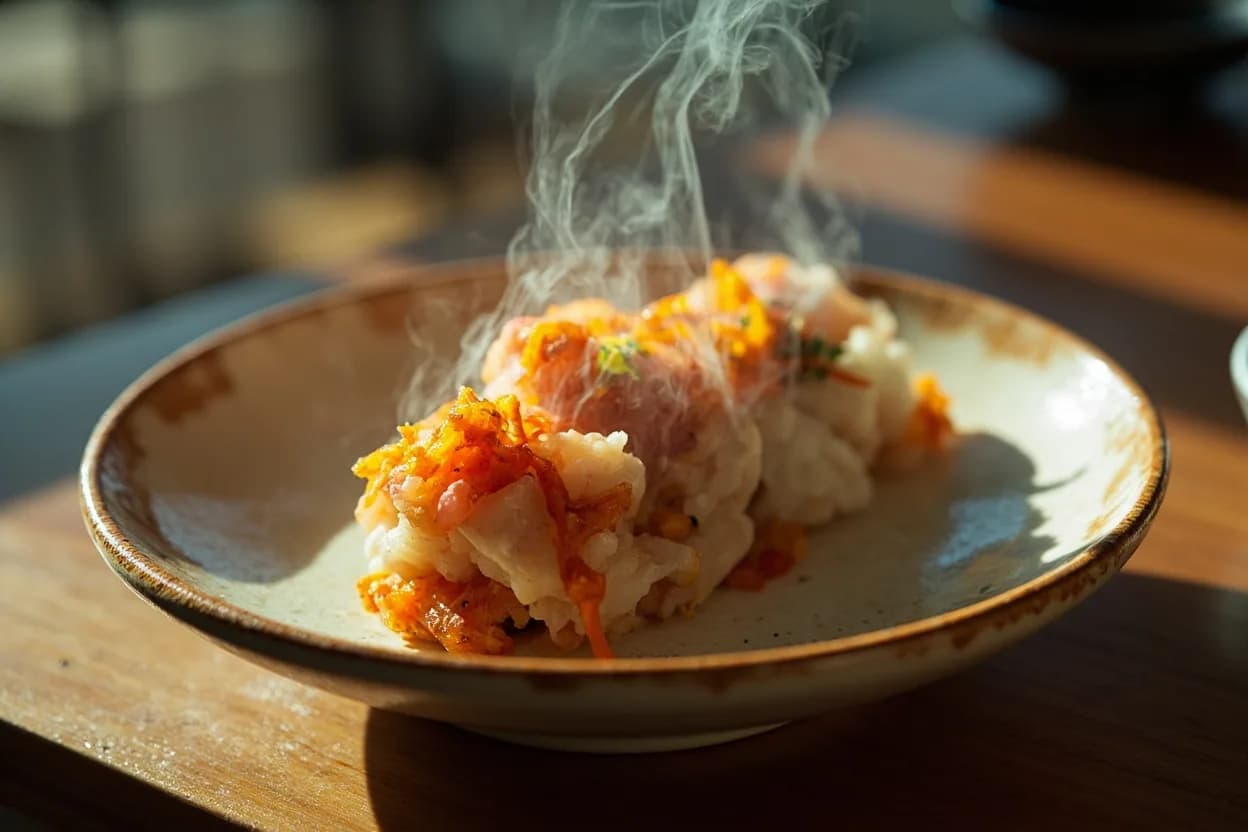
The dishes that define Edomae Sushi, documented in the Canon.
References
- 1.Sushi and Beyond — Michael Booth
- 2.The Story of Sushi — Trevor Corson
- 3.Edomae Sushi: Art, Tradition, Simplicity — Kikuo Shimizu
- 4.Washoku: Recipes from the Japanese Home Kitchen — Elizabeth Andoh
- 5.On Food and Cooking — Harold McGee (fish curing and acid chemistry)
Confidence: high
Notes
Akazu vs. white vinegar
Red vinegar (akazu) pressed from sake lees was the original shari seasoning and was largely displaced by cheaper white rice vinegar in the mid-20th century. Many of Tokyo's finest contemporary sushiya have reverted to akazu for its deeper umami and amber color — a visible signal of classical allegiance.
Neta aging
One of the craft's least visible skills is short-term aging: wrapping fish in paper or kombu and resting it at controlled temperatures for hours or days to allow enzymatic breakdown of proteins (inosinic acid accumulation), producing more complex flavor than same-day fresh fish. This is especially prized for madai, hirame, and katsuo.